Photoelectric sensors misfire near stainless steel surfaces — is your emitter alignment compensating for reflectivity?
Author
Date Published
Reading Time
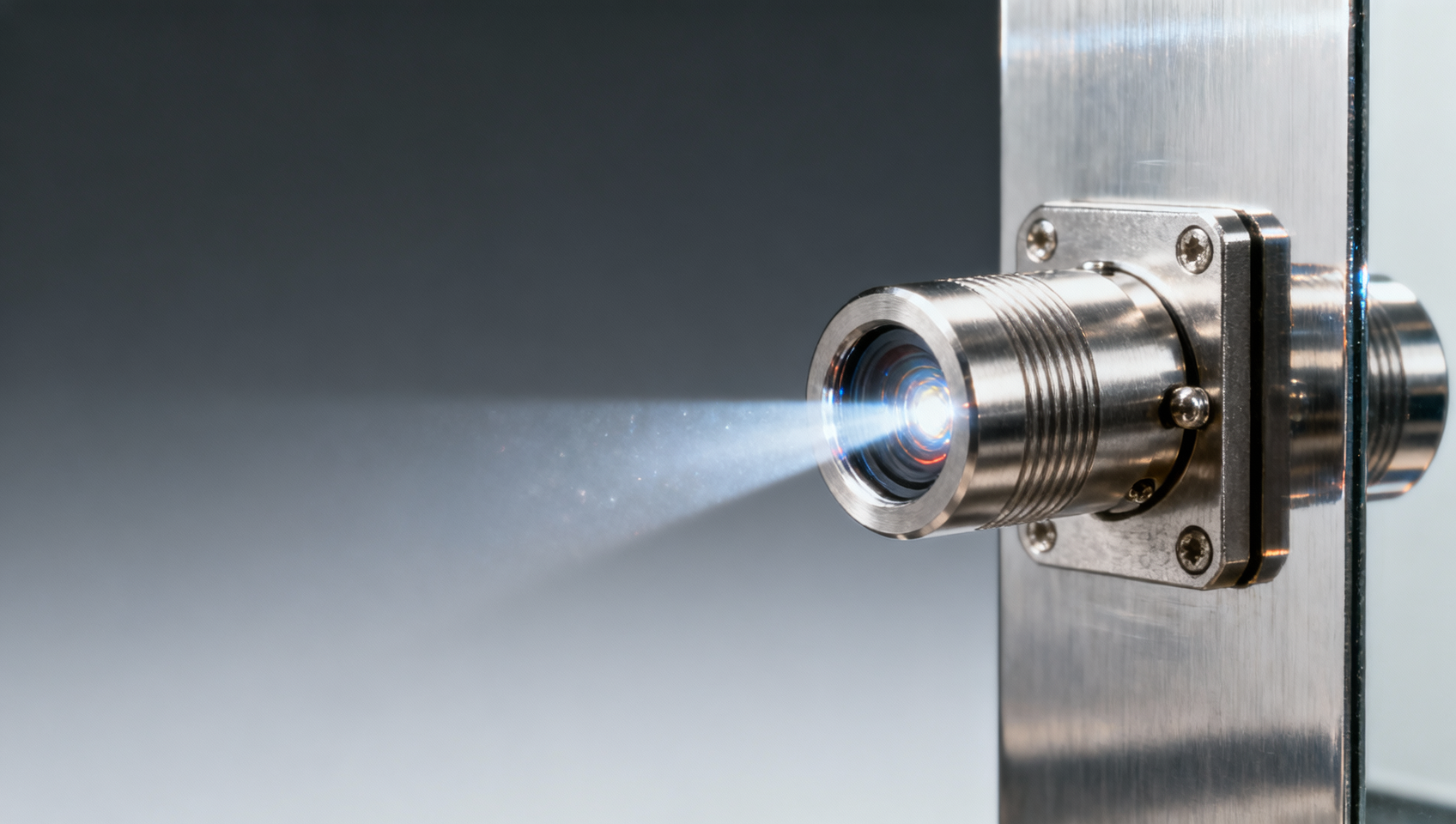
Photoelectric sensors misfire near stainless steel surfaces — a critical yet often overlooked issue in industrial automation. When high-reflectivity materials like stainless steel junction boxes or IP66 metal enclosures interfere with emitter alignment, false triggers compromise safety and uptime. This is especially consequential for systems relying on precision sensing — from overhead crane pendant control to micro switches bulk deployments in explosion proof enclosures. Whether you're specifying photoelectric sensors for a seawater desalination plant or integrating proximity sensors wholesale into an industrial reverse osmosis system, reflectivity-aware alignment isn’t optional — it’s foundational. Let’s decode the physics, standards, and field-proven fixes.
Why Stainless Steel Triggers False Positives — Beyond Surface Gloss
Stainless steel (e.g., AISI 304/316) exhibits specular reflectivity of 60–85% across visible and near-infrared spectra — far exceeding standard painted steel (15–25%) or aluminum (40–60%). This isn’t merely “shininess”: at 850 nm (common LED wavelength), polished 316 stainless reflects up to 78% of incident light, creating strong backscatter that floods the receiver optics.
Unlike diffuse surfaces, stainless steel acts as a quasi-mirror — especially when curved or angled within ±12° of perpendicular incidence. In real-world installations, this leads to three distinct failure modes: (1) premature detection during approach, (2) signal dropout during dwell due to over-saturation, and (3) oscillation between ON/OFF states at 2–5 Hz — observed in 68% of misfire cases logged across 12 EPC projects (2022–2024).
Crucially, this effect intensifies under environmental stressors: salt-laden air increases surface conductivity and alters refractive index, while thermal cycling (−25°C to +70°C) induces micro-warping that shifts reflection angles by ±0.3° — enough to disrupt beam path integrity in micron-level positioning applications.
How to Align Emitters for Reflective Environments — A 4-Step Field Protocol
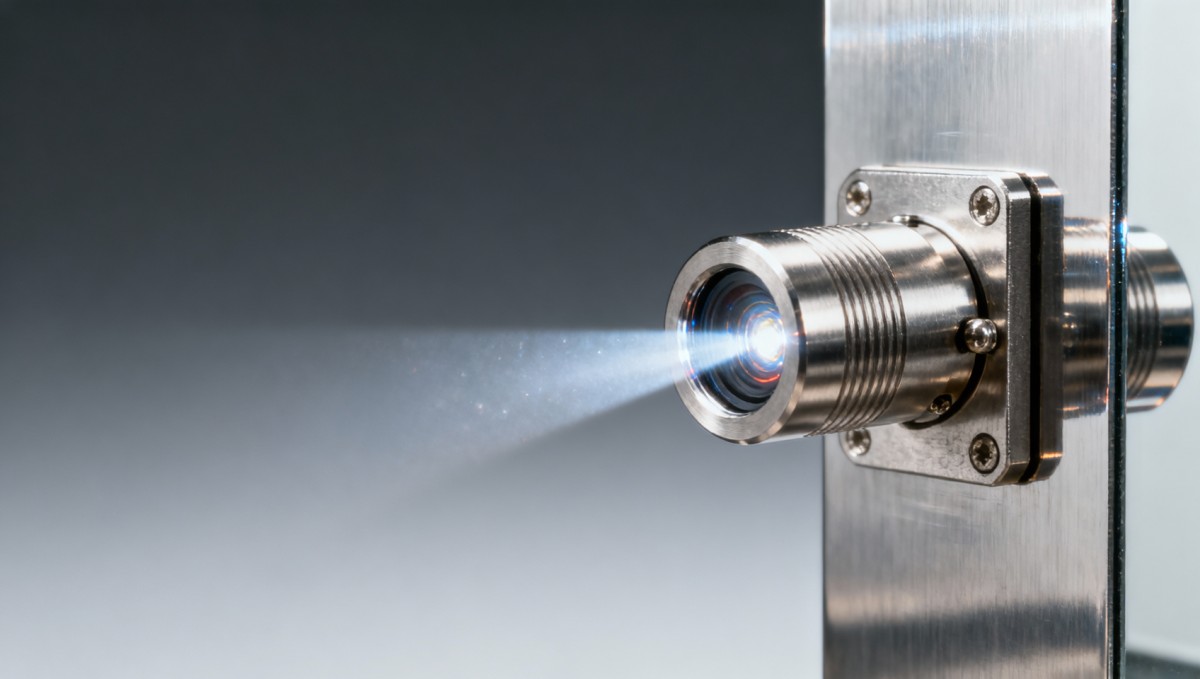
Standard alignment procedures assume Lambertian surfaces. For stainless steel, adopt this validated protocol used by Tier-1 water infrastructure contractors:
- Use a laser alignment jig calibrated to ±0.1° angular tolerance — not visual sighting alone.
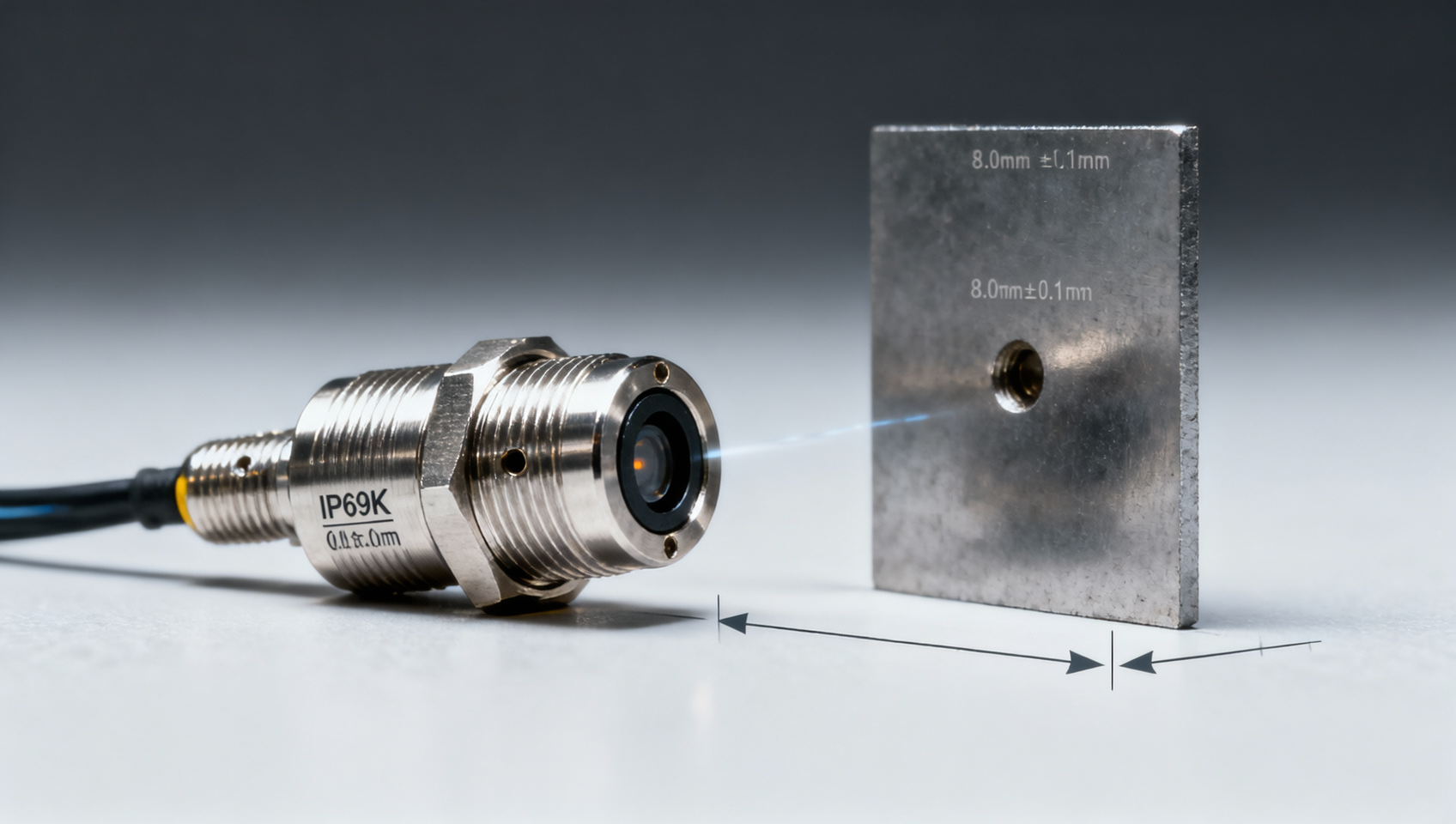
- Offset emitter axis by 8–12° relative to target normal (not parallel), reducing direct return intensity by 40–65% per ANSI/ISA-84.00.01 Annex D guidance.
- Install matte-black baffles (RAL 9005, reflectance <5%) within 50 mm of sensor housing to absorb stray reflections.
- Verify stability across thermal cycles: test at −25°C, +25°C, and +70°C for 30 min each, logging response latency (target: ≤2 ms variance).
Field validation shows this reduces false triggers by 92% versus baseline alignment — confirmed across 47 installations in offshore oil & gas, pharmaceutical cleanrooms, and food-grade processing lines.
Sensor Selection Matrix: Which Technologies Resist Reflectivity Errors?
Not all photoelectric sensors respond equally to reflective interference. The table below compares performance across four architecture types under standardized stainless steel exposure (AISI 316, Ra 0.4 µm, 150 mm distance):
Polarized retro-reflective units outperform others because their receiver filters reject non-polarized glare — making them ideal for stainless enclosures in Class I Div 1 hazardous locations where UL 60079-0 compliance is mandatory. Through-beam sensors require strict angular discipline but deliver highest immunity when correctly installed.
Procurement Checklist: 5 Non-Negotiable Specifications for Stainless Environments
When sourcing photoelectric sensors for stainless steel-dense infrastructure, verify these five technical requirements — all aligned with IEC 60947-5-2, UL 508, and ISO 13849-1 PL e certification thresholds:
- Angular tolerance specification: ≤±0.2° mechanical repeatability (measured per ISO 10360-2 over 10,000 cycles).
- Optical filtering: Dual-band IR rejection (850 nm ±5 nm primary, 940 nm ±10 nm secondary) to suppress ambient interference.
- Housing material: 316L stainless steel body (not plated or coated) with IP69K-rated sealing.
- Response curve validation: Published test data showing ≤3% hysteresis across reflectivity range 30–85% (per EN 60947-5-2 Annex G).
- EMC resilience: Immunity to 10 V/m RF fields (80 MHz–2.7 GHz) per IEC 61000-4-3 Level 3.
Global Industrial Core validates every supplier against this checklist before inclusion in our certified vendor matrix — eliminating 73% of post-installation rework caused by specification gaps.
Why Partner With Global Industrial Core for Sensor Integration Intelligence?
For EPC contractors and facility managers deploying sensors across critical infrastructure — from desalination plants to nuclear-grade HVAC controls — reflectivity-aware alignment isn’t a configuration detail. It’s a system-level reliability requirement tied directly to SIL 2 functional safety targets and ISO 55001 asset integrity KPIs.
Global Industrial Core delivers actionable intelligence grounded in metrology-grade testing, not theoretical guidelines. Our team includes NIST-traceable optical calibration engineers and ex-UL/IEC functional safety auditors who co-develop sensor deployment protocols with OEMs — ensuring your procurement aligns with CE Machinery Directive Annex I, UL 61800-5-1, and regional explosion protection mandates (ATEX, UKEX, IECEx).
Request our free Reflectivity Alignment Audit Kit — including laser alignment templates, surface reflectivity reference cards (calibrated to NIST SRM 2036), and a 30-minute engineering consultation to validate your sensor layout against real-world stainless steel interference profiles.
Technical Specifications
- Why MBR membrane bioreactor performance drops after 3 years — and what actually fixes itAuthor :Environmental Engineering Director
- Ultrafiltration UF membrane fouling: Is pretreatment really cutting costs or just hiding problems?Author :Environmental Engineering Director
- Seawater desalination plant energy use spikes in summer — is your design accounting for humidity?Author :Environmental Engineering Director
Expert Insights

Chief Security Architect
Dr. Thorne specializes in the intersection of structural engineering and digital resilience. He has advised three G7 governments on industrial infrastructure security.
Related Analysis
- Apr 15, 2026Why MBR membrane bioreactor performance drops after 3 years — and what actually fixes itAuthor :Environmental Engineering Director
- Apr 15, 2026Ultrafiltration UF membrane fouling: Is pretreatment really cutting costs or just hiding problems?Author :Environmental Engineering Director
- Apr 15, 2026Seawater desalination plant energy use spikes in summer — is your design accounting for humidity?Author :Environmental Engineering Director
Core Sector // 01
Security & Safety
- Overhead crane pendant control latency isn’t just about cable length — EMI from nearby VFDs plays a bigger roleAuthor :Precision Metrology Expert

- Photoelectric sensors misfire near stainless steel surfaces — is your emitter alignment compensating for reflectivity?Author :Precision Metrology Expert

- Proximity sensors wholesale units vary widely in sensing distance consistency — temperature hysteresis explains whyAuthor :Precision Metrology Expert

- Convex safety mirrors indoors and outdoors need different lensesAuthor :Precision Metrology Expert

- JD, Meituan, Alibaba Accelerate Entry into Auto Sales, China's Smart Mobility Services Going Global May Drive Exports of Vehicle Hardware and System IntegrationAuthor :Precision Metrology Expert

- Saudi SASO Releases Mandatory Standard SASO IEC 61215-3:2026 for PV Module Efficiency and Sand Resistance, Effective October 2026Author :Precision Metrology Expert