Vortex Flow Meter: When It Works Best
Author
Date Published
Reading Time
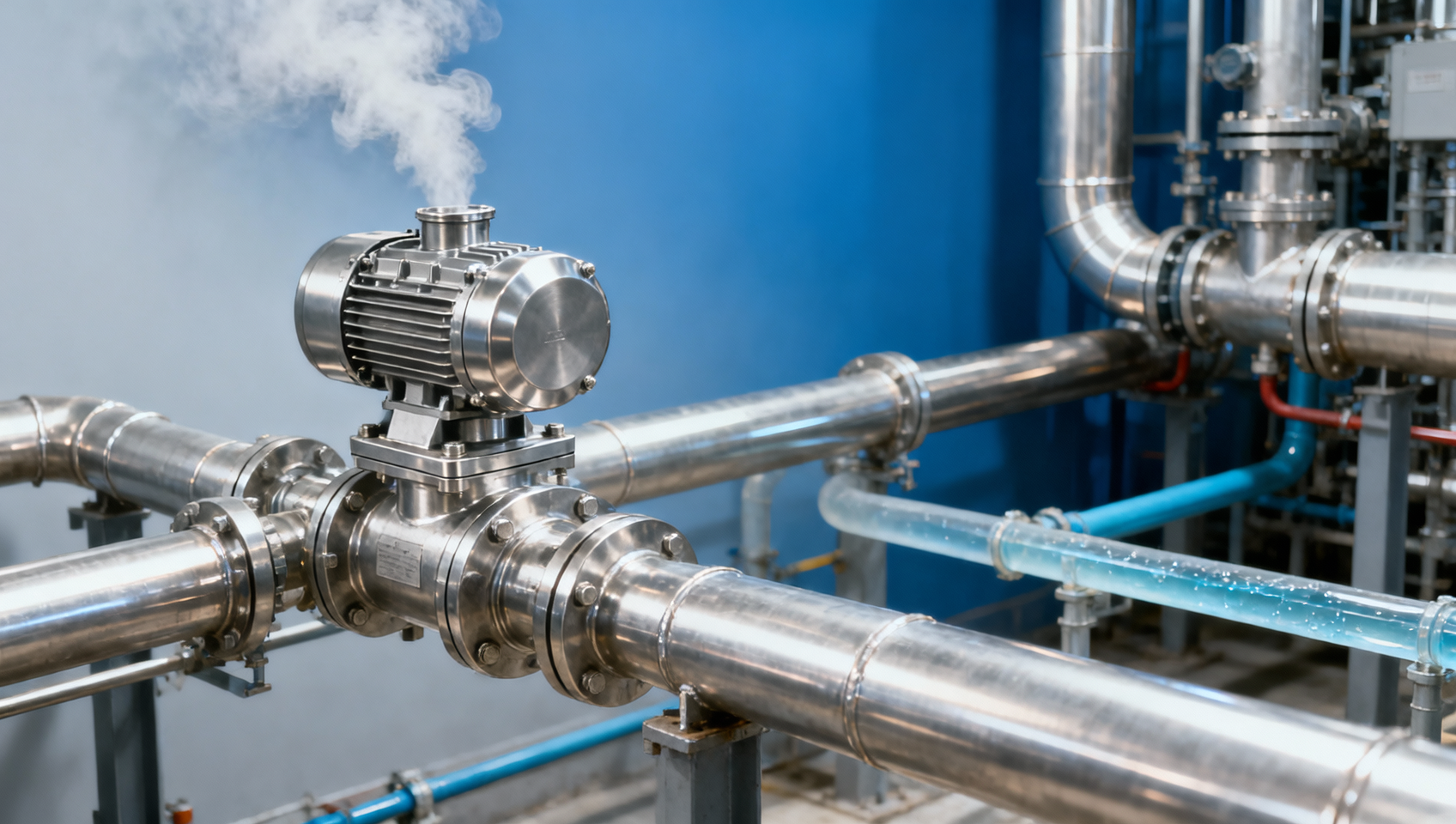
Choosing the right vortex flow meter starts with knowing where it delivers the most stable, cost-effective performance. For engineers, operators, and buyers comparing a vortex flow meter with an electromagnetic flow meter, coriolis mass flow meter, or ultrasonic water meters, this guide explains the process conditions, media types, and industrial applications where vortex technology works best.
Where does a vortex flow meter make the most sense?
A vortex flow meter is often the strongest choice when a plant needs reliable flow measurement for steam, gases, or clean to moderately clean liquids under stable process conditions. Its working principle depends on vortex shedding behind a bluff body, so the meter performs best when the flow profile is reasonably developed and the medium is not heavily contaminated with sticky solids, long fibers, or severe pulsation.
In industrial procurement, this matters because many buyers compare instruments only by initial price. That is risky. A lower-cost device can become expensive if it struggles with high-temperature steam, frequent maintenance, or poor repeatability in continuous service. In many utility and process lines, a vortex flow meter offers a practical middle ground between the higher cost of a coriolis mass flow meter and the conductivity limits of an electromagnetic flow meter.
The technology is especially attractive when facilities need one platform across 3 common media categories: saturated or superheated steam, compressed air or industrial gas, and water-like liquids with predictable viscosity. Typical users include EPC teams specifying utility skids, facility managers upgrading energy monitoring, and procurement directors looking for a durable instrument with manageable lifecycle cost over 2–5 years of routine plant operation.
For Global Industrial Core readers, the key question is not whether vortex technology is modern enough. The real question is whether the process conditions support stable shedding frequency, acceptable pressure loss, and installation discipline. If those three factors are controlled, a vortex flow meter can become a dependable instrument for metering, balancing, and utility accountability across multiple industries.
Typical conditions that favor vortex technology
- Medium temperature ranges from ambient utility service up to high-temperature steam duty, where electromagnetic meters are not always practical.
- Pipe sizes commonly fall in standard industrial ranges, and the line can provide straight-run installation guidance such as 10D upstream and 5D downstream, depending on disturbances.
- Flow is continuous or semi-continuous rather than highly intermittent, with limited pulsation from compressors, pumps, or control valves.
- The plant needs one meter family for steam, gas, and liquid service, reducing spare parts complexity and operator retraining time.
Which applications are best suited for a vortex flow meter?
The best application scenarios are those where process engineers need robust measurement without moving parts and where the medium is compatible with vortex shedding. Steam systems are the most recognized example. Boiler outlet monitoring, steam distribution branches, and energy-use allocation lines are classic use cases because the vortex flow meter handles temperature and pressure conditions that challenge simpler technologies.
Gas measurement is another strong area. Plants often use a vortex flow meter for compressed air, nitrogen, oxygen in suitable service conditions, and non-condensing industrial gases. In these systems, the instrument helps maintenance and production teams detect unusual consumption patterns over weekly or monthly review cycles. That supports utility optimization and leak reduction programs without moving to a much higher meter budget.
For liquids, the fit is more selective. A vortex flow meter works well with water, condensate, demineralized water, cooling water, and compatible chemicals when viscosity remains in a normal operating range and entrained solids stay limited. It is generally less attractive for slurry service, highly viscous fluids, or sticky coatings that can alter bluff-body behavior and degrade signal stability.
This is where structured sourcing matters. GIC supports industrial buyers by framing applications according to process duty, maintenance burden, and compliance expectations, not just catalog claims. For a plant running 24/7, the value of choosing the right measurement principle can exceed the unit price difference within a single budgeting cycle.
Application scenario matrix
The table below helps engineering and procurement teams quickly judge whether a vortex flow meter is a primary-fit option, a conditional-fit option, or a poor-fit option across common industrial media.
The main takeaway is simple: steam and gas are usually where vortex technology shows the clearest value. For liquids, a vortex flow meter can still be a good solution, but the decision should be based on viscosity, cleanliness, and whether an electromagnetic flow meter would deliver easier long-term operation.
Three high-value sectors
In food-support utilities, pharmaceuticals, power generation auxiliaries, chemical processing, metal treatment, and large commercial energy systems, a vortex flow meter is commonly used where the measured medium is part of the utility backbone rather than the hardest process fluid. That distinction is important for both design and maintenance planning.
For example, in a 2-line boiler room or a 4-branch steam header, the meter may be installed for energy allocation rather than custody transfer. In that case, ruggedness, repeatability, and service access can matter more than pursuing the most expensive high-precision instrument available.
How does a vortex flow meter compare with electromagnetic, coriolis, and ultrasonic meters?
Comparison is essential because many buyers start with a broad search such as “best industrial flow meter” and only later narrow the technology. A vortex flow meter is not universally better than an electromagnetic flow meter, coriolis mass flow meter, or ultrasonic water meters. It becomes the best choice only when the process profile matches its strengths.
An electromagnetic flow meter is often favored for conductive liquids, especially water and wastewater, because it introduces little obstruction and handles dirty liquid service well. But it does not measure steam or most gases. A coriolis mass flow meter delivers direct mass flow and high accuracy across many fluids, yet it usually comes with higher capital cost, greater weight, and practical constraints in larger line sizes.
Ultrasonic water meters can be attractive when non-intrusive installation, very low pressure loss, or municipal-style water service is the priority. However, for steam lines and mixed utility environments, a vortex flow meter often offers better applicability. In many industrial projects, the procurement decision comes down to balancing 4 factors: medium type, required accuracy, maintenance environment, and total installed cost.
The next table is designed for decision makers who need a realistic, use-based comparison rather than a generic product summary.
Technology comparison for industrial selection
For cross-functional teams, the practical rule is this: choose a vortex flow meter when one facility needs broad utility coverage and acceptable installation discipline is possible. Choose electromagnetic when the duty is liquid-focused and conductive. Choose coriolis when mass accuracy justifies higher budget. Choose ultrasonic water meters when water distribution and low head loss dominate the requirement.
When buyers make the wrong comparison
- Comparing list price only, while ignoring transmitters, compensation, fittings, and shutdown installation cost.
- Assuming one meter type handles steam, gas, slurry, and water equally well.
- Overlooking line disturbances, where 1 elbow or 2 closely spaced valves can damage actual field performance.
- Selecting by brochure accuracy instead of usable accuracy under the real site process range.
What should engineers and procurement teams check before buying?
A vortex flow meter can perform very well, but only if the selection process is disciplined. Before issuing an RFQ or approving a replacement, teams should verify medium state, pressure and temperature range, expected turndown, line size, and installation geometry. These checks usually take less than 1 project meeting, but they prevent months of field complaints later.
For operators, the biggest concern is often stability at low flow. For procurement, it is usually lifecycle cost. For decision makers, it is risk: will the meter support billing logic, utility balancing, or compliance documentation without repeated intervention? A well-structured buying process should cover at least 5 checkpoints, not just the instrument body and tag number.
Lead time also matters. Standard industrial configurations may move within 2–6 weeks depending on body material, connection type, electronics, and certification requests. Projects needing special materials, remote electronics, or expanded documentation often require longer planning. Early alignment between engineering and sourcing avoids last-minute substitutions that create commissioning delays.
GIC’s strategic sourcing perspective is useful here because the procurement decision should include document quality, traceability, and compatibility with plant standards. In global projects, the difference between a smooth purchase and a stalled purchase is often not the product alone, but whether the technical file supports approval by EPC, owner, and operations teams in the same review cycle.
Five-point selection checklist
- Confirm the medium category: steam, gas, or liquid. A vortex flow meter is strongest when the medium is clean enough and flow behavior is stable.
- Review process range, including normal, minimum, and peak load. A meter sized only for peak flow may underperform during everyday operation.
- Check installation space. Straight runs such as 10D upstream and 5D downstream are common planning references, though actual requirements depend on disturbance type.
- Verify output, integration, and compensation needs. Some applications need temperature and pressure inputs for accurate steam or gas calculations.
- Ask for documentation early, including material data, calibration information, and applicable CE, UL, ISO-related project requirements where relevant.
Procurement review table
Use the following table to align engineering, operations, and purchasing before final supplier comparison.
This type of pre-purchase alignment reduces rework. It also helps avoid a common industrial mistake: choosing a meter that is technically acceptable in theory but difficult to sustain in the actual plant environment.
What are the common mistakes, limitations, and FAQs?
Even a well-selected vortex flow meter can disappoint if expectations are unrealistic. The technology is not a universal answer for every process fluid. Problems usually arise from low-flow operation, strong vibration, severe pulsation, contamination buildup, or installation too close to disturbances. In most cases, the issue is application mismatch rather than a defective instrument.
Another mistake is treating all utility lines the same. A steam main, a compressed air branch, and a cooling water line may share the same nominal pipe size, but they do not create the same measurement environment. Over a 6–12 month operating period, these differences affect maintenance frequency, signal stability, and confidence in reported values.
For information researchers and plant users, FAQ-style decision support is often more helpful than generic theory. The questions below address the issues most frequently considered during specification, replacement, or budget review.
Is a vortex flow meter good for steam?
Yes, steam is one of the strongest applications for a vortex flow meter. It is widely used for saturated and superheated steam when process pressure, temperature, and installation conditions are properly reviewed. For energy accounting or utility balancing, teams should also confirm whether temperature or pressure compensation is required as part of the final measurement architecture.
When is an electromagnetic flow meter a better choice?
An electromagnetic flow meter is often better for conductive liquids, especially where the fluid contains solids, the process demands low pressure loss, or the service is water-focused. If the application is wastewater, slurry-like liquid, or dirty conductive water, electromagnetic technology is often more forgiving than a vortex flow meter.
Should I replace a vortex flow meter with a coriolis mass flow meter?
Only if the process truly needs direct mass flow, density-related functionality, or higher accuracy that justifies the cost increase. For many utility services, the existing vortex flow meter remains the more economical and operationally sensible solution. The upgrade decision should be based on use case, not on the assumption that more expensive always means more suitable.
How often should the installation be reviewed?
A practical review interval is every 6–12 months for critical utility lines, or after any piping modification, compressor change, valve relocation, or major shutdown. If operators notice unstable readings, the first inspection should focus on process changes, vibration, and flow disturbances before assuming electronics failure.
Why work with Global Industrial Core for flow meter selection and sourcing?
Industrial buyers rarely need just a product description. They need decision support across specification, technical comparison, compliance review, and supplier communication. Global Industrial Core helps EPC teams, plant engineers, and procurement leaders evaluate a vortex flow meter within the broader context of instruments and measurement, utility reliability, and operational risk control.
That matters when projects involve multiple stakeholders across 3 stages: technical screening, commercial alignment, and execution planning. A meter that looks acceptable in a catalog may still fail internal approval if documentation is incomplete, installation assumptions are weak, or the selected technology does not fit the medium. GIC bridges that gap with sourcing-oriented technical insight grounded in real industrial use conditions.
If you are assessing a vortex flow meter against an electromagnetic flow meter, coriolis mass flow meter, or ultrasonic water meters, the most productive next step is to review your actual service conditions. That includes medium type, operating range, pipe size, utility objective, installation constraints, and any CE, UL, or ISO-related project requirements. A structured review can shorten the comparison cycle and reduce specification drift.
Contact Global Industrial Core to discuss parameter confirmation, product selection, expected lead time, documentation needs, certification expectations, sample or evaluation support, and quotation planning. For complex industrial projects, a focused technical-commercial review at the start often saves 2–4 weeks later in re-approval, replacement evaluation, or commissioning correction.
What you can consult with us about
- Whether a vortex flow meter is the right technology for your steam, gas, or liquid service.
- How to compare a vortex flow meter with an electromagnetic flow meter, coriolis mass flow meter, or ultrasonic water meters for your site.
- Which parameters should appear in your RFQ, datasheet, and approval package.
- How lead time, documentation, and compliance expectations may affect final sourcing decisions.
Expert Insights

Chief Security Architect
Dr. Thorne specializes in the intersection of structural engineering and digital resilience. He has advised three G7 governments on industrial infrastructure security.
Related Analysis
Core Sector // 01
Security & Safety
- Coriolis Mass Flow Meter Cost ExplainedAuthor :Environmental Engineering Director

- Electromagnetic Flow Meter Buying GuideAuthor :Environmental Engineering Director

- Ultrasonic Water Meters vs MechanicalAuthor :Environmental Engineering Director

- Vortex Flow Meter: When It Works BestAuthor :Environmental Engineering Director

- How to Pick Industrial Level SensorsAuthor :Environmental Engineering Director

- Radar Level Transmitter in Dusty TanksAuthor :Environmental Engineering Director

- Ultrasonic Level Gauge vs Radar LevelAuthor :Environmental Engineering Director

- Steam traps wholesale: Which type fails least in condensate return lines with air binding?Author :Environmental Engineering Director