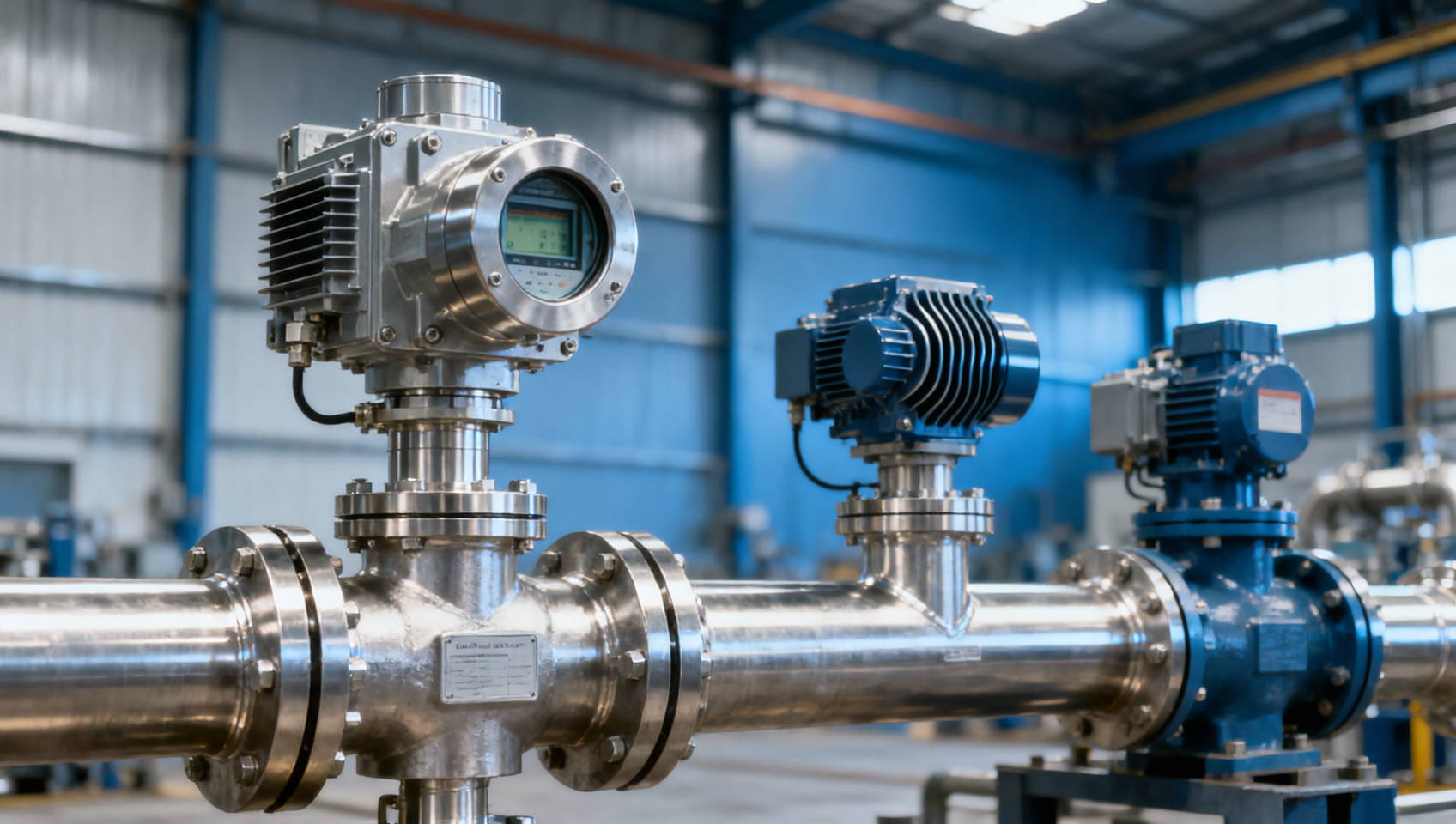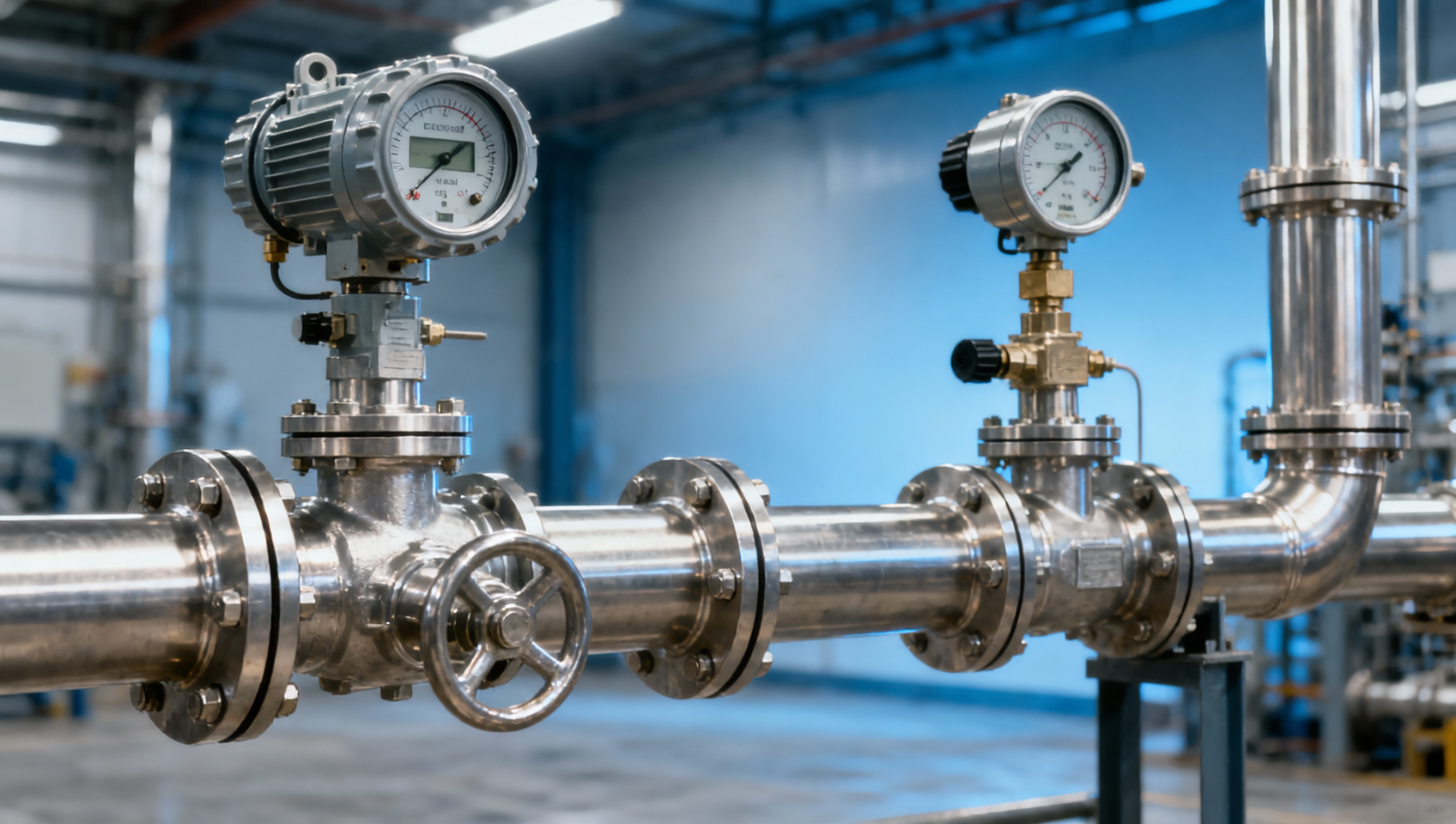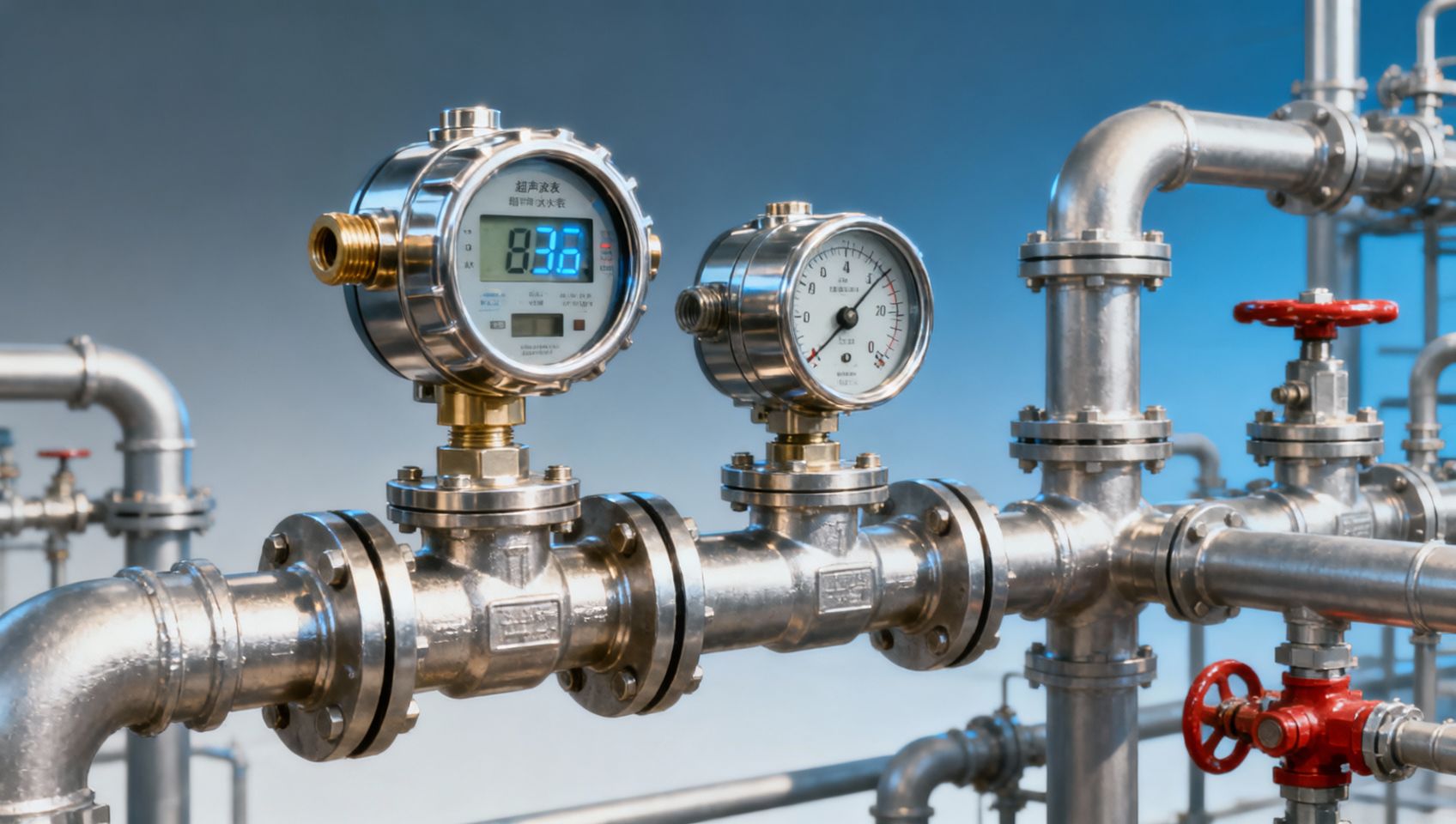
Ultrasonic Level Gauge vs Radar Level
Author
Date Published
Reading Time
Choosing between an ultrasonic level gauge and a radar level transmitter can directly affect measurement accuracy, maintenance demands, and long-term operating costs. For engineers, operators, buyers, and industrial decision-makers comparing industrial level sensors, the short answer is this: ultrasonic level gauges are often the more economical choice for clean, stable, non-contact level measurement in simpler environments, while radar level transmitters are usually the better option for demanding industrial conditions involving vapor, dust, pressure, temperature variation, foam, or the need for higher reliability.
That overall rule works in many cases, but not all. The best choice depends on the tank conditions, the material being measured, the required accuracy, and the operational risks of getting the reading wrong. This guide compares ultrasonic and radar level technologies in practical terms so you can make a confident selection based on application fit, not just purchase price.
Which is better: ultrasonic level gauge or radar level transmitter?
If your process is relatively clean and uncomplicated, an ultrasonic level gauge can be a cost-effective and reliable solution. It is widely used for water tanks, open channels, wastewater basins, and non-pressurized vessels where the air above the product is stable and free from heavy vapor, dust, or turbulence.
If your process environment is harsher or more variable, radar level is generally the better long-term investment. Radar level transmitters perform more consistently in tanks with steam, condensation, temperature swings, pressure, dust, agitation, and many difficult bulk solids or liquid applications. In critical industries, radar is often preferred because it reduces measurement uncertainty and lowers the risk of process upset.
In simple terms:
- Choose ultrasonic when budget matters and the environment is favorable.
- Choose radar when process reliability, difficult conditions, or measurement confidence matter more than initial sensor cost.
How ultrasonic and radar level measurement actually work
An ultrasonic level gauge measures level by sending high-frequency sound waves toward the material surface and timing how long the echo takes to return. The instrument then converts that time-of-flight into a distance and level reading.
A radar level transmitter works similarly in principle, but it uses electromagnetic microwave signals instead of sound. Because radar signals are not dependent on the speed of sound through air, they are generally less affected by atmospheric changes inside the vessel.
This basic physics explains many of the real-world differences between the two technologies. Ultrasonic measurement depends heavily on the condition of the gas space between the sensor and the material surface. Radar is usually much more tolerant of process variation.
What matters most in real applications
When people search for “ultrasonic level gauge vs radar level,” they are usually not looking for a textbook definition. They want to know which technology will perform better in their actual tank, silo, pit, or process vessel. The most important evaluation factors are listed below.
1. Accuracy and measurement stability
Radar level transmitters generally offer better measurement stability in difficult environments. If the vessel contains vapor, mist, temperature changes, pressure fluctuations, foam, or dust, radar usually maintains more dependable readings.
Ultrasonic sensors can deliver good performance in stable, clean conditions, but their readings may drift or become unreliable when the sound path is disrupted.
2. Environmental sensitivity
This is often the deciding factor.
- Ultrasonic can be affected by steam, vapor, dust, condensation, turbulence, uneven surfaces, and changes in air temperature.
- Radar is much less sensitive to these factors and is more suitable for harsh industrial environments.
3. Maintenance requirements
Both technologies are available as non-contact level sensors, which helps reduce wear and contamination. However, ultrasonic devices may require more frequent attention if condensation, buildup, or unstable process conditions interfere with signal transmission. Radar often has lower maintenance demands in challenging applications because it is more robust against environmental interference.
4. Initial cost vs lifecycle cost
Ultrasonic level gauges are usually less expensive to purchase. For non-critical applications, this can make them an attractive option.
Radar level transmitters often cost more upfront, but they may reduce false readings, manual intervention, downtime, and maintenance. In higher-value operations, that can lead to a lower total cost of ownership over time.
5. Suitability for liquids vs solids
Both technologies can be used for liquids and solids, but radar often performs better in difficult bulk solids applications, especially where dust, uneven material surfaces, or long measurement ranges are involved. Ultrasonic can work for solids in some cases, but it is more vulnerable to signal loss in dusty or irregular conditions.
When an ultrasonic level gauge is the right choice
An ultrasonic level gauge is often the best fit when the application is straightforward and the process conditions are not severe. Common examples include:
- Water and wastewater tanks
- Open channels and lift stations
- Chemical storage with calm surfaces and minimal vapor
- Atmospheric tanks with short to moderate measuring distances
- Budget-sensitive projects where high-end performance is not necessary
Ultrasonic technology is especially attractive when:
- You want non-contact measurement at a lower price point
- The medium is relatively clean
- There is little steam, foam, or dust
- The vessel is not under pressure
- The required accuracy is moderate rather than highly critical
For many municipal and utility-type installations, ultrasonic remains a practical and proven solution.
When radar level is the better option
Radar level is usually the stronger choice in industrial environments where process conditions are less forgiving. It is commonly selected for:
- Pressurized tanks and closed vessels
- Applications with steam, vapor, or condensation
- Agitated tanks and turbulent surfaces
- Foaming liquids
- Dusty silos and bulk solids storage
- High-temperature or variable-temperature processes
- Critical measurement points where failure carries operational or safety risk
Radar is often preferred by industrial buyers and engineers when reliability matters more than low purchase price. In sectors such as chemical processing, power, oil and gas, mining, and heavy manufacturing, radar level transmitters are frequently the safer long-term decision.
Key limitations you should not ignore
Neither technology is universally perfect. A good buying decision requires understanding where each one may struggle.
Ultrasonic limitations
- Performance can degrade in steam, vapor, or heavy dust
- Temperature changes in the air space can affect accuracy
- Foam and turbulent surfaces may weaken the echo
- Condensation or buildup on the sensor face can cause issues
- Not ideal for many high-pressure or severe process environments
Radar limitations
- Higher upfront cost
- Selection may be more complex due to frequency, antenna type, and application matching
- In certain low-dielectric media, careful configuration may be required
- Poor installation geometry can still create false echoes if not engineered properly
In other words, radar is more capable, but not automatically foolproof. Correct specification and installation still matter.
How buyers and engineers should compare them before purchasing
If you are evaluating industrial level sensors for a plant upgrade or new project, focus on the questions below rather than comparing list prices alone.
What is the actual process environment?
Check for steam, vapor, dust, foam, pressure, temperature swings, turbulence, and condensation. If any of these are significant, radar likely deserves serious priority.
How critical is the measurement point?
If a bad reading could cause overflow, dry running, batch errors, compliance issues, or production loss, radar may deliver better risk control.
What are the material properties?
Consider whether you are measuring liquid or solid, the surface behavior, dielectric properties, and whether buildup is likely.
How much maintenance can your team realistically support?
If the instrument is installed in a hard-to-access area or labor resources are limited, a more robust radar solution may save time and operating cost.
What is the full economic picture?
Procurement teams should compare not just unit price, but also:
- Installation cost
- Commissioning complexity
- Calibration needs
- Expected maintenance frequency
- Downtime risk
- Replacement cycle
- Impact of inaccurate measurement on production or compliance
This is where many low-cost ultrasonic selections lose their price advantage over time in demanding applications.
Common selection mistakes that lead to poor performance
Many level measurement problems are caused less by the technology itself and more by poor application matching. Common mistakes include:
- Choosing ultrasonic for vessels with heavy vapor or condensation
- Using price as the primary decision factor in critical processes
- Ignoring nozzle geometry, internal obstructions, or agitators
- Not accounting for foam, dust, or surface turbulence
- Selecting a radar transmitter without checking antenna suitability or dead zone requirements
- Assuming non-contact automatically means maintenance-free
A good specification process should involve both operations and engineering input. Operators often know the true process behavior better than datasheets do.
Practical recommendation by user type
For information researchers: the most useful distinction is that ultrasonic relies on sound through air, while radar uses microwaves and is generally more resilient in difficult process conditions.
For operators and users: if your current level reading becomes unstable during steam, foam, dust, or weather changes, radar is often the upgrade path worth investigating.
For procurement teams: do not compare these devices only by purchase cost. Compare the cost of unreliable measurement, maintenance calls, and process disruption.
For business decision-makers: ultrasonic is often the right value choice for low-risk utility service, while radar is usually the better strategic investment for critical assets and harsh industrial duty.
Final verdict: ultrasonic level gauge vs radar level
The best choice comes down to application severity and the cost of uncertainty.
Ultrasonic level gauges are a smart option for clean, simple, lower-risk applications where cost control is important and environmental interference is limited.
Radar level transmitters are typically the better choice for demanding industrial processes where higher reliability, stronger signal performance, and lower long-term operational risk justify the higher initial investment.
If you are selecting for a critical vessel, a difficult medium, or an environment with vapor, dust, pressure, or temperature variation, radar is usually the safer and more future-proof decision. If you are measuring water or similar media in a stable, open, non-pressurized environment, ultrasonic may provide all the performance you need at a lower cost.
The most effective buying decision is not asking which technology is better in general. It is asking which one is better for your exact process conditions, maintenance capacity, and business risk.
Expert Insights

Chief Security Architect
Dr. Thorne specializes in the intersection of structural engineering and digital resilience. He has advised three G7 governments on industrial infrastructure security.
Related Analysis
Core Sector // 01
Security & Safety
- Coriolis Mass Flow Meter Cost ExplainedAuthor :Environmental Engineering Director

- Electromagnetic Flow Meter Buying GuideAuthor :Environmental Engineering Director

- Ultrasonic Water Meters vs MechanicalAuthor :Environmental Engineering Director

- Vortex Flow Meter: When It Works BestAuthor :Environmental Engineering Director

- How to Pick Industrial Level SensorsAuthor :Environmental Engineering Director

- Radar Level Transmitter in Dusty TanksAuthor :Environmental Engineering Director

- Ultrasonic Level Gauge vs Radar LevelAuthor :Environmental Engineering Director

- Steam traps wholesale: Which type fails least in condensate return lines with air binding?Author :Environmental Engineering Director