How to Pick Industrial Level Sensors
Author
Date Published
Reading Time
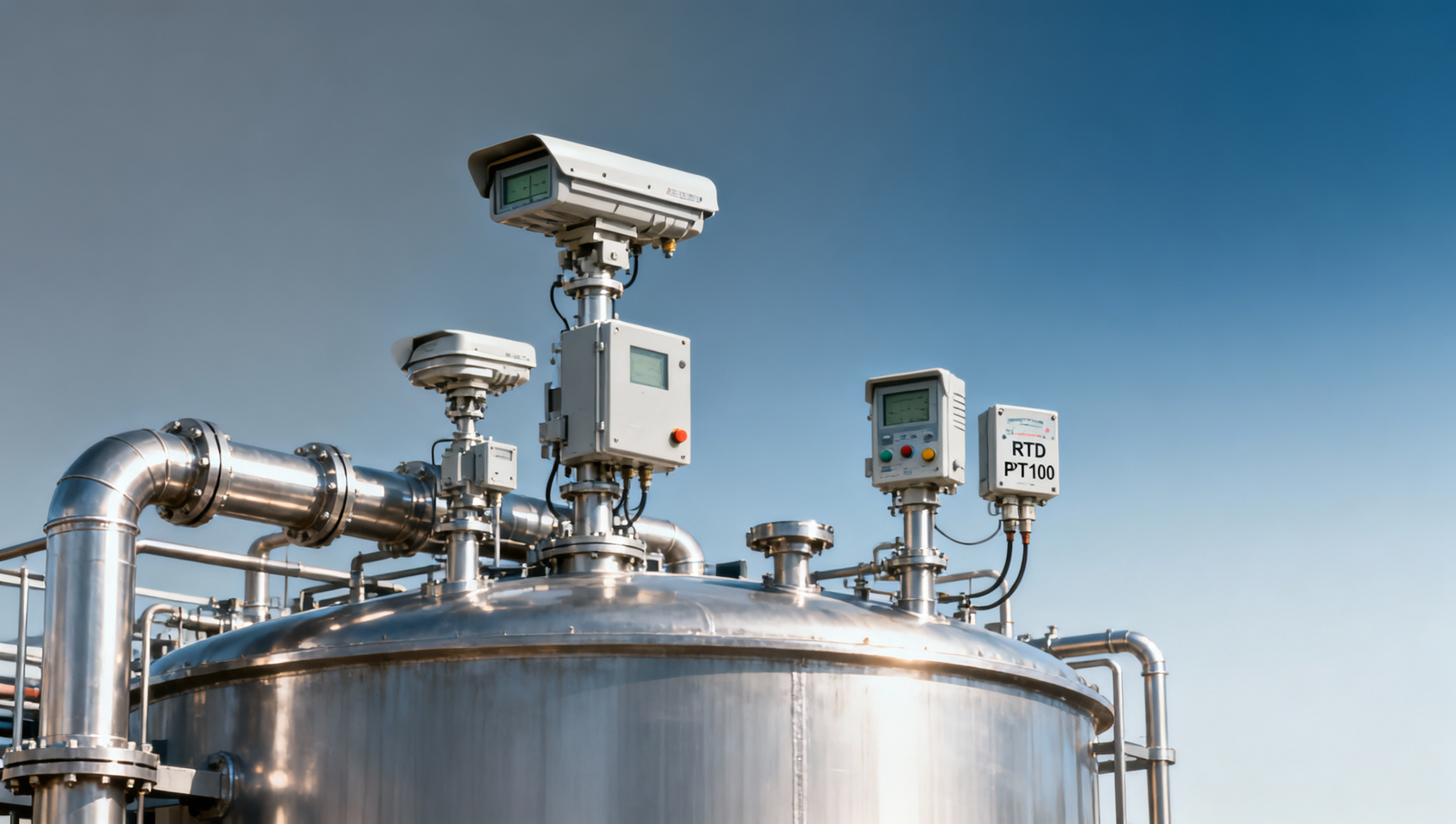
Choosing the right industrial level sensors is critical for safety, accuracy, and long-term reliability in demanding environments. From ultrasonic level gauge and radar level transmitter options to integration with temperature transmitters, RTD PT100 sensors, and broader process control systems, the right selection affects uptime, compliance, and cost. This guide helps researchers, operators, buyers, and decision-makers evaluate key specifications, application risks, and sourcing factors with confidence.
If you are comparing industrial level sensors, the most important truth is simple: there is no single “best” sensor, only the best fit for your process conditions, medium, installation constraints, and control requirements. In industrial environments, wrong selection usually leads to false readings, maintenance burden, safety exposure, and avoidable replacement costs. Right selection starts with understanding what you are measuring, where it is installed, how accurate the signal must be, and what can interfere with performance.
For most buyers and engineers, the fastest path to a good decision is to evaluate level sensors in this order: application medium, measurement technology, tank geometry, process temperature and pressure, required accuracy, output and integration needs, certification requirements, and supplier reliability. That sequence prevents a common mistake: choosing by price or popularity before checking real-world suitability.
What users really need to know before picking an industrial level sensor
Whether you are an operator, procurement specialist, technical researcher, or plant decision-maker, the key questions are usually practical rather than theoretical:
- Will the sensor measure reliably in my actual operating environment?
- Which technology is better for liquid, slurry, powder, foam, or corrosive media?
- How will temperature, pressure, vapor, dust, turbulence, or buildup affect readings?
- What installation limitations could cause inaccurate measurement?
- How do I compare ultrasonic level gauge and radar level transmitter options?
- What certifications and outputs are required for plant integration and compliance?
- What will the sensor really cost over its operating life, not just at purchase?
These are the issues that matter most because industrial level measurement is closely tied to process continuity, alarm reliability, inventory control, environmental protection, and worker safety. A product that looks technically acceptable on paper can still fail in service if the application details are ignored.
Start with the application, not the sensor model
The best sensor selection begins with a clear profile of the application. Before reviewing brands or product catalogs, define the following:
- Medium: liquid, viscous fluid, slurry, powder, granules, foam-forming product, corrosive chemical, wastewater, fuel, or food-grade material
- Tank or vessel type: open tank, closed vessel, silo, bypass chamber, underground storage, pressurized tank
- Measurement objective: continuous level measurement, point level detection, overfill prevention, dry-run protection, interface detection
- Process conditions: operating temperature, pressure, agitation, vapor, condensation, dust, turbulence, and filling pattern
- Mechanical constraints: nozzle size, top or side mounting, dead zone, internal obstructions, available straight path
- Control needs: local display, analog signal, switching output, digital communication, remote monitoring, PLC or SCADA integration
This step matters because one technology may perform very well in one service and poorly in another. For example, a clean water tank may suit multiple low-maintenance options, while a high-temperature, pressurized vessel with vapor and foam may require a much more robust measurement approach.
How to compare the main industrial level sensor technologies
Industrial level sensors are available in several core technologies. The right choice depends on how each technology reacts to the measured medium and the environment around it.
Radar level transmitter
A radar level transmitter is often preferred in demanding industrial applications because it can provide stable non-contact measurement across a wide range of process conditions. Radar performs well where temperature, pressure, vapors, and many difficult media make other technologies less reliable.
Best for: chemicals, hydrocarbons, aggressive liquids, high-pressure tanks, high-temperature vessels, and applications requiring dependable long-term performance.
Strengths:
- Good performance in harsh environments
- Less affected by temperature and pressure than some alternatives
- Suitable for continuous measurement
- Available in non-contact and guided wave formats
Watch-outs:
- Higher upfront cost than basic technologies
- May require careful setup around internal obstructions or low dielectric media
- Supplier configuration support can be important in complex vessels
Ultrasonic level gauge
An ultrasonic level gauge is a common non-contact option for water, wastewater, and relatively clean liquid storage. It is widely used because it is easy to install and often cost-effective.
Best for: open tanks, water treatment, simple storage applications, and moderate process conditions.
Strengths:
- Non-contact measurement reduces maintenance in many clean applications
- Simple installation in many tanks
- Cost-effective for suitable services
Watch-outs:
- Performance can be affected by foam, vapor, condensation, turbulence, or temperature variation in the air space
- Not ideal for all pressurized or high-temperature environments
- Dead zone near the sensor face must be considered
Hydrostatic level sensors
These sensors infer level from pressure at the bottom of the tank. They are common in liquid storage and wastewater systems.
Best for: liquids with stable density, deep tanks, boreholes, and submerged installations.
Strengths:
- Simple principle
- Useful in narrow or irregular tanks where top-mounted non-contact methods are difficult
- Often economical
Watch-outs:
- Density changes can affect accuracy
- Wet-contact design may increase maintenance in contaminated or corrosive media
- Vent tube and sealing quality matter
Capacitive level sensors
Capacitive devices detect level based on dielectric changes. They are used for liquids, powders, and interface measurement in certain applications.
Best for: point level detection, some solids applications, and specific liquid measurements where process characteristics are stable.
Watch-outs: buildup, coating, and dielectric variation can influence reliability if not properly matched to the medium.
Float and mechanical switches
These remain useful in many basic applications, especially where simple point level alarms are needed.
Best for: overfill alarms, sump monitoring, and basic pump control.
Watch-outs: moving parts can wear, stick, or foul in dirty service.
How to choose between ultrasonic and radar for level measurement
This is one of the most common comparison points in industrial procurement. In general, choose an ultrasonic level gauge when the environment is relatively clean, open, non-pressurized, and cost sensitivity is high. Choose a radar level transmitter when process reliability is more important than initial purchase price, especially in difficult industrial conditions.
Ultrasonic is often the better fit when:
- You are measuring water or mild liquids
- The tank is open or lightly enclosed
- There is limited vapor, foam, or condensation
- Budget is a major factor
Radar is often the better fit when:
- The process includes vapor, pressure, high temperature, or corrosive chemicals
- Measurement stability is critical to operations or safety
- You need stronger long-term performance in harsh service
- Process interruptions are costly
For many industrial buyers, the business decision comes down to lifecycle risk. Ultrasonic may cost less upfront, but if the application includes frequent signal interference, false alarms, or product buildup, the total cost of ownership can quickly exceed a well-selected radar solution.
Critical operating conditions that affect sensor performance
Many selection mistakes happen because users compare specification sheets without fully evaluating process interference. The following conditions should always be reviewed:
Temperature and pressure
Extreme process temperature and vessel pressure can eliminate some sensor options immediately. They also affect housing materials, seals, electronics, and mounting accessories. If your process includes thermal cycling, verify stability across the entire operating range, not just nominal conditions.
Foam, vapor, and condensation
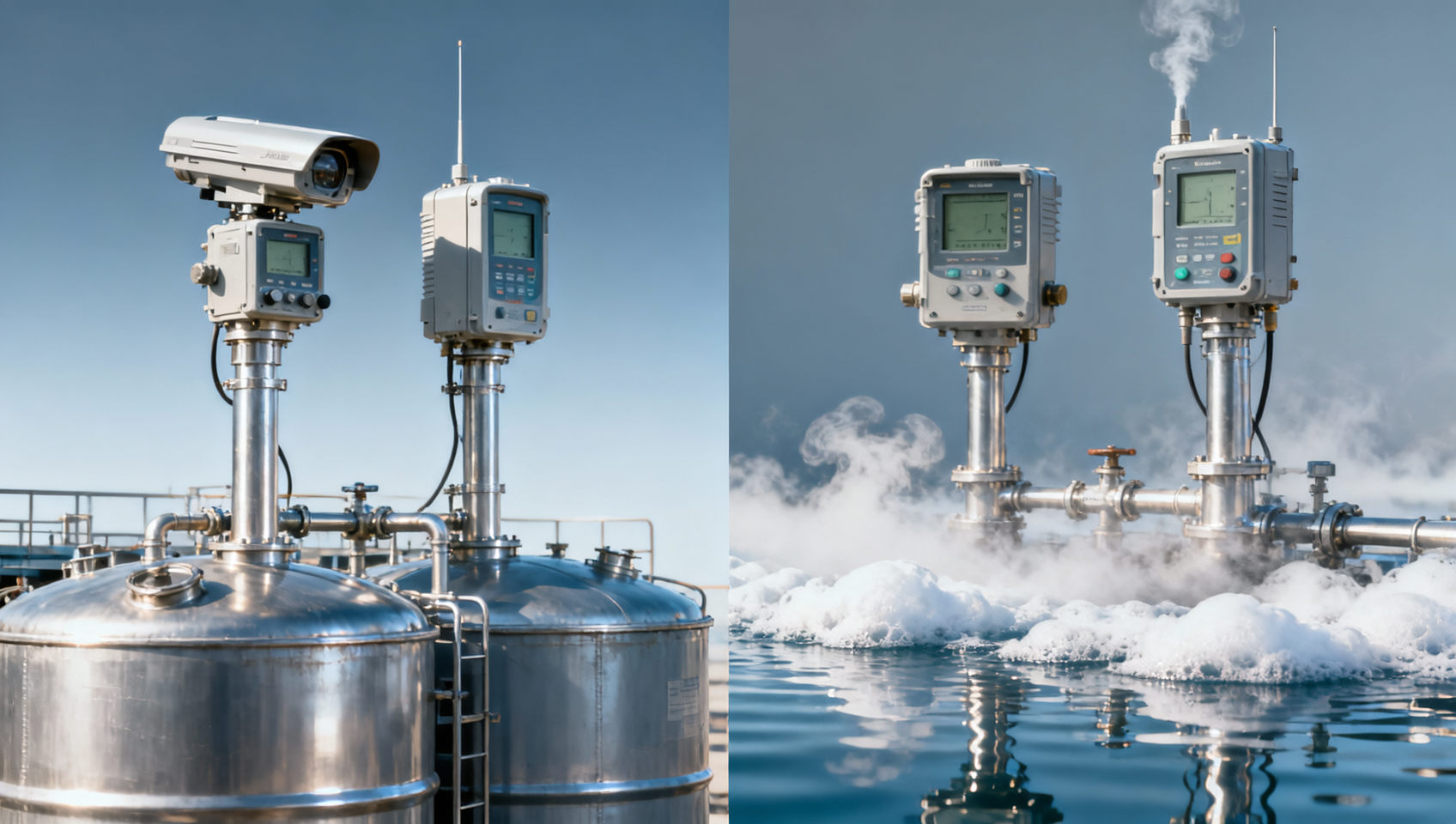
These conditions are especially important when considering non-contact measurement. Heavy vapor or condensation can reduce reliability for some technologies. Foam can absorb or scatter signals depending on sensor type and process intensity.
Dust and solids movement
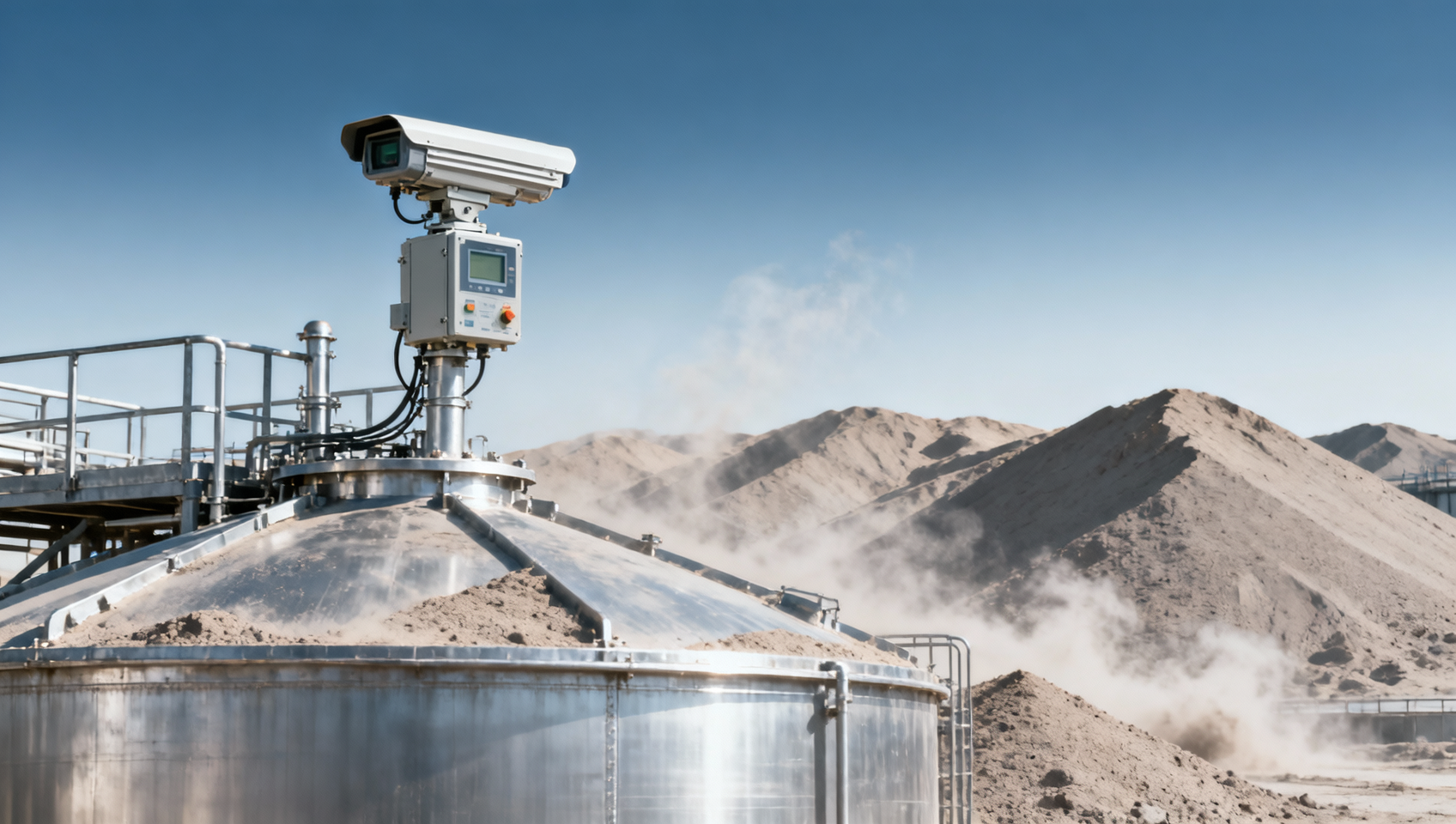
In silos, bins, and powder handling systems, dust clouds and uneven material surfaces can interfere with readings. The angle of repose and filling pattern also matter. Solids measurement often requires more attention to beam angle, aiming, and vessel geometry than liquid applications.
Agitation, turbulence, and internal obstructions
Mixers, ladders, coils, nozzles, support beams, and turbulent filling can all distort a reading if the sensor is mounted poorly. This is why installation review should be part of selection, not a later step.
Corrosive and hygienic environments
Media compatibility is essential. Wetted materials, gaskets, process connections, and enclosure ratings must match the chemical and cleaning regime. In sanitary industries, surface finish and hygienic certifications may also be required.
Accuracy, repeatability, and range: what really matters
Not every application requires ultra-high precision. One of the smartest ways to choose industrial level sensors is to align measurement performance with the operational need.
- Accuracy matters most in inventory control, batching, and regulated process applications.
- Repeatability is often more important in control loops where consistent behavior matters more than absolute level value.
- Measurement range must cover the entire usable tank height while accounting for dead zones and process connection limitations.
- Response time matters in fast-filling or pump protection applications.
Avoid overpaying for unnecessary precision, but do not under-specify where the level signal drives alarms, dosing, overflow prevention, or production decisions.
Why installation details often decide success or failure
Even a high-quality sensor can underperform if it is installed in the wrong location or without regard to process geometry. Before buying, confirm:
- Available mounting location and nozzle dimensions
- Distance from walls, inlets, mixers, and internal structures
- Required blanking distance or dead band
- Cable routing, ingress protection, and environmental exposure
- Need for stilling wells, mounting brackets, aiming accessories, or isolation valves
For operators and maintenance teams, installation accessibility is also a real cost factor. A sensor that is technically suitable but difficult to access for cleaning, verification, or replacement may create unnecessary downtime later.
Integration with transmitters, temperature devices, and control systems
In modern plants, industrial level sensors rarely work as isolated devices. They are part of a broader instrumentation and control architecture. That means output and compatibility are selection criteria, not afterthoughts.
Depending on the application, you may need support for:
- 4-20 mA analog output
- HART, Modbus, Profibus, or other digital communication protocols
- Relay outputs for alarms and pump control
- Local display and diagnostics
- Remote asset monitoring platforms
In many process environments, level data is interpreted alongside temperature and pressure data. That is why integration with a temperature transmitter, RTD PT100 sensor, or other process instruments can be important. For example, density-sensitive applications, heated tanks, and compensation logic may require coordinated measurement inputs. Buyers should confirm whether the selected level device can fit into the existing PLC, DCS, or SCADA environment without expensive customization.
Compliance, safety, and certification checks buyers should not skip
In industrial procurement, compliance is part of performance. A level sensor is not truly suitable if it cannot meet site or market requirements. Depending on geography and application, check for:
- CE, UL, or equivalent market access requirements
- ISO-aligned manufacturing and quality systems
- Hazardous area approvals where applicable
- Ingress protection ratings for water and dust exposure
- Material traceability and chemical compatibility records
- Calibration, test reports, and installation documentation
For procurement teams and enterprise decision-makers, these checks reduce both technical risk and supplier risk. They also support audit readiness and smoother project approval for EPC and industrial infrastructure projects.
How procurement teams should compare suppliers, not just products
When two industrial level sensors appear similar on paper, supplier quality often determines the better investment. Strong sourcing decisions usually consider these factors:
- Application engineering support before purchase
- Clarity and completeness of technical documentation
- Lead times and spare parts availability
- Factory testing and calibration capabilities
- Warranty terms and after-sales support
- Field-proven references in similar industries
This is especially important for strategic buyers and business leaders. The cost of choosing a poorly supported supplier can include commissioning delays, integration issues, repeated maintenance visits, and process disruption. In critical facilities, that risk often outweighs small unit-price savings.
A practical checklist for selecting the right industrial level sensor
Use this decision framework to simplify comparison and improve internal alignment across engineering, operations, and procurement:
- Define the medium and whether it is liquid, slurry, solid, or foam-forming.
- Map tank geometry, mounting constraints, and internal obstructions.
- Confirm process temperature, pressure, vapor, dust, and agitation conditions.
- Decide whether you need continuous measurement or point level detection.
- Set the real accuracy, repeatability, and response time requirements.
- Review output signals and control system integration needs.
- Verify material compatibility and required certifications.
- Compare lifecycle cost, not just purchase price.
- Evaluate supplier support, documentation, and delivery reliability.
- Request application review if conditions are complex or safety-critical.
Final decision: fit-for-purpose beats lowest price
The best way to pick industrial level sensors is to choose for process fit, operational reliability, and lifecycle value. For straightforward water or utility applications, an ultrasonic level gauge may be the right balance of simplicity and cost. For more demanding industrial duties, a radar level transmitter often delivers stronger reliability and lower long-term risk. Where process conditions vary significantly, the right answer may depend on installation design, system integration, and material compatibility as much as on sensing principle.
For researchers, the priority is understanding which technology matches the application. For operators, it is dependable performance and manageable maintenance. For buyers, it is balancing cost with risk. For business decision-makers, it is protecting uptime, compliance, and capital efficiency. A good selection process brings all four perspectives together.
In short, do not ask only, “Which level sensor is best?” Ask, “Which level sensor will remain accurate, stable, compliant, and supportable in this exact industrial environment?” That is the question that leads to the right purchase.
Expert Insights

Chief Security Architect
Dr. Thorne specializes in the intersection of structural engineering and digital resilience. He has advised three G7 governments on industrial infrastructure security.
Related Analysis
Core Sector // 01
Security & Safety
- Coriolis Mass Flow Meter Cost ExplainedAuthor :Environmental Engineering Director

- Electromagnetic Flow Meter Buying GuideAuthor :Environmental Engineering Director

- Ultrasonic Water Meters vs MechanicalAuthor :Environmental Engineering Director

- Vortex Flow Meter: When It Works BestAuthor :Environmental Engineering Director

- How to Pick Industrial Level SensorsAuthor :Environmental Engineering Director

- Radar Level Transmitter in Dusty TanksAuthor :Environmental Engineering Director

- Ultrasonic Level Gauge vs Radar LevelAuthor :Environmental Engineering Director

- Steam traps wholesale: Which type fails least in condensate return lines with air binding?Author :Environmental Engineering Director