Ultrasonic Water Meters vs Mechanical
Author
Date Published
Reading Time
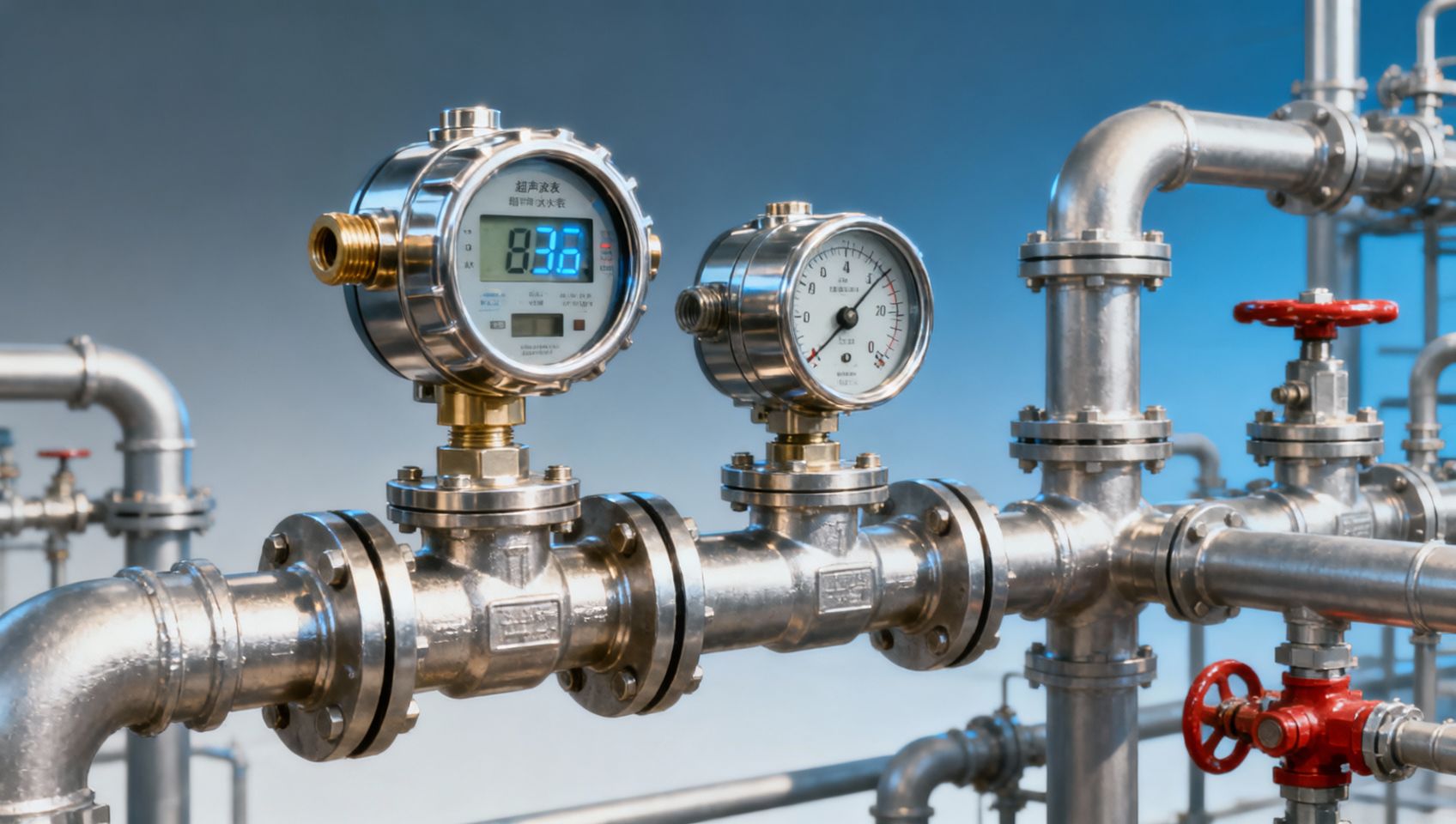
Choosing between ultrasonic water meters and mechanical meters is not just a technical preference. It directly affects billing accuracy, leak visibility, maintenance workload, and total lifecycle cost. For most modern commercial, utility, and industrial water systems, ultrasonic water meters offer better long-term performance, especially where low-flow accuracy, remote reading, and reduced maintenance matter. Mechanical meters still make sense in cost-sensitive projects, basic installations, or environments where power-free simplicity is valued. The right choice depends on water quality, metering objectives, reading infrastructure, and procurement priorities.
For information researchers, operators, buyers, and business decision-makers, the real question is not which technology is newer, but which one delivers the best operational and financial outcome in the intended application. This guide compares ultrasonic and mechanical water meters in practical terms, explains when each option is appropriate, and highlights the sourcing criteria that reduce risk in real-world projects.
Ultrasonic water meters vs mechanical meters: the short answer
If your priority is accuracy over time, low maintenance, digital connectivity, and better performance at low flow rates, ultrasonic water meters are usually the stronger choice. If your priority is lower upfront price, proven simplicity, and straightforward deployment in less demanding environments, mechanical meters remain relevant.
In many public utility, campus, commercial building, and industrial submetering projects, ultrasonic models are increasingly preferred because they have no moving parts, are less sensitive to wear, and support AMR or AMI systems more easily. Mechanical meters, however, are still widely used because they are familiar, available, and often less expensive at the point of purchase.
What matters most to buyers and operators when comparing these meter types
Most readers evaluating ultrasonic water meters vs mechanical alternatives care about five practical issues:
- Billing accuracy: Can the meter maintain reliable measurement over time, especially at low flow?
- Maintenance burden: How often will the meter need cleaning, repair, or replacement?
- Water conditions: Will suspended solids, scale, or debris reduce performance?
- Data access: Can the meter integrate with remote monitoring or smart metering systems?
- Total cost of ownership: Does a lower purchase price actually lead to lower long-term cost?
These factors matter more than headline product claims. In procurement and asset planning, the best meter is the one that matches the site conditions and business objectives with the lowest acceptable risk.
How ultrasonic water meters work and why they are gaining adoption
Ultrasonic water meters measure flow by transmitting sound waves through water and calculating flow velocity based on signal transit time or related ultrasonic principles. Because they do not rely on internal moving components such as impellers or pistons, they avoid many wear-related problems associated with traditional mechanical designs.
This delivers several practical advantages:
- Stable accuracy over a longer service life
- Better sensitivity at low flow rates
- Lower pressure loss in many designs
- Less maintenance due to the absence of moving parts
- Easier integration with digital communication modules
These features make ultrasonic meters attractive for smart water networks, district metering, commercial facilities, hospitals, campuses, and industrial systems where data quality and reliability are important.
How mechanical water meters work and where they still make sense
Mechanical water meters measure flow through physical movement inside the meter body. Common designs include velocity meters and positive displacement meters. Water flow turns an internal mechanism, and that mechanical motion is converted into a volume reading.
Mechanical meters continue to be used because they offer:
- Lower initial purchase cost in many cases
- Long market history and broad installer familiarity
- Simple operation without dependence on advanced electronics
- Practical suitability for basic metering applications
They are often appropriate in small-scale systems, standard municipal deployments, or projects where budget constraints outweigh the need for advanced data features. However, they are more vulnerable to wear, clogging, and accuracy drift when water quality is poor or long service intervals are expected.
Accuracy comparison: which meter performs better over time?
Accuracy is usually the most important issue in the ultrasonic water meters vs mechanical debate. In general, ultrasonic meters have the advantage in long-term accuracy retention. Since they do not depend on rotating or oscillating internal parts, they are less affected by mechanical wear.
This is especially important in low-flow conditions. Small leaks, overnight consumption, and low-demand usage periods may be under-registered by mechanical meters as components age or become affected by debris. Ultrasonic models tend to perform better in these ranges, which can improve revenue capture for utilities and provide better consumption visibility for facilities.
Mechanical meters can still deliver acceptable accuracy, particularly when new and properly matched to clean water service. But over time, moving parts may degrade, causing under-registration or increased maintenance needs. For procurement teams evaluating long-term performance rather than just day-one specifications, this difference is significant.
Maintenance and reliability: where lifecycle cost often outweighs purchase price
Many buyers initially focus on capex, but operators usually experience the real cost later. This is where ultrasonic meters often justify their higher upfront price.
Because ultrasonic meters have no internal moving parts, they generally require less mechanical servicing. They are less prone to internal wear and, in many installations, maintain performance with fewer interventions. That can reduce:
- Field inspection frequency
- Meter replacement cycles
- Complaint investigations linked to inconsistent readings
- Labor costs associated with servicing large installed meter populations
Mechanical meters may remain economical in simple, low-risk applications, but in distributed utility networks or facility portfolios with many metering points, maintenance labor and performance loss can erase the initial savings. Decision-makers should compare full lifecycle cost, not just unit price.
How water quality affects meter selection
Water quality can strongly influence meter performance. In systems with suspended particles, scale formation, or inconsistent water conditions, mechanical meters face greater risk because internal moving parts can be obstructed or worn faster.
Ultrasonic water meters are often more resilient in these conditions, though they are not immune to all installation and fluid-quality issues. Buyers should still confirm the manufacturer’s specifications regarding conductivity assumptions, flow profile requirements, upstream and downstream installation conditions, and environmental protection ratings.
In dirty or variable water applications, the meter choice should never be made in isolation. It should be considered alongside filtration strategy, pipe condition, expected flow range, and maintenance access.
Digital integration and smart metering readiness
One of the strongest reasons many organizations shift toward ultrasonic meters is digital capability. Modern water management increasingly depends on remote reading, consumption analytics, alarm functions, and integration into building management or utility data platforms.
Ultrasonic meters are often designed with this future in mind. Depending on the model, they may support:
- Pulse output
- M-Bus
- Modbus
- LoRaWAN
- NB-IoT
- AMI and AMR platforms
Mechanical meters can also be equipped with remote reading accessories in some cases, but ultrasonic designs are typically better aligned with advanced metering infrastructure. If the project includes leak detection, usage benchmarking, ESG reporting, or automated billing workflows, this becomes a major decision factor.
When a mechanical meter is still the better choice
Despite the advantages of ultrasonic technology, mechanical meters should not be dismissed. They may still be the better choice when:
- The budget is highly constrained
- The metering point is non-critical
- Reading is manual and digital integration is unnecessary
- Water conditions are stable and relatively clean
- The organization prefers familiar technology for simple replacement programs
In these scenarios, the lower initial cost and operational familiarity of mechanical meters can be more valuable than the added features of ultrasonic models. The key is to avoid paying for capabilities the application does not need.
When ultrasonic water meters clearly offer better value
Ultrasonic meters are often the stronger investment when:
- Accurate low-flow measurement is important
- Long service life and reduced maintenance are priorities
- Remote monitoring or smart metering is planned
- Labor costs for field service are high
- Water loss control and data visibility matter
- Commercial or industrial billing disputes must be minimized
For utilities and enterprise facility portfolios, these benefits often translate into stronger revenue protection, lower operational cost, and better planning visibility. In other words, ultrasonic meters are not just a technology upgrade; they can support a better operating model.
What procurement teams should check before selecting either type
For buyers and decision-makers, selecting between ultrasonic and mechanical meters should involve more than comparing catalog specifications. A disciplined procurement checklist should include:
- Accuracy class and certification: Verify compliance with relevant standards and regional metrology requirements.
- Flow range: Check minimum, transitional, nominal, and overload flow performance.
- Pressure loss: Review system impact, especially in larger networks.
- Environmental rating: Confirm enclosure protection, humidity tolerance, and installation suitability.
- Communication options: Match outputs and protocols to the project’s monitoring infrastructure.
- Battery life or power requirements: Especially important for ultrasonic units with communications modules.
- Maintenance expectations: Ask for realistic service interval data, not only marketing claims.
- Warranty and support: Evaluate supplier responsiveness, spare parts access, and documentation quality.
- Total cost of ownership: Include installation, reading, maintenance, replacement, and data management cost.
For industrial and infrastructure buyers, supplier credibility matters as much as product performance. Technical submittals, test reports, certification records, and application references should all be reviewed before approval.
A quick note on comparing water meters with other flow meter technologies
Some buyers evaluating ultrasonic water meters also compare them with broader flow measurement technologies such as vortex flow meter, electromagnetic flow meter, and coriolis mass flow meter solutions. These technologies serve different operating principles and application profiles.
For standard water billing and distribution measurement, ultrasonic and mechanical water meters are the more direct comparison. Electromagnetic flow meters are often used in larger pipelines and conductive fluid systems, vortex flow meters are more common in steam and gas or certain process applications, and coriolis mass flow meters are typically selected for high-precision mass flow measurement in process industries. They are not direct substitutes for every water metering installation, especially where cost, size, and utility billing requirements differ.
This distinction helps procurement teams avoid over-specifying expensive process instrumentation for applications that can be served more efficiently by the right water meter technology.
Final verdict: which should you choose?
If you need a simple answer, choose ultrasonic water meters when accuracy stability, low-flow performance, smart data access, and reduced maintenance are important. Choose mechanical water meters when the application is straightforward, budget is the primary constraint, and advanced functionality is not necessary.
The most effective decision is not based on technology preference alone. It should reflect the actual economics and operational demands of the site. For utilities, commercial operators, and industrial buyers, that usually means evaluating the meter across its full service life, not only its purchase price.
In modern water measurement, ultrasonic meters increasingly lead where performance and data matter. Mechanical meters still have a place where simplicity and low upfront cost are enough. The right choice is the one that aligns metering performance with business risk, maintenance capacity, and long-term asset strategy.
Expert Insights

Chief Security Architect
Dr. Thorne specializes in the intersection of structural engineering and digital resilience. He has advised three G7 governments on industrial infrastructure security.
Related Analysis
Core Sector // 01
Security & Safety
- Coriolis Mass Flow Meter Cost ExplainedAuthor :Environmental Engineering Director

- Electromagnetic Flow Meter Buying GuideAuthor :Environmental Engineering Director

- Ultrasonic Water Meters vs MechanicalAuthor :Environmental Engineering Director

- Vortex Flow Meter: When It Works BestAuthor :Environmental Engineering Director

- How to Pick Industrial Level SensorsAuthor :Environmental Engineering Director

- Radar Level Transmitter in Dusty TanksAuthor :Environmental Engineering Director

- Ultrasonic Level Gauge vs Radar LevelAuthor :Environmental Engineering Director

- Steam traps wholesale: Which type fails least in condensate return lines with air binding?Author :Environmental Engineering Director