Radar Level Transmitter in Dusty Tanks
Author
Date Published
Reading Time
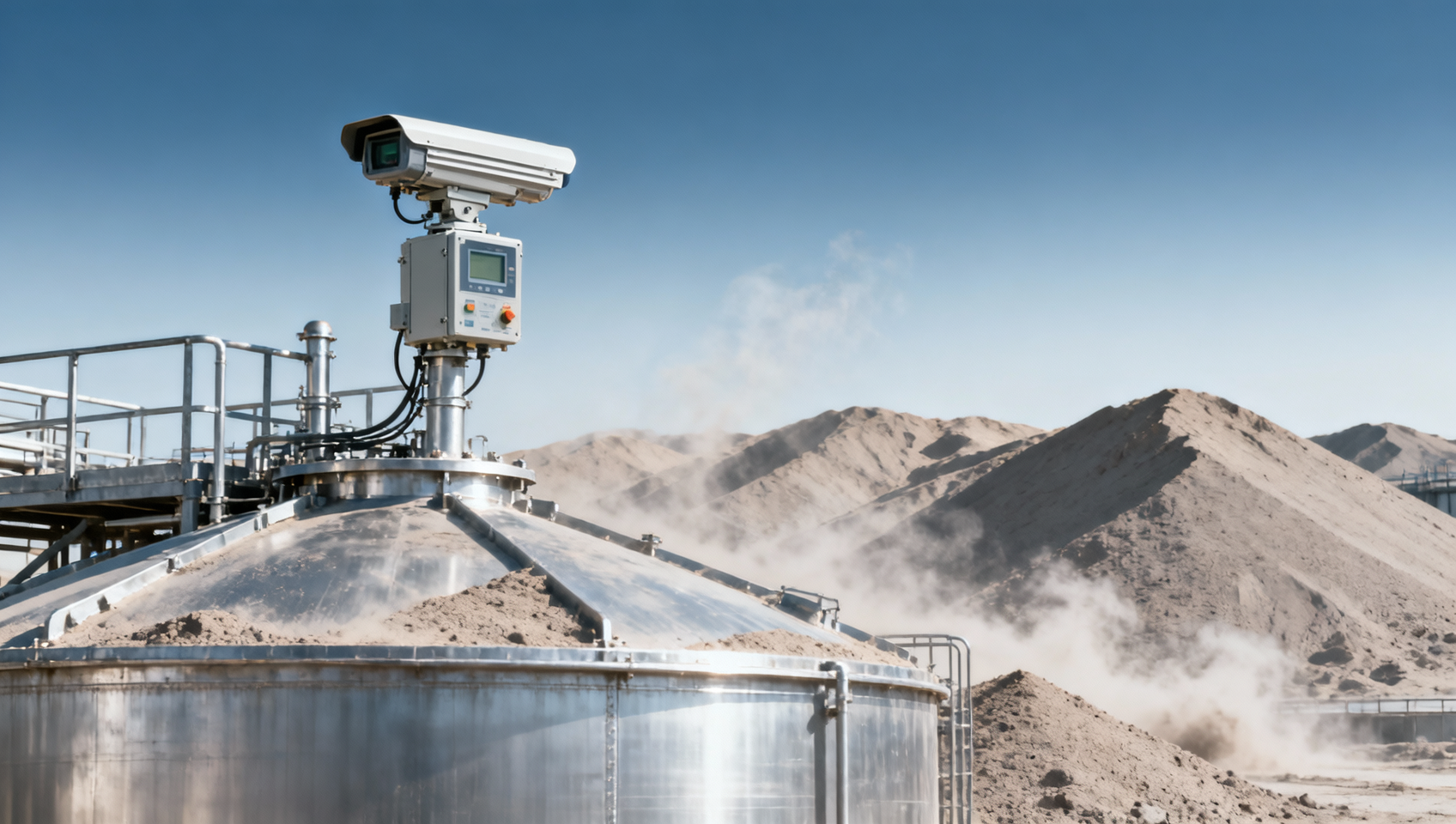
In dusty storage tanks, choosing the right radar level transmitter is essential for stable, non-contact measurement and safer operations. Compared with an ultrasonic level gauge and other industrial level sensors, radar performs more reliably in harsh, powder-filled environments. This guide helps researchers, operators, buyers, and decision-makers understand key selection factors, application challenges, and procurement priorities for accurate level monitoring.
Across cement, grain, fly ash, lime, chemicals, plastics, and mineral processing, dust is more than a housekeeping problem. It interferes with signal transmission, reduces measurement confidence, and can trigger process interruptions when inventory data is wrong by even 3% to 5%. In large silos ranging from 10 m to 40 m high, a poor level reading can affect dispatch planning, overfill prevention, and batch control.
For EPC teams and plant operators, the radar level transmitter is often selected not only for measurement performance but also for lifecycle stability. Procurement managers also need to evaluate installation complexity, communication protocol compatibility, dust resistance, and maintenance intervals. A technically correct selection can reduce manual checks, improve stock accuracy, and support safer tank operations in continuous-duty industrial environments.
Why Dusty Tanks Challenge Conventional Level Measurement
Dusty storage tanks create a difficult measurement environment because the medium is rarely calm, uniform, or clearly reflective. Fine powder, aeration, filling turbulence, and uneven bulk surfaces all influence how a sensor interprets the target level. During pneumatic conveying or top filling, dense dust clouds can persist for several minutes, especially in enclosed silos with poor venting.
An ultrasonic level gauge depends on sound waves, so dust density, temperature layering, and vapor pockets can weaken the returning echo. In contrast, radar uses electromagnetic waves and is typically less affected by airborne particles. This becomes critical in silos containing cement powder, carbon black, flour, or fly ash, where material movement and dust suspension are frequent during 24/7 operation.
Measurement errors in dusty tanks are not always obvious at first. A transmitter may appear stable during static conditions but lose reliability during filling, emptying, or material buildup on the nozzle. In practical terms, a 500 mm reading deviation in a 20 m silo can distort inventory calculations enough to disrupt purchase planning, truck loading schedules, or production sequencing.
Typical site conditions that increase measurement risk
- High dust concentration during top loading, often lasting 2 to 10 minutes per filling cycle.
- Long measuring distance, commonly 8 m to 30 m, requiring stronger and better-focused signal performance.
- Irregular bulk solids surface with angle of repose, cone formation, or sidewall buildup.
- Internal obstructions such as ladders, braces, filters, or feed pipes that may create false echoes.
These factors explain why dusty tank applications require more than a generic industrial level sensor. Selection must match the process, not just the vessel height. Antenna design, beam angle, frequency, mounting position, and signal processing are all part of the decision.
Radar versus common alternatives in dusty service
The table below summarizes why radar is usually preferred when dust, long range, and difficult bulk solids surfaces are present. It also helps buyers compare where an ultrasonic level gauge may still be acceptable in lighter-duty applications.
For most dusty tanks, radar provides the best balance of range, non-contact operation, and low maintenance. However, good results still depend on correct engineering choices rather than simply specifying “radar” as a category.
How to Select a Radar Level Transmitter for Powder and Bulk Solid Tanks
A successful selection starts with application data, not brochure claims. Buyers should collect at least 8 inputs before comparing suppliers: tank height, nozzle length, material type, bulk density, dust level, filling method, process temperature, and required output protocol. In many projects, missing just 1 or 2 of these inputs leads to avoidable commissioning delays.
Frequency and beam angle are especially important in dusty tanks. Higher-frequency radar often offers a narrower beam, which helps focus the signal away from internal obstructions. In a silo with ladders, sidewall stiffeners, or fill pipes, a narrow beam can reduce false echoes and improve stable level tracking, particularly when the measuring range exceeds 15 m.
Antenna style also matters. For powders and dusty solids, lens or horn antenna options are common because they support non-contact measurement and can be matched to tank geometry. The mounting nozzle should be checked carefully. A long nozzle can attenuate the signal or create reflections unless the transmitter is designed for that installation condition.
Core selection criteria
- Measure the maximum range with a practical safety margin of at least 10% to 20% above the actual tank height.
- Confirm process temperature and pressure range, especially if outdoor silos face seasonal swings from -20°C to 50°C.
- Verify ingress protection and housing durability for dust-heavy outdoor areas, commonly IP66 or IP67 for industrial use.
- Check whether the output is 4–20 mA, HART, Modbus, or another protocol required by the plant control system.
- Assess whether false echo mapping or advanced signal filtering is available for tanks with internal structures.
From a procurement perspective, the lowest purchase price can be misleading. If a cheaper unit needs more manual verification, more frequent cleaning, or repeated tuning after filling cycles, its total cost of ownership rises quickly over 12 to 24 months. In heavy industry, stable operation often justifies a higher-capability transmitter.
Practical parameter guide for common dusty applications
The following table provides a practical reference for common tank conditions. It is not a substitute for detailed engineering review, but it helps researchers and buyers narrow down the right radar level transmitter specification.
The key takeaway is simple: the right radar level transmitter is defined by range, dust severity, mounting conditions, and control integration. A good supplier should be able to review all four dimensions before quotation, not after delivery.
Installation, Commissioning, and Performance Optimization
Even a well-chosen transmitter can underperform if installed incorrectly. In dusty tanks, mounting position is often the difference between stable measurement and recurring false signals. As a general rule, the transmitter should avoid the direct path of the filling stream and should not be mounted too close to sidewalls, internal beams, or inspection hatches.
For top-mounted installations, site teams should review nozzle geometry, roof slope, and tank internals before cutting or reusing an opening. A short, clean nozzle is usually preferred. If the nozzle is unavoidable and extends several centimeters into the roof structure, the echo profile should be checked during startup to confirm that the transmitter sees the product surface rather than the nozzle edge.
Commissioning should not end with power-on. In most industrial projects, operators benefit from a 3-step validation process: empty or near-empty check, mid-level verification, and full-tank review during or after a filling cycle. This approach helps confirm both measurement linearity and signal stability under real dust conditions.
Recommended implementation workflow
- Survey the vessel and record all internal obstructions, nozzle dimensions, and target measurement range.
- Install the radar level transmitter away from the direct filling path whenever possible.
- Configure empty distance, full distance, and any available false echo suppression settings.
- Test under at least 2 operating states: static inventory and active filling or discharge.
- Document the final setup for maintenance teams and future replacement planning.
Performance optimization also includes communication setup and control logic. If the output feeds PLC or DCS systems, scaling errors can create an apparent level problem when the sensor is actually correct. In many facilities, 4–20 mA mapping, alarm thresholds, and empty/full calibration should be reviewed together during commissioning.
Common installation mistakes and corrective actions
The table below highlights frequent field issues that reduce radar accuracy in dusty tanks. It can be used by operators, site engineers, and EPC teams as a quick troubleshooting reference.
Most commissioning problems can be solved without replacing the transmitter. In practice, better mounting, refined configuration, and proper scaling resolve a large share of instability issues in the first 1 to 2 service visits.
Procurement Priorities, Lifecycle Cost, and Supplier Evaluation
For procurement teams, the purchase decision should balance technical suitability, delivery risk, and support capability. A radar level transmitter for dusty tanks is not a commodity item when it serves critical inventory control or safety-related overfill warning. The better question is not “Which unit is cheapest?” but “Which option provides reliable measurement over 3 to 5 years with manageable service demands?”
Lead time can also influence plant decisions. Depending on configuration and project scale, industrial instrument supply may take 2 to 6 weeks for standard items and longer for project-specific documentation packages. Buyers should clarify whether accessories, mounting adapters, cable glands, and documentation are included in the quoted scope to avoid site delays.
From an enterprise decision-making perspective, standardization brings measurable value. If a plant group uses the same communication protocol, similar housing type, and comparable configuration logic across 10 or more tanks, training time is reduced and spare management becomes easier. This matters for multi-site operations where maintenance resources are limited.
What buyers should verify before issuing a purchase order
- Application matching: confirm the supplier has reviewed powder type, tank height, dust severity, and nozzle details.
- Documentation scope: wiring diagram, installation guide, calibration instructions, and output mapping details should be clear.
- Compliance alignment: check required CE, UL, ISO-related manufacturing or site compliance expectations where applicable.
- After-sales support: define response time, remote support availability, and spare part handling for the first 12 months.
The following comparison framework helps procurement directors and technical buyers assess offers beyond headline price. It is especially useful in EPC bidding, plant modernization, and cross-border sourcing where technical misunderstandings can be costly.
When comparing offers, procurement should score technical fit, support, and documentation alongside price. In dusty tank applications, a well-supported transmitter often delivers lower lifecycle cost than a cheaper unit that requires repeated field intervention.
Maintenance, Common Questions, and Long-Term Reliability
One advantage of a non-contact radar level transmitter is reduced routine maintenance compared with contact-based or mechanical systems. Even so, dusty tanks still require periodic inspection. A practical maintenance plan may include a visual check every 3 to 6 months, confirmation of stable signal behavior after major shutdowns, and cleaning of the mounting area if excessive powder buildup is observed.
Operators should not assume every unstable reading means the transmitter has failed. In many cases, the root cause is process-related: heavy aeration, bridging, cone collapse, or temporary dust surges during fast filling. Maintenance teams should compare the signal behavior with actual tank operations before replacing hardware.
Long-term reliability depends on three practical factors: correct initial selection, disciplined installation, and accessible support. Plants that document configuration settings, tank geometry, and wiring details usually shorten troubleshooting time significantly during the first 1 to 3 years of service.
FAQ: How do users and buyers handle common radar level concerns?
How accurate is radar level measurement in dusty tanks?
Actual performance depends on tank geometry, bulk solid behavior, and setup quality. In real industrial use, the key goal is stable and repeatable measurement rather than a headline number alone. For a 15 m to 30 m bulk solids silo, repeatable readings under changing dust conditions are often more valuable than tight laboratory accuracy that cannot be maintained in service.
Can radar replace an ultrasonic level gauge in an existing silo?
In many cases, yes. Replacement is common when the existing ultrasonic level gauge suffers from dust interference, condensation, or unstable echoes. Before changeout, teams should verify mounting compatibility, power supply, signal output, and whether the existing nozzle position is suitable for radar operation.
What maintenance should be planned each year?
A practical annual plan may include 2 routine inspections, 1 configuration backup review, and a functional check after any major shutdown or process modification. If the tank sees severe buildup or sticky powder, more frequent inspection may be needed. The aim is preventive verification, not unnecessary intervention.
What documents should procurement request from suppliers?
At minimum, buyers should request a datasheet, installation instructions, wiring details, output protocol information, recommended application limits, and any available commissioning guidance. For project work, tank drawings and site conditions should be reviewed with the supplier before finalizing the order.
A radar level transmitter is often the most practical answer for dusty tanks because it combines non-contact measurement, stronger resistance to powder-filled conditions, and better suitability for long measurement distances. For researchers, operators, buyers, and enterprise decision-makers, the best outcome comes from matching the instrument to the vessel, process, and control system rather than selecting by price alone.
If your project involves cement silos, fly ash storage, grain tanks, plastic pellet hoppers, or other difficult bulk solid applications, careful specification can prevent repeated troubleshooting and improve stock visibility from day one. To evaluate the right radar level transmitter for your site, contact us for a tailored recommendation, technical review, or sourcing support aligned with your operational priorities.
Expert Insights

Chief Security Architect
Dr. Thorne specializes in the intersection of structural engineering and digital resilience. He has advised three G7 governments on industrial infrastructure security.
Related Analysis
Core Sector // 01
Security & Safety
- Coriolis Mass Flow Meter Cost ExplainedAuthor :Environmental Engineering Director

- Electromagnetic Flow Meter Buying GuideAuthor :Environmental Engineering Director

- Ultrasonic Water Meters vs MechanicalAuthor :Environmental Engineering Director

- Vortex Flow Meter: When It Works BestAuthor :Environmental Engineering Director

- How to Pick Industrial Level SensorsAuthor :Environmental Engineering Director

- Radar Level Transmitter in Dusty TanksAuthor :Environmental Engineering Director

- Ultrasonic Level Gauge vs Radar LevelAuthor :Environmental Engineering Director

- Steam traps wholesale: Which type fails least in condensate return lines with air binding?Author :Environmental Engineering Director