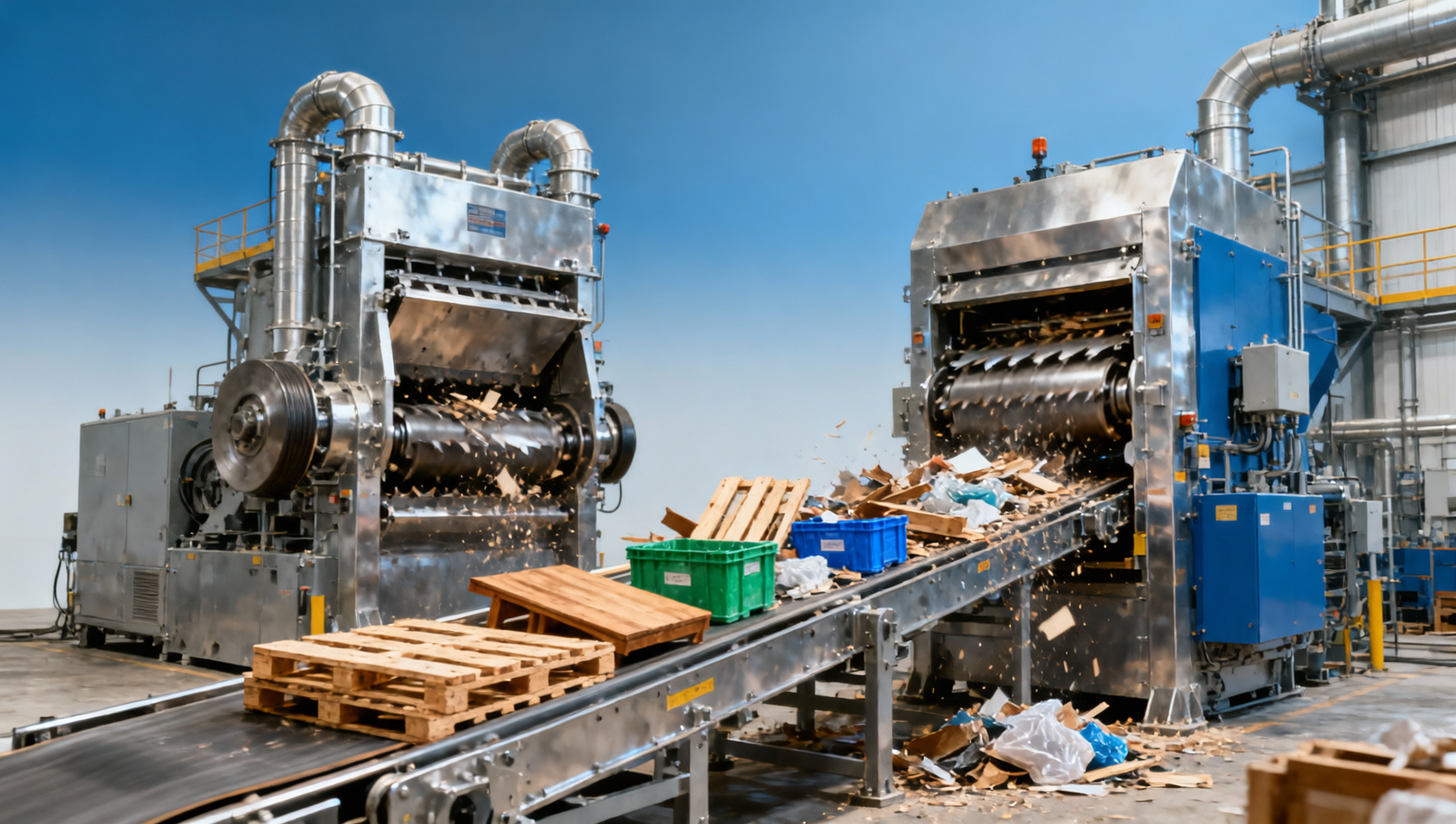
Why a solid waste shredder jams even when motor power looks enough
Author
Date Published
Reading Time
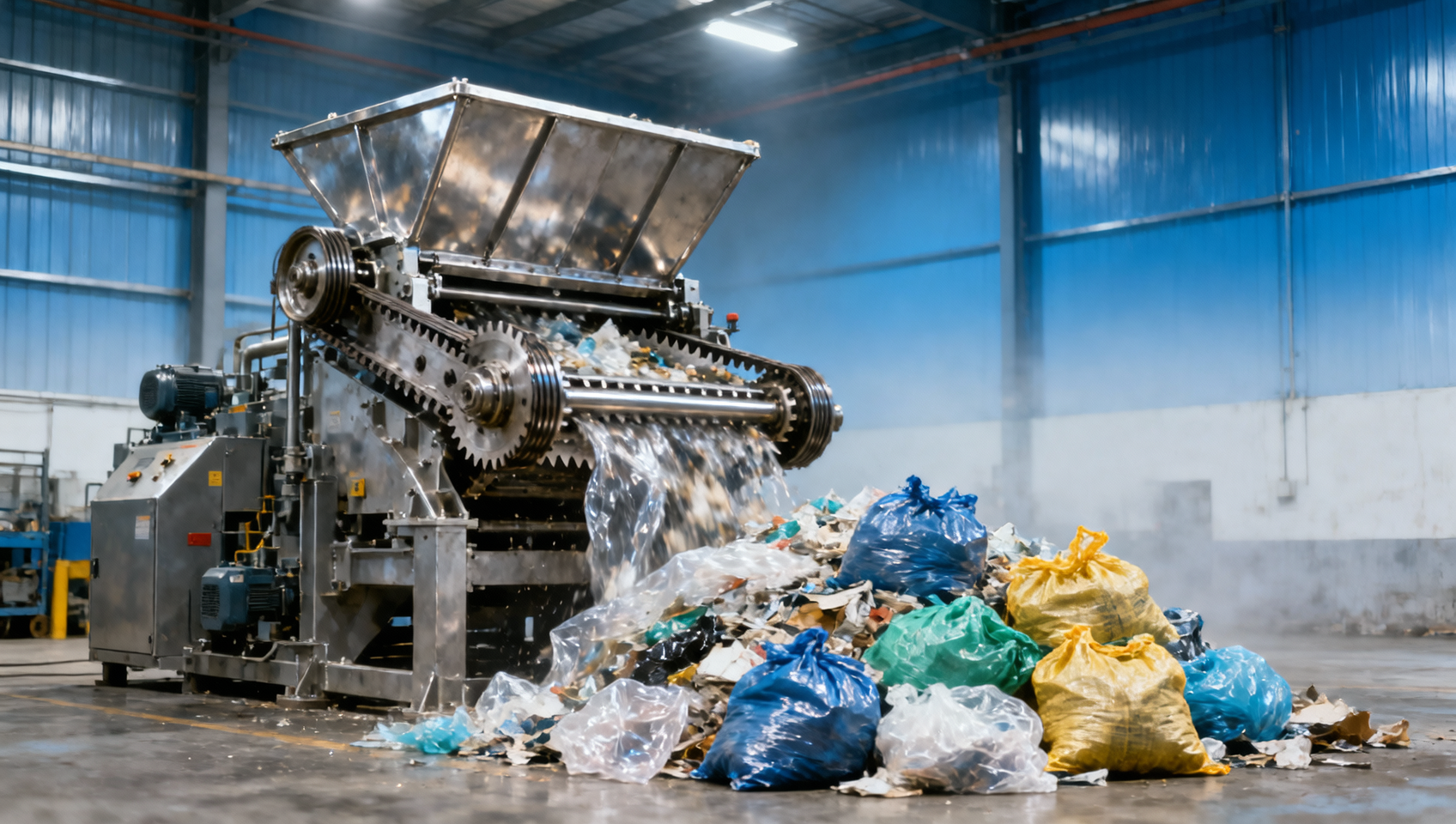
A solid waste shredder can still jam even when motor power seems sufficient, because real performance depends on feed consistency, cutter design, torque delivery, material contamination, and maintenance conditions. For buyers comparing a twin shaft shredder machine with other recycling systems like a tire recycling machine or plastic recycling granulator, understanding these hidden causes is essential to improve uptime, safety, and return on investment.
In industrial recycling and waste size-reduction lines, operators often assume that a larger motor should solve throughput problems. In practice, jamming is usually a system-level issue rather than a simple power shortage. Material behavior under load, shaft speed, cutter geometry, hopper design, and even maintenance discipline can determine whether a shredder runs smoothly for 8 to 16 hours per shift or stops repeatedly.
This matters to multiple decision-makers. Operators want fewer emergency stops. Procurement teams need to compare total lifecycle cost, not just nameplate kW. Technical researchers want to understand why two machines with similar motor ratings can perform very differently. Business leaders are focused on capacity stability, safety exposure, and payback period. A clear view of jam causes helps all four groups make better decisions.
Why motor power alone does not prevent shredder jamming
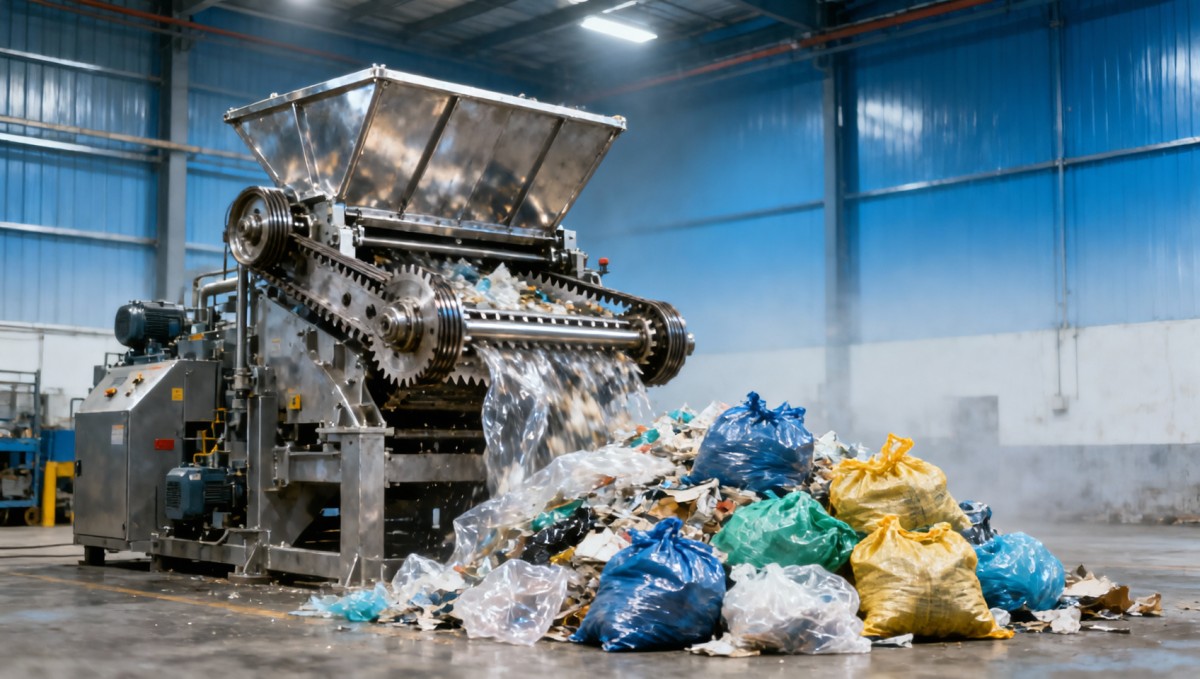
Motor power is only one part of the load chain. A shredder rated at 75 kW or 110 kW may still stall if the gearbox ratio, torque curve, and shaft speed do not match the waste stream. Shredding is a low-speed, high-torque process. If torque is not available at the right moment, the cutters may bite into material but fail to complete the cut, causing bridging or rotor lock.
Another common misunderstanding is confusing peak power with continuous usable power. During startup or sudden impact, the machine may need 1.5 to 2 times its normal running torque for a few seconds. If the drive system cannot absorb that fluctuation, the shredder jams even though the installed motor appears oversized on paper.
Feed consistency is equally important. A twin shaft shredder machine can handle mixed municipal, commercial, or industrial solid waste, but irregular feed density creates unstable loading. For example, a line running 2 tons per hour with evenly metered material may perform better than the same machine receiving 3-ton surges every few minutes from a wheel loader or conveyor dump.
The cutter and shaft arrangement also affects load distribution. Aggressive hook angles may improve initial grabbing, but they can also pull oversized items too deep into the cutting chamber. When bulky textiles, wires, films, or metal-contaminated waste wrap around shafts, power becomes secondary to mechanical entanglement.
The difference between power, torque, and cutting stability
In most solid waste shredders, the actual anti-jam capability depends on four linked factors:
- Motor output in kW or hp
- Gear reduction ratio and resulting shaft torque
- Rotor speed, often between 8 and 35 rpm for heavy-duty shredding
- Control logic such as automatic reverse cycles, usually triggered within 1 to 3 seconds of overload detection
When any one of these is mismatched, the shredder may experience repeated short jams, high current spikes, or complete stops that reduce line efficiency by 10% to 30% over a week of operation.
Typical reasons a “powerful” shredder still jams
The table below highlights why installed motor power can look sufficient while field performance remains unstable.
The key takeaway is that a shredder should be evaluated as a torque-and-material handling system, not only as an electrical drive package. Buyers comparing a tire recycling machine, a plastic recycling granulator, and a solid waste shredder should keep in mind that each technology faces different cutting mechanics and failure modes.
Material-related jam causes: contamination, moisture, and bulk density
Real-world waste streams are rarely uniform. Municipal solid waste, commercial refuse, bulky waste, and production scrap can include textiles, films, wood, rubber, cables, and occasional metal contamination in the same batch. A shredder configured for a nominal 50 to 150 mm output profile may still jam if the feed contains ropes, chains, steel brackets, or compressed bundles that do not separate easily inside the chamber.
Moisture changes cutting behavior as well. Damp organic fractions, sludge-coated packaging, or wet plastics can compact and smear instead of fracturing cleanly. In many facilities, moisture content above 20% to 30% increases carryback, causes material adhesion around cutters, and raises the likelihood of chamber packing. This is especially important where a shredder feeds downstream screening or RDF preparation systems.
Bulk density is another hidden factor. Light film or foam may bridge in the hopper, while dense compressed waste imposes sudden heavy torque demand. In both cases, the result can look like “insufficient motor power,” even though the actual issue is feed behavior before the cutters fully engage the material.
Contamination is often underestimated during procurement. A line designed around clean industrial scrap may struggle when the same machine later receives 3% to 8% metallic contaminants, concrete fragments, or thick woven bags. These contaminants accelerate wear, distort cutter clearances, and increase unplanned stoppages.
How different materials increase jam risk
Before selecting equipment or changing line settings, operations teams should map how specific waste types behave in the cutting chamber.
This comparison shows why identical motor ratings can produce very different outcomes across sites. Material conditioning, pre-sorting, and contamination control often reduce jamming more effectively than adding 10 kW to 20 kW of extra installed power.
Practical feed control checks
- Keep feed size within the designed opening range instead of relying on the shredder to break oversized bundles.
- Use metered conveyors or hydraulic pushers rather than irregular bucket dumping where possible.
- Separate long flexible items if they routinely create wrapping events more than 2 to 3 times per shift.
- Track moisture and contamination patterns by batch, supplier, or waste origin to identify repeat causes.
Mechanical design and maintenance factors that trigger repeated stoppages
A shredder may be correctly sized on paper and still jam because the cutting system is no longer working within design tolerances. Cutter wear changes the bite angle, reduces penetration efficiency, and increases slip. When cutter thickness loss, edge rounding, or spacer wear exceeds acceptable limits, the machine needs more torque to achieve the same cut, which raises jam frequency.
Clearance settings matter. Excessive cutter-to-cutter or cutter-to-counterknife gap can let resilient materials deform rather than shear. Too little clearance, on the other hand, increases friction and heat. In demanding waste applications, even a few millimeters of deviation can affect cutting stability over hundreds of cycles per hour.
Bearings, seals, and gearbox condition also influence jamming risk. A bearing beginning to fail may add rotational resistance long before a catastrophic breakdown occurs. Poor lubrication intervals, contaminated grease, or thermal stress can slowly reduce system efficiency, making overloads appear to be material issues when they are actually maintenance-related.
Control settings deserve equal attention. Reverse time, overload threshold, and restart logic should match the waste profile. If reverse time is too short, the obstruction may not clear. If it is too long, throughput drops unnecessarily. Many sites improve stability after adjusting reverse parameters from a default 1-second cycle to a tuned 2 to 4 second sequence.
Maintenance points that directly affect anti-jam performance
For operators and maintenance managers, these checks usually deliver the fastest improvement in uptime:
- Inspect cutter wear pattern every 250 to 500 operating hours, depending on waste abrasiveness.
- Verify shaft alignment and spacer integrity during planned shutdowns.
- Check hydraulic or electric drive response under load, not only at idle.
- Review auto-reverse frequency; a sharp increase over 7 to 14 days often signals emerging wear or feed change.
- Clean wrapped material from shafts before it hardens or compresses into seals and bearing areas.
If these steps are neglected, small performance losses accumulate. A machine that once ran at 90% effective availability may fall to 70% to 75%, with most losses blamed incorrectly on inadequate motor size.
Inspection priorities for procurement and technical audits
When evaluating a new or existing solid waste shredder, procurement teams should not limit factory acceptance checks to no-load testing. A stronger audit framework includes the following points.
A technical audit built around these points supports better purchasing decisions than relying solely on brochure output figures. It also helps facility managers estimate labor hours, spare parts demand, and expected downtime exposure.
How to choose the right shredder setup for stable throughput and ROI
Selection should begin with waste characterization, not motor size. A buyer evaluating a twin shaft shredder machine should define at least 4 parameters: material composition, target hourly throughput, desired output size range, and contamination level. Without those inputs, even a technically strong machine can underperform once installed.
For example, a plant processing bulky commercial waste at 1 to 3 tons per hour may prioritize aggressive intake and automatic reverse control. A facility handling cleaner plastic scrap may be better served by a plastic recycling granulator after pre-shredding. Tire applications typically demand different cutter strength, bead wire handling, and downstream separation logic than mixed solid waste applications.
Procurement teams should also evaluate cost beyond acquisition price. A lower-cost shredder that jams twice per shift may create hidden losses in labor, downstream starvation, and maintenance overtime. In many industrial environments, 15 to 30 minutes of unplanned stoppage per event is enough to reshape the total cost equation over 12 months.
A practical ROI review combines throughput stability, wear life, maintenance access, and spare parts lead time. If a critical cutter set requires 6 to 8 weeks for replacement, the financial risk may outweigh a small upfront saving on the base machine.
Selection criteria for buyers and decision-makers
- Match shaft torque and cutter profile to the actual waste mix, not the average material description.
- Ask for overload recovery logic details, including reverse sequence and control response time.
- Review maintenance intervals, spare part consumption, and cutter replacement procedure.
- Confirm whether the supplier has experience with mixed waste, wet waste, flexible materials, or metal contamination if these are part of your stream.
- Assess downstream compatibility with conveyors, separators, RDF systems, or granulation stages.
Comparing common recycling equipment by jam risk profile
Different recycling machines fail for different reasons. The table below helps buyers compare technology fit more realistically.
This comparison reinforces a central point: the right machine is the one aligned with the material, feed pattern, and downstream process. A larger motor cannot compensate for a poor technology match.
FAQ: practical answers for operators, buyers, and project teams
How can operators tell whether a jam is caused by material or maintenance?
If jams increase suddenly after a change in waste source, moisture, or feed size, the cause is often material-related. If jamming rises gradually over 2 to 6 weeks while feed remains similar, check cutter wear, bearing drag, and control settings first. Current trend logs, reverse frequency, and visual inspection together provide the most reliable diagnosis.
What overload protection features are most useful in a solid waste shredder?
Useful features include automatic reverse on overload, adjustable torque threshold, current monitoring, emergency stop access, and restart sequencing that prevents repeated shock loading. For demanding lines, event logging that records overload frequency over each 8-hour or 12-hour shift can help maintenance teams act before a minor jam pattern becomes a major downtime issue.
Should buyers always choose higher installed power for future expansion?
Not always. Future flexibility matters, but too much focus on motor size can hide more important factors such as cutter design, chamber geometry, drive control, and spare parts support. A balanced specification usually performs better than simply oversizing the motor by 20% or 30% without reviewing the rest of the system.
What is a reasonable maintenance planning approach to reduce jamming?
A practical approach is to combine daily visual checks, weekly cleaning review, and a deeper mechanical inspection every 250 to 500 operating hours. Sites processing abrasive or contaminated waste may need shorter intervals. The goal is to detect clearance change, wrapping buildup, and early drive resistance before throughput drops sharply.
A solid waste shredder jams for many reasons that have little to do with headline motor power. In most cases, the decisive factors are torque delivery, feed consistency, cutter condition, material contamination, moisture, and control logic. For information researchers, operators, procurement teams, and business leaders, the most reliable path is to evaluate the shredder as part of the full recycling system rather than as a standalone motor-driven machine.
If you are comparing a twin shaft shredder machine with a tire recycling machine or plastic recycling granulator, focus on actual material behavior, maintenance reality, and lifecycle performance. For project planning, retrofit review, or sourcing support, contact us to discuss your waste profile, operating targets, and equipment selection criteria, and get a more tailored recycling solution.
Technical Specifications
- How to choose an organic fertilizer machine for wet raw materialsAuthor :Environmental Engineering Director
- What affects output stability in a hydraulic briquetting pressAuthor :Environmental Engineering Director
- Waste paper baler wholesale prices vary for reasons beyond tonnageAuthor :Environmental Engineering Director
Expert Insights

Chief Security Architect
Dr. Thorne specializes in the intersection of structural engineering and digital resilience. He has advised three G7 governments on industrial infrastructure security.
Related Analysis
- Apr 16, 2026How to choose an organic fertilizer machine for wet raw materialsAuthor :Environmental Engineering Director
- Apr 16, 2026What affects output stability in a hydraulic briquetting pressAuthor :Environmental Engineering Director
- Apr 16, 2026Waste paper baler wholesale prices vary for reasons beyond tonnageAuthor :Environmental Engineering Director
Core Sector // 01
Security & Safety
- How to choose an organic fertilizer machine for wet raw materialsAuthor :Environmental Engineering Director

- What affects output stability in a hydraulic briquetting pressAuthor :Environmental Engineering Director

- Waste paper baler wholesale prices vary for reasons beyond tonnageAuthor :Environmental Engineering Director

- When a scrap metal baler becomes too small for daily loading needsAuthor :Environmental Engineering Director

- Tire recycling machine layouts that reduce dust and wire lossAuthor :Environmental Engineering Director

- PET bottle washing line problems that lower flake purityAuthor :Environmental Engineering Director

- Plastic recycling granulator selection starts with feedstock qualityAuthor :Environmental Engineering Director

- Twin shaft shredder machine or single shaft for bulky wasteAuthor :Environmental Engineering Director