Plastic recycling granulator selection starts with feedstock quality
Author
Date Published
Reading Time
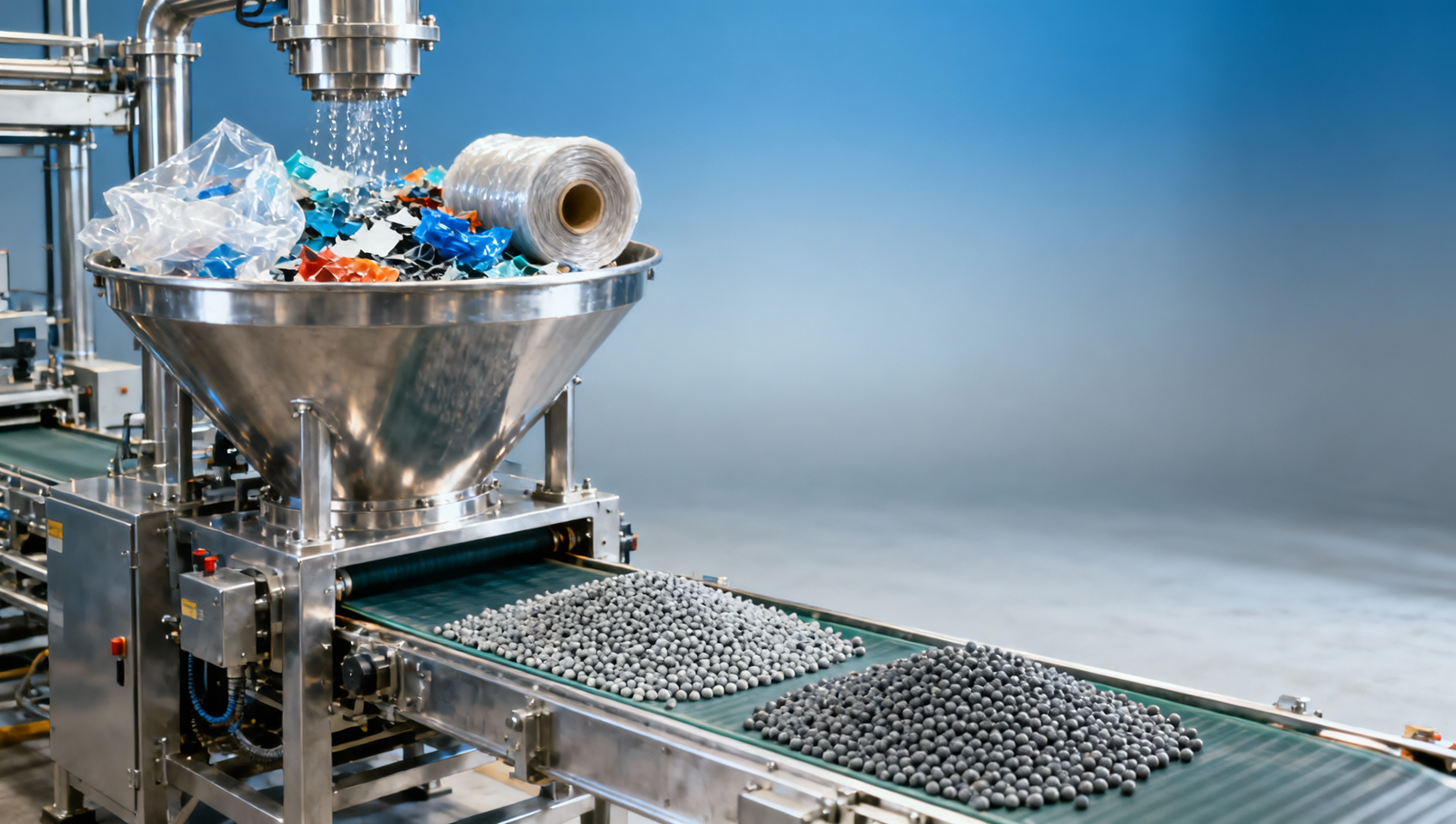
Choosing the right plastic recycling granulator begins long before the machine starts running—it starts with feedstock quality. For researchers, operators, buyers, and decision-makers, understanding how contamination, moisture, size consistency, and material type affect output is essential to improving efficiency, pellet quality, and ROI. This guide explains why feedstock assessment is the first step toward smarter granulator selection.
In industrial recycling lines, a granulator is not an isolated machine. Its real performance depends on what enters the hopper, how stable the input stream remains over an 8-hour to 24-hour production cycle, and whether upstream sorting, washing, and drying are aligned with the final throughput target. A machine sized for 500 kg/h on clean rigid regrind may underperform badly when fed wet film, mixed polymers, or heavily contaminated post-consumer waste.
For B2B buyers and plant managers, the commercial implication is clear: granulator selection should begin with a feedstock audit, not with motor power alone. This approach reduces oversizing, minimizes knife wear, improves particle consistency, and supports more stable downstream extrusion, washing, or pelletizing. In practice, a disciplined feedstock-first method often shortens commissioning time and lowers avoidable maintenance events within the first 3 to 6 months.
Why feedstock quality defines granulator performance
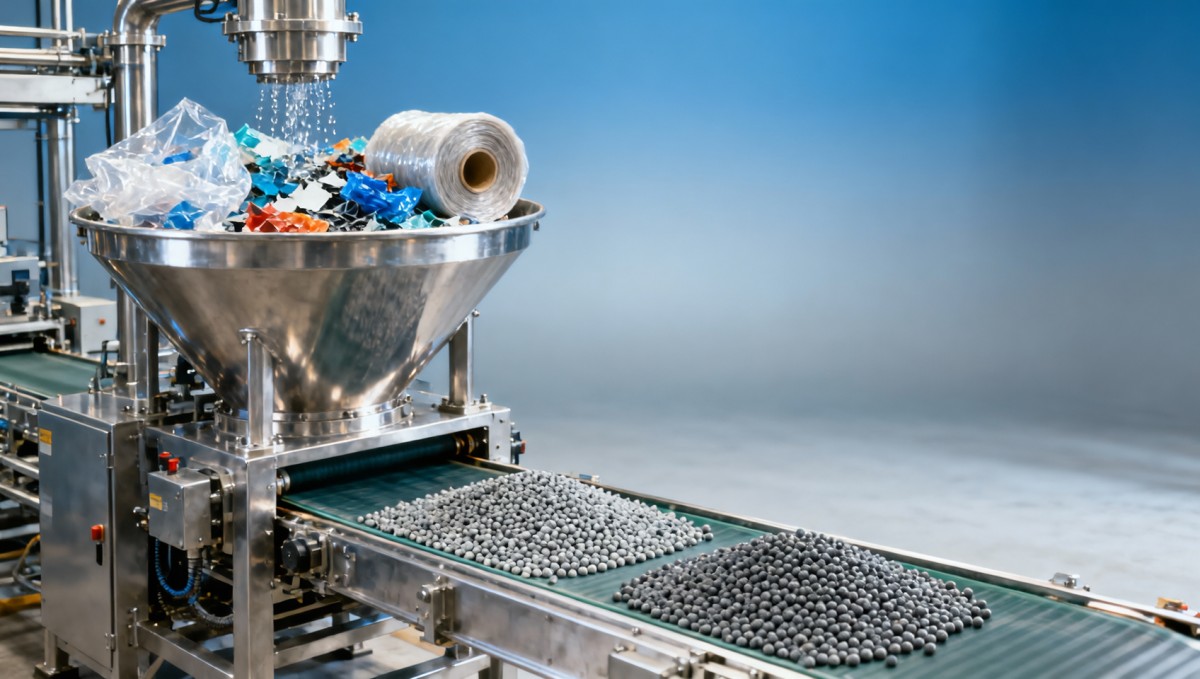
Feedstock quality affects nearly every core granulator outcome: throughput, energy use, flake size uniformity, dust generation, and machine wear. In mixed industrial environments, the same granulator can deliver sharply different results depending on whether the material stream is composed of clean HDPE sprues, printed PP packaging, PET bottle scrap, or multilayer film. Even a contamination shift of 2% to 5% can change knife loading and cleaning frequency.
Moisture is another decisive factor. If incoming plastic carries surface water above the practical tolerance of the cutting chamber, operators may see material slippage, bridging, inconsistent cutting, and downstream drying inefficiency. For many applications, keeping moisture below 1% to 3% before granulation is a useful operational benchmark, although the acceptable range depends on polymer type and process layout.
Particle geometry and bulk density also matter. Lightweight film and fiber behave differently from dense purgings or injection runners. Low-density materials often require forced feeding or specialized rotor design, while rigid chunks may demand higher torque and wider cutting clearances. Selecting a machine without measuring feed form typically leads to unstable loading and lower real-world throughput than the supplier’s nominal rating.
Material composition must be checked at the polymer level as well. A stream marketed internally as “mixed plastic” may include PE, PP, PET, ABS, PVC, paper labels, aluminum traces, or fine sand. Some mixtures are manageable with robust wear parts and pre-cleaning. Others create thermal sensitivity, corrosion risk, or product-quality loss that a standard granulator alone cannot solve.
The four feedstock variables that should be measured first
- Contamination level: estimate dirt, metal, paper, organics, and fines as a percentage by weight.
- Moisture range: record both average and peak moisture over at least 2 to 3 production batches.
- Size and shape consistency: note whether material arrives as film, lumps, flakes, runners, or shredded scrap.
- Polymer mix: identify the dominant resin and the proportion of incompatible or heat-sensitive materials.
The table below shows how common feedstock conditions influence granulator choice in practical B2B operations.
The key lesson is that feedstock quality is not a minor preprocessing detail. It is the baseline engineering input for selecting cutting geometry, motor sizing, feed system configuration, and maintenance planning. Plants that document these variables early are far more likely to match expected and actual throughput within an acceptable operating range.
How to assess feedstock before comparing granulator models
A sound granulator procurement process starts with a short but structured feedstock assessment. For most facilities, the most practical window is 7 to 14 days of sampling across multiple shifts, suppliers, or collection routes. This prevents decisions based on an unusually clean or unusually poor batch. A single sample can be misleading; a batch profile is more useful than a snapshot.
Operators should document average bulk density, oversized pieces, visible contamination, and moisture behavior after storage. Buyers should also check how feedstock changes seasonally. In some regions, outdoor-stored scrap absorbs moisture during wet months, while summer heat increases odor and residue migration. These variations directly affect machine loading, knife life, and housekeeping requirements.
Decision-makers often focus first on rated capacity, but capacity claims are only meaningful when linked to material conditions. A supplier quote stating 300 kg/h, 800 kg/h, or 1,200 kg/h should always be read together with resin type, feed dimensions, contamination range, and target output size. Without that context, side-by-side equipment comparisons are unreliable.
A practical 5-step feedstock audit
- Collect representative samples from at least 3 operating periods or supply batches.
- Separate contaminants by type: metal, paper, labels, fines, and non-target polymers.
- Measure moisture before and after any washing or drying stage.
- Record input size distribution, including maximum piece dimensions.
- Define the downstream requirement: flake size, pellet quality, or direct reuse target.
The following matrix can help procurement teams translate feedstock findings into machine-selection criteria.
This kind of pre-selection discipline helps engineering, operations, and sourcing teams speak the same language. It also makes supplier discussions more productive, because machine recommendations can be tied to measurable feedstock conditions rather than generic brochure claims.
Common mistake to avoid
One of the most costly mistakes is evaluating only “average” material quality. Granulators must survive peaks: wetter batches, dirtier batches, and occasional oversized pieces. Designing around the mean while ignoring the top 10% of difficult input conditions often leads to stoppages, higher noise, and more frequent blade adjustments.
Matching granulator configuration to material type and line objectives
Once feedstock is characterized, the next step is matching machine configuration to both the material and the production goal. A plant processing in-house industrial scrap for direct reuse may prioritize uniform granule size and low dust. A washing line handling post-consumer packaging may prioritize ruggedness, easy maintenance access, and tolerance for moderate contamination. The right granulator is therefore a process-fit decision, not simply a capacity purchase.
Rotor design is central to this fit. Open rotors are often preferred for flexible films and hollow materials because they improve draw-in behavior. Closed or heavy-duty rotor structures may be more appropriate for thick rigid parts or dense lumps. Screen size also matters: smaller screens can improve particle uniformity but may lower throughput and increase energy demand, especially when moisture or contamination rises.
Knife arrangement, knife material, and clearance settings must be considered as a system. In operations running 16 to 24 hours per day, easier knife access and repeatable adjustment can save significant labor over a quarter. If abrasive contamination is common, wear resistance may justify higher initial spend because blade replacement intervals can shorten sharply under poor feed conditions.
Feed systems are equally important. Lightweight film and fiber may require belt feeding, nip rolls, or screw-assisted intake. Rigid sprues or molded rejects may feed well by gravity. When the line objective includes stable downstream extrusion, a more controlled feed path can be more valuable than marginally higher nameplate capacity.
Configuration priorities by application
- Rigid in-house scrap: focus on uniform cut, low dust, easy blade servicing, and predictable output.
- Washed film recycling: prioritize anti-wrap features, stable feeding, and moisture-tolerant operation.
- Mixed post-consumer plastics: emphasize contamination tolerance, chamber accessibility, and wear-part planning.
- Heavy purgings and lumps: prioritize torque, robust rotor construction, and safe loading dimensions.
A useful way to compare options is to evaluate how different configurations serve different feedstock realities and line goals.
For many industrial buyers, the most reliable investment is not the most powerful machine on paper, but the one whose rotor, feed method, and maintenance layout are aligned with the worst credible feedstock condition expected on site.
Procurement priorities: from technical fit to lifecycle cost
Procurement teams should evaluate granulators using total operating fit rather than purchase price alone. A lower-cost machine can become expensive if blade replacement is frequent, chamber cleaning takes 45 minutes instead of 15, or actual throughput falls 20% below line targets. For industrial operations, these differences compound quickly over 12 months.
A strong sourcing brief should include at least six decision points: feedstock description, hourly throughput target, target particle size, contamination profile, maintenance expectations, and integration requirements with conveyors, washing systems, or pelletizers. This level of detail allows suppliers to respond with technically comparable proposals instead of broad estimates.
Serviceability deserves special attention. Plants operating in remote industrial zones or running multi-shift production should ask about knife lead times, screen replacement, bearing access, and commissioning support. A machine that requires specialized parts with an 8 to 10 week lead time may create unacceptable risk, especially where spare-unit redundancy is limited.
Compliance and safety should also be part of the buying decision. In heavy-industry procurement environments, buyers may need documented alignment with CE, UL-related electrical expectations where applicable, guarding design, emergency stop logic, and safe access for cleaning and blade changes. These factors influence both plant risk and approval speed.
Key procurement questions to ask suppliers
- What feedstock assumptions were used for the quoted throughput?
- How does the machine perform when contamination rises or moisture increases?
- What is the recommended knife inspection interval under similar applications?
- How long do common spare parts typically take to deliver?
- What pre-installation utilities and safety clearances are required on site?
The table below summarizes a practical purchasing framework for industrial teams comparing multiple granulator offers.
When these factors are documented in the RFQ stage, purchasing moves from reactive price comparison to controlled technical sourcing. That is especially important for EPC contractors, plant upgrades, and multi-line facilities where granulator downtime can affect several downstream assets at once.
Implementation risks, operator realities, and common selection mistakes
Even well-chosen granulators can underperform if implementation ignores operator realities. Installation layout, feed presentation, operator training, and preventive maintenance scheduling all shape the outcome. In many plants, the first 30 to 90 days determine whether the machine reaches stable production or becomes a recurring bottleneck.
One frequent mistake is underestimating upstream inconsistency. If a washing line occasionally sends material with excess water, or a sorting line allows metal traces into the stream, the granulator absorbs the problem first. This can show up as blade damage, abnormal vibration, or rapid screen wear. The machine is blamed, but the root cause is often poor feed control.
Another mistake is choosing a configuration that is technically capable but operationally hard to maintain. If chamber cleaning requires extended lockout, difficult access, or extra labor at every shift change, planned maintenance may be deferred. Over time, this increases dust, heat buildup, and unscheduled stoppages. Ease of maintenance is therefore not a convenience feature; it is a production safeguard.
Training matters as well. Operators should know the acceptable feed range, the warning signs of overload, and the basic adjustment points for safe operation. A short training protocol covering startup inspection, noise/vibration checks, knife condition review, and cleaning intervals can reduce avoidable faults in the first quarter of operation.
Four mistakes that reduce ROI
- Buying on motor size alone without defining actual feedstock variability.
- Ignoring moisture spikes and contamination peaks during equipment sizing.
- Overlooking spare-part availability and maintenance access during procurement.
- Expecting one granulator setup to handle all plastics equally well without upstream control.
FAQ: what industrial buyers and operators ask most often
How much does feedstock contamination affect granulator output?
Even moderate contamination can reduce stable throughput, increase knife wear, and worsen output consistency. The exact effect varies by material and machine design, but contamination is one of the fastest ways to erode expected capacity and maintenance intervals.
Should wet plastic always be dried before granulation?
Not always to the same level, but moisture must be controlled. For many lines, keeping the input in a manageable range such as below 1% to 3% improves feed stability and reduces chamber buildup. The correct target depends on polymer type and process sequence.
What is the most important number to compare between suppliers?
The most important figure is not headline throughput alone, but throughput under defined feedstock conditions. Ask every supplier to state resin type, input size, contamination level, and moisture basis behind the quoted kg/h.
How long should a feedstock evaluation take before purchase?
In many industrial settings, 7 to 14 days of representative sampling is enough to identify major variability. For more complex mixed-waste operations, a longer review may be justified to capture seasonal or supplier-related shifts.
Plastic recycling granulator selection starts with feedstock quality because that is where process risk, cost control, and output value are defined. When contamination, moisture, material type, and size consistency are measured early, engineering teams can specify the right rotor, feed system, screen strategy, and maintenance plan with far greater confidence.
For researchers, operators, buyers, and business leaders, this feedstock-first approach improves technical alignment and commercial clarity at the same time. It helps reduce mismatched equipment purchases, supports more reliable output, and strengthens ROI across the full recycling line. If you are evaluating granulator options for industrial plastic recovery, contact Global Industrial Core to discuss your material profile, compare sourcing pathways, and get a tailored selection framework for your operation.
Technical Specifications
- How to choose an organic fertilizer machine for wet raw materialsAuthor :Environmental Engineering Director
- What affects output stability in a hydraulic briquetting pressAuthor :Environmental Engineering Director
- Waste paper baler wholesale prices vary for reasons beyond tonnageAuthor :Environmental Engineering Director
Expert Insights

Chief Security Architect
Dr. Thorne specializes in the intersection of structural engineering and digital resilience. He has advised three G7 governments on industrial infrastructure security.
Related Analysis
- Apr 16, 2026How to choose an organic fertilizer machine for wet raw materialsAuthor :Environmental Engineering Director
- Apr 16, 2026What affects output stability in a hydraulic briquetting pressAuthor :Environmental Engineering Director
- Apr 16, 2026Waste paper baler wholesale prices vary for reasons beyond tonnageAuthor :Environmental Engineering Director
Core Sector // 01
Security & Safety
- How to choose an organic fertilizer machine for wet raw materialsAuthor :Environmental Engineering Director

- What affects output stability in a hydraulic briquetting pressAuthor :Environmental Engineering Director

- Waste paper baler wholesale prices vary for reasons beyond tonnageAuthor :Environmental Engineering Director

- When a scrap metal baler becomes too small for daily loading needsAuthor :Environmental Engineering Director

- Tire recycling machine layouts that reduce dust and wire lossAuthor :Environmental Engineering Director

- PET bottle washing line problems that lower flake purityAuthor :Environmental Engineering Director

- Plastic recycling granulator selection starts with feedstock qualityAuthor :Environmental Engineering Director

- Twin shaft shredder machine or single shaft for bulky wasteAuthor :Environmental Engineering Director