When a scrap metal baler becomes too small for daily loading needs
Author
Date Published
Reading Time
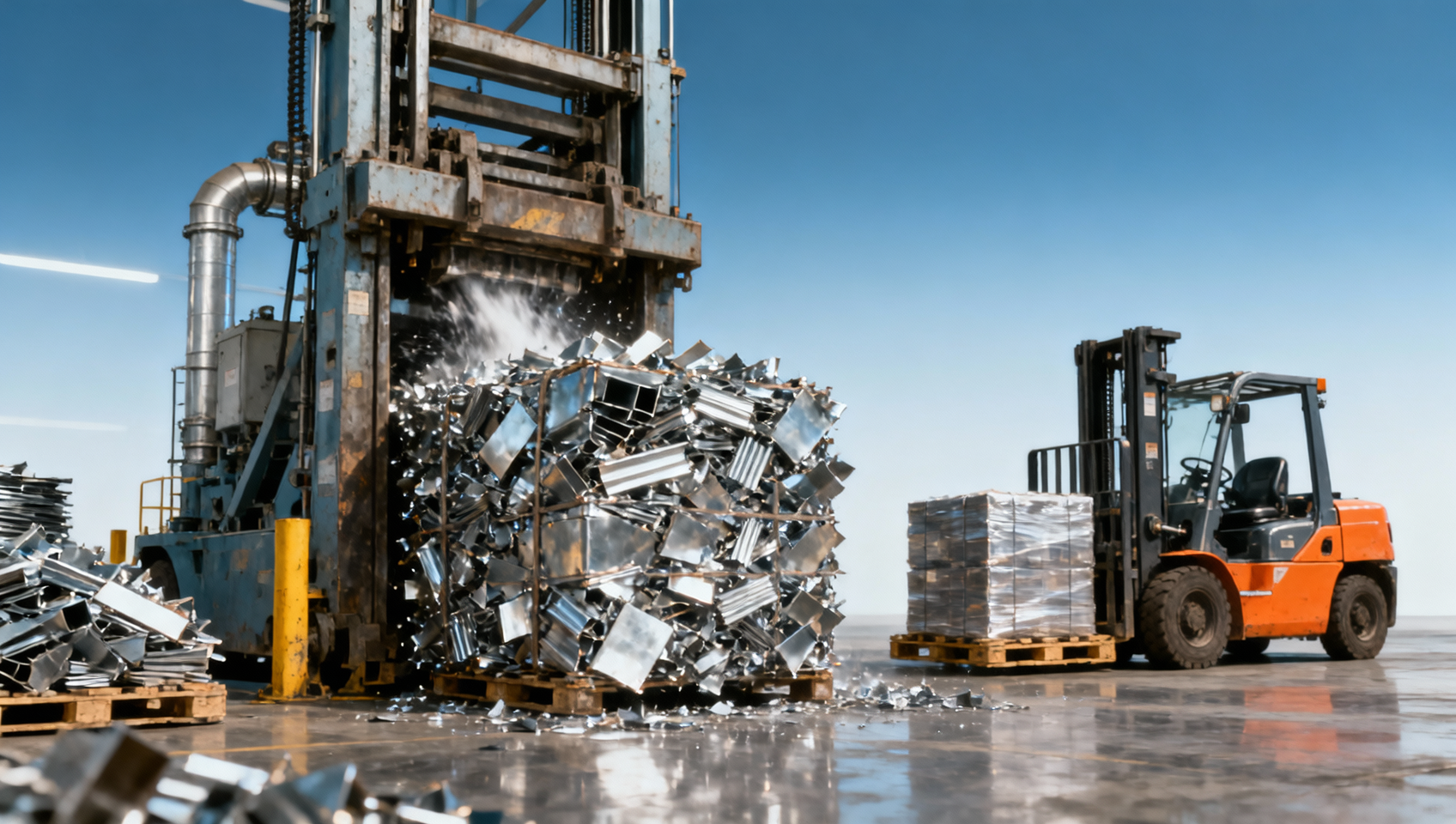
When a scrap metal baler can no longer keep up with daily loading volume, bottlenecks spread quickly across labor, storage, transport, and operating cost. For operators, buyers, and plant decision-makers comparing a scrap metal baler with a hydraulic briquetting press, twin shaft shredder machine, or solid waste shredder, knowing when to upgrade is critical to maintaining throughput, safety, and long-term recycling efficiency.
In many recycling yards, fabrication plants, auto dismantling sites, and metal processing facilities, the first warning sign is not machine failure. It is the growing gap between incoming scrap volume and the baler’s actual hourly output. Once that gap persists for 2 to 4 weeks, the cost impact is usually visible in overtime labor, trailer delays, floor congestion, and higher handling cycles.
This matters to more than operators on the floor. Procurement teams must judge whether they need a larger scrap metal baler, a hydraulic briquetting press for chips and turnings, or a twin shaft shredder machine to pre-condition bulky feed. Senior managers, meanwhile, need to weigh capital expenditure against throughput stability, safety compliance, and logistics efficiency over a 3 to 7 year planning horizon.
The right upgrade decision is rarely based on bale size alone. It depends on material mix, moisture, bulk density, labor availability, transport cost, maintenance windows, and the downstream buyer’s preferred package format. A well-timed equipment change can reduce double handling, improve outbound load density, and create a more predictable recycling operation.
Operational signs that your scrap metal baler is undersized
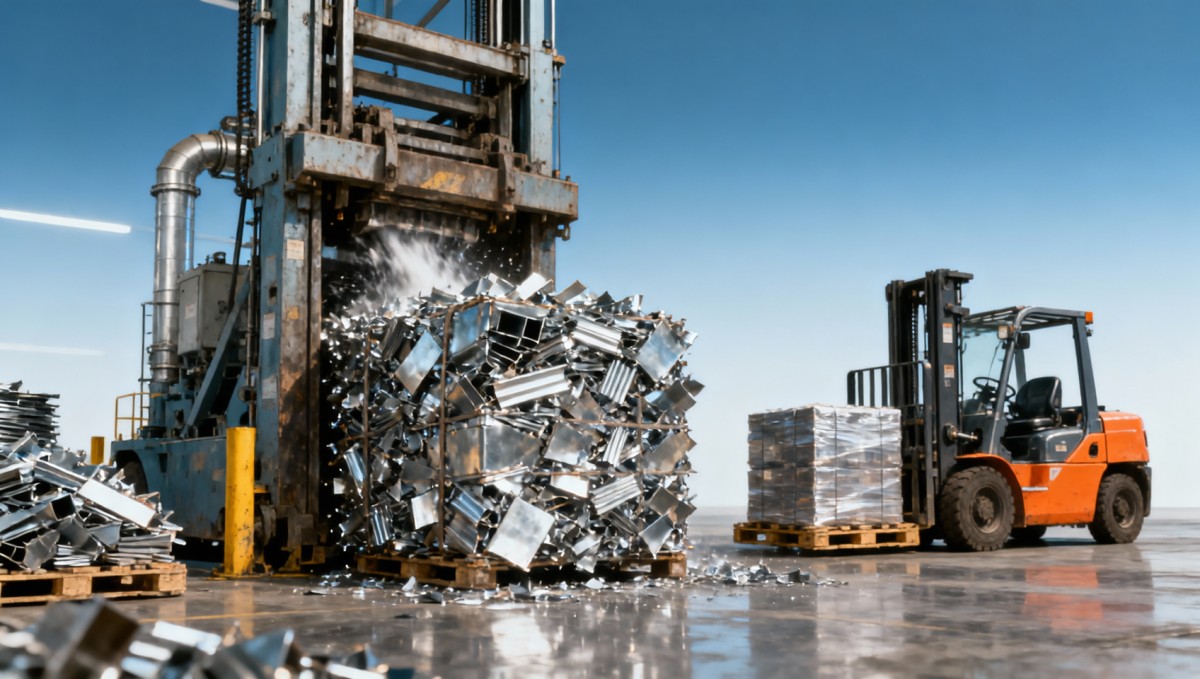
A scrap metal baler becomes too small long before it stops working. In most facilities, the clearest indicator is that daily feed volume consistently exceeds the machine’s practical throughput, not its nameplate capacity. For example, if incoming loose scrap averages 18 to 25 tons per shift but the baler can only process 10 to 14 tons under real conditions, backlog becomes structural rather than occasional.
Another warning sign is rising touch frequency. If forklifts or loaders have to move the same scrap 2 or 3 times before baling, the baler is no longer acting as a flow stabilizer. Instead, it becomes a choke point. This often leads to blocked aisles, reduced housekeeping quality, and a higher risk of mixed-material contamination.
Cycle time also tells an important story. If a machine advertised for 45 to 60 second cycles is regularly operating at 80 to 120 seconds because of overfeeding, irregular scrap geometry, or frequent manual adjustment, effective hourly output may drop by 25% to 40%. That loss is especially costly when yards run 10 to 12 hour loading windows.
Maintenance behavior changes as equipment becomes undersized for the duty. Operators may push the machine harder, accept higher contamination, or delay wear-part replacement to keep production moving. The result is often more hydraulic heat, more hose fatigue, and more unplanned downtime. Even 2 unscheduled stoppages per week can disrupt truck dispatch and labor planning.
Common floor-level symptoms
- Loose scrap remains on the floor at shift end more than 3 days per week.
- Operators queue loaders or wait for bale ejection to clear the feed area.
- Outbound trailers leave below target payload because bale production lags behind dispatch timing.
- Manual sorting increases because the baler cannot absorb mixed or oversized feed consistently.
These symptoms may look like labor issues, but they are often capacity issues in disguise. If the operation has grown by 15% to 30% in monthly scrap intake while the baler remains unchanged, the equipment may simply no longer match the process. At that stage, delaying review usually raises total cost more than scheduled investment would.
A quick diagnosis framework
Before planning an upgrade, compare actual throughput, queue time, and floor inventory against a rolling 30-day average. A practical rule used in many facilities is that if backlog exceeds 1 day of normal intake on more than 20% of operating days, the system deserves immediate review.
The table shows that capacity shortfall is measurable. Once multiple indicators move into the warning range, the issue is no longer isolated to the baler. It affects labor scheduling, yard layout, truck utilization, and customer service reliability.
How undersized baling capacity affects cost, safety, and shipping efficiency
The direct cost of an undersized scrap metal baler is easy to see: more labor hours and slower loading. The larger cost is hidden in handling duplication and transport inefficiency. If material waits too long for compaction, loaders spend more time re-positioning piles, and trailer fill plans become less precise. In some facilities, a 10% drop in bale density can translate into an additional truck movement over a weekly dispatch cycle.
Safety pressure also rises when the baler cannot keep pace. Overflowing feed zones, temporary scrap piles, and narrow forklift paths increase the chance of tire damage, visibility loss, and unstable material stacks. These are not only housekeeping concerns. They influence daily operating discipline, especially where mixed ferrous and non-ferrous streams are processed in the same yard.
From a procurement perspective, small equipment often appears economical because the purchase price is lower. But total cost of ownership changes if the machine forces an extra operator, increases wear-part consumption, or limits shift flexibility. A plant that works 2 shifts for 5 or 6 days per week may find that the avoided congestion cost justifies a larger machine faster than expected.
Shipping efficiency depends heavily on package consistency. Buyers and transport teams usually prefer stable bale dimensions, predictable density, and minimal loose protrusions. If the current baler produces under-compressed bundles, outbound loads may carry less payable weight, and stacking stability during loading can worsen. This creates friction all the way from yard dispatch to smelter or mill receiving.
Key cost categories to review
- Labor cost per processed ton, including loader waiting time and re-handling.
- Energy and hydraulic wear cost per ton under overloaded duty.
- Storage footprint cost when backlog occupies productive yard space.
- Transport inefficiency when bale density or output timing reduces trailer utilization.
A practical cost review should use at least 3 months of data. Short-term snapshots can hide recurring dispatch delays or seasonal inflow peaks. For many sites, the real issue only becomes obvious when monthly intake varies by 20% to 35% and the baler has no capacity buffer.
Where the bottleneck spreads first
In high-volume operations, the first bottleneck often appears in staging and loading rather than in the baler chamber itself. Once the queue extends upstream, sorting slows down, contamination risk increases, and dispatch windows narrow. That is why upgrading a scrap metal baler is not just an equipment choice. It is a flow-control decision for the entire recycling line.
Choosing between a larger scrap metal baler and alternative processing equipment
Not every throughput problem should be solved by installing a bigger baler. The right answer depends on scrap form and downstream requirements. If the feed is mostly sheet offcuts, structural trim, and light-gauge metal, a larger scrap metal baler is often the most direct upgrade. If the material is mostly chips, swarf, or turnings with coolant residue, a hydraulic briquetting press may deliver better density and fluid recovery.
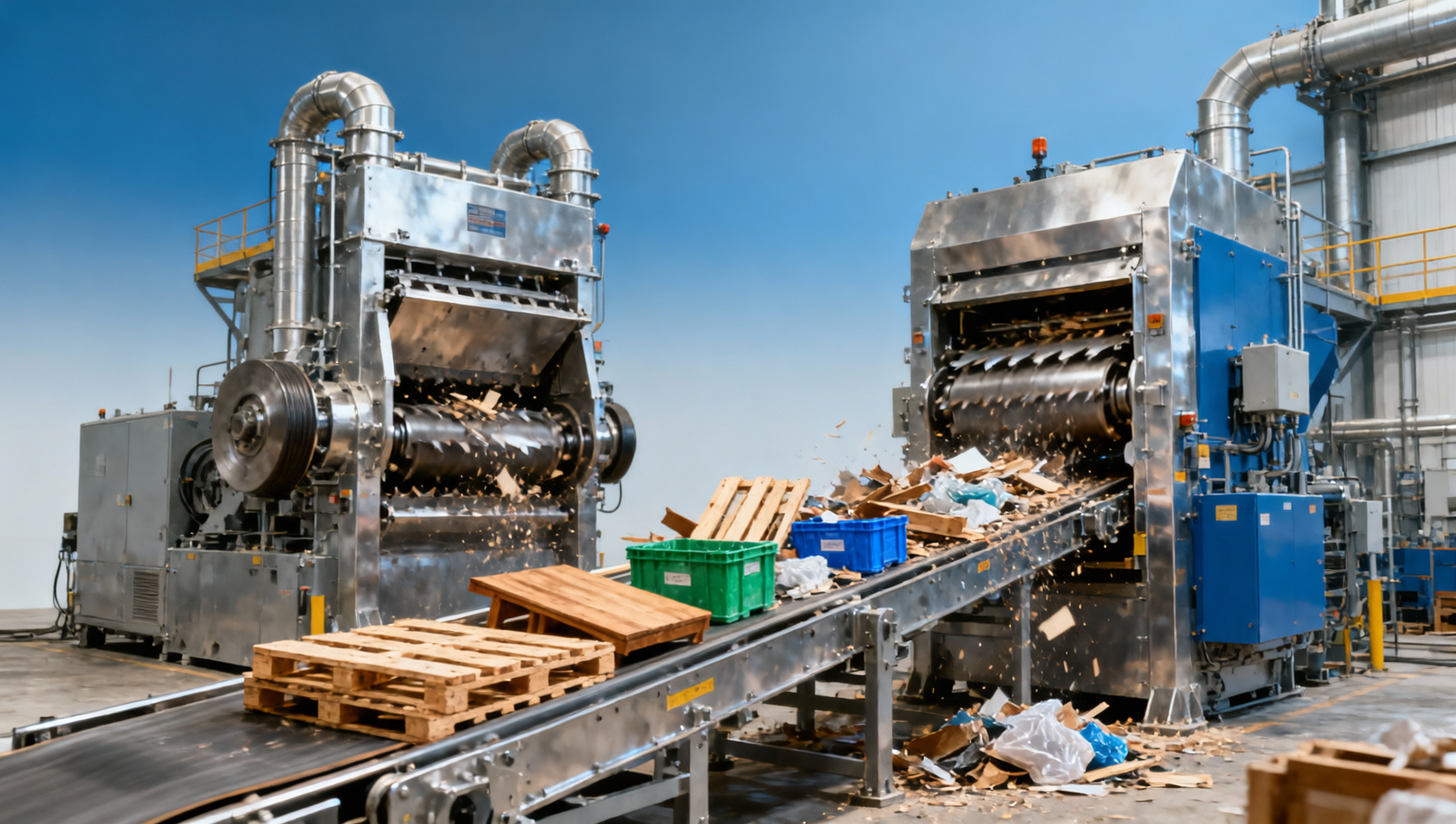
A twin shaft shredder machine becomes relevant when incoming scrap is too bulky, irregular, or trapped in shapes that prevent efficient chamber filling. Shredding before baling can improve feed uniformity, reduce void space, and stabilize cycle time. A solid waste shredder may be more appropriate where mixed industrial waste and non-metallic contamination must be reduced before separation or disposal.
For buyers, the decision should start with feed audit data collected over 14 to 30 operating days. Look at average daily tonnage, peak hour loading, bulk density, moisture, contamination percentage, and oversize ratio. An operation with 30% oversize bulky pieces may benefit more from pre-shredding than from a simple baler upsizing.
Plant managers should also check what the downstream market rewards. Some mills prefer dense bales with defined dimensions. Others buy briquettes when chip handling and remelting efficiency are priorities. Equipment selection should therefore align with saleable output, not just internal convenience.
Equipment fit by material type
The comparison below helps clarify which machine type best suits different recycling objectives and feed conditions.
The key takeaway is that a larger scrap metal baler is best when the primary problem is baling capacity. If the main issue is feed shape, chip compaction, or mixed waste reduction, the better investment may sit upstream or in a parallel process line.
Selection criteria procurement teams should document
- Target throughput per hour and per shift under real feed conditions, not ideal test conditions.
- Accepted input size range and contamination tolerance.
- Power demand, hydraulic duty, and maintenance intervals over 6 to 12 months.
- Required output format for transport, storage, and customer acceptance.
Specification points that matter before you upgrade
A larger machine is not automatically a better machine. Capacity planning should focus on the gap between current demand and required buffer. In many facilities, a 20% to 30% headroom above current average throughput is reasonable. That buffer helps absorb peak days, maintenance windows, and seasonal surges without forcing the equipment into constant overload.
Important technical points include chamber size, feed opening, cycle time, hydraulic pressure stability, bale dimensions, motor power, and ease of wear-part access. For example, a plant processing mixed light-gauge scrap may need a larger chamber to reduce bridging, while a dense non-ferrous stream may prioritize compression force and bale uniformity instead.
Operational compatibility matters just as much as machine rating. Check loader reach, conveyor or hopper interface, discharge path, wire tying or strapping method, and floor loading conditions. Upgrades often fail to meet expectations because the new baler is installed without reworking staging space or material presentation.
Procurement should also confirm support factors: lead time, spare-parts availability, training scope, commissioning period, and troubleshooting response. A machine with a 10 to 14 week delivery and a 2 day commissioning plan may still create risk if critical seals, knives, or hydraulic components require long replenishment cycles.
Priority checklist before purchase approval
- Measure actual incoming tonnage by material group for at least 4 weeks.
- Map peak-hour flow, loader count, and current queue length.
- Define required bale size, density expectation, and dispatch rhythm.
- Review utility requirements, foundation conditions, and safe maintenance access.
- Check service support response time and spare-parts planning.
The following table can help decision-makers align technical and commercial evaluation during supplier comparison.
A disciplined specification review prevents a common mistake: buying for peak compression force while ignoring actual material flow. In most plants, uptime, feeding ease, and maintenance access are just as decisive as headline tonnage.
Do not ignore integration details
Even a correctly sized scrap metal baler can underperform if upstream sorting, loader presentation, or outbound bale handling remain unchanged. Integration planning should cover at least 5 areas: feed consistency, operator training, safety guarding, maintenance routine, and dispatch coordination.
Implementation, maintenance, and common upgrade mistakes
Once the decision to upgrade is made, implementation should be treated as an operations project rather than a simple equipment purchase. A realistic timeline often includes 2 to 6 weeks for final specification and approvals, 8 to 16 weeks for manufacturing and delivery, and several days for installation, testing, and operator training. Plants with tight production schedules should prepare temporary flow adjustments before arrival.
The most common mistake is sizing only for current average demand. If the business expects new contracts, expanded dismantling volume, or higher recovery targets, the machine should support foreseeable growth. Buying exactly to current need often recreates the same bottleneck within 12 to 24 months.
A second mistake is overlooking maintenance discipline after the upgrade. Larger balers and associated systems may reduce handling cost, but they still depend on daily inspections, hydraulic monitoring, wear-part checks, and operator feedback. Preventive routines as short as 15 to 20 minutes per shift can prevent much larger downtime events.
A third mistake is assuming all scrap streams should enter one machine. In some facilities, separating chips to a hydraulic briquetting press while routing bulky scrap through a twin shaft shredder machine and main baler produces better overall efficiency than trying to force everything through a single point.
FAQ for buyers and operators
How do we know if the baler is too small or just poorly operated?
Review 30 days of actual data. If trained operators still face repeated backlog, cycle time drift above 25%, or regular trailer delays, the problem is likely capacity-related. If performance improves sharply after feed preparation and maintenance correction, operation may be the main issue.
When is a hydraulic briquetting press the better option?
Use a hydraulic briquetting press when the dominant material is chips, turnings, and fines rather than bulky scrap. It is especially useful where cleaner storage, higher material density, and possible fluid recovery are important to plant economics.
Should a twin shaft shredder machine be installed before the baler?
Often yes, if oversize and tangled feed is causing bridging, slow cycles, or manual cutting. A pre-shred stage can stabilize feeding and improve overall baling efficiency, though it adds wear parts, power demand, and another maintenance routine.
What support should be requested from suppliers?
Request installation scope clarification, operator training, maintenance documentation, recommended spare-parts lists, and realistic response times for service. For high-duty sites, it is wise to define critical spares for the first 6 to 12 months of operation.
An upgrade works best when it is tied to measurable goals: lower re-handling, denser outbound loads, fewer queue delays, safer traffic flow, and more stable daily throughput. Those results come from matching the machine to the material, the layout, and the shipping model, not from chasing the largest possible unit.
If your facility is seeing recurring backlog, inconsistent bale output, or growing pressure on labor and dispatch, it may be time to review whether a larger scrap metal baler, a hydraulic briquetting press, a twin shaft shredder machine, or a solid waste shredder is the better fit. To evaluate your process with greater precision, contact us for a tailored equipment assessment, specification guidance, or a customized recycling line solution.
Technical Specifications
- How to choose an organic fertilizer machine for wet raw materialsAuthor :Environmental Engineering Director
- What affects output stability in a hydraulic briquetting pressAuthor :Environmental Engineering Director
- Waste paper baler wholesale prices vary for reasons beyond tonnageAuthor :Environmental Engineering Director
Expert Insights

Chief Security Architect
Dr. Thorne specializes in the intersection of structural engineering and digital resilience. He has advised three G7 governments on industrial infrastructure security.
Related Analysis
- Apr 16, 2026How to choose an organic fertilizer machine for wet raw materialsAuthor :Environmental Engineering Director
- Apr 16, 2026What affects output stability in a hydraulic briquetting pressAuthor :Environmental Engineering Director
- Apr 16, 2026Waste paper baler wholesale prices vary for reasons beyond tonnageAuthor :Environmental Engineering Director
Core Sector // 01
Security & Safety
- How to choose an organic fertilizer machine for wet raw materialsAuthor :Environmental Engineering Director

- What affects output stability in a hydraulic briquetting pressAuthor :Environmental Engineering Director

- Waste paper baler wholesale prices vary for reasons beyond tonnageAuthor :Environmental Engineering Director

- When a scrap metal baler becomes too small for daily loading needsAuthor :Environmental Engineering Director

- Tire recycling machine layouts that reduce dust and wire lossAuthor :Environmental Engineering Director

- PET bottle washing line problems that lower flake purityAuthor :Environmental Engineering Director

- Plastic recycling granulator selection starts with feedstock qualityAuthor :Environmental Engineering Director

- Twin shaft shredder machine or single shaft for bulky wasteAuthor :Environmental Engineering Director