Tire recycling machine layouts that reduce dust and wire loss
Author
Date Published
Reading Time
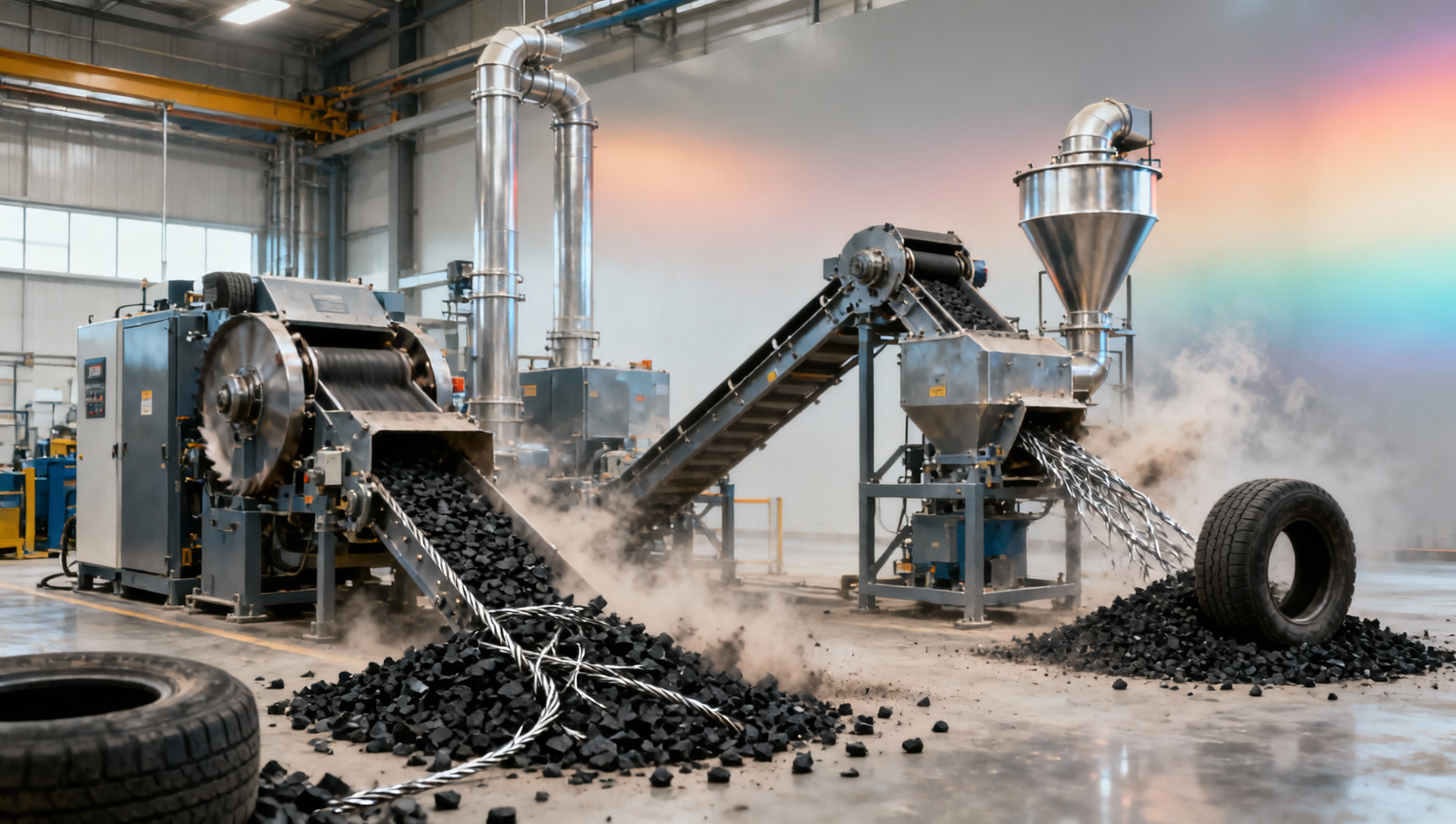
Designing efficient tire recycling machine layouts is not just about throughput—it is about controlling dust, minimizing wire loss, and improving operator safety at every stage. For buyers, plant managers, and processors comparing solutions such as twin shaft shredder machine systems, industrial dust collector units, and cyclone dust collector integration, the right layout can directly affect material recovery, maintenance costs, and long-term profitability.
In tire recycling plants, layout decisions influence much more than machine placement. Airflow direction, conveyor drop height, magnetic separation sequence, and access for cleaning all shape how efficiently rubber, steel wire, and textile fractions are recovered. A poorly planned line can raise dust concentration, increase wire carryover into rubber granules, and create avoidable shutdowns within 3–6 months of commissioning.
For information researchers, operators, procurement teams, and business decision-makers, layout design should therefore be evaluated as a process engineering issue rather than a simple equipment list. This article explains how tire recycling machine layouts can reduce dust and wire loss, what configuration points matter most, and which selection criteria help industrial buyers compare complete systems with lower operating risk.
Why layout design matters in tire recycling performance
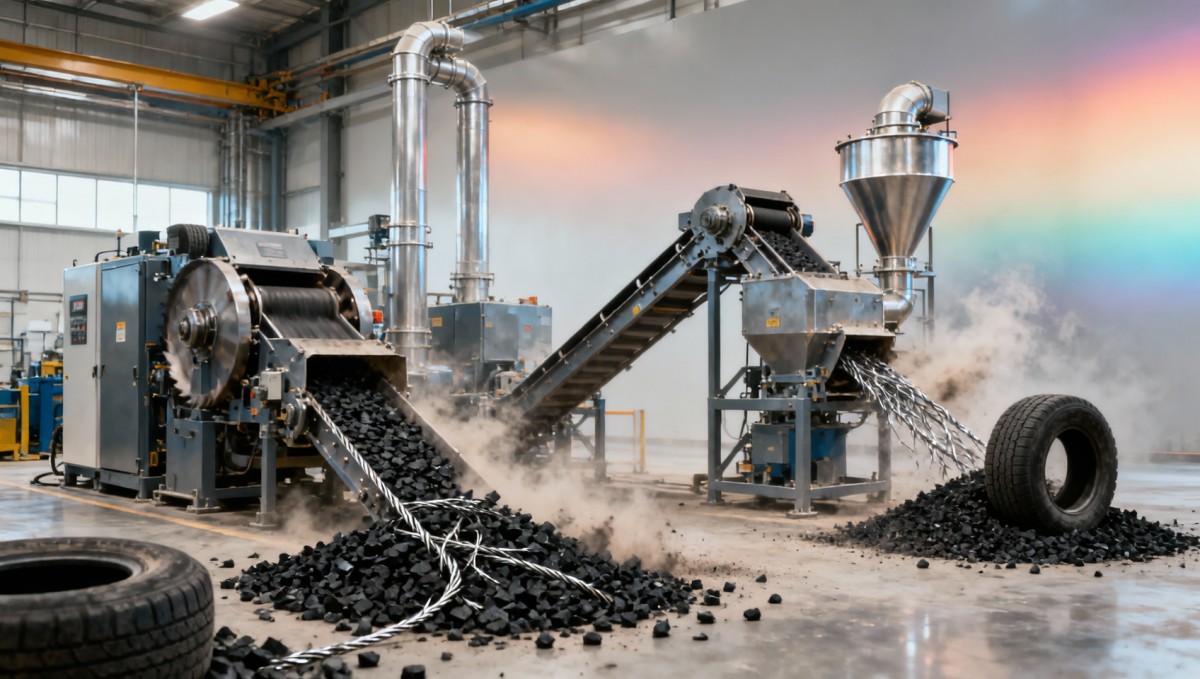
A tire recycling line usually combines primary shredding, secondary size reduction, steel separation, fiber removal, dust collection, screening, and storage. Even when individual machines are technically sound, the overall result can still be weak if the layout creates long transfer paths, multiple open discharge points, or unstable feed rates between stages.
Dust generation is typically highest at 4 points: shredding discharge, granulator infeed, vibrating screen transfer, and fiber separation zones. If these areas are not enclosed or connected to properly balanced extraction points, airborne particulate can spread across walkways, motors, control cabinets, and finished product bins. In many mid-capacity plants processing 1–5 tons per hour, this directly increases housekeeping time and filter loading.
Wire loss often occurs when liberated steel is not removed early enough or when conveyors are arranged in ways that re-entangle wire with rubber chips. Each unnecessary drop, impact point, or recirculation loop raises the chance that thin bead wire and fragmented steel remain mixed into crumb rubber. That reduces product purity and may trigger customer complaints in downstream molded product applications.
A practical layout should aim for three outcomes at the same time: controlled airflow, short and sealed material transfer, and staged metal recovery. These goals support both environmental performance and commercial performance. When wire recovery improves by even 1%–3%, the value effect becomes meaningful over a 12-month operating cycle, especially for facilities running two shifts per day.
The main layout variables that affect dust and wire loss
- Machine spacing between shredder, granulator, and separator, which affects enclosure feasibility and maintenance access.
- Conveyor type and angle, especially where steep inclines or high drop points can create material bounce and dust escape.
- Sequence of magnetic separators, which ideally includes more than 1 recovery stage for coarse and fine steel.
- Placement of cyclone dust collector and pulse-jet dust collector units relative to emission points and duct lengths.
- Floor zoning for raw tires, intermediate chips, finished rubber, and recovered wire to avoid cross-contamination.
Layout impact by operating objective
The table below shows how common layout choices influence operational results. It is useful for buyers comparing line proposals that appear similar on paper but differ in process integration and recovery efficiency.
The key takeaway is that line performance depends on how the machines work together. A layout that reduces open handling points and separates steel in 2 or 3 stages usually delivers cleaner output than a compact but poorly sequenced arrangement.
Layout principles that reduce dust at the source
The most effective dust control strategy in tire recycling is source capture rather than general room ventilation. Instead of relying on broad workshop extraction, plants should identify localized release points and design enclosures, hoods, and duct branches around them. This approach lowers the air volume required and improves collection efficiency at the exact stage where particles are created.
A twin shaft shredder machine typically handles bulky whole tires or pre-cut tires with variable feed density. The discharge area should be partially enclosed, and the receiving conveyor should be fitted with side covers to reduce turbulence. If the layout leaves 1–2 meters of open fall distance, shredded chips can bounce, release dust, and create material spread on the floor.
Cyclone dust collector units are often used upstream to remove larger particulate loads before final filtration. In practice, they work best when connected to high-volume, moderate-load points such as shredding and coarse granulation. For finer dust, a secondary industrial dust collector with pulse cleaning is usually more suitable, especially when the target is to keep sensitive areas like control rooms and finished product packing zones cleaner.
Duct routing matters. Shorter lines with fewer sharp bends generally maintain more stable suction. As a working rule, layouts should avoid unnecessary elbows and excessively long branches where possible. Even a difference of 5–8 meters in duct length can change system balance enough to weaken capture at the farthest hood if the fan and duct diameters are not adjusted accordingly.
Practical dust-control layout measures
- Enclose major transfer points between shredder, granulator, and screen to limit dust escape.
- Use negative-pressure hoods at the granulator feed and discharge, where particle release is often highest.
- Position the cyclone dust collector near high-load generation points to reduce long raw-dust duct runs.
- Reserve at least 800–1200 mm of maintenance clearance around collector units for filter servicing and safe access.
- Separate finished rubber storage from dusty primary reduction zones with physical barriers or dedicated airflow zones.
When central extraction is not enough
Many plants assume one central collector can solve all dust issues. In reality, mixed particle sizes and staggered load peaks across the line can make a single collection point inefficient. For capacities above 3 tons per hour, a hybrid design with cyclone pre-separation plus targeted branch extraction is often easier to balance and maintain than a one-point-only system.
This is also a procurement issue. Buyers should not only ask for collector power and filter area, but also request a dust-control map showing pickup points, branch routing, and access doors for cleaning. A detailed drawing usually reveals whether the supplier has engineered the full process or simply attached a collector to the end of the line.
How to minimize wire loss through smarter separation sequencing
Wire loss is rarely caused by one machine alone. It usually results from a chain of design choices: overshredding at the first stage, delayed magnetic recovery, repeated recirculation, or poor control of particle size before separation. In tire recycling, steel should be removed progressively as it becomes liberated, rather than waiting until the final product stage.
A common effective sequence is primary shredding, first magnetic separation, secondary granulation, second magnetic separation, and then fiber or air separation. This order helps remove larger steel fragments early, reducing wear on downstream equipment. It also lowers the chance that fine wire gets embedded into smaller rubber particles during repeated size reduction.
Conveyor layout supports this goal. Horizontal or gently inclined conveyors with stable feed presentation generally improve magnetic pickup compared with systems that discharge material in thick, uneven layers. If the belt load is too deep, some steel remains buried under rubber chips. Feed spreaders or controlled discharge chutes can therefore improve recovery without changing the separator itself.
Plants targeting finer crumb, such as 1–4 mm output, usually need tighter separation discipline than lines producing coarse chips of 20–50 mm. The finer the target size, the more valuable early and repeated steel removal becomes. Otherwise, wire contamination appears later in screening and packaging, where correction is more labor-intensive and more expensive.
Recommended sequencing by process stage
The following comparison helps procurement teams evaluate whether a proposed tire recycling machine layout is optimized for steel recovery or simply arranged for equipment convenience.
For most plants, the strongest improvement comes from combining early steel recovery with smoother transfer geometry. If material handling remains unstable, even strong magnetic separators may not reach their practical recovery potential.
Common wire-loss mistakes
- Using only one magnetic separator for a multi-stage reduction line.
- Allowing deep material beds greater than practical separator exposure depth.
- Positioning separators after sharp discharge drops that disturb material presentation.
- Ignoring bead wire concentration from truck or OTR tire fractions, which may require stronger early recovery planning.
Plant layout planning for operators, maintenance teams, and safety managers
An efficient tire recycling machine layout is not only a process diagram. It is also a workplace system. Operators need clear sightlines, safe access to emergency stops, and enough clearance to inspect belts, remove wrapped wire, and clean under transfer points. Maintenance teams need room to service bearings, change screens, and replace wear parts without dismantling surrounding components.
In practice, access gaps of 700–1000 mm may work for inspection, but larger maintenance zones are often needed near shredder chambers, granulator housings, and dust collector service doors. If these clearances are not considered during layout planning, routine service becomes slower and less safe. What looks compact in a proposal drawing can become inefficient during the first 6 months of real operation.
Safety zoning is equally important. Tire recycling lines combine moving conveyors, rotating blades, magnetic equipment, airborne dust, and forklift traffic. A good layout separates pedestrian routes from tire loading and wire discharge areas. It also prevents finished rubber packaging from sharing the same circulation path as raw incoming tires, reducing both contamination and handling conflict.
Control panels and electrical cabinets should be placed outside the dustiest zones where possible. This lowers cleaning burden and helps extend component life in facilities running 8–16 hours per day. It also supports troubleshooting, because operators can inspect alarms and parameter changes without standing next to high-noise or high-dust process points.
A practical checklist before finalizing the layout
- Confirm maintenance access around shredder, granulator, screens, and industrial dust collector units.
- Review forklift movement, finished product discharge, and wire scrap removal routes.
- Check emergency stop reach distance and lockout access for each major machine.
- Verify that duct cleaning, filter replacement, and hopper emptying can be done without process obstruction.
- Reserve floor area for future upgrades such as additional magnetic separation or finer screening.
Typical buyer concerns and layout responses
The table below translates operational concerns into layout decisions. It is especially useful for procurement teams preparing technical comparison sheets or tender requirements.
A layout that supports maintenance and safety usually also supports uptime. For most industrial users, that connection matters as much as rated machine capacity when judging the long-term value of the investment.
Procurement criteria, implementation steps, and common questions
When evaluating suppliers, decision-makers should ask for more than equipment brochures. A serious proposal should include a process flow, general arrangement drawing, dust collection concept, utility list, and expected wear-part service points. Without these details, it is difficult to compare layouts that claim similar output such as 2 tons per hour or 4 tons per hour.
Implementation usually follows 5 stages: requirement definition, layout engineering, utility and foundation preparation, installation and commissioning, and performance adjustment. Depending on line complexity, this can range from 4–8 weeks for smaller modular systems to 10–16 weeks for more integrated plants with multiple separators and dust control zones.
Procurement teams should also align acceptance criteria before purchase. Typical checkpoints include output size range, visible wire carryover, dust leakage at transfer points, electrical load stability, and accessibility for service. These criteria reduce disputes after delivery and make commissioning more objective.
For companies serving export markets or regulated industrial customers, documentation quality matters as much as machine quality. Drawings, manuals, spare-part lists, and maintenance schedules should be clear enough for operators and engineers to use without repeated supplier clarification.
Key procurement questions to raise with suppliers
- How many steel separation stages are included, and at which exact points are they installed?
- Which transfer points are enclosed, and where are the extraction hoods positioned?
- Is the cyclone dust collector used as pre-separation, final separation, or both in combination with another collector?
- What maintenance clearance is required around shredders, screens, and filter units?
- Can the layout be expanded later for finer crumb production or higher hourly throughput?
FAQ
How many dust collection points are usually needed in a tire recycling line?
Many lines need extraction at 3–6 key points rather than one general pickup. The exact number depends on line length, degree of enclosure, and whether primary shredding, granulation, screening, and fiber separation are all included in the same workshop.
Is one magnetic separator enough to control wire loss?
For simple coarse chip lines, one stage may be acceptable, but for cleaner rubber output or finer granule production, 2-stage separation is often the practical minimum. A third polishing stage can be useful before final packaging where purity requirements are tighter.
What should operators monitor after startup?
During the first 2–4 weeks, operators should check dust escape at transfer points, wire content in rubber fractions, belt loading depth, separator discharge quality, and filter cleaning frequency. These observations often reveal whether the layout balance is correct or needs adjustment.
What layout mistake causes the most hidden cost?
One of the costliest mistakes is underestimating access and housekeeping needs. A layout that saves a few square meters but creates daily cleaning difficulty, slow maintenance, and poor wire recovery can raise labor and downtime costs throughout the life of the line.
A tire recycling machine layout that reduces dust and wire loss should be judged as a full-system engineering solution, not as a collection of standalone machines. The best layouts combine controlled airflow, staged steel recovery, safe maintenance access, and room for future process upgrades. For buyers, plant managers, and industrial processors, these factors directly influence material purity, operating stability, and lifecycle cost.
If you are comparing tire recycling line configurations, planning a new facility, or upgrading an existing shredder and separation system, now is the right time to review the layout in detail. Contact us to discuss your process targets, request a tailored equipment arrangement, or explore more solutions for dust control, wire recovery, and efficient plant operation.
Technical Specifications
- How to choose an organic fertilizer machine for wet raw materialsAuthor :Environmental Engineering Director
- What affects output stability in a hydraulic briquetting pressAuthor :Environmental Engineering Director
- Waste paper baler wholesale prices vary for reasons beyond tonnageAuthor :Environmental Engineering Director
Expert Insights

Chief Security Architect
Dr. Thorne specializes in the intersection of structural engineering and digital resilience. He has advised three G7 governments on industrial infrastructure security.
Related Analysis
- Apr 16, 2026How to choose an organic fertilizer machine for wet raw materialsAuthor :Environmental Engineering Director
- Apr 16, 2026What affects output stability in a hydraulic briquetting pressAuthor :Environmental Engineering Director
- Apr 16, 2026Waste paper baler wholesale prices vary for reasons beyond tonnageAuthor :Environmental Engineering Director
Core Sector // 01
Security & Safety
- How to choose an organic fertilizer machine for wet raw materialsAuthor :Environmental Engineering Director

- What affects output stability in a hydraulic briquetting pressAuthor :Environmental Engineering Director

- Waste paper baler wholesale prices vary for reasons beyond tonnageAuthor :Environmental Engineering Director

- When a scrap metal baler becomes too small for daily loading needsAuthor :Environmental Engineering Director

- Tire recycling machine layouts that reduce dust and wire lossAuthor :Environmental Engineering Director

- PET bottle washing line problems that lower flake purityAuthor :Environmental Engineering Director

- Plastic recycling granulator selection starts with feedstock qualityAuthor :Environmental Engineering Director

- Twin shaft shredder machine or single shaft for bulky wasteAuthor :Environmental Engineering Director