Twin shaft shredder machine or single shaft for bulky waste
Author
Date Published
Reading Time
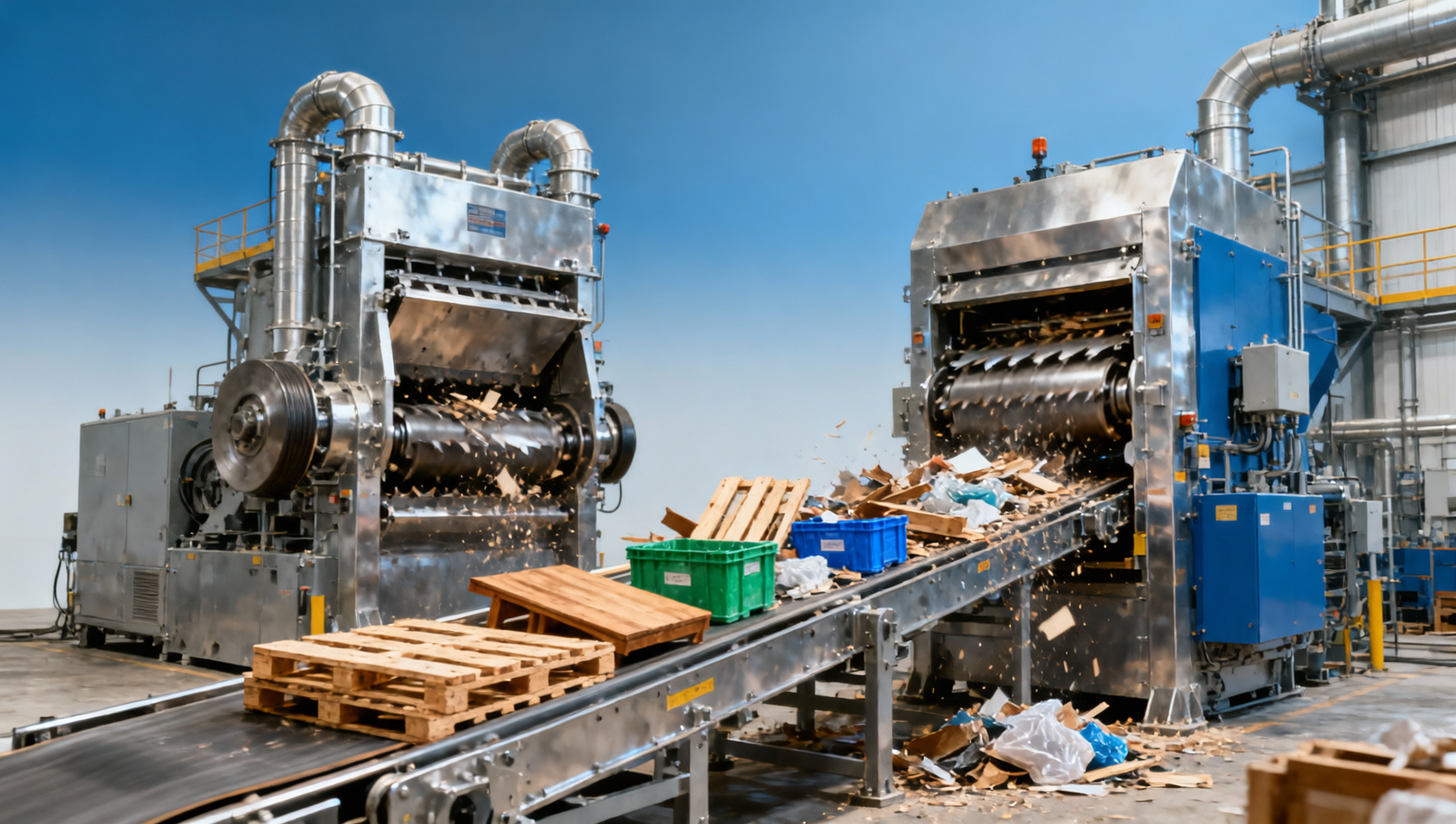
When processing bulky waste, choosing between a twin shaft shredder machine and a single-shaft system directly affects throughput, particle control, maintenance, and downstream recycling efficiency. For buyers, operators, and decision-makers evaluating a solid waste shredder, this guide explains the key performance differences, ideal applications, and cost factors to help you select the most practical solution for demanding industrial waste streams.
Bulky waste is rarely uniform. It may include furniture, mattresses, pallets, plastics, wood, mixed municipal items, commercial rejects, or industrial packaging with hidden metal contamination. That variability makes shredder selection more than a simple equipment comparison. The right machine influences hourly capacity, energy use, labor intensity, fire risk, and the quality of material sent to sorting, RDF production, or landfill reduction.
In most industrial procurement discussions, the real question is not which machine is “better” in general, but which machine is better for a defined feedstock, output target, and plant layout. A twin shaft shredder machine usually favors aggressive primary size reduction and tolerance for difficult materials, while a single shaft shredder is often preferred when output consistency and controlled discharge size matter more.
Understanding the Core Difference Between Twin Shaft and Single Shaft Shredders
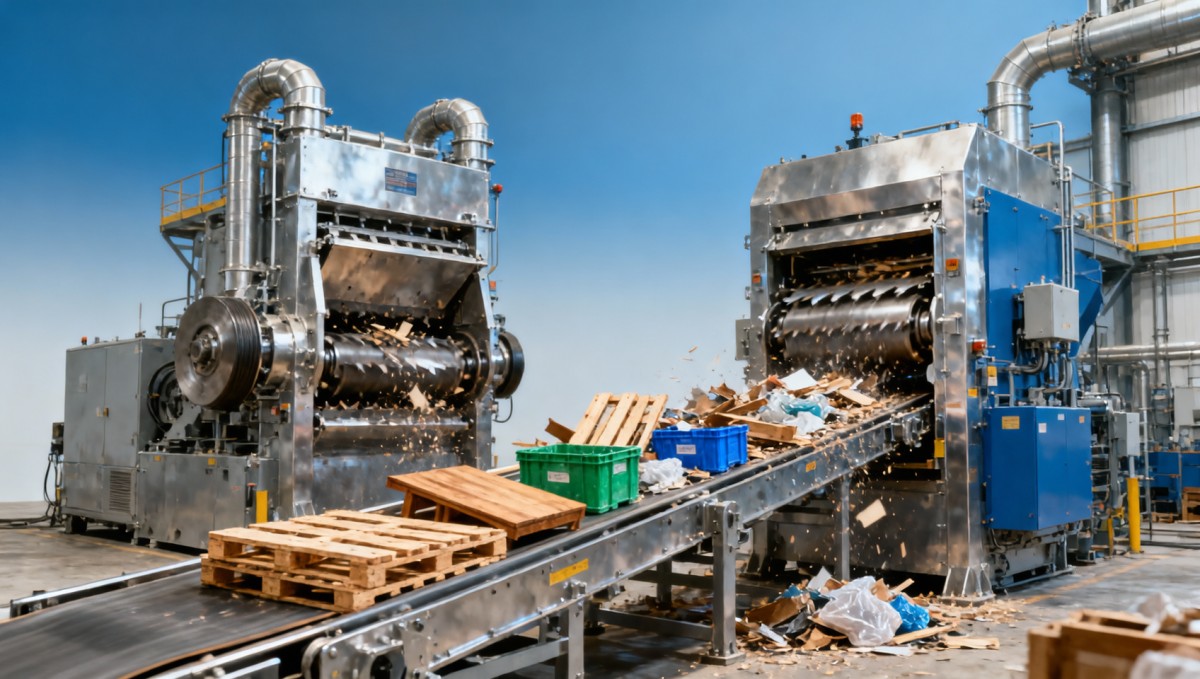
A twin shaft shredder machine uses two counter-rotating shafts equipped with cutters that pull, tear, and shear bulky waste. This configuration is designed for high-torque, low-speed operation, commonly in the range of 10 rpm to 40 rpm depending on material density and drive design. It is typically used as a primary shredder for irregular and oversized waste that would challenge more size-sensitive systems.
A single shaft shredder uses one rotor and a hydraulic ram to push material toward the cutting chamber. It often includes a screen below or around the rotor, which controls final output size. Typical rotor speeds may range from 70 rpm to 120 rpm, and the screen opening can be selected to achieve particles such as 20 mm, 40 mm, 60 mm, or larger depending on the downstream process requirement.
The operational result is clear. A twin shaft shredder machine prioritizes feed tolerance and coarse reduction. A single shaft unit prioritizes more uniform particle sizing. For bulky waste streams with mattresses, sofas, mixed furniture, and contaminated municipal items, this distinction can determine whether the shredder works steadily for 8 to 16 hours per day or suffers repeated stoppages due to bridging and overload.
Another major difference is how each machine handles unshreddables. Twin shaft systems are generally more forgiving when encountering metal inserts, bolts, hinges, or occasional hard contaminants. Single shaft systems can still process mixed waste, but they usually perform best when the feed is pre-inspected or when a magnetic separator and operator controls are in place to reduce heavy tramp material.
Quick comparison of machine behavior
The table below summarizes the most practical differences procurement teams and plant engineers typically evaluate during early-stage equipment selection.
For most bulky waste facilities, the choice starts with process philosophy. If the plant needs a front-end machine that can accept unpredictable loads with minimal preparation, a twin shaft shredder machine often leads. If the plant must meet a tighter particle-size target before screening, air separation, or densification, a single shaft shredder may offer better process control.
Which Machine Fits Common Bulky Waste Applications
Bulky waste applications differ sharply by source. Municipal collection centers typically receive mixed furniture, mattresses, branches, plastics, textiles, and occasional metal contamination. Commercial and industrial facilities may receive pallets, crates, packaging foam, rolls, drums, and production rejects. The more mixed and unpredictable the stream, the more valuable robust primary shredding becomes.
A twin shaft shredder machine is usually the preferred option in three scenarios: first, when feed pieces exceed 800 mm to 1,500 mm in length; second, when operators cannot economically pre-sort every incoming load; third, when the plant objective is volume reduction before transport, sorting, or secondary processing. In these cases, throughput stability often matters more than exact particle size in the first stage.
A single shaft shredder becomes more attractive when the incoming waste is less variable and the next process step requires better dimensional control. For example, facilities producing refuse-derived fuel, preparing wood fractions, or feeding optical separators may need a more consistent output in the 30 mm to 80 mm range. Screen-based control gives single shaft systems an advantage here.
Some of the best-performing plants use both technologies in sequence. A twin shaft shredder machine performs coarse opening and de-bulking, then a single shaft unit refines the fraction for downstream separation. While this raises capital cost, it can improve line stability, increase recovery value, and reduce recirculation loads in facilities running 15 tph to 40 tph or more.
Application-based selection guide
The following matrix helps match equipment type to feed condition, output expectation, and operating goal.
The key takeaway is operational fit. A machine selected only from brochure horsepower or cutter diameter may look adequate on paper but underperform in live waste streams. Matching the shredder to contamination level, item size, and downstream quality target usually prevents the most expensive errors.
Common plant goals that shape the choice
- If the priority is reducing transport volume by 50% to 70%, coarse primary shredding is often enough and a twin shaft shredder machine is a practical lead option.
- If the line must feed a separator, baler, densifier, or fuel system with tighter input specs, a single shaft shredder offers more output control.
- If unplanned downtime costs are high because the plant runs 2 shifts or 3 shifts, contamination tolerance should carry more weight in the buying decision.
Performance, Maintenance, and Cost Factors Buyers Should Compare
Procurement teams often focus first on capital expenditure, but total cost of ownership is usually the more decisive metric over 3 to 7 years. A twin shaft shredder machine may require a higher investment in heavy-duty drive components and cutter assemblies, yet it can reduce labor and pre-sorting needs. A single shaft shredder may deliver cleaner output but can require more consistent feed preparation and screen management.
Throughput must be measured under realistic feed conditions rather than nominal figures. A supplier may quote 5 tph to 20 tph, but actual performance depends on bulk density, moisture, metal contamination, hopper loading method, and whether the material bridges. In bulky waste lines, effective throughput can drop by 20% to 35% if feed inconsistency is not considered during specification.
Maintenance philosophy also differs. Twin shaft machines generally involve cutter wear monitoring, shaft alignment checks, gearbox inspection, and periodic bearing service. Single shaft systems add screen wear, ram performance, and rotor-knife clearance as critical maintenance points. For plants with limited technical staff, simpler daily routines can matter as much as absolute output quality.
Energy consumption should be evaluated per ton processed, not only by installed motor power. A 75 kW to 200 kW system can appear expensive on paper, but if it processes difficult mixed waste steadily with fewer stoppages, its cost per ton may outperform a lower-powered system that needs repeated clearing, reverse cycling, or manual intervention.
Key cost and maintenance checkpoints
Before issuing an RFQ, define the following points in measurable terms so suppliers can respond with comparable proposals.
- Target throughput in tons per hour, using average and peak feed scenarios rather than a single number.
- Desired output size, such as coarse pre-shred, under 150 mm, or controlled 30 mm to 80 mm fraction.
- Expected operating schedule, for example 8 hours, 16 hours, or 24 hours per day.
- Maximum contaminant level, including metal inserts, wires, and dense non-processables.
- Maintenance window frequency, such as weekly 2-hour checks or monthly half-day service stops.
Practical cost comparison areas
The table below organizes major commercial and technical factors that influence lifecycle value.
For finance and operations teams, the best investment is usually the one that lowers downtime risk and supports process consistency. A slightly higher purchase price can be justified if it reduces labor hours, unplanned stoppages, and reject rates across a 24- to 60-month operating period.
How to Specify the Right Shredder for Procurement and Plant Implementation
A reliable shredder purchase starts with a disciplined specification process. Instead of requesting a generic bulky waste shredder, buyers should define the feedstock composition, contamination profile, target throughput, discharge requirement, and available utilities. This prevents oversizing, undersizing, and the common mismatch where a machine performs well in trials but poorly in full-scale plant conditions.
For bulky waste, start by sampling at least 3 representative feed batches over 2 to 4 weeks. Record dimensions, density, moisture, metal contamination, and the percentage of spring-loaded or elastic materials such as mattresses, textiles, and films. If more than 25% of the stream consists of oversized irregular items, a twin shaft shredder machine often deserves priority in technical review.
Operators should also review site realities. Loader type, hopper height, conveyor width, dust extraction, fire suppression, and magnetic separation all affect shredder choice. A machine is not purchased in isolation. In many facilities, one poor interface point, such as an undersized discharge conveyor or lack of overbelt magnet, creates more downtime than the shredder itself.
Decision-makers should ask suppliers for wear-part access time, overload protection method, emergency stop layout, and the estimated lead time for critical spare parts. In industrial environments, a 2-week parts delay can disrupt contracts, labor planning, and waste reception schedules. Service support and spare-part availability are therefore strategic procurement criteria, not secondary details.
Five-step specification framework
- Define feedstock with photos, average dimensions, and contamination notes from at least 3 collection cycles.
- Set measurable targets for throughput, reduction ratio, and downstream particle-size requirement.
- Map the full line, including loaders, conveyors, magnets, separators, and fire safety provisions.
- Request trial evidence or material-based references for similar waste streams, not only general brochures.
- Compare spare-part lead time, maintenance access, and commissioning support before awarding the order.
Common specification mistakes to avoid
Three mistakes appear repeatedly in bulky waste projects. First, buyers define throughput without describing composition variability. Second, they compare motor power but not effective tons per hour under contaminated loads. Third, they ignore downstream requirements, then discover that a primary shredder alone cannot meet fuel or sorting quality targets.
A disciplined buying process reduces technical surprises. When RFQs include feed photos, density ranges, moisture estimates, expected contaminants, and operating hours, suppliers can propose more realistic shaft design, cutter profile, and discharge configuration. That improves the chance of selecting either a twin shaft shredder machine or a single shaft unit that performs as intended from day one.
FAQ: Selection, Operation, and Risk Control for Bulky Waste Shredding
The questions below reflect common concerns from information researchers, plant operators, purchasing managers, and business leaders comparing shredder options for bulky waste treatment lines.
Is a twin shaft shredder machine always better for bulky waste?
Not always. It is often better for primary reduction of irregular, oversized, or contaminated bulky waste, especially when feed preparation is limited. However, if your process requires consistent discharge, such as 30 mm to 60 mm material for RDF or advanced sorting, a single shaft shredder may be the better standalone option or the better second-stage machine.
What throughput should buyers realistically expect?
There is no single number that fits every project. Small and mid-scale systems may operate around 2 tph to 10 tph, while larger industrial lines can exceed 15 tph depending on feed density and machine design. The safest approach is to ask for throughput under waste conditions similar to your own, including contamination and moisture, rather than relying on ideal test figures.
Which machine is easier to maintain?
Maintenance difficulty depends on plant capability and waste characteristics. Twin shaft systems often simplify feed handling but require attention to cutters, shafts, and torque-related components. Single shaft systems may deliver better output control, but ram hydraulics, knives, and screens add maintenance routines. Plants with limited maintenance staff should compare daily, weekly, and monthly service tasks before buying.
How long does implementation usually take?
For standard industrial projects, lead times often fall within 6 to 16 weeks depending on customization, electrical scope, and transport distance. Installation and commissioning may add 1 to 3 weeks. If the shredder is part of a complete line with conveyors, separation equipment, and civil preparation, total project duration can extend further and should be planned in phases.
What are the main operational risks in bulky waste shredding?
The main risks are overload from hidden metal, bridging in the hopper, fire from batteries or hot materials, and poor downstream flow due to oversized discharge. Risk control usually includes pre-inspection, magnets, overload protection, emergency stop systems, routine cleaning, and clear lockout procedures. In mixed municipal waste environments, these controls are as important as the shredder model itself.
For bulky waste processing, the best choice depends on whether your operation values rugged primary reduction, controlled particle sizing, or a staged combination of both. A twin shaft shredder machine is typically the stronger option for difficult, irregular, contamination-prone waste streams, while a single shaft shredder is often more effective where output uniformity directly affects downstream recovery or fuel quality.
If you are comparing solutions for municipal, commercial, or industrial bulky waste, a structured evaluation of feedstock, throughput, maintenance capacity, and downstream objectives will produce a more reliable decision than a price-only comparison. To discuss your application in detail, get a tailored shredder selection plan, review specification criteria, or explore broader industrial waste processing solutions, contact us today.
Technical Specifications
- How to choose an organic fertilizer machine for wet raw materialsAuthor :Environmental Engineering Director
- What affects output stability in a hydraulic briquetting pressAuthor :Environmental Engineering Director
- Waste paper baler wholesale prices vary for reasons beyond tonnageAuthor :Environmental Engineering Director
Expert Insights

Chief Security Architect
Dr. Thorne specializes in the intersection of structural engineering and digital resilience. He has advised three G7 governments on industrial infrastructure security.
Related Analysis
- Apr 16, 2026How to choose an organic fertilizer machine for wet raw materialsAuthor :Environmental Engineering Director
- Apr 16, 2026What affects output stability in a hydraulic briquetting pressAuthor :Environmental Engineering Director
- Apr 16, 2026Waste paper baler wholesale prices vary for reasons beyond tonnageAuthor :Environmental Engineering Director
Core Sector // 01
Security & Safety
- How to choose an organic fertilizer machine for wet raw materialsAuthor :Environmental Engineering Director

- What affects output stability in a hydraulic briquetting pressAuthor :Environmental Engineering Director

- Waste paper baler wholesale prices vary for reasons beyond tonnageAuthor :Environmental Engineering Director

- When a scrap metal baler becomes too small for daily loading needsAuthor :Environmental Engineering Director

- Tire recycling machine layouts that reduce dust and wire lossAuthor :Environmental Engineering Director

- PET bottle washing line problems that lower flake purityAuthor :Environmental Engineering Director

- Plastic recycling granulator selection starts with feedstock qualityAuthor :Environmental Engineering Director

- Twin shaft shredder machine or single shaft for bulky wasteAuthor :Environmental Engineering Director