How to Screen an Environment & Ecology Exporter for Long-Term Risk
Author
Date Published
Reading Time
Choosing the right Environment & Ecology exporter is not just a sourcing decision—it is a long-term risk management strategy. For commercial evaluators, the challenge lies in identifying partners that can consistently meet compliance, quality, delivery, and sustainability demands across global projects. This guide outlines how to assess an exporter beyond price, helping you reduce exposure and build a more resilient supply chain.
Why Scenario Differences Matter When Screening an Environment & Ecology Exporter
An Environment & Ecology exporter may appear strong on paper yet still be a poor fit for your actual project environment. The reason is simple: risk is highly scenario-dependent. A supplier suitable for routine municipal wastewater projects may struggle in hazardous industrial emissions control. An exporter that performs well in one-off equipment supply may fail in long-cycle EPC contracts that require documentation control, spare parts support, and cross-border compliance updates.
For business evaluators, long-term risk screening should therefore begin with use context. You are not only asking whether the exporter can manufacture or trade environmental products. You are asking whether that Environment & Ecology exporter can remain reliable across your project type, regulatory geography, lifecycle expectations, and operational consequences of failure. In practice, this means comparing exporters not only by quote, but by scenario fit, quality discipline, engineering responsiveness, and continuity capacity.
Typical Business Scenarios Where Exporter Risk Profiles Change
Most procurement teams encounter Environment & Ecology exporter decisions in several recurring scenarios. Each one has a different tolerance for delay, variance, and compliance error.
1. EPC-led infrastructure delivery
In EPC projects, schedule slippage and document inconsistency can create downstream contractual exposure. Here, the right exporter must support technical submittals, inspection coordination, packaging standards, shipment visibility, and change control. The strongest candidate is often not the cheapest exporter, but the one with stable project management systems.
2. Plant retrofit and brownfield upgrades
Retrofit projects are sensitive to compatibility risk. If a filtration, dust collection, water treatment, or waste handling solution does not match the existing footprint, interfaces, or control logic, the cost of correction can be severe. In this scenario, an Environment & Ecology exporter must demonstrate customization capability and installation reference experience.
3. Multi-site industrial procurement programs
For framework contracts across several facilities, consistency matters more than one-time performance. Buyers need repeatable quality, stable lead times, and predictable after-sales support. The best exporter in this setting is one that can standardize SKUs, maintain traceable batches, and scale production without degrading quality.
4. Regulated export destinations
When products are shipped into markets with strict regulatory demands, such as CE-related technical file expectations, RoHS restrictions, environmental permits, or local emissions rules, documentary weakness becomes a major risk. In this case, a capable Environment & Ecology exporter must prove it understands destination-market compliance, not only factory-level production.
A Practical Scenario Comparison for Commercial Evaluators
The table below helps business evaluators align exporter screening criteria with real procurement situations rather than generic supplier scorecards.
What to Examine First in an Environment & Ecology Exporter
A high-quality Environment & Ecology exporter should be screened in layers. Start with the basics, but do not stop there.
Compliance depth, not compliance claims
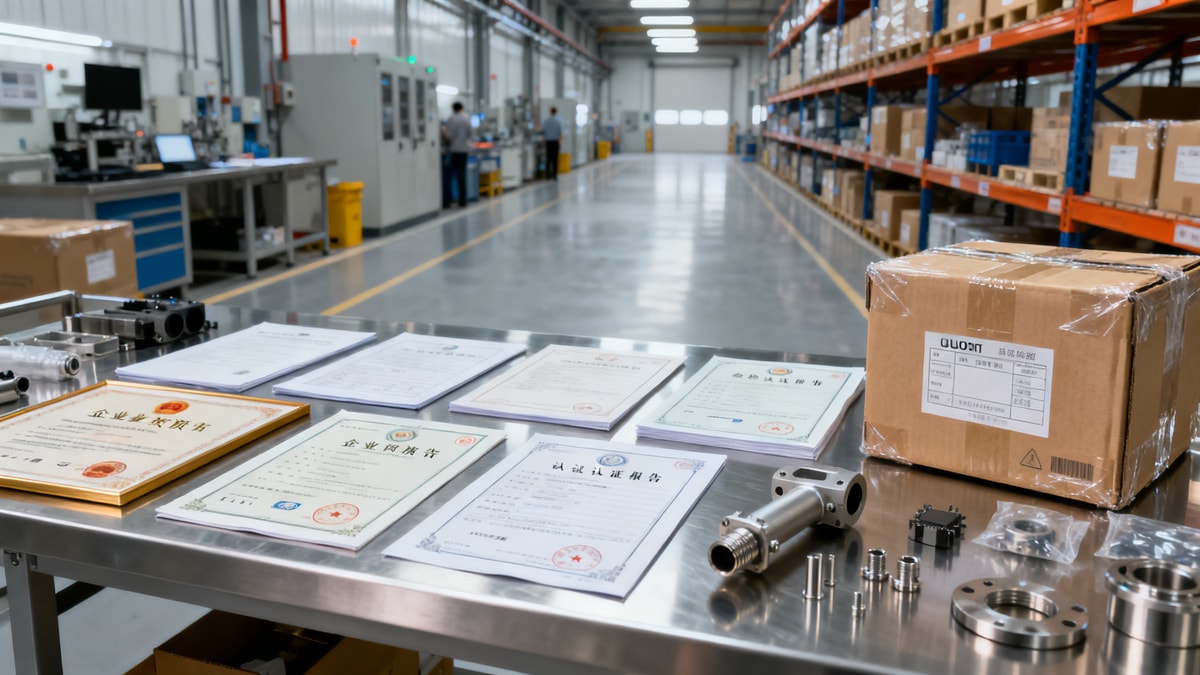
Ask for actual certificates, recent test reports, and market-specific declarations. Verify whether documents match the supplied model and manufacturing site. Many exporters can mention ISO or CE, but fewer can explain product scope, renewal timelines, notified body involvement, or limitations. Long-term risk rises sharply when compliance is outsourced to paperwork agents rather than embedded in operations.
Manufacturing control and traceability
For environmental and ecological systems, small process deviations can affect performance, durability, and regulatory results. Review incoming inspection, in-process quality checkpoints, nonconformance handling, and batch traceability. If the exporter is a trading entity, identify the true factory and confirm whether control over production is contractual or merely relationship-based.
Delivery resilience
A commercially attractive exporter can still become a risk if it depends on a fragile supply chain. Evaluate critical raw material sources, backup suppliers, lead time history, seasonal bottlenecks, export documentation capability, and packaging standards. This is especially important for bulky treatment equipment, hazardous-adjacent components, and customized fabricated assemblies.
How Risk Priorities Change by Buyer Type
Different buying organizations should not score the same Environment & Ecology exporter in the same way. Evaluation criteria must reflect business exposure.
For EPC contractors
Prioritize schedule reliability, documentation completeness, and change-order responsiveness. The exporter must fit structured submittal workflows and inspection hold points. A lower-priced supplier without project discipline can trigger liquidated damages indirectly.
For facility managers and end users
Focus on lifecycle support. Spare parts availability, service response, operating stability, and operator training can matter more than initial procurement savings. A strong Environment & Ecology exporter for this audience is one that supports uptime over years, not just shipment at origin.
For procurement directors
Look at concentration risk, cost predictability, and supplier governance. Can the exporter support standardization across plants? Is there a clear escalation process? Are commercial terms aligned with quality and warranty obligations? Strategic sourcing needs supplier durability as much as technical acceptance.
Warning Signs Often Missed During Exporter Evaluation
Commercial evaluators often identify obvious red flags, yet long-term failures usually come from subtler gaps.
- The exporter offers broad product coverage but cannot show deep references in your application scenario.
- Certification documents exist, but model mapping and factory scope are unclear.
- Response times are fast during bidding but vague once technical exceptions are raised.
- Quoted lead times are attractive, yet no evidence of buffer capacity or secondary sourcing is provided.
- After-sales support is described generally, with no service matrix, spare part policy, or warranty process.
These warning signs do not always mean the Environment & Ecology exporter is unqualified. They do mean that the buyer should raise verification depth before awarding any long-term business.
Scenario-Based Due Diligence Questions That Improve Decision Quality
The best screening process uses targeted questions tied to the buyer’s operating scenario.
If your project is schedule-critical
Ask for historical on-time delivery data, sample production plans, expediting process maps, and packaging photos from prior export shipments. Confirm who owns logistics milestones and customs coordination.
If your application is technically customized
Request drawings, revision control examples, design review workflows, and reference cases with similar operating media, temperature ranges, or environmental loads. A credible exporter should discuss engineering constraints clearly.
If your market is compliance-sensitive
Validate standards familiarity, latest report dates, declarations of conformity, restricted substance statements, and audit readiness. The exporter should understand not only what documents exist, but when and why authorities or clients may challenge them.
How to Match the Right Environment & Ecology Exporter to Your Operating Reality
A practical way to reduce risk is to create a weighted evaluation model around your actual exposure. If non-compliance would block commissioning, compliance should outweigh price. If operational downtime is costly, after-sales depth should rank above freight savings. If your demand is repetitive across multiple projects, consistency metrics should outrank short-term negotiation wins.
This approach is especially useful in the comprehensive industrial sector, where environmental systems often intersect with safety, power, instrumentation, and mechanical integration. The right Environment & Ecology exporter must therefore be evaluated not in isolation, but as part of a larger industrial delivery chain. Compatibility with broader project governance is often what separates acceptable suppliers from strategic partners.
FAQ for Business Evaluators
Is a factory-direct exporter always lower risk than a trading exporter?
Not always. A factory-direct model may offer better production visibility, but an experienced trading-led Environment & Ecology exporter can sometimes provide stronger coordination, broader sourcing flexibility, and better export execution. The key is control: who owns quality, documentation, claims handling, and schedule recovery?
How many references are enough?
Focus less on volume and more on relevance. Three solid references in similar operating and regulatory scenarios can be more meaningful than dozens of unrelated shipments.
Should price ever be the leading factor?
Only in low-complexity, low-consequence purchases with easy replacement options. In most industrial environmental applications, total risk-adjusted value matters more than the initial quote.
Final Decision Framework and Next Step
To screen an Environment & Ecology exporter for long-term risk, start with the scenario, not the catalog. Define where the product will be used, what failure would cost, which regulations apply, and how much lifecycle support your organization expects. Then score exporters against that context using evidence: compliance records, project references, traceability, engineering responsiveness, capacity resilience, and after-sales structure.
For commercial evaluators, the most reliable decision is rarely about choosing the broadest supplier or the lowest bidder. It is about selecting the Environment & Ecology exporter whose systems, documentation, and operating behavior best match your long-term project reality. If you are comparing candidates, build a scenario-based checklist first, then request proof aligned to your actual risk profile. That single change can significantly improve supplier quality and reduce downstream exposure.
Technical Specifications
- US DOE Level 3 Transformer Efficiency Rule Takes Effect July 1, 2026Author :Grid Infrastructure Analyst
- INMETRO Proposes EMP Immunity Requirement for Industrial Laser Distance Meters in BrazilAuthor :Precision Metrology Expert
- Indonesia BPOM Fast-Tracks Chinese Industrial Air PurifiersAuthor :Environmental Engineering Director
Expert Insights

Chief Security Architect
Dr. Thorne specializes in the intersection of structural engineering and digital resilience. He has advised three G7 governments on industrial infrastructure security.
Related Analysis
- May 05, 2026US DOE Level 3 Transformer Efficiency Rule Takes Effect July 1, 2026Author :Grid Infrastructure Analyst
- May 05, 2026INMETRO Proposes EMP Immunity Requirement for Industrial Laser Distance Meters in BrazilAuthor :Precision Metrology Expert
- May 05, 2026Indonesia BPOM Fast-Tracks Chinese Industrial Air PurifiersAuthor :Environmental Engineering Director
Core Sector // 01
Security & Safety
- How to Screen an Environment & Ecology Exporter for Long-Term RiskAuthor :Environmental Engineering Director

- Global Industrial Waste Shredder Lead Times Extend to 22 WeeksAuthor :Environmental Engineering Director

- How to assess an Environment & Ecology exporter by documentationAuthor :Environmental Engineering Director

- Environment & Ecology cost issues that derail compliance plansAuthor :Environmental Engineering Director

- India BIS Draft IS 17832:2026 Sets Noise & Dust Limits for Waste CrushersAuthor :Environmental Engineering Director

- Eddy Current Separator Performance Drops With the Wrong Feed MixAuthor :Environmental Engineering Director

- Magnetic Separator Machine Buying Traps in Mixed Scrap LinesAuthor :Environmental Engineering Director

- When a Vibrating Screen Separator Starts Losing AccuracyAuthor :Environmental Engineering Director