Ambient Air Quality Monitor Placement Can Distort Readings
Author
Date Published
Reading Time
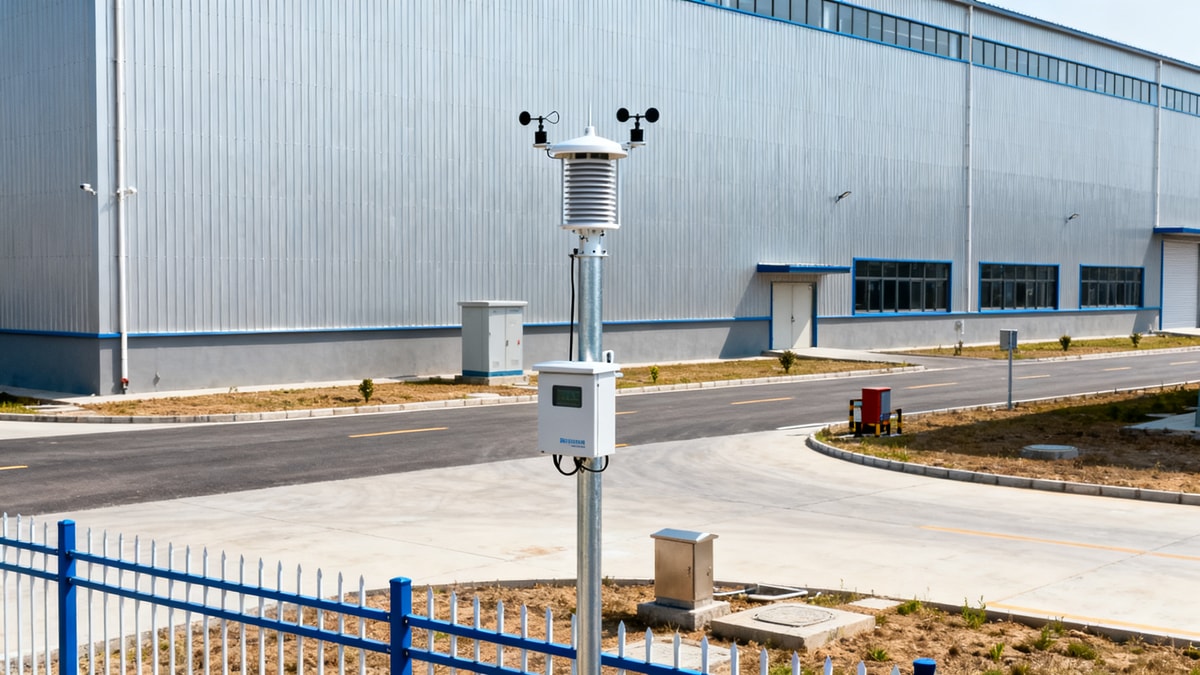
Even the most advanced ambient air quality monitor can produce misleading data if it is installed in the wrong location. For technical evaluators, placement is not a minor detail but a decisive factor that affects compliance, trend accuracy, and risk assessment. Understanding how airflow, emission sources, height, and surrounding structures distort readings is essential before trusting the numbers or comparing system performance.
Why placement matters more in some monitoring scenarios than others
An ambient air quality monitor is rarely deployed in a neutral environment. It may be placed near a plant boundary, outside a warehouse, beside a roadway, on a school perimeter, or within a multi-building industrial campus. In each case, the monitor is expected to answer a different business question: Is the site compliant? Is the community exposed? Are emissions controls effective? Is a supplier’s system stable across seasons? Because the decision context changes, the consequences of poor placement also change.
For technical evaluators, this is especially important during specification reviews, pilot tests, tender comparisons, and post-installation acceptance. A distorted reading can lead to false alarms, underreported pollution, failed audits, or incorrect procurement conclusions. In industrial settings, a monitor that is too close to a stack plume, HVAC exhaust, reflective wall, loading bay, or idling vehicle zone can overstate local pollution. On the other hand, a unit mounted in an over-sheltered or unusually elevated position may underrepresent actual exposure at breathing level or along a regulated boundary line.
The practical lesson is simple: before evaluating sensor quality, data platform performance, or calibration stability, first verify whether the ambient air quality monitor is positioned for the intended use case. Good hardware in the wrong place creates bad evidence.
Typical application scenarios and how placement priorities differ
Different deployments require different siting logic. A monitor used for regulatory boundary surveillance should not be positioned the same way as one used for urban trend mapping or construction dust alerts. The table below helps technical evaluators compare common scenarios quickly.
In all of these cases, the ambient air quality monitor must be matched to the decision purpose. A technically valid location for one scenario can be misleading in another.
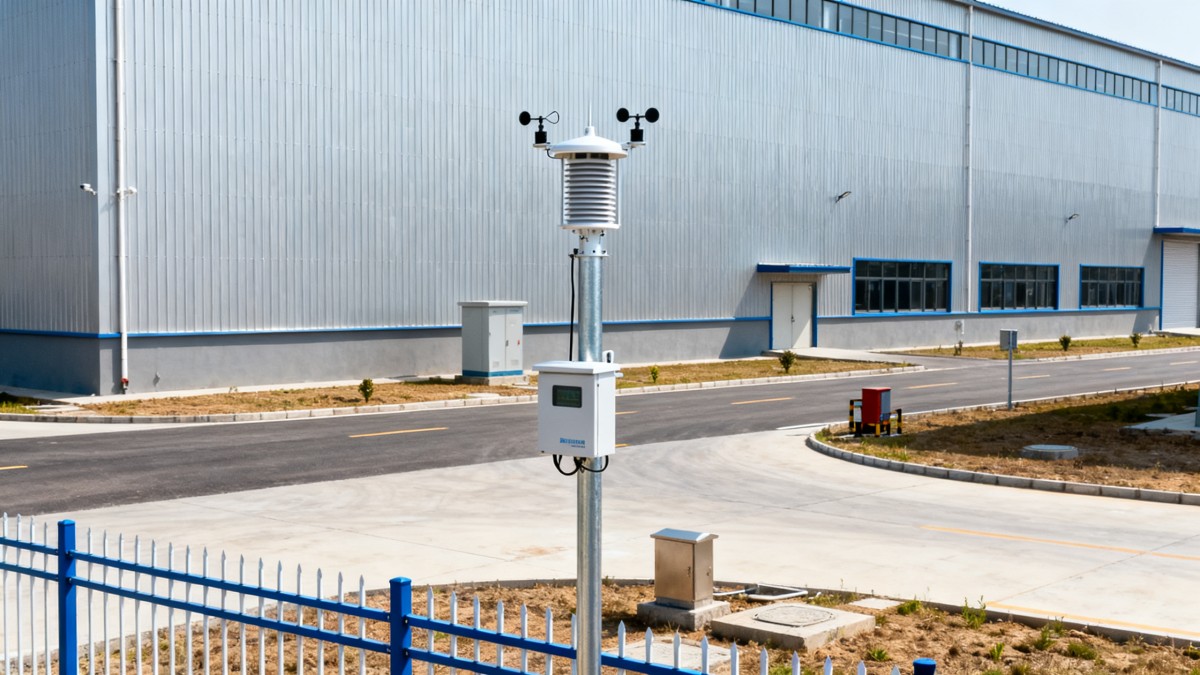
Scenario 1: Industrial fence-line monitoring needs representative exposure, not dramatic numbers
In heavy industry, fence-line deployment is often used to evaluate emissions migration, support permit obligations, or address community concern. The common mistake is to place the ambient air quality monitor where pollution is easiest to detect rather than where ambient conditions are most representative. Mounting near vents, truck queues, wastewater treatment corners, backup generators, or process doors may produce extreme spikes that look useful but do not reflect the broader boundary condition.
Technical evaluators should study site maps, source inventories, and seasonal wind roses before approving monitor positions. A strong location generally avoids direct source dominance while still remaining sensitive to off-site transport. If one side of the plant receives prevailing downwind impact, that side may deserve the primary monitoring position, but the exact point still needs clearance from walls, canopies, and turbulence created by equipment yards.
For procurement teams comparing vendors, placement also affects perceived instrument performance. One supplier may appear “more sensitive” only because its unit was mounted in a more contaminated micro-location. Evaluations should normalize siting before comparing precision, response time, or drift.
Scenario 2: Roadside and urban installations are highly vulnerable to microenvironment distortion
An ambient air quality monitor deployed for traffic pollution is exposed to one of the most unstable siting environments. Concentrations can change sharply within a few meters because of lane geometry, street canyon effects, parked buses, median barriers, and traffic signal cycles. A monitor near a junction may overemphasize braking and idling emissions, while one placed too far back from the road may miss the actual transport signature.
For technical evaluators, the key question is whether the objective is hot-spot detection, corridor trend analysis, or public exposure estimation. These are not the same. A hot-spot program may intentionally place the monitor where peaks occur, but then the data should not be used as a citywide baseline. A corridor trend program needs consistency over time and should avoid locations likely to be altered by new signage, temporary bus stops, or facade renovation. A public exposure program should consider walking paths, waiting zones, and school entrances rather than only the nearest curb.
Building geometry is another distortion source. Tall facades can create recirculating pockets where pollutants linger. If the ambient air quality monitor sits inside that pocket, readings may remain elevated long after roadway conditions change. That may be valuable for exposure assessment but misleading for source attribution unless documented carefully.
Scenario 3: Construction, quarry, and temporary worksites require dynamic siting logic
Temporary and mobile projects introduce a different challenge: the source itself moves. Dust-producing activities shift with excavation, crushing, haul routes, stockpile locations, and demolition phases. In these environments, a fixed ambient air quality monitor can become irrelevant within weeks if placement is not reviewed against the project schedule.
A useful approach is to define multiple monitoring roles. One unit may act as an upwind background reference, while another operates at the most likely downwind receptor edge. This gives evaluators a stronger basis for distinguishing project impact from regional conditions. Simply relocating a monitor whenever complaints arise may create fragmented datasets that cannot support trend analysis or contractor accountability.
In tenders and technical reviews, ask whether the deployment plan includes relocation criteria, documentation protocols, and weather integration. Without those controls, the ambient air quality monitor may generate activity logs rather than defensible evidence.
Scenario 4: Sensitive receptor monitoring should reflect human exposure, not installation convenience
When monitors are installed around schools, hospitals, office campuses, or residential edges, the main objective is often exposure relevance. Yet many systems are mounted where power, poles, or network access are easiest to obtain. This can place the ambient air quality monitor too high, too close to building exhausts, or too far from where people actually spend time.
For these projects, evaluators should balance representativeness, tamper protection, and maintenance access. Overprotective placement inside alcoves, behind fences, or beneath overhangs may reduce vandalism risk but alter airflow. Likewise, rooftop installation may simplify wiring but weaken the connection between measured values and occupant exposure at ground level. If the business question relates to health-related decision support, siting must remain faithful to real receptor conditions.
The four placement variables that most often distort readings
Across industries, most siting errors fall into four technical categories. First is source proximity. If the ambient air quality monitor is too close to a single emitter, readings become source-dominated rather than ambient. Second is airflow interference. Walls, containers, vehicles, vegetation, and rooftops can create eddies, sheltering, or channeling that changes measured concentrations.
Third is mounting height. Height influences whether data represent breathing-zone exposure, plume interception, or mixed-air background. A few meters can change interpretation significantly. Fourth is operational context. Maintenance zones, cleaning activities, diesel refueling areas, or intermittent exhaust fans may not appear on drawings but can heavily influence local measurements. Technical evaluators should inspect actual site operations, not just planned layouts.
A practical evaluation checklist for site selection
Before approving any ambient air quality monitor location, technical teams should confirm several points:
- Is the site objective compliance, source tracking, trend analysis, complaint response, or exposure estimation?
- Does the monitor sit in a representative airflow path for that objective?
- Is there sufficient distance from direct exhausts, loading zones, and idling vehicles?
- Could nearby walls, roofs, trees, or containers create turbulence or sheltering?
- Is the mounting height consistent with the intended interpretation of data?
- Will future site changes such as expansion, roadworks, or utility installations alter the microenvironment?
- Is the siting method documented well enough to support audits and vendor comparisons?
This checklist is especially valuable in EPC and multi-vendor projects, where instrument selection, civil placement, and environmental compliance may be handled by different teams.
Common misjudgments technical evaluators should challenge
One common misjudgment is assuming that a higher reading means a better monitor. In reality, a poorly placed ambient air quality monitor may only be sampling a stronger local plume. Another is treating all outdoor locations as equivalent once calibration is complete. Calibration confirms instrument response, not environmental representativeness.
A third mistake is copying previous projects without checking the local microclimate. The same sensor model can perform very differently between an open industrial yard and a narrow urban corridor. Finally, teams often underestimate how temporary site objects affect data. Portable generators, stored pallets, scaffold wraps, and parked tankers can all modify airflow enough to shift readings materially.
FAQ for scenario-based placement decisions
Can one ambient air quality monitor serve both compliance and source diagnosis?
Sometimes, but not reliably in every project. A location optimized for representative boundary compliance may not be close enough for source differentiation. Dual-purpose expectations should be validated carefully.
Should monitors always be installed at breathing height?
Not always. Breathing-zone relevance matters for exposure-focused projects, but some industrial or perimeter applications require different heights to achieve representative sampling or security. The correct height depends on the decision objective.
How often should placement be reviewed?
At minimum during commissioning, after major site changes, and when data patterns become inconsistent with process expectations or meteorology. Temporary worksites may require far more frequent reviews.
How to move from measurement data to confident procurement and deployment decisions
For technical evaluators, the right question is not simply whether an ambient air quality monitor meets specification on paper. The more decisive question is whether the proposed placement allows the instrument to answer the site’s real operational need. In industrial procurement, environmental governance, and infrastructure planning, this distinction protects both compliance credibility and capital efficiency.
Before final selection, align monitor location with the specific scenario: fence-line compliance, roadway trend analysis, construction dust control, or receptor exposure assessment. Review winds, source maps, height, physical obstructions, and future site changes together rather than in isolation. When placement logic is documented and scenario-specific, data become more defensible, vendor comparisons become fairer, and the ambient air quality monitor becomes a strategic decision tool instead of a misleading signal generator.
Technical Specifications
- India BIS Draft IS 17832:2026 Sets Noise & Dust Limits for Waste CrushersAuthor :Environmental Engineering Director
- Korea MFDS Mandates Korean UI & KOSHA OEL Database for Industrial Water AnalyzersAuthor :Precision Metrology Expert
- Indonesia BPOM Mandates PM0.1 Efficiency & CADR Decay Labeling for Industrial Air PurifiersAuthor :Environmental Engineering Director
Expert Insights

Chief Security Architect
Dr. Thorne specializes in the intersection of structural engineering and digital resilience. He has advised three G7 governments on industrial infrastructure security.
Related Analysis
- May 03, 2026India BIS Draft IS 17832:2026 Sets Noise & Dust Limits for Waste CrushersAuthor :Environmental Engineering Director
- May 03, 2026Korea MFDS Mandates Korean UI & KOSHA OEL Database for Industrial Water AnalyzersAuthor :Precision Metrology Expert
- May 03, 2026Indonesia BPOM Mandates PM0.1 Efficiency & CADR Decay Labeling for Industrial Air PurifiersAuthor :Environmental Engineering Director
Core Sector // 01
Security & Safety
- Indonesia BPOM Mandates PM0.1 Efficiency & CADR Decay Labeling for Industrial Air PurifiersAuthor :Environmental Engineering Director

- Ambient Air Quality Monitor Placement Can Distort ReadingsAuthor :Environmental Engineering Director

- Wholesale N95 respirators: test reports that deserve a closer lookAuthor :Environmental Engineering Director

- RCEP Mandates Carbon Labeling for Industrial Air Filters from Jul 2026Author :Environmental Engineering Director

- EU CE Update: ULPA Filters Require MVR Testing from Jan 2027Author :Environmental Engineering Director

- EU CE Draft: ULPA Air Filters Must Pass MVR TestingAuthor :Environmental Engineering Director
![]()
- FDA Expands Regulation of Industrial Air Filters: ULPA Filter MVR Verification RequiredAuthor :Environmental Engineering Director
![]()
- Preventing dust leaks in environmental engineeringAuthor :Environmental Engineering Director