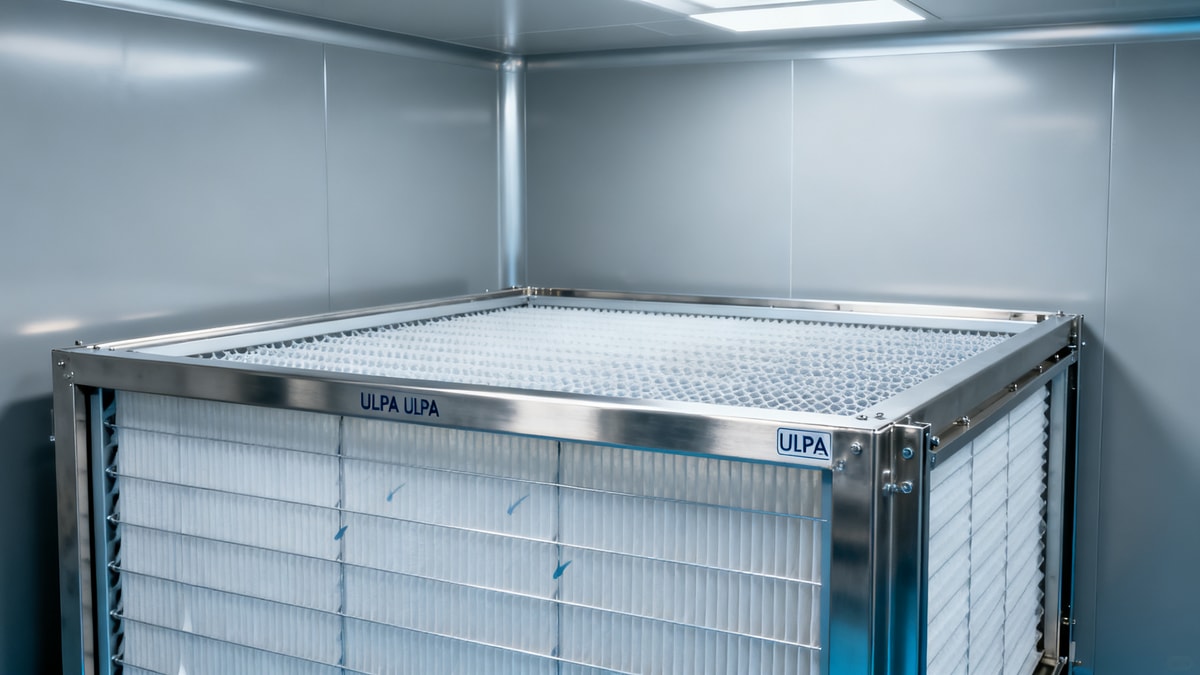
EU CE Mark Transition Ends for Industrial Dust Collectors
Author
Date Published
Reading Time
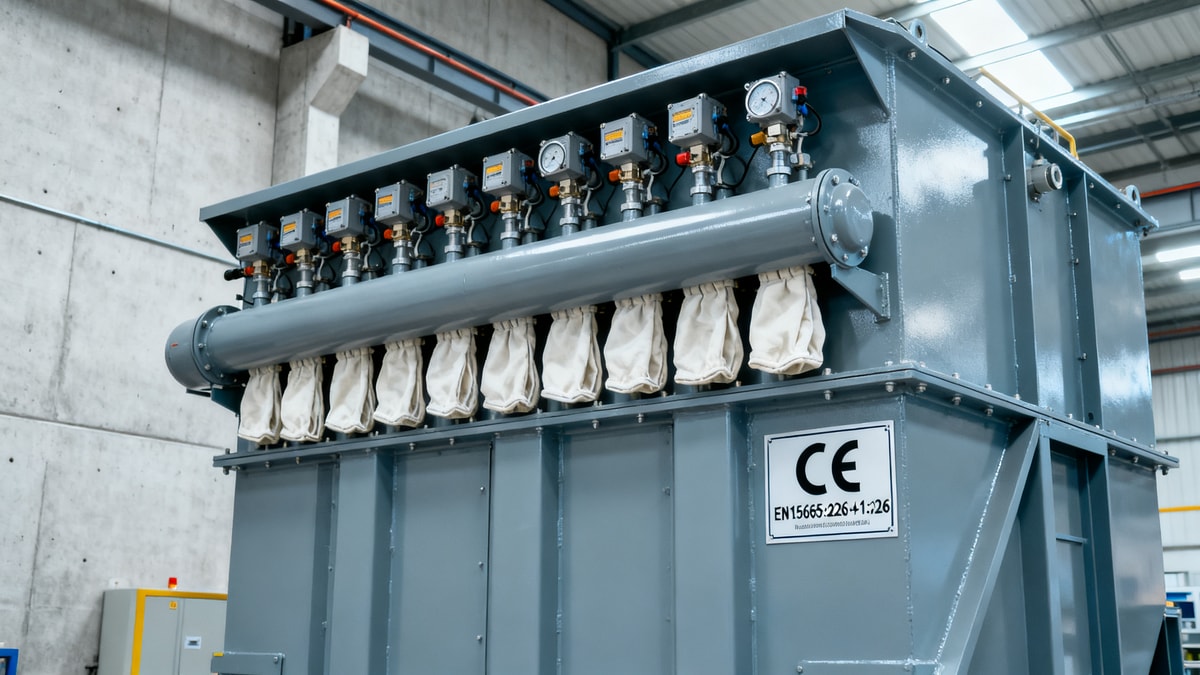
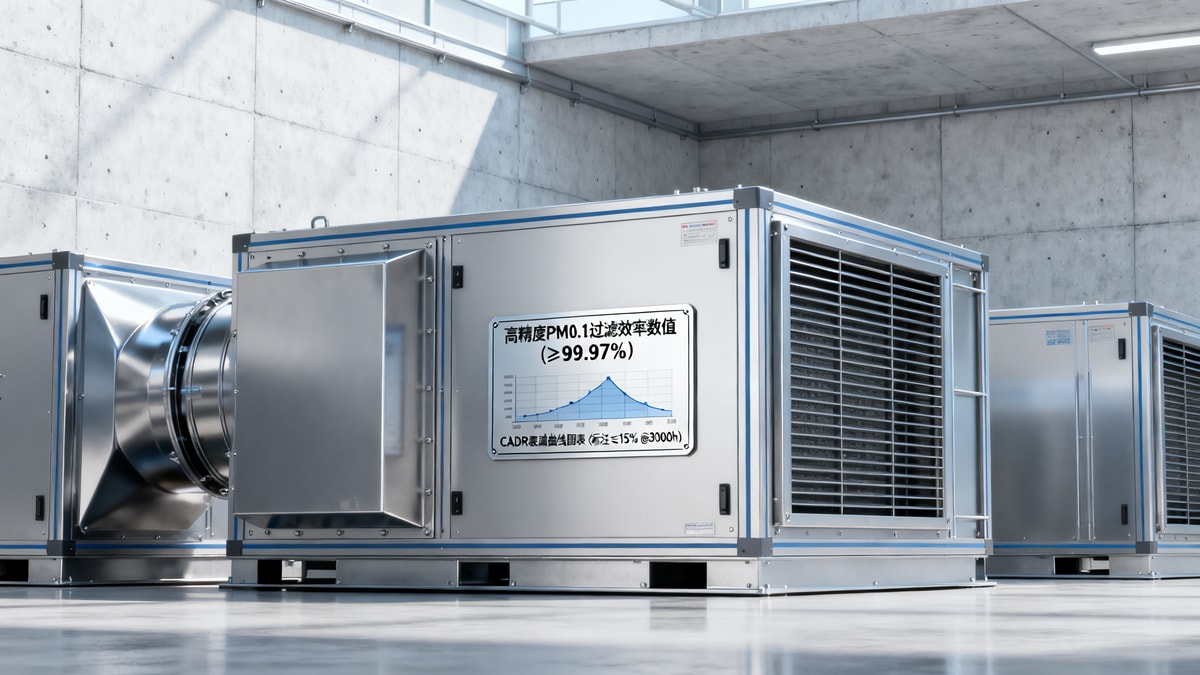
As of 1 May 2026, the EU transition period for CE marking of industrial dust collectors and air filtration equipment under EN 15665 has formally ended. Manufacturers and exporters—particularly those in China supplying to the EU market—must now comply with EN 15665:2026+A1:2026. This affects industrial air filter producers, baghouse manufacturers, and cartridge-based purification system suppliers, as non-compliant units will face customs rejection.
Event Overview
The European Commission confirmed on 1 May 2026 that the transition period for EN 15665:2015+A1:2020 has expired. From this date, all industrial air filters, baghouse dust collectors, and cartridge-type air purification equipment placed on the EU market must conform to the revised standard EN 15665:2026+A1:2026. Key new mandatory requirements include a maximum nanoparticle (PM0.3) penetration rate of ≤0.005% and validation of dynamic pressure decay curves during pulse-jet cleaning cycles. Exporters must hold valid certificates issued under the new standard to clear EU customs.
Industries Affected by Segment
Direct Exporters (Trade Enterprises)
These enterprises are directly impacted because CE conformity is a legal prerequisite for market access. Non-compliant shipments will be detained or rejected at EU borders. The requirement to obtain new certification means delays in shipment scheduling, potential retesting costs, and possible renegotiation of delivery terms with EU importers.
Manufacturers (Equipment Producers)
Producers of baghouse systems, cartridge filters, and industrial air cleaners must revise product design, materials selection, and internal testing protocols to meet the PM0.3 penetration limit and dynamic pressure decay verification. Existing production lines may require recalibration or third-party validation before issuing new test reports.
Supply Chain Service Providers (Certification & Testing Agencies)
Testing laboratories and notified bodies accredited for EN 15665 are experiencing increased demand for validation under the updated standard. Lead times for certification may extend, especially for facilities requiring re-verification of test rigs for nanoparticle measurement and real-time pressure decay analysis.
Procurement & Component Suppliers
Suppliers of filter media, pulse valves, and pressure sensors may see revised technical specifications from OEMs—for example, tighter tolerances for filter membrane pore distribution or enhanced data logging capability for pressure transducers. These changes could trigger updates to supplier quality agreements and material declarations.
What Relevant Enterprises Should Monitor and Do Now
Verify current certification status against EN 15665:2026+A1:2026
Exporters and manufacturers should confirm whether their existing CE certificates reference the superseded EN 15665:2015+A1:2020 version. Certificates issued before 1 May 2026 under the old standard are no longer valid for new consignments entering the EU.
Prioritize retesting for PM0.3 penetration and dynamic pressure decay
These two clauses are newly mandatory and technically demanding. Facilities lacking nanoparticle aerosol generation and detection capability—or real-time differential pressure monitoring during cleaning cycles—should engage accredited labs early to avoid bottlenecks.
Review documentation packages for EU Authorized Representative alignment
New technical files must reflect compliance with EN 15665:2026+A1:2026, including updated risk assessments, test reports, and EU Declaration of Conformity. The EU Authorized Representative must hold these updated documents before placing products on the market.
Update commercial contracts and Incoterms to reflect certification responsibility
Where contracts assign CE compliance obligations to suppliers (e.g., under EXW or FCA), parties should clarify who bears cost and timeline risk for re-certification—especially if legacy stock remains undelivered post-1 May 2026.
Editorial Perspective / Industry Observation
Observably, this deadline marks a shift from transitional flexibility to enforceable regulatory reality—not merely a paperwork update. Analysis shows the inclusion of PM0.3 penetration reflects growing EU focus on ultrafine particle control in occupational health contexts. The dynamic pressure decay clause signals stricter validation of long-term operational reliability, not just static performance. From an industry perspective, this is less a one-off compliance checkpoint and more an indicator of tightening technical harmonization across EU environmental and workplace safety frameworks. Continued monitoring of related standards—such as EN 60204-1 (electrical safety) and EN 14986 (explosion protection)—is advisable, as alignment trends suggest future cross-referencing.
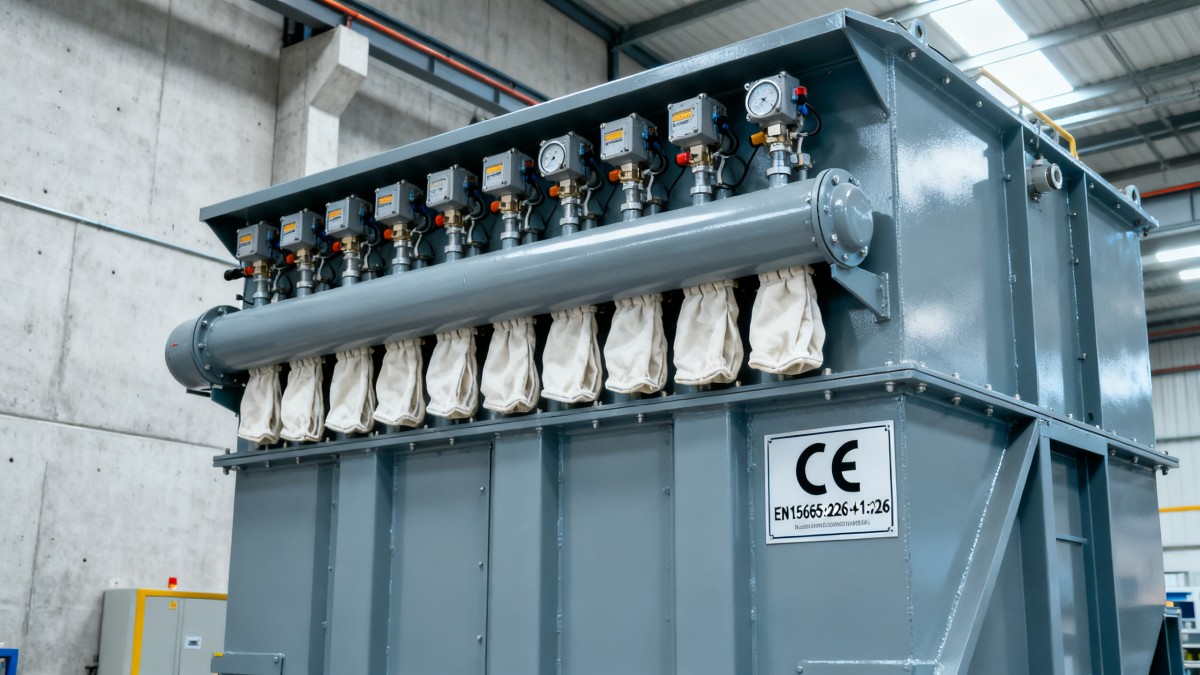
Conclusion: The expiry of the EN 15665 transition period is a concrete regulatory milestone—not a speculative policy signal. It confirms that technical compliance for industrial air cleaning equipment in the EU is now anchored to measurable, testable performance thresholds. Current interpretation should treat this as an active enforcement condition, not a pending recommendation. Enterprises engaged in EU trade must align product validation, documentation, and contractual frameworks accordingly—and do so without assuming grandfathering of prior certifications.
Source: European Commission official notice dated 1 May 2026; CEN publication record for EN 15665:2026+A1:2026. Note: Ongoing updates to EU NANDO database regarding notified body accreditation status for the new standard remain under observation.
Technical Specifications
- US DOE Industrial Transformer Efficiency Rule Effective Oct 2026Author :Grid Infrastructure Analyst
- Indonesia BPOM Launches AI Filter Life Algorithm ReviewAuthor :Environmental Engineering Director
- Global Industrial Waste Shredder Lead Times Extend to 22 WeeksAuthor :Environmental Engineering Director
Expert Insights

Chief Security Architect
Dr. Thorne specializes in the intersection of structural engineering and digital resilience. He has advised three G7 governments on industrial infrastructure security.
Related Analysis
- May 04, 2026US DOE Industrial Transformer Efficiency Rule Effective Oct 2026Author :Grid Infrastructure Analyst
- May 04, 2026Indonesia BPOM Launches AI Filter Life Algorithm ReviewAuthor :Environmental Engineering Director
- May 04, 2026Global Industrial Waste Shredder Lead Times Extend to 22 WeeksAuthor :Environmental Engineering Director
Core Sector // 01
Security & Safety
- Indonesia BPOM Launches AI Filter Life Algorithm ReviewAuthor :Environmental Engineering Director

- EU CE Mark Transition Ends for Industrial Dust CollectorsAuthor :Environmental Engineering Director

- Indonesia BPOM Mandates PM0.1 Efficiency & CADR Decay Labeling for Industrial Air PurifiersAuthor :Environmental Engineering Director

- Ambient Air Quality Monitor Placement Can Distort ReadingsAuthor :Environmental Engineering Director

- Wholesale N95 respirators: test reports that deserve a closer lookAuthor :Environmental Engineering Director

- RCEP Mandates Carbon Labeling for Industrial Air Filters from Jul 2026Author :Environmental Engineering Director

- EU CE Update: ULPA Filters Require MVR Testing from Jan 2027Author :Environmental Engineering Director

- EU CE Draft: ULPA Air Filters Must Pass MVR TestingAuthor :Environmental Engineering Director
![]()