EU CE Update: ULPA Filters Require MVR Testing from Jan 2027
Author
Date Published
Reading Time
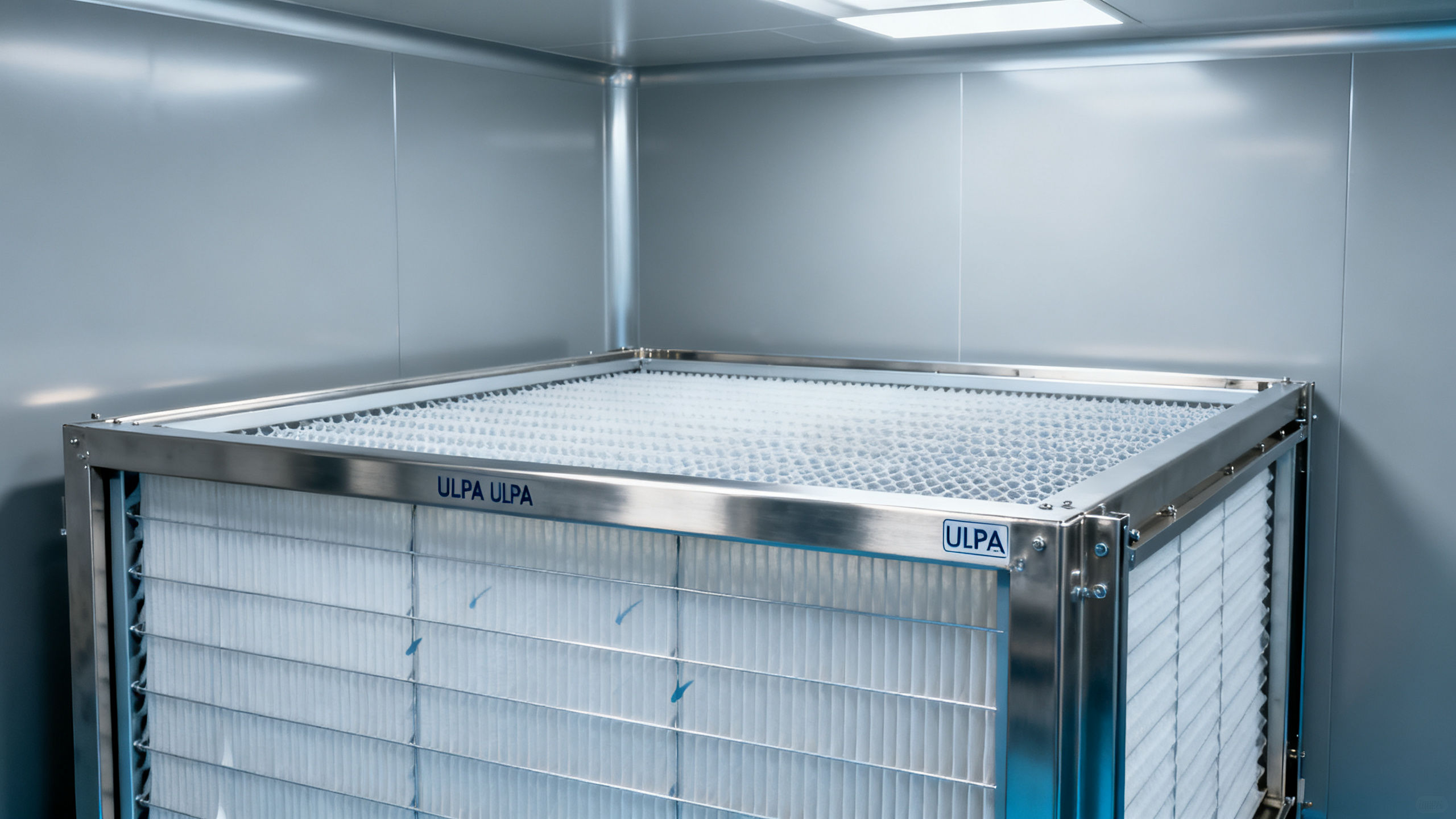
On 28 April 2026, the European Commission published the final draft of EN 1822-5:2026 in the Official Journal of the European Union (OJEU C 142/2026), mandating microbial virus retention (MVR) testing for ULPA-grade industrial air filters used in ISO Class 1–3 cleanrooms. This development directly affects manufacturers and exporters of high-efficiency filtration systems serving pharmaceutical, biotech, semiconductor, and medical device industries — where airborne bio-contamination control is critical.
Event Overview
The European Commission formally released EN 1822-5:2026 on 28 April 2026 in OJEU C 142/2026. The standard specifies that, effective 1 January 2027, all ULPA-class industrial air filters claiming CE marking for use in ISO Class 1–3 cleanrooms must pass a newly introduced Microbial Virus Retention (MVR) test. The test uses MS2 bacteriophage aerosol and requires ≥99.999% retention efficiency. Test reports must be issued by an EU Notified Body.
Industries Affected
Filter Component & Media Manufacturers
These suppliers provide ULPA-grade filter media (e.g., glass fiber or nanofiber composites) to OEMs. They are affected because MVR performance depends on both fiber morphology and structural integrity under aerosol challenge — not just particle capture efficiency (e.g., at 0.12 µm). Media formulations previously qualified only for EN 1822-1 particle-based testing may require re-evaluation or reformulation.
OEM Filter Housing & Module Assemblers
Manufacturers integrating media into sealed frames, gaskets, and housings face new validation requirements. MVR testing evaluates full-filter integrity — including seal quality, edge bonding, and frame rigidity under dynamic airflow. Leakage paths undetectable via traditional DOP/PAO scanning may compromise MVR results, necessitating revised assembly protocols and leak-testing integration.
Export-Oriented Filtration System Integrators
Companies supplying turnkey cleanroom air handling units (AHUs) or mini-environments to EU clients must now ensure upstream ULPA filters carry valid MVR-certified CE declarations. Since MVR testing is not part of legacy CE conformity assessments, integrators risk non-compliance if relying on existing supplier documentation without verification of Notified Body-issued MVR reports.
Testing & Certification Service Providers
Laboratories accredited under ISO/IEC 17025 — especially those offering EN 1822 particle testing — must now expand capability to include MS2 phage aerosol generation, sampling, and plaque assay quantification. Only Notified Bodies designated for Regulation (EU) 2016/425 or (EU) 2017/745 may issue MVR test reports for CE purposes; general testing labs cannot fulfill this role.
What Enterprises and Practitioners Should Focus On Now
Monitor official implementation timelines and transitional provisions
Although EN 1822-5:2026 enters force on 1 January 2027, the Commission has not yet published guidance on grandfathering of existing CE certificates or validity of pre-2027 test data. Enterprises should track updates from the EU NANDO database and national market surveillance authorities for any grace periods or phased rollouts.
Identify and prioritize ULPA filter SKUs destined for ISO Class 1–3 cleanroom applications in the EU
Not all ULPA filters fall under this requirement — only those declared for use in ISO Class 1–3 environments (e.g., semiconductor photolithography bays, aseptic filling lines). Companies should audit their technical documentation, labeling, and DoC statements to determine which products trigger the MVR obligation — avoiding over-compliance on non-applicable models.
Distinguish between regulatory signal and operational readiness
The publication of EN 1822-5:2026 is a formal regulatory milestone, but Notified Bodies have not yet published their internal MVR testing procedures or capacity roadmaps. Enterprises should treat current MVR capability as limited and confirm availability with specific Notified Bodies before initiating certification planning.
Initiate early engagement with Notified Bodies and update supply chain communication
Request written confirmation from current Notified Bodies on their designation scope for EN 1822-5:2026, expected lead times, and required sample configurations. Simultaneously, notify upstream media suppliers and contract assemblers of the upcoming requirement to align internal validation timelines and avoid last-minute production bottlenecks.
Editorial Perspective / Industry Observation
Observably, this amendment marks a structural shift in EU air filtration regulation — moving beyond particulate removal toward functional biological containment assurance. Analysis shows it reflects growing regulatory emphasis on process-critical contamination risks in advanced manufacturing and life sciences, rather than merely environmental air quality. It is currently best understood as a binding regulatory signal with defined enforcement timing, not yet a fully operationalized compliance pathway — given the absence of harmonized MVR test lab capacity and pending clarification on transition rules. The industry should therefore monitor both technical implementation readiness and enforcement precedents closely over the next 8 months.
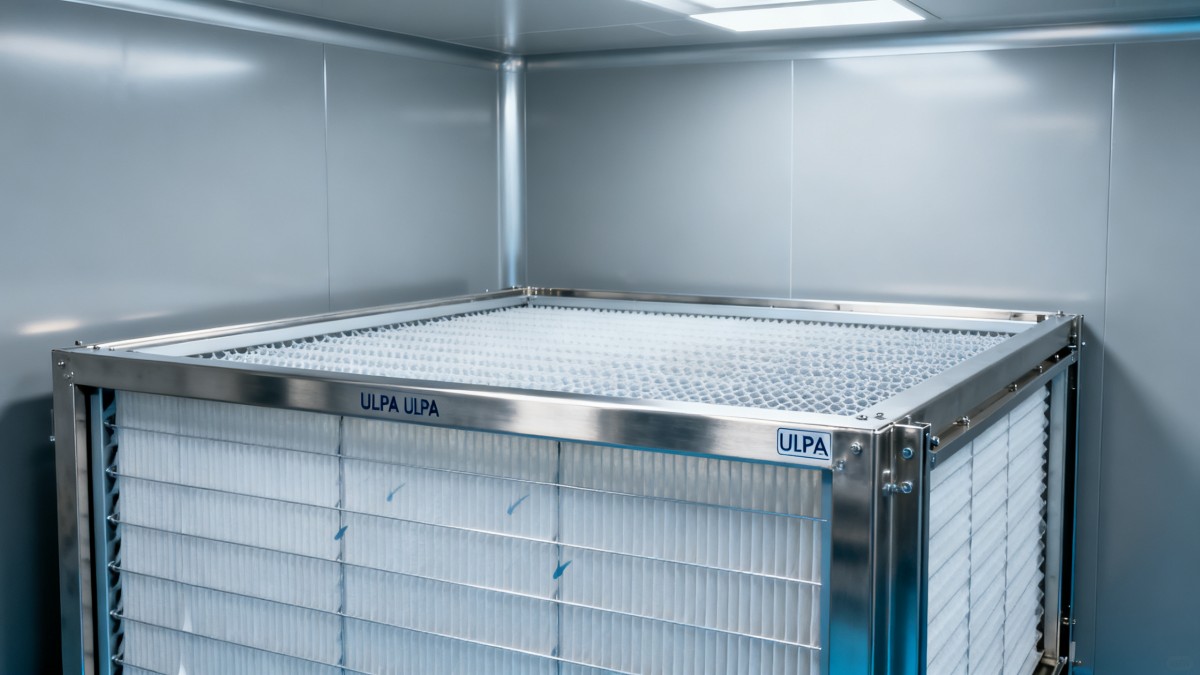
This update carries material implications for global ULPA filter supply chains — particularly for Chinese filter media producers and system integrators exporting to regulated EU cleanroom markets. Its significance lies less in novelty of the test method (MS2 phage has long been used in lab-scale studies) and more in its codification as a mandatory, third-party-verified CE conformity requirement. For stakeholders, it signals a tightening of performance accountability — where filtration efficacy is now explicitly tied to microbiological hazard mitigation, not just particle count reduction.
Information Sources:
• Official Journal of the European Union (OJEU C 142/2026), published 28 April 2026
• Draft EN 1822-5:2026, final version as referenced in OJEU C 142/2026
Note: Notified Body designation status for EN 1822-5:2026, detailed test methodology harmonization, and transitional arrangements remain under observation and are not yet publicly confirmed.
Technical Specifications
- 6th National Auto Standards Committee Launched, Impacts Optical Test Equipment ExportAuthor :Precision Metrology Expert
- Copper Price Surge Impacts Industrial Components BOM CostsAuthor :Grid Infrastructure Analyst
- EU CE Update: ULPA Filters Require MVR Testing from Jan 2027Author :Environmental Engineering Director
Expert Insights

Chief Security Architect
Dr. Thorne specializes in the intersection of structural engineering and digital resilience. He has advised three G7 governments on industrial infrastructure security.
Related Analysis
- Apr 29, 20266th National Auto Standards Committee Launched, Impacts Optical Test Equipment ExportAuthor :Precision Metrology Expert
- Apr 29, 2026Copper Price Surge Impacts Industrial Components BOM CostsAuthor :Grid Infrastructure Analyst
- Apr 29, 2026EU CE Update: ULPA Filters Require MVR Testing from Jan 2027Author :Environmental Engineering Director
Core Sector // 01
Security & Safety
- EU CE Update: ULPA Filters Require MVR Testing from Jan 2027Author :Environmental Engineering Director

- EU CE Draft: ULPA Air Filters Must Pass MVR TestingAuthor :Environmental Engineering Director
![]()
- FDA Expands Regulation of Industrial Air Filters: ULPA Filter MVR Verification RequiredAuthor :Environmental Engineering Director
![]()
- Preventing dust leaks in environmental engineeringAuthor :Environmental Engineering Director

- EU CBAM Enters Enforcement Phase for Industrial Filtration & Water Treatment EquipmentAuthor :Environmental Engineering Director
![]()
- EU Mandates PM0.3 Efficiency & Energy Labels for Industrial Air Filters from 1 July 2026Author :Environmental Engineering Director
![]()
- EU Draft Rules: Industrial Air Filters Must Label PM0.3 Efficiency from July 2026Author :Environmental Engineering Director
![]()
- Electrostatic precipitator ESP vs baghouse in high temperature dustAuthor :Environmental Engineering Director