When to Replace a Thermal Overload Relay
Author
Date Published
Reading Time
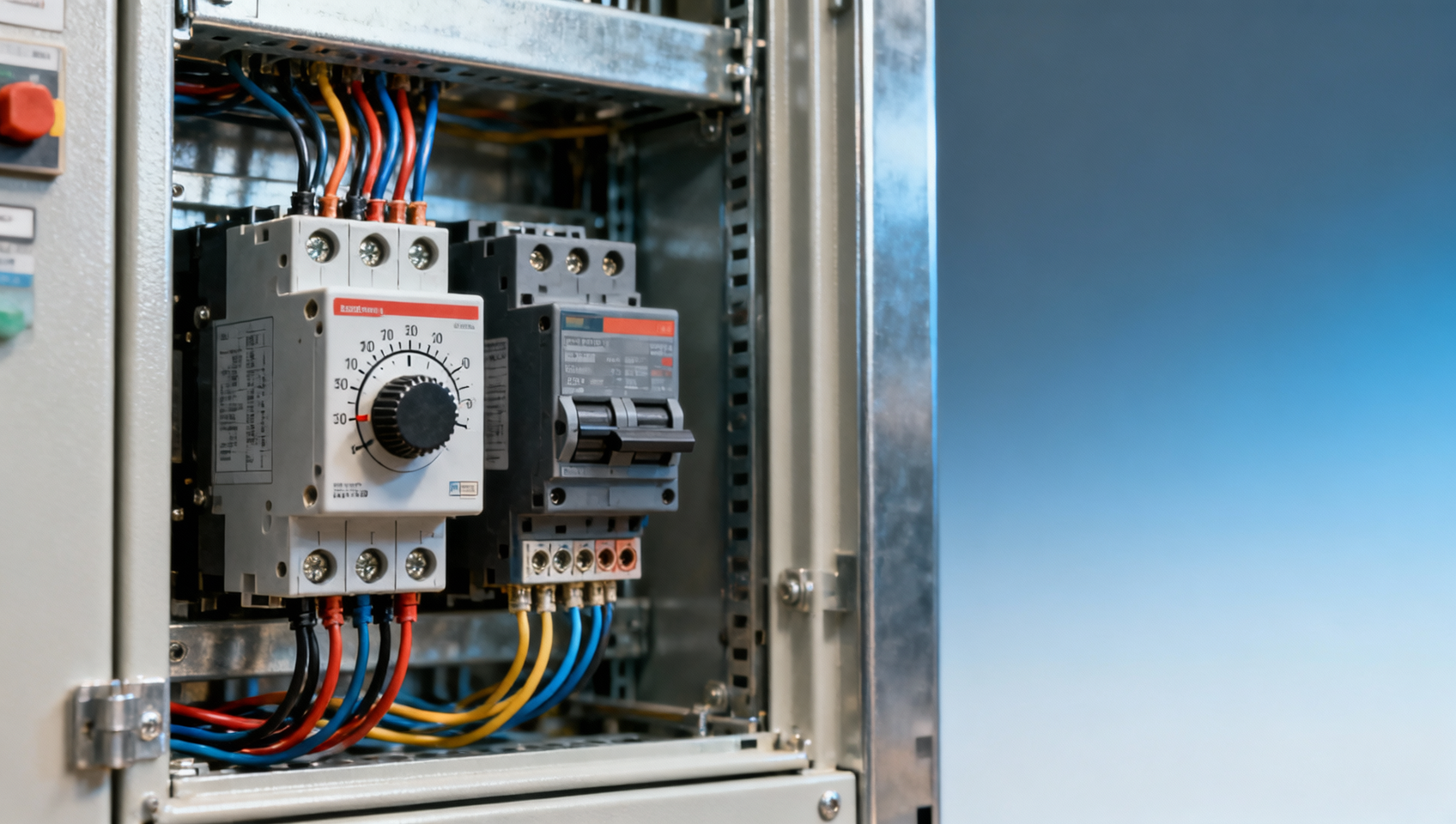
Knowing when to replace a thermal overload relay is essential for preventing motor damage, downtime, and costly safety risks. For engineers, operators, and buyers evaluating thermal overload relays alongside wholesale magnetic contactors, earth leakage circuit breaker options, residual current device RCD solutions, and low voltage switchboard systems, understanding the warning signs of failure helps ensure safer, more reliable industrial operations.
If you need a short answer: replace a thermal overload relay when it no longer trips accurately, shows visible damage, repeatedly nuisance-trips without a real overload cause, fails to reset properly, has been exposed to short circuit or overheating events, or no longer matches the motor’s actual load and starting characteristics. In many facilities, relay replacement is not just a maintenance task—it is a risk control decision that protects motors, production continuity, and compliance.
What users are really trying to know when they search this topic
Most readers searching “when to replace a thermal overload relay” are not looking for a textbook definition. They want to answer practical questions such as:
- How do I know whether the relay is still reliable?
- What symptoms mean replacement is safer than adjustment or reset?
- Can a bad overload relay damage a motor or create downtime?
- Should I replace only the relay, or also inspect the magnetic contactor and related protection devices?
- What should buyers and maintenance teams check before purchasing a replacement?
That practical intent matters because a thermal overload relay sits at the center of motor protection. If it drifts out of calibration or suffers internal wear, the result may be false trips, missed trips, overheated motors, or hidden reliability issues inside a low voltage switchboard.
The most important rule: replace it when protection becomes uncertain
A thermal overload relay should be replaced as soon as there is doubt about its ability to protect the motor within the intended current range and trip class. In industrial environments, uncertainty is already a risk signal.
Unlike some components that fail visibly and completely, overload relays can degrade gradually. They may still appear functional while tripping too late, too early, or inconsistently. That makes delayed replacement especially dangerous for operations relying on pumps, fans, conveyors, compressors, and other motor-driven assets.
From an operational perspective, replacement is usually justified when one or more of the following is true:
- The relay no longer trips at the expected load level.
- The reset mechanism sticks or behaves inconsistently.
- There is evidence of heat, corrosion, contamination, or mechanical damage.
- The motor application has changed and the existing relay is no longer correctly rated.
- The relay has experienced electrical fault stress beyond normal overload conditions.
- The cost of uncertainty is higher than the cost of replacement.
Clear signs that a thermal overload relay should be replaced
For operators and maintenance teams, these are the most useful field-level replacement indicators.
1. Repeated nuisance tripping after the real cause has been ruled out
If the motor is operating within normal current limits, the ambient temperature is acceptable, and there is no mechanical overload, but the relay continues to trip, the relay itself may be unstable or worn. Repeated nuisance tripping is not only frustrating—it can reduce trust in the protection system and encourage unsafe bypass behavior.
2. Failure to trip during a genuine overload event
This is one of the most serious warning signs. If the motor current remains above the safe setting and the relay does not trip in time, the motor windings may overheat and insulation life may drop sharply. Any suspected under-tripping or delayed tripping should trigger immediate inspection and likely replacement.
3. Physical damage or overheating marks
Replace the relay if you see:
- Burn marks or discoloration
- Melted plastic or insulation
- Cracked housing
- Corroded terminals
- Loose or damaged adjustment dial
- Signs of moisture or dust ingress
These symptoms often indicate internal deterioration that may not be repairable or predictable.
4. Relay will not reset properly
If a relay fails to reset, resets only intermittently, or immediately trips again despite verified normal operating conditions, internal mechanisms may be damaged. In critical applications, a sticking reset function is enough reason to replace the unit rather than continue troubleshooting around it.
5. Aging in harsh operating environments
Thermal overload relays installed in high-heat, dusty, corrosive, or vibration-heavy areas age faster. Even if they appear to work, years of thermal cycling and contamination can change trip behavior. In such environments, periodic preventive replacement can be more economical than waiting for failure.
6. Mismatch with a new motor, changed load, or updated starter assembly
If the motor has been replaced, upsized, derated, or assigned to a different process load, the existing relay may no longer fit the application. The same applies when a wholesale magnetic contactor or starter assembly is upgraded. An overload relay should match the motor’s full-load current, starting profile, and operating duty.
7. Exposure to abnormal fault events
A thermal overload relay is designed for overload protection, not as a substitute for short circuit protection. If the circuit has experienced a major fault, short circuit, phase loss event, severe overheating, or switchboard incident, replace the relay unless testing clearly confirms continued integrity. This is especially important where the relay is installed near an earth leakage circuit breaker, residual current device RCD, or other protection components affected by the same fault environment.
How long does a thermal overload relay last?
There is no single universal replacement interval. Service life depends on:
- Operating temperature
- Frequency of motor starts and stops
- Load stability
- Vibration
- Contamination from dust, oil, or chemicals
- Quality of installation and enclosure protection
- Coordination with contactors and upstream devices
In stable indoor applications, a relay may perform reliably for many years. In heavy industrial duty, mining, processing plants, or outdoor electrical rooms, the practical life may be shorter. For asset managers and procurement teams, the better question is not “How many years should it last?” but “Can we still trust its protection performance in this environment?”
Should you replace the relay or just adjust it?
Adjustment is appropriate only when the relay is healthy and the issue is clearly a settings mismatch. Replacement is the better choice when there is any sign of deterioration or uncertainty.
You can usually consider adjustment first if:
- The motor nameplate and actual full-load current were not previously matched correctly
- The trip setting is obviously incorrect
- The application has changed but the relay remains within a suitable adjustable range
- No damage, drift, or inconsistent behavior is present
You should lean toward replacement if:
- The relay trips inconsistently
- The mechanism feels worn or unreliable
- The unit has visible damage
- The relay is old and installed in a harsh environment
- The cost of an unexpected motor outage is high
For decision-makers, this is a simple risk calculation: if the process is critical, replacement is often cheaper than another unscheduled shutdown or motor rewind.
Why relay replacement should not be viewed in isolation
A thermal overload relay is only one part of the motor protection chain. If it is failing or aging, related components should also be checked. In many industrial panels, the real issue is not the relay alone but system coordination.
At minimum, inspect these associated elements:
- Magnetic contactor condition and contact wear
- Terminal tightness and conductor heating
- Phase balance and supply quality
- Motor current draw under actual load
- Upstream breaker or fuse coordination
- Earth leakage circuit breaker performance where applicable
- Residual current device RCD suitability for the circuit design
- Ventilation and thermal condition inside the low voltage switchboard
This broader view is especially relevant for buyers sourcing replacement components. A relay that keeps tripping may be exposing an undersized contactor, poor enclosure cooling, phase imbalance, or an incorrectly selected protection scheme.
What procurement teams should check before buying a replacement
For purchasing professionals, selecting a replacement thermal overload relay should go beyond brand and price. The wrong relay can create operational risk, warranty disputes, and compliance issues.
Match the application, not just the part number
- Motor full-load current range
- Trip class requirements
- Manual or automatic reset preference
- Contactor compatibility
- Panel space and mounting format
- Ambient temperature suitability
- Required certifications such as CE, UL, or other local approvals
Consider the complete protection environment
If the motor starter is part of a larger protection assembly, the replacement should be evaluated together with magnetic contactors, earth leakage circuit breaker devices, residual current device RCD solutions, and low voltage switchboard architecture. Coordination matters more than component-level substitution.
Prefer traceable, specification-backed sourcing
For industrial infrastructure, procurement should favor suppliers who can provide:
- Technical datasheets
- Testing and certification documents
- Compatibility information
- Clear operating ranges
- After-sales technical support
This reduces the risk of buying relays that fit mechanically but perform poorly in the real application.
A practical replacement checklist for operators and maintenance teams
Use this field checklist when deciding whether to replace a thermal overload relay:
- Verify motor current against nameplate and actual load.
- Check for phase imbalance, mechanical overload, and ventilation issues.
- Inspect the relay for discoloration, cracking, corrosion, or contamination.
- Test whether the relay trips and resets consistently.
- Review whether the motor, contactor, or duty cycle has changed.
- Confirm the relay setting range still matches the application.
- Review history of repeated trips, fault events, or panel overheating.
- If confidence in protection is low, replace the relay.
In most industrial settings, the key threshold is confidence. If the relay’s behavior cannot be trusted, replacement is the safer operational choice.
Business impact: why timely replacement saves more than it costs
For plant managers and enterprise decision-makers, replacing a questionable thermal overload relay is a small cost compared with the possible consequences of delay:
- Motor burnout and replacement expense
- Production stoppage
- Emergency service labor
- Safety incidents from overheated equipment
- Reduced equipment life across the starter assembly
- Compliance exposure in audited facilities
In high-value operations, proactive replacement supports uptime, maintenance planning, and safer asset management. It is often one of the simplest reliability improvements available in motor control systems.
Conclusion
A thermal overload relay should be replaced when its protection performance becomes doubtful, not only when it fails completely. Warning signs include nuisance tripping, failure to trip, visible heat damage, reset problems, harsh-environment aging, and application mismatch after motor or starter changes.
For operators, the priority is reliable motor protection. For buyers, the priority is correct specification and system compatibility. For decision-makers, the priority is reducing downtime and avoiding preventable electrical risk. In all three cases, the same principle applies: if the relay can no longer protect with confidence, replacement is the right decision.
When evaluating replacements, also review related components such as wholesale magnetic contactors, earth leakage circuit breaker devices, residual current device RCD units, and low voltage switchboard conditions to ensure the entire protection chain remains coordinated, safe, and dependable.
Technical Specifications
- Canton Fair Phase II 2026: Industrial Components Booking Rate Hits 98%Author :Heavy Industry Strategist
- TÜV Rheinland Updates EMC Guide for Industrial Optics EquipmentAuthor :Precision Metrology Expert
- Copper Price Surges 6.8%: Impact on Cables, Breakers & BOM CostsAuthor :Grid Infrastructure Analyst
Expert Insights

Chief Security Architect
Dr. Thorne specializes in the intersection of structural engineering and digital resilience. He has advised three G7 governments on industrial infrastructure security.
Related Analysis
- Apr 21, 2026Canton Fair Phase II 2026: Industrial Components Booking Rate Hits 98%Author :Heavy Industry Strategist
- Apr 21, 2026TÜV Rheinland Updates EMC Guide for Industrial Optics EquipmentAuthor :Precision Metrology Expert
- Apr 21, 2026Copper Price Surges 6.8%: Impact on Cables, Breakers & BOM CostsAuthor :Grid Infrastructure Analyst
Core Sector // 01
Security & Safety
- Earth Leakage Circuit Breaker vs RCDAuthor :Grid Infrastructure Analyst

- Why Magnetic Contactors Fail EarlyAuthor :Grid Infrastructure Analyst

- Wholesale Magnetic Contactors Buying GuideAuthor :Grid Infrastructure Analyst

- When to Replace a Thermal Overload RelayAuthor :Grid Infrastructure Analyst

- How to Choose Thermal Overload RelaysAuthor :Grid Infrastructure Analyst

- Safety relief valves: Why set pressure drift matters more than initial calibrationAuthor :Grid Infrastructure Analyst

- Solenoid valves wholesale: How coil voltage tolerance affects field reliabilityAuthor :Grid Infrastructure Analyst

- Electric motorized valves: Do IP67 ratings hold up under frequent washdown?Author :Grid Infrastructure Analyst