How to Choose Thermal Overload Relays
Author
Date Published
Reading Time
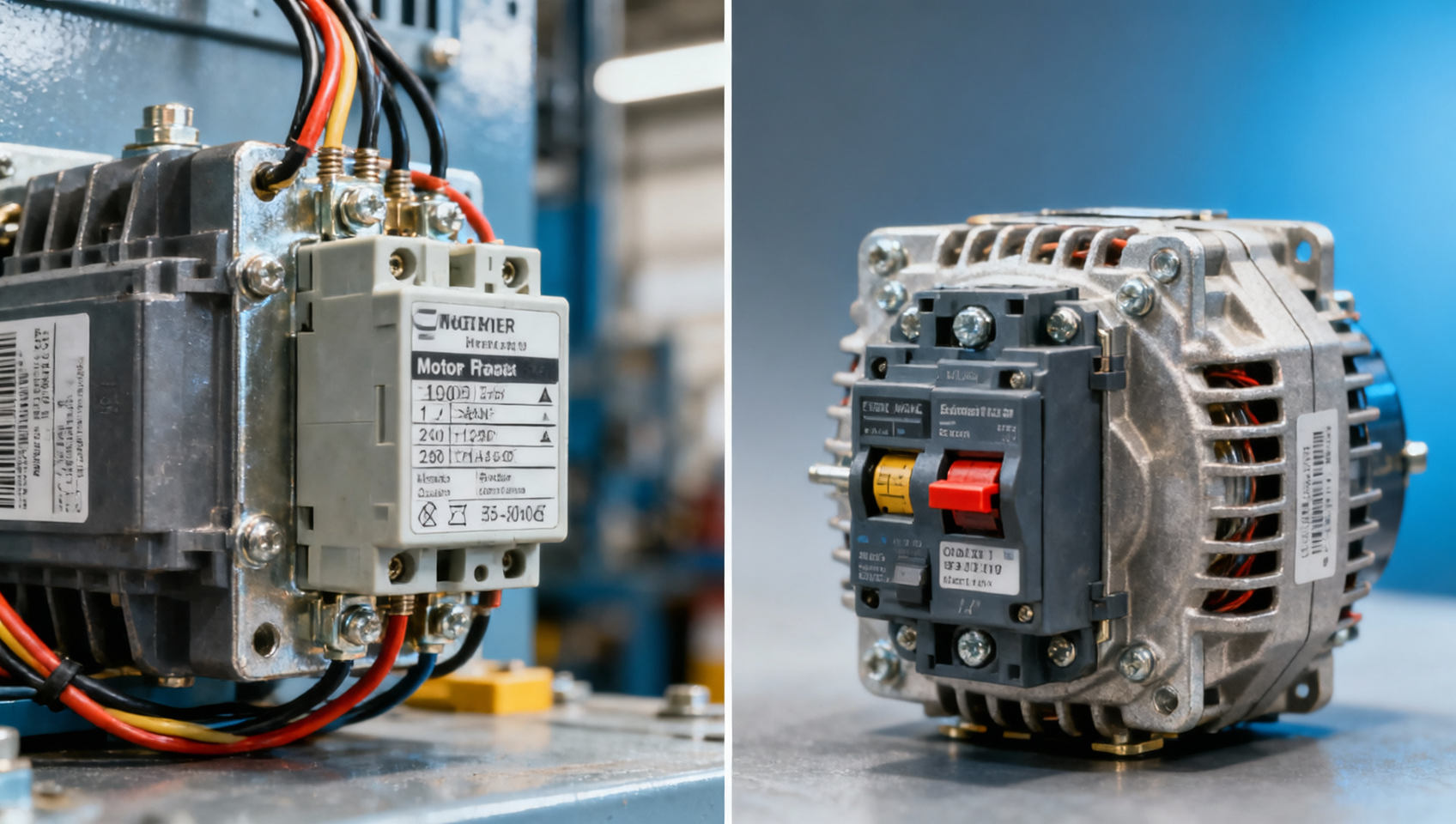
Choosing the right thermal overload relay starts with one practical question: what motor are you protecting, under what load conditions, and with what level of restart risk? In most industrial applications, the best choice is not simply the cheapest compatible relay, but the one that matches the motor full-load current, trip class, duty cycle, ambient conditions, and coordination requirements with the magnetic contactor and upstream breaker. Get that selection wrong, and you can face nuisance trips, insulation damage, costly downtime, or even safety and compliance issues.
For engineers, operators, buyers, and industrial decision-makers, thermal overload relay selection matters because it affects both equipment protection and lifecycle cost. It also plays directly into the performance of broader motor control systems that may include wholesale magnetic contactors, earth leakage circuit breaker devices, residual current device RCD protection, and air circuit breaker ACB assemblies. This guide explains how to choose thermal overload relays in a way that supports reliable motor protection, safer operation, and smarter procurement.
What a thermal overload relay actually needs to do in your system
A thermal overload relay is designed to protect a motor from sustained overcurrent, not from short circuit faults. Its core job is to detect overload conditions that develop over time and disconnect the motor circuit before overheating damages windings, insulation, bearings, or connected equipment.
In real installations, this means the relay must:
- Match the motor’s full-load current accurately
- Tolerate normal starting current without unnecessary tripping
- Respond fast enough to prolonged overloads
- Work properly with the installed contactor and starter assembly
- Support the operating environment, reset method, and maintenance strategy
This is why relay selection should never be treated as a generic accessory choice. The relay must align with the motor characteristics and the actual process demands.
Start with the motor nameplate, not the catalog
The most important input for choosing thermal overload relays is the motor nameplate data. Before comparing brands or prices, collect the following:
- Rated motor current or full-load current (FLC)
- Motor power rating
- Voltage and frequency
- Phase configuration
- Service factor, if provided
- Duty cycle and starting method
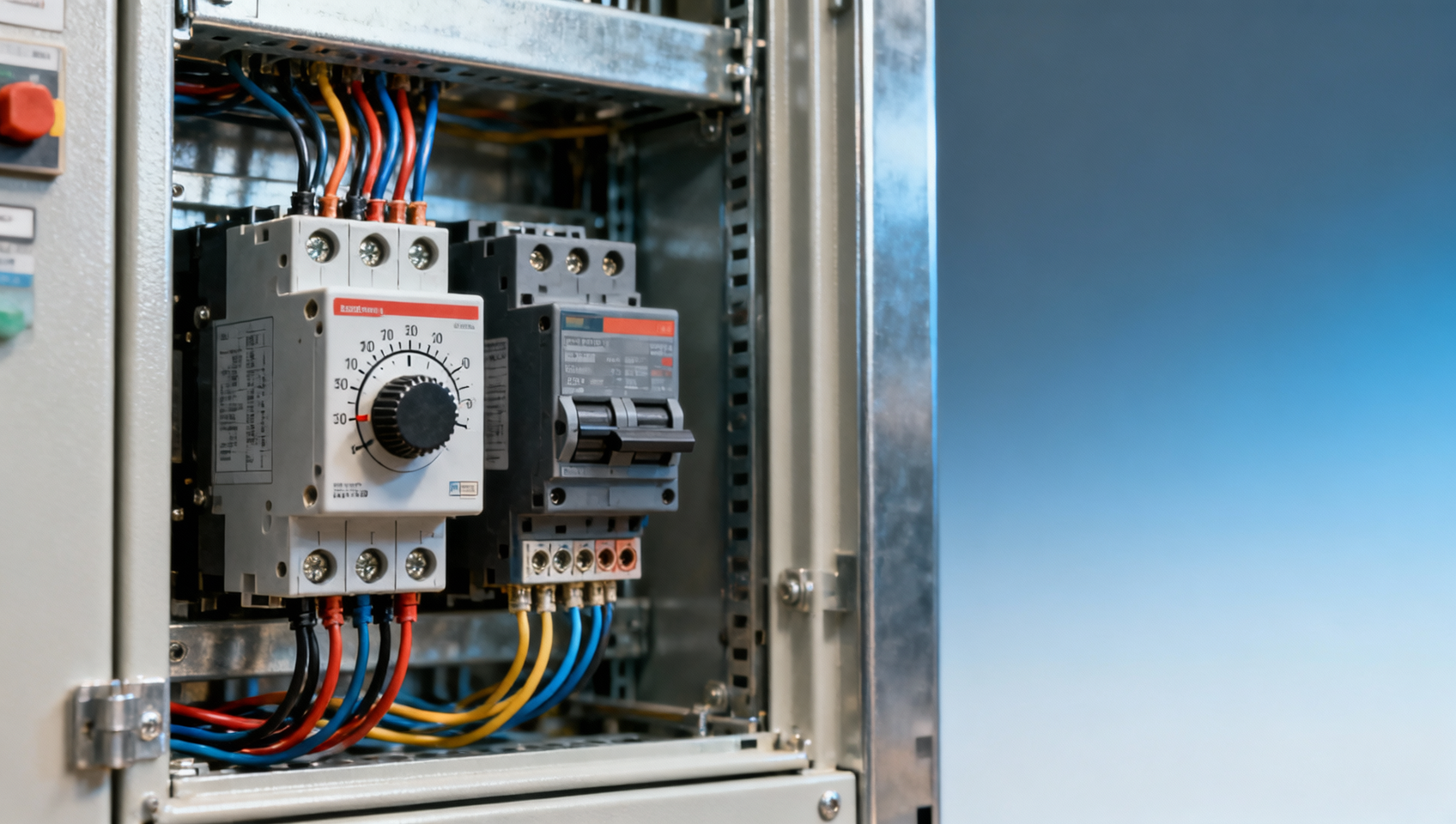
The relay adjustment range should cover the motor’s rated current, ideally with the operating point falling in the middle portion of the adjustment band rather than right at the extreme low or high end. A relay range that is too broad may reduce adjustment precision. A relay range that is too narrow may leave little room for field optimization.
For example, if a motor has a full-load current of 12 A, a relay adjustable from 9 to 13 A is usually a better fit than one adjustable from 7 to 18 A, assuming the rest of the system is compatible.
For procurement teams, this is also where many avoidable mistakes happen. A relay selected only by motor kW or HP, without confirming actual current at the application voltage, can easily be mismatched.
Choose the right current setting and trip class
After selecting a relay with the proper adjustment range, the next step is setting and evaluating its trip behavior. Two factors matter most here: current setting and trip class.
Current setting
The relay should generally be set according to the motor’s nameplate full-load current and application conditions. In some cases, service factor, ambient compensation, or manufacturer guidance may justify a small adjustment. The goal is to protect the motor while avoiding nuisance trips during normal operation.
Trip class
Trip class defines how long the relay allows an overload condition before tripping. Common classes include Class 10, Class 20, and Class 30.
- Class 10: Often suitable for normal-duty motors with relatively standard starting times
- Class 20: Better for heavier starts or applications with longer acceleration
- Class 30: Used where long starting times are expected, but only when justified by motor design and application needs
If the relay trips too quickly for a high-inertia load, the motor may never start reliably. If it trips too slowly, the motor may be exposed to damaging heat. This is one of the most critical selection decisions for conveyors, pumps, compressors, crushers, fans, and other industrial loads with different start profiles.
Match the relay to the motor starting method and load profile
Not all motors operate under the same conditions, so overload relays should be selected with the actual process in mind.
Direct-on-line starting
For standard DOL applications, many conventional thermal overload relays are suitable, provided the motor starts within the expected time and the relay trip class is correct.
Star-delta starting
For star-delta systems, the relay location in the circuit affects current calculations and selection. This is a common source of sizing errors. Engineers should confirm whether the relay is installed in the line or inside the delta circuit, since the current relationship changes.
Frequent starts and stops
Applications with frequent cycling can create repeated thermal stress. In these cases, the relay must account for cumulative heating effects. A poorly chosen relay may either trip too often or fail to reflect actual motor heating.
Heavy-start or high-inertia loads
Load types such as mixers, mills, compressors, or loaded conveyors often require longer acceleration times. A higher trip class may be necessary, but only after confirming that the motor can safely tolerate the extended starting period.
For users and operators, this means relay choice should reflect what the machine really does every day, not just its nominal motor rating on paper.
Consider ambient temperature, enclosure conditions, and installation environment
Thermal overload relays respond to heat, so ambient conditions matter. Industrial environments often introduce variables that can shift performance:
- High panel temperature
- Poor ventilation
- Seasonal temperature variation
- Dust, humidity, or corrosive atmosphere
- High-altitude installations
If a control panel runs hot, a non-compensated relay may trip differently than expected. Temperature-compensated designs can help maintain more consistent protection across variable ambient conditions.
In harsh environments, relay durability, ingress protection of the panel, and the quality of terminal connections also become important. For industrial buyers, this is where a lower upfront price can turn into higher maintenance cost and more downtime.
Verify compatibility with contactors, breakers, and the full protection scheme
A thermal overload relay should not be selected in isolation. It is part of a motor starter and protection system that may include:
- Magnetic contactors
- Motor circuit breakers
- MCCB or air circuit breaker ACB devices
- Earth leakage circuit breaker protection
- Residual current device RCD solutions where applicable
- Control transformers, PLC logic, and interlocks
The relay must be mechanically and electrically compatible with the contactor it pairs with. In many systems, manufacturers design overload relays to mount directly to specific contactor series. This simplifies installation and coordination, but only if the product families are properly matched.
Procurement teams comparing wholesale magnetic contactors and relay packages should also review coordination data, short-circuit withstand ratings, and approvals. A relay that fits physically but lacks tested coordination with the contactor and upstream protective device may create reliability or compliance risks.
It is also important to understand the difference between functions:
- Thermal overload relay: protects against sustained overload and phase-related heating issues
- Earth leakage circuit breaker / RCD: protects against leakage current and electric shock or fire risk
- ACB or other upstream breaker: provides switching and fault interruption at higher current levels
These devices are complementary, not interchangeable.
Do not overlook phase loss, phase imbalance, and reset mode
Many motor failures are not caused by simple overload alone. Phase loss and phase imbalance can rapidly overheat a motor, especially in three-phase systems. A good thermal overload relay should provide reliable sensitivity to these conditions.
You should also choose the reset method based on operational risk:
- Manual reset: Better for safety-critical or supervised systems where automatic restart could be dangerous
- Automatic reset: May suit certain continuous processes, but only where restart will not create safety, product, or equipment hazards
For operators, reset mode has real-world implications. If a conveyor, pump, or fan restarts unexpectedly after cooling, personnel safety and process stability can be affected. For facility managers and decision-makers, this is a risk-control issue as much as a technical one.
Check standards, certifications, and supplier documentation before buying
In industrial sourcing, documentation quality often tells you as much as the device itself. When selecting thermal overload relays, verify:
- Compliance with relevant IEC, UL, CE, or other regional standards
- Rated operational data and adjustment range
- Trip class and phase-failure sensitivity
- Coordination tables with contactors and short-circuit protective devices
- Temperature compensation details
- Mounting compatibility and wiring diagrams
- Spare part availability and after-sales support
For global projects, especially those managed by EPC contractors or multinational industrial groups, inconsistent certification can delay approval, commissioning, or insurance acceptance. Reliable suppliers should be able to provide test data, compliance files, and application guidance without ambiguity.
A practical buying checklist for engineers and procurement teams
If you need a faster way to evaluate options, use this checklist before issuing a purchase decision:
- Confirm motor nameplate full-load current at actual operating voltage
- Select a relay with an adjustment range that closely fits the motor current
- Choose the correct trip class for the starting time and load inertia
- Review whether the application uses DOL, star-delta, or another starting method
- Assess ambient temperature and enclosure conditions
- Verify compatibility with the selected magnetic contactor
- Check coordination with upstream breaker protection, including ACB or MCCB where relevant
- Confirm whether leakage protection through an earth leakage circuit breaker or residual current device RCD is also required
- Decide between manual and automatic reset based on safety and process needs
- Validate certifications, documentation, and supplier technical support
This approach helps reduce procurement errors and ensures the relay supports both motor protection and operational continuity.
Common selection mistakes that lead to downtime or premature motor failure
Several recurring errors appear in industrial motor protection projects:
- Choosing by motor power only instead of actual current
- Ignoring starting time and selecting the wrong trip class
- Using a relay at the extreme end of its adjustment range
- Failing to account for panel temperature or harsh ambient conditions
- Assuming overload protection replaces earth leakage or short-circuit protection
- Overlooking phase loss sensitivity
- Selecting components from different brands without checking tested compatibility
Each of these mistakes can produce hidden costs: nuisance trips, operator frustration, emergency maintenance, reduced motor life, and unplanned shutdowns.
Final decision: what matters most when choosing thermal overload relays
The best thermal overload relay is the one that accurately protects the specific motor in its real operating environment, while fitting the broader control and protection architecture. For most industrial users, the priority order should be clear: first match the motor current, then confirm trip class, application duty, environmental suitability, and system compatibility with contactors and upstream devices.
If you are comparing sourcing options, do not evaluate the relay as a standalone low-cost part. Evaluate it as a protection component tied to motor lifespan, maintenance frequency, downtime risk, compliance, and plant safety. In systems that also involve wholesale magnetic contactors, earth leakage circuit breaker assemblies, residual current device RCD protection, and air circuit breaker ACB solutions, integrated coordination is what separates a workable purchase from a reliable one.
In short, choosing thermal overload relays well means choosing based on motor data, load behavior, protection coordination, and operational risk, not just catalog convenience. That is the decision framework that delivers safer operation, better reliability, and stronger long-term value.
Technical Specifications
- Canton Fair Phase II 2026: Industrial Components Booking Rate Hits 98%Author :Heavy Industry Strategist
- TÜV Rheinland Updates EMC Guide for Industrial Optics EquipmentAuthor :Precision Metrology Expert
- Copper Price Surges 6.8%: Impact on Cables, Breakers & BOM CostsAuthor :Grid Infrastructure Analyst
Expert Insights

Chief Security Architect
Dr. Thorne specializes in the intersection of structural engineering and digital resilience. He has advised three G7 governments on industrial infrastructure security.
Related Analysis
- Apr 21, 2026Canton Fair Phase II 2026: Industrial Components Booking Rate Hits 98%Author :Heavy Industry Strategist
- Apr 21, 2026TÜV Rheinland Updates EMC Guide for Industrial Optics EquipmentAuthor :Precision Metrology Expert
- Apr 21, 2026Copper Price Surges 6.8%: Impact on Cables, Breakers & BOM CostsAuthor :Grid Infrastructure Analyst
Core Sector // 01
Security & Safety
- Earth Leakage Circuit Breaker vs RCDAuthor :Grid Infrastructure Analyst

- Why Magnetic Contactors Fail EarlyAuthor :Grid Infrastructure Analyst

- Wholesale Magnetic Contactors Buying GuideAuthor :Grid Infrastructure Analyst

- When to Replace a Thermal Overload RelayAuthor :Grid Infrastructure Analyst

- How to Choose Thermal Overload RelaysAuthor :Grid Infrastructure Analyst

- Safety relief valves: Why set pressure drift matters more than initial calibrationAuthor :Grid Infrastructure Analyst

- Solenoid valves wholesale: How coil voltage tolerance affects field reliabilityAuthor :Grid Infrastructure Analyst

- Electric motorized valves: Do IP67 ratings hold up under frequent washdown?Author :Grid Infrastructure Analyst