Earth Leakage Circuit Breaker vs RCD
Author
Date Published
Reading Time
Choosing between an earth leakage circuit breaker and a residual current device (RCD) is not just a terminology issue. For most buyers, engineers, and operators, the real question is simpler: which device gives the right protection for people, equipment, and compliance in a specific installation? The short answer is that an RCD is the broader protective concept for detecting residual or leakage current, while “earth leakage circuit breaker” is often used regionally or commercially to describe a device that performs a similar leakage-protection function, sometimes with additional overcurrent protection depending on the product type. In practice, the right decision depends on whether you need shock protection, fire-risk reduction, overload and short-circuit protection, selective coordination, or a combination of all of them.
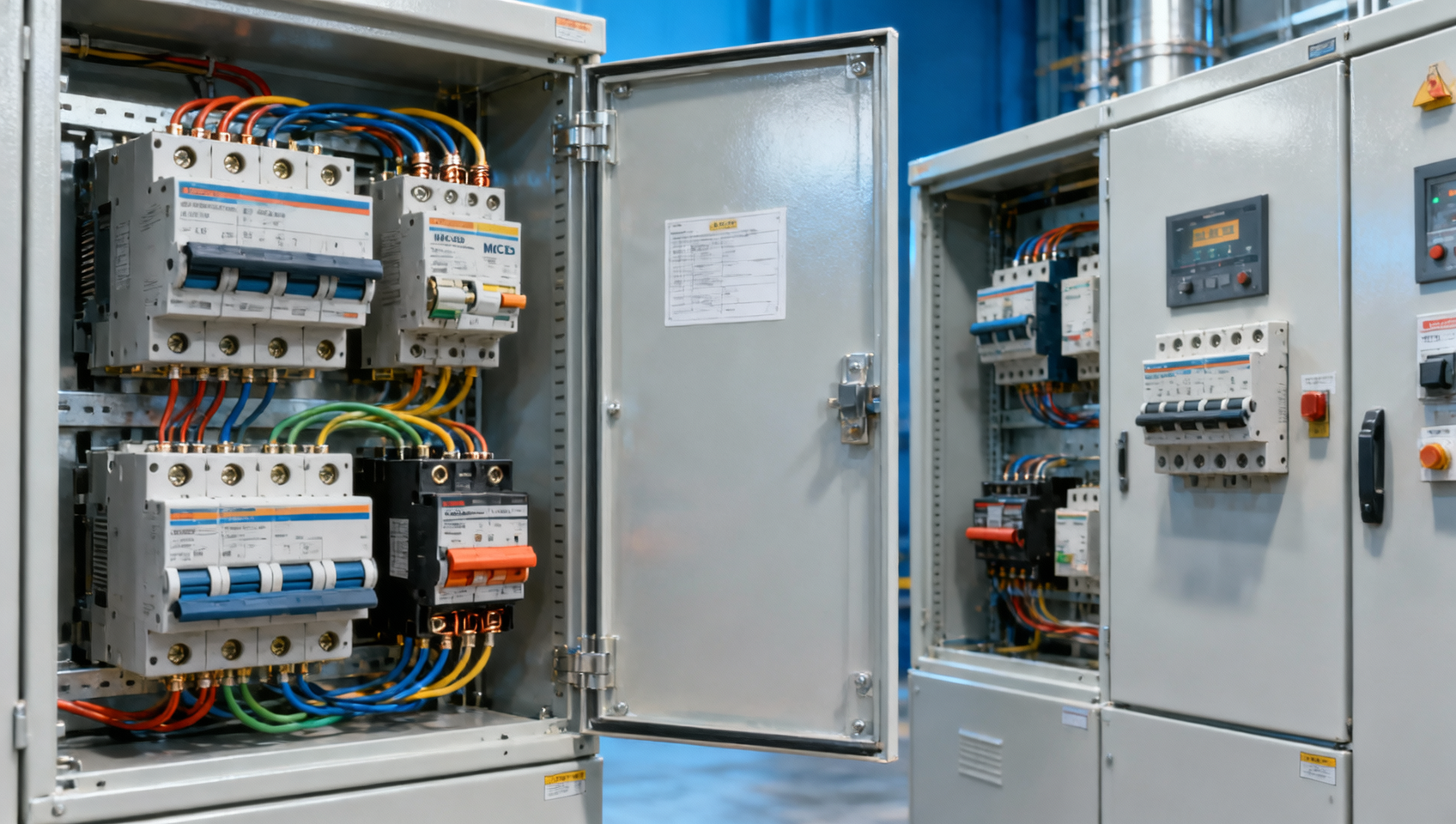
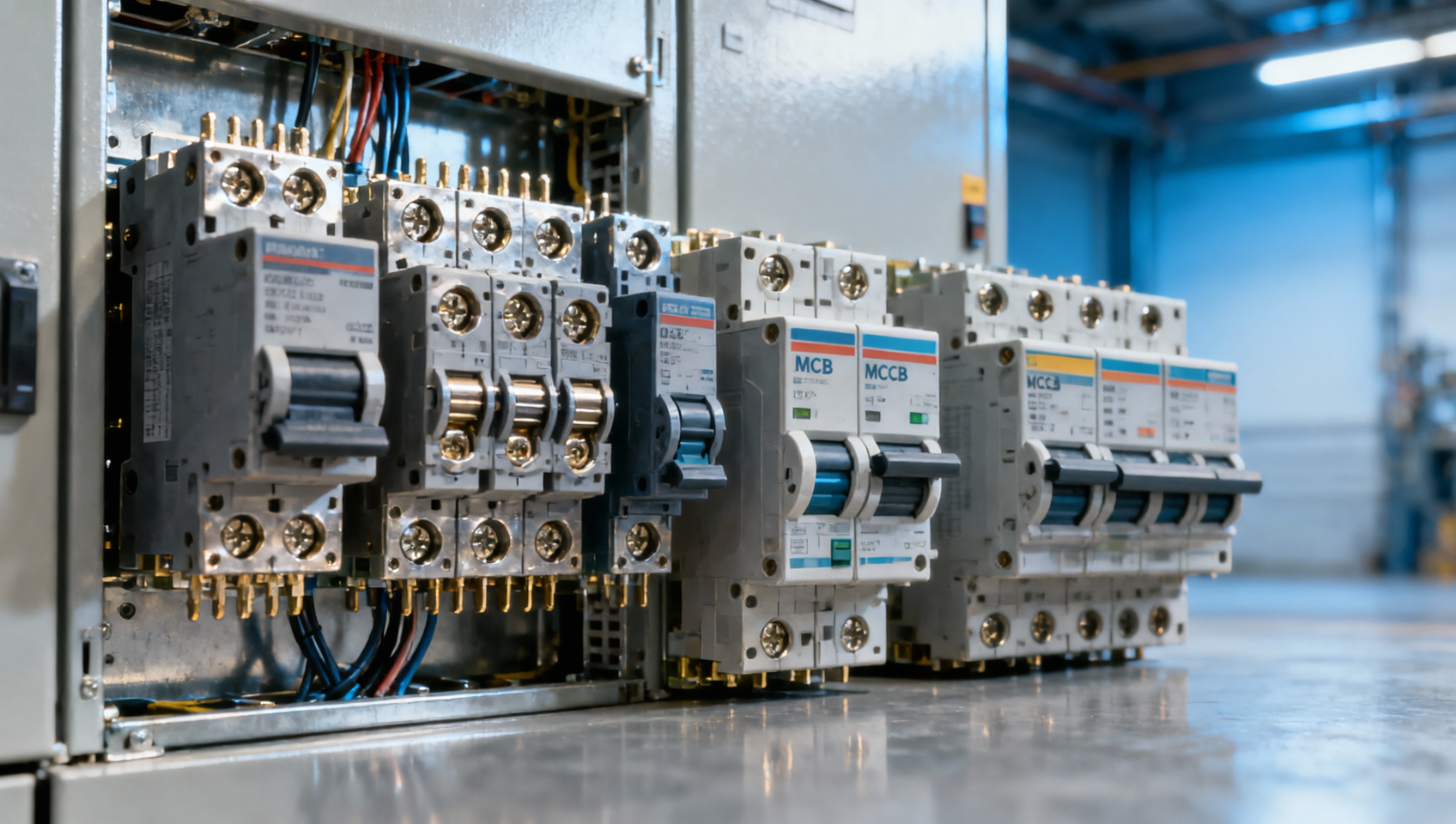
For industrial switchboards and commercial power systems, this distinction matters because misunderstanding it can lead to underspecified panels, nuisance tripping, poor discrimination, or gaps in compliance. If you are comparing low voltage switchboard designs alongside miniature circuit breaker MCB, molded case circuit breaker MCCB, or air circuit breaker ACB strategies, the key is to evaluate the device by function, trip characteristics, standards, and application—not by label alone.
What is the real difference between an Earth Leakage Circuit Breaker and an RCD?
In many markets, an RCD refers to any device designed to disconnect a circuit when it detects an imbalance between live conductors and neutral, indicating leakage current to earth. Its primary purpose is protection against electric shock and, in some cases, reduction of fire risk caused by insulation faults.
An earth leakage circuit breaker is a term that is often used interchangeably with RCD, but the exact meaning can vary by country, manufacturer, and product family. In some contexts, it refers specifically to a leakage-protection breaker without overcurrent protection. In others, it may describe a combined device that includes both residual current protection and overload/short-circuit protection.
This is where confusion usually begins. In specification work, the name on a datasheet is less important than the technical function:
- RCCB (Residual Current Circuit Breaker): provides leakage protection only.
- RCBO (Residual Current Breaker with Overcurrent Protection): provides leakage protection plus overload and short-circuit protection.
- ELCB (Earth Leakage Circuit Breaker): an older or regional term that may refer either to voltage-operated legacy devices or modern current-operated leakage breakers, depending on context.
So if your team is asking “Earth Leakage Circuit Breaker vs RCD,” the most accurate answer is this: they are not always different categories in practical use, but you must confirm whether the selected device is leakage-only or leakage-plus-overcurrent protection.
Which protection function do buyers and engineers actually need?
Most target readers are not searching for terminology alone. They want to know what to specify, buy, install, or approve. The decision usually comes down to four protection needs:
- Human safety: protection against indirect contact and electric shock.
- Fire prevention: detection of insulation leakage before overheating or arcing escalates.
- Equipment and feeder protection: overload and short-circuit interruption.
- System continuity: minimizing nuisance trips and maintaining selective coordination.
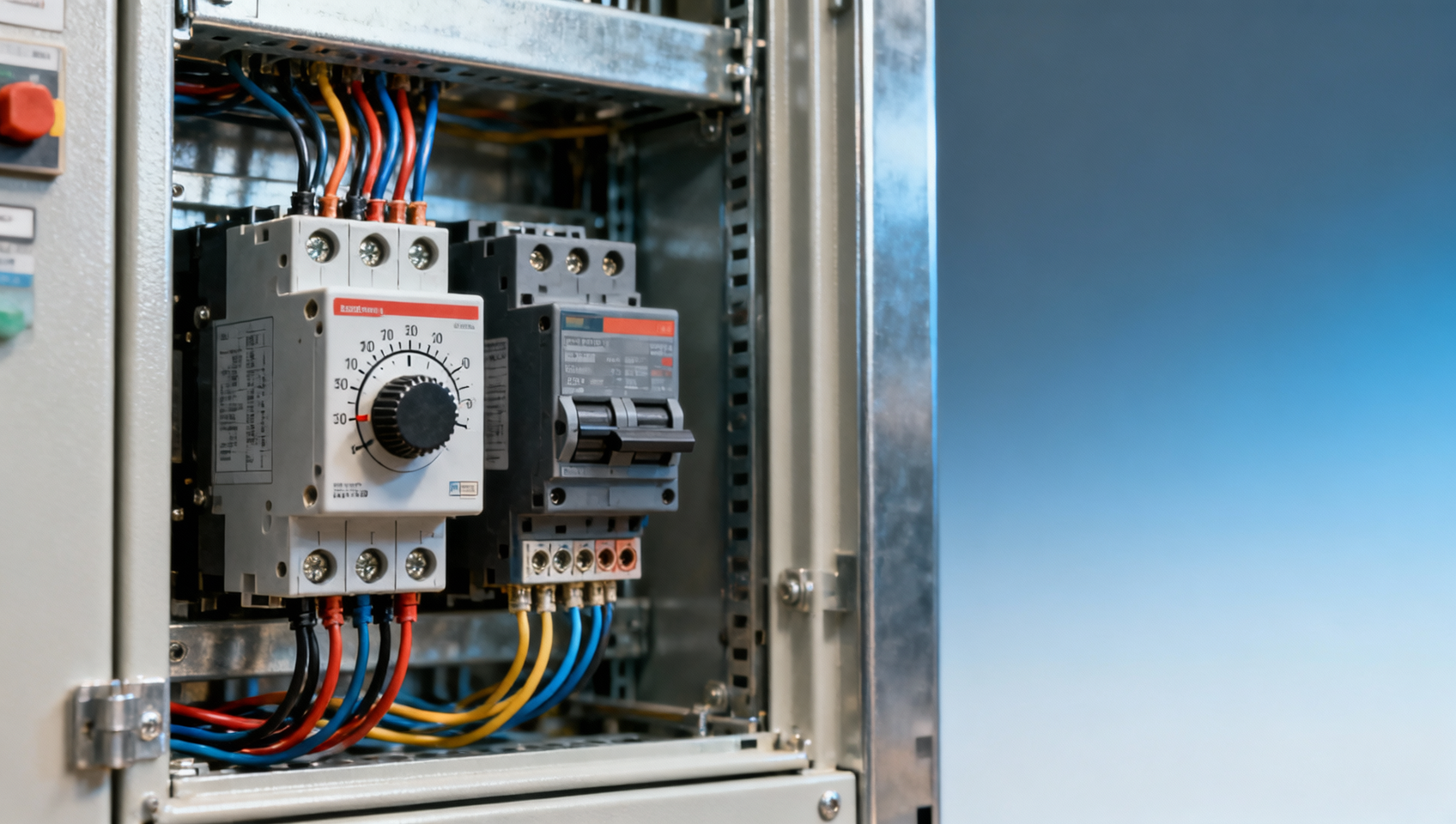
If your installation already has an MCB, MCCB, or ACB providing overcurrent protection, you may only need a dedicated residual current device for leakage protection. If you need both in one compact device at branch-circuit level, an RCBO may be the better fit.
For procurement teams, this means that comparing “earth leakage circuit breaker” versus “RCD” without checking the full protection scope can create hidden risks. A cheaper device may not protect against overload. A combined device may save panel space but may complicate coordination. A highly sensitive unit may improve personal protection but increase unwanted tripping in circuits with VFDs, UPS systems, or harmonic-rich loads.
Why the terminology causes specification mistakes
Electrical protection language differs across regions, and supplier catalogs do not always help. In one market, “ELCB” may be used casually for an RCCB. In another, it may imply older technology that is no longer preferred for modern installations. In technical evaluation, relying on the product label alone is a common source of mistakes.
The main specification errors include:
- Assuming every earth leakage breaker includes overcurrent protection.
- Using a leakage-only device without upstream overload/short-circuit protection.
- Selecting the wrong sensitivity rating for the application.
- Ignoring load type when choosing RCD type.
- Failing to coordinate branch and upstream devices, causing unnecessary shutdowns.
For industrial buyers and EPC teams, the safer approach is to review:
- Rated current
- Residual operating current
- Breaking capacity
- Number of poles
- Trip curve or delay characteristics
- RCD type such as AC, A, F, or B
- Applicable IEC, UL, CE, or local compliance requirements
This is much more useful than trying to resolve the issue by terminology alone.
RCCB, RCBO, MCB, MCCB, and ACB: how they fit together in a real system
In low voltage distribution, protective devices are selected as a layered system rather than as isolated products. Understanding this relationship helps decision-makers avoid both overdesign and protection gaps.
MCB devices are typically used for final circuits and provide overload and short-circuit protection, but not residual current protection on their own.
MCCB devices are used for higher current feeders and offer adjustable protection functions, again usually focused on overload and short-circuit protection unless used with dedicated earth leakage modules or relays.
ACB units are commonly deployed at main incomers or large distribution sections where high breaking capacity, selectivity, and advanced protection coordination are required.
RCCB adds leakage protection but needs separate overcurrent protection upstream or downstream.
RCBO combines residual current and overcurrent protection in a single device, making it attractive in compact boards or branch circuits where both functions are needed at the same point.
A typical decision flow looks like this:
- Need branch-circuit overload protection only: MCB
- Need branch-circuit overload plus leakage protection: RCBO
- Need feeder or incomer protection with high fault capacity: MCCB or ACB
- Need leakage monitoring or protection in larger circuits: RCCB, earth leakage relay systems, or MCCB/ACB accessories depending on design
For industrial facilities, leakage protection is often part of a broader protection architecture, not a standalone decision.
How to choose the right residual current sensitivity and type
This is one of the most important practical questions for users and specifiers. A device may be correctly categorized but still be the wrong choice if sensitivity or type does not match the circuit.
Sensitivity is commonly selected based on the protection objective:
- 30 mA: commonly used for personal protection.
- 100 mA or 300 mA: often used for fire protection or upstream leakage protection where higher immunity to nuisance tripping is needed.
RCD type matters because modern loads do not always produce simple sinusoidal leakage currents:
- Type AC: for basic alternating residual currents only; increasingly limited in suitability for modern electronic loads.
- Type A: handles AC and pulsating DC residual currents; common in many commercial and industrial applications.
- Type F: suitable for certain single-phase inverter-driven equipment.
- Type B: used where smooth DC residual currents may occur, such as VFDs, EV charging, PV, and some industrial power electronics.
Choosing the wrong type can result in either failure to detect a dangerous fault or repeated false trips. For operations teams, this is often the difference between a safe, stable installation and a maintenance headache.
When should you use a dedicated earth leakage relay instead of a standard RCD?
In larger industrial systems, a standard DIN-rail residual current device is not always the best solution. Facilities with high leakage backgrounds, long cable runs, variable-speed drives, large motors, or critical process loads may require a more flexible approach.
Dedicated earth leakage relays, often paired with toroidal current transformers and shunt-trip breakers, offer several advantages:
- Adjustable trip thresholds
- Adjustable time delay for selectivity
- Better integration with MCCB or ACB systems
- Remote monitoring and alarm functions
- Improved suitability for complex industrial distribution networks
This is especially relevant for facility managers and decision-makers balancing safety with uptime. In high-value operations, preventing a full-line trip may be just as important as detecting leakage quickly. A tailored relay-based solution can support both goals more effectively than a generic residential-style RCD.
How to evaluate compliance, reliability, and procurement risk
For procurement personnel and enterprise decision-makers, selecting the right device is not only a technical issue. It also affects liability, inspection readiness, maintenance burden, and lifecycle cost.
Key evaluation points include:
- Standards compliance: verify applicable IEC, UL, CE, ISO-related quality processes, and local regulatory requirements.
- Application fit: confirm load type, system grounding arrangement, ambient conditions, and fault levels.
- Selectivity: ensure upstream and downstream devices are coordinated to reduce unnecessary outages.
- Environmental robustness: check temperature range, enclosure rating, vibration tolerance, and contamination resistance.
- Testing and certification: request routine test data, third-party certificates, and performance documentation.
- Maintenance practicality: consider test-button accessibility, replacement lead time, and compatibility with existing switchboards.
From a business perspective, the cheapest product is rarely the lowest-cost option over time. Poorly selected earth leakage protection can lead to nuisance shutdowns, damaged equipment, lost production, compliance issues, and reputational risk after safety incidents.
Common buying scenarios and the best-fit choice
To simplify the comparison, here are several common scenarios:
Scenario 1: Commercial branch circuits requiring human protection
Best fit: RCBO or RCCB + MCB
Reason: You need personal shock protection and standard circuit protection at final distribution level.
Scenario 2: Industrial feeder with existing MCCB protection but added leakage protection needed
Best fit: Dedicated residual current protection or earth leakage relay system
Reason: You may already have overload and short-circuit coverage, so the leakage function should be coordinated separately.
Scenario 3: Panel space is limited and simplified branch design is preferred
Best fit: RCBO
Reason: One device combines the required functions.
Scenario 4: Process environment with VFDs, inverters, or electronic power conversion
Best fit: Properly selected RCD type, often Type B or application-specific solution
Reason: Standard Type AC devices may be unsuitable.
Scenario 5: Buyer sees “ELCB” in supplier quotation
Best fit: Request exact technical definition
Reason: Confirm whether it is current-operated, what standards it meets, whether overcurrent protection is included, and what residual current types it detects.
What should you ask a supplier before approving the device?
Whether you are sourcing for a new EPC project or retrofitting an existing facility, ask these questions before final approval:
- Is this device leakage protection only, or does it also provide overload and short-circuit protection?
- What residual current type does it support: AC, A, F, or B?
- What is the rated residual operating current?
- Is time delay available for selectivity?
- Which IEC or UL standards does it comply with?
- Is it suitable for inverter-driven or harmonic-rich loads?
- What is the rated breaking capacity and conditional short-circuit rating?
- Can it integrate with the existing low voltage switchboard architecture?
- What testing, certification, and quality traceability documents are available?
- What is the expected service life and replacement availability?
These questions move the discussion from vague naming to application-based engineering, which is where the real decision should be made.
Final verdict: Earth Leakage Circuit Breaker vs RCD
The most useful conclusion is that “Earth Leakage Circuit Breaker vs RCD” is often not a true head-to-head comparison unless you first define the exact device type. In many cases, an earth leakage circuit breaker is simply a regional or product-specific way of describing an RCD-related device. The real decision is whether you need:
- Leakage protection only
- Leakage plus overcurrent protection
- Basic personal protection or higher-level fire protection
- Standard sensitivity or selective industrial coordination
- Compatibility with modern electronic loads and power conversion equipment
For users and operators, the priority is safe and stable operation. For buyers, it is buying the correct function rather than the familiar label. For enterprise decision-makers, it is ensuring compliance, uptime, and lifecycle value across the electrical protection strategy.
If you evaluate the device by function, standards, sensitivity, coordination, and application environment, you will make a far better choice than by comparing names alone.
Technical Specifications
- Canton Fair Phase II 2026: Industrial Components Booking Rate Hits 98%Author :Heavy Industry Strategist
- TÜV Rheinland Updates EMC Guide for Industrial Optics EquipmentAuthor :Precision Metrology Expert
- Copper Price Surges 6.8%: Impact on Cables, Breakers & BOM CostsAuthor :Grid Infrastructure Analyst
Expert Insights

Chief Security Architect
Dr. Thorne specializes in the intersection of structural engineering and digital resilience. He has advised three G7 governments on industrial infrastructure security.
Related Analysis
- Apr 21, 2026Canton Fair Phase II 2026: Industrial Components Booking Rate Hits 98%Author :Heavy Industry Strategist
- Apr 21, 2026TÜV Rheinland Updates EMC Guide for Industrial Optics EquipmentAuthor :Precision Metrology Expert
- Apr 21, 2026Copper Price Surges 6.8%: Impact on Cables, Breakers & BOM CostsAuthor :Grid Infrastructure Analyst
Core Sector // 01
Security & Safety
- Earth Leakage Circuit Breaker vs RCDAuthor :Grid Infrastructure Analyst

- Why Magnetic Contactors Fail EarlyAuthor :Grid Infrastructure Analyst

- Wholesale Magnetic Contactors Buying GuideAuthor :Grid Infrastructure Analyst

- When to Replace a Thermal Overload RelayAuthor :Grid Infrastructure Analyst

- How to Choose Thermal Overload RelaysAuthor :Grid Infrastructure Analyst

- Safety relief valves: Why set pressure drift matters more than initial calibrationAuthor :Grid Infrastructure Analyst

- Solenoid valves wholesale: How coil voltage tolerance affects field reliabilityAuthor :Grid Infrastructure Analyst

- Electric motorized valves: Do IP67 ratings hold up under frequent washdown?Author :Grid Infrastructure Analyst