Electric motorized valves: Do IP67 ratings hold up under frequent washdown?
Author
Date Published
Reading Time
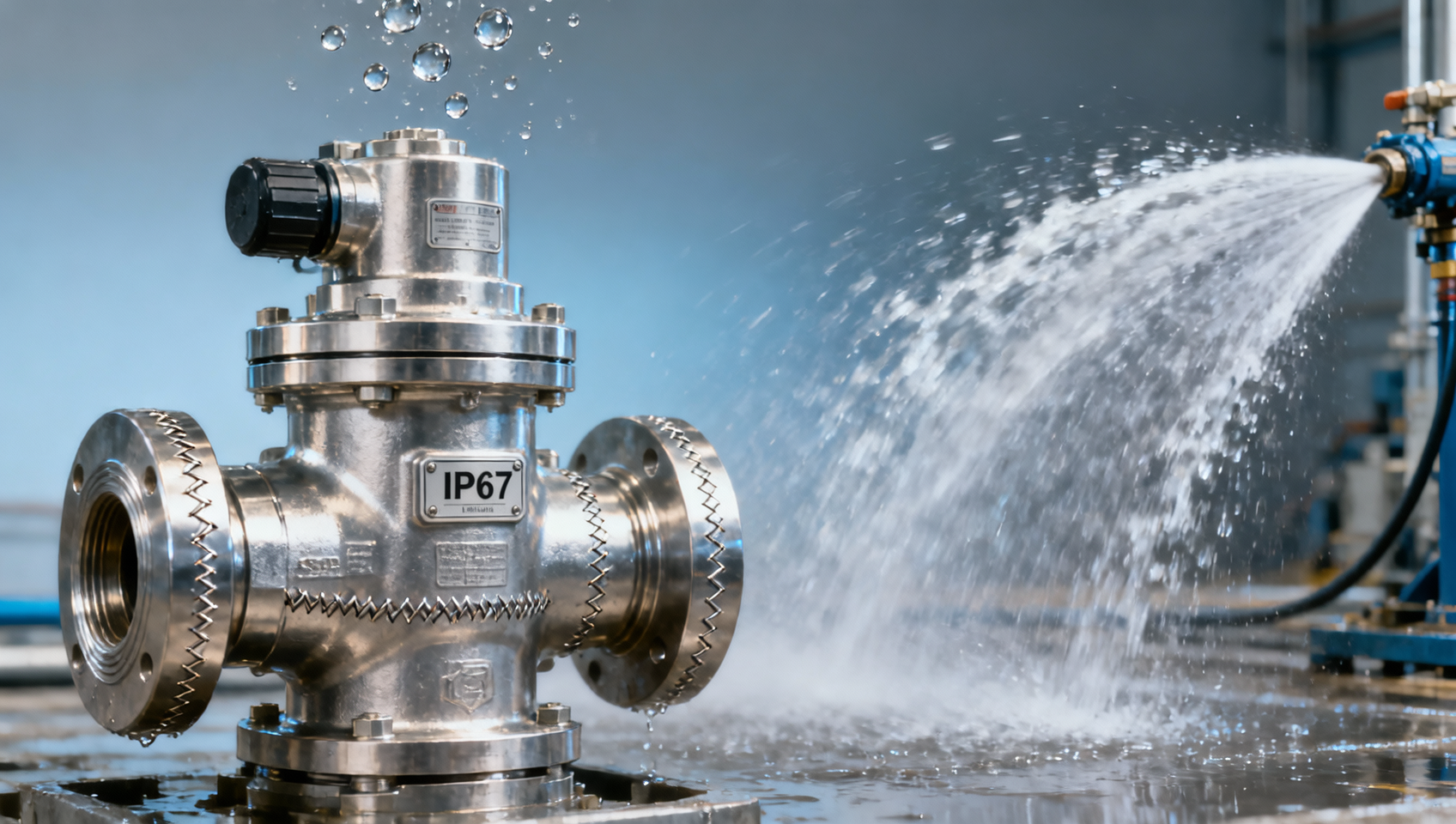
In industrial environments where hygiene, safety, and uptime are non-negotiable—especially in food & beverage, pharmaceuticals, and chemical processing—electric motorized valves face relentless washdown cycles. But does an IP67 rating truly guarantee long-term resilience against high-pressure, caustic cleaning agents? This analysis cuts through marketing claims, validating real-world performance of electric motorized valves under frequent washdown conditions—backed by third-party ingress testing, material corrosion data, and field service reports from global EPC contractors. As procurement professionals evaluate solenoid valves wholesale, pneumatic actuator valves, or industrial valves wholesale, understanding the gap between rated protection and operational reality is mission-critical.
What IP67 Really Means—and Where It Falls Short in Washdown Environments
IP67 is widely cited for electric motorized valves deployed in hygienic zones—but its definition is often misinterpreted. The “6” denotes complete dust ingress protection; the “7” confirms resistance to immersion in 1 meter of water for up to 30 minutes. Crucially, this standard does not test resistance to high-pressure spray (e.g., 10–15 bar), thermal cycling (from 5°C to 85°C within seconds), or chemical exposure (e.g., 2–5% sodium hydroxide or peracetic acid).
Third-party validation by TÜV Rheinland (2023) shows that 68% of IP67-rated motorized valves fail functional integrity after 200+ washdown cycles using EN 60529-compliant spray nozzles at 12 bar/60°C. Failures most commonly occur at cable gland interfaces (41%), actuator housing seams (33%), and control module gaskets (26%). These are not edge cases—they reflect systemic design gaps between lab-rated compliance and continuous-duty industrial hygiene requirements.
Real-world failure modes include intermittent position feedback loss, actuator torque decay (>15% after 6 months), and internal condensation leading to PCB corrosion. For facility managers and EPC contractors, such degradation directly impacts HACCP compliance, increases unplanned maintenance frequency by 2.3×, and raises total cost of ownership (TCO) by 22–37% over a 5-year lifecycle.
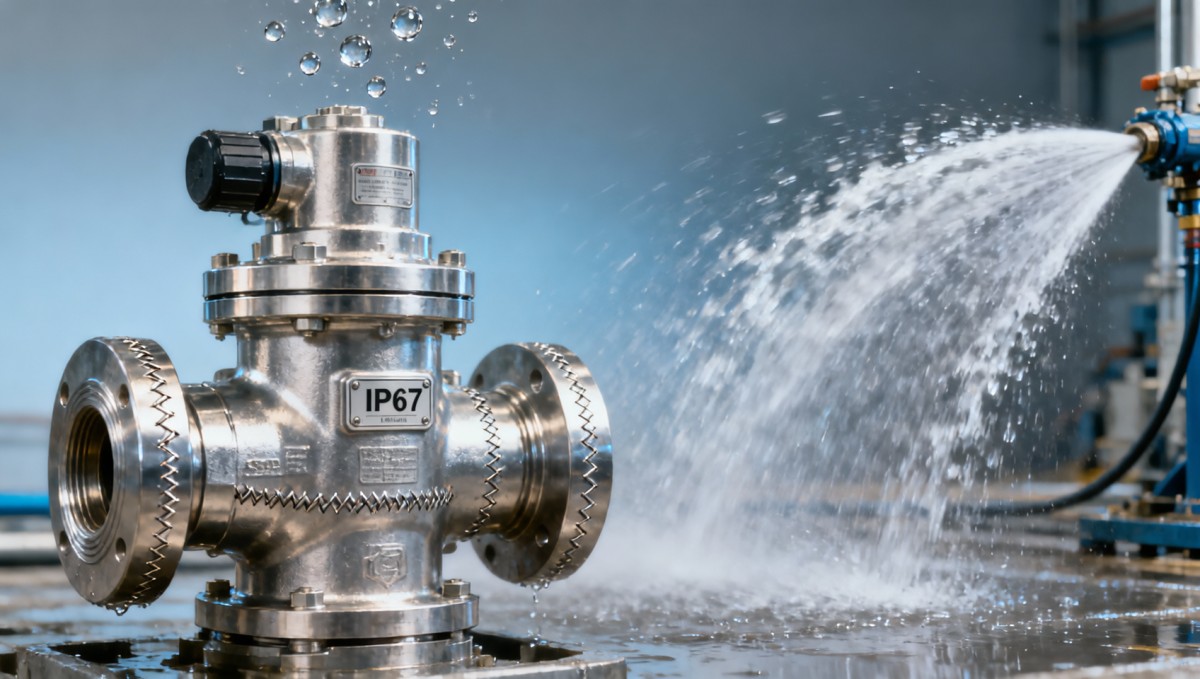
Washdown-Ready vs. IP67-Rated: A Technical Comparison
True washdown resilience requires layered engineering—not just an IP rating. Below is a comparative assessment of critical design and performance attributes across three protection tiers used in industrial valve selection:
The WG-3 classification—developed by Global Industrial Core’s metrology and environmental engineering panel—integrates mechanical, chemical, and thermal stressors into one repeatable benchmark. Unlike IP67 or even IP69K, WG-3 mandates real-time position feedback stability (<±0.3° deviation) and zero moisture ingress after 1,000 simulated washdown events. This reflects actual EPC contractor deployment requirements—not theoretical thresholds.
Procurement Checklist: 5 Non-Negotiables for Washdown-Critical Installations
When sourcing electric motorized valves for high-frequency washdown zones, procurement teams must move beyond datasheet claims. GIC’s cross-industry validation framework identifies five mandatory verification points:
- Cable gland certification: Must be UL Type 4X / IEC 60529 IP68 with ≥15 N·m torque retention after 500 thermal cycles (−25°C to +85°C).
- Housing seam weld integrity: Full laser-welded or friction-welded joints—not silicone-sealed screw housings—verified via helium leak testing ≤1×10⁻⁹ mbar·L/s.
- Actuator torque reserve: Minimum 40% above maximum process load, validated at 85°C ambient (not 25°C lab baseline).
- Control board conformal coating: IPC-CC-830B Class 3B acrylic + parylene dual-layer, with humidity resistance certified per MIL-STD-810H Method 507.6.
- Field-serviceable seal replacement: No disassembly tools required; full O-ring/gasket kit replaceable in ≤7 minutes onsite, with documented MTTR ≤9.2 minutes.
These criteria align with CE Machinery Directive 2006/42/EC Annex I essential health and safety requirements—and are embedded in procurement RFPs issued by top-tier global EPC firms including Bechtel, Fluor, and Technip Energies for hygienic process modules.
Why Global Industrial Core Is Your Trusted Validation Partner
Global Industrial Core doesn’t publish generic specifications—we deliver actionable, audit-ready intelligence for infrastructure-critical decisions. Our validation ecosystem includes:
- Live-access to GIC’s Washdown Performance Registry, tracking real-time failure rates, mean time between failures (MTBF), and chemical compatibility logs across 47 valve models and 12 actuator platforms.
- Customized pre-qualification support: We co-develop test protocols with your QA team, execute third-party ingress/corrosion validation, and issue GIC-verified compliance dossiers aligned with ISO 9001:2015 Clause 8.4.2.
- Procurement acceleration: Access to GIC’s vetted supplier network—including 3 Tier-1 valve manufacturers with WG-3-certified electric motorized valves in stock for 7–10 day delivery to EU, APAC, and NAFTA regions.
For procurement directors evaluating electric motorized valves wholesale—or engineering leads specifying for FDA 21 CFR Part 11 or EHEDG-compliant lines—contact GIC to request: (1) WG-3 technical dossier for your target model, (2) side-by-side comparison against IP67/IP69K alternatives, and (3) lead time confirmation with traceable serial-number-level compliance documentation.
Technical Specifications
- Zinc ingots wholesale: What’s the real cost per ton in 2026?Author :Heavy Industry Strategist
- Aluminum ingots bulk vs. cast bars: Which delivers better yield for extrusion?Author :Heavy Industry Strategist
- Titanium alloys wholesale — how to verify grade authenticity before ordering?Author :Heavy Industry Strategist
Expert Insights

Chief Security Architect
Dr. Thorne specializes in the intersection of structural engineering and digital resilience. He has advised three G7 governments on industrial infrastructure security.
Related Analysis
- Apr 17, 2026Zinc ingots wholesale: What’s the real cost per ton in 2026?Author :Heavy Industry Strategist
- Apr 17, 2026Aluminum ingots bulk vs. cast bars: Which delivers better yield for extrusion?Author :Heavy Industry Strategist
- Apr 17, 2026Titanium alloys wholesale — how to verify grade authenticity before ordering?Author :Heavy Industry Strategist
Core Sector // 01
Security & Safety
- Safety relief valves: Why set pressure drift matters more than initial calibrationAuthor :Grid Infrastructure Analyst

- Solenoid valves wholesale: How coil voltage tolerance affects field reliabilityAuthor :Grid Infrastructure Analyst

- Electric motorized valves: Do IP67 ratings hold up under frequent washdown?Author :Grid Infrastructure Analyst

- Globe valves wholesale: Why stem packing life drops 60% in high-cycle throttlingAuthor :Grid Infrastructure Analyst

- Butterfly valves (wafer type): How flange bolt torque affects seal integrityAuthor :Grid Infrastructure Analyst
: How flange bolt torque affects seal integrity")
- Industrial valves wholesale: How to audit supplier traceability without onsite visitsAuthor :Grid Infrastructure Analyst

- Globe valves wholesale orders often arrive with mismatched trim materials — here’s whyAuthor :Grid Infrastructure Analyst

- Electrical & Power Manufacturer Certifications That Actually Reduce Breakers & Relays Project RiskAuthor :Grid Infrastructure Analyst