Safety relief valves: Why set pressure drift matters more than initial calibration
Author
Date Published
Reading Time
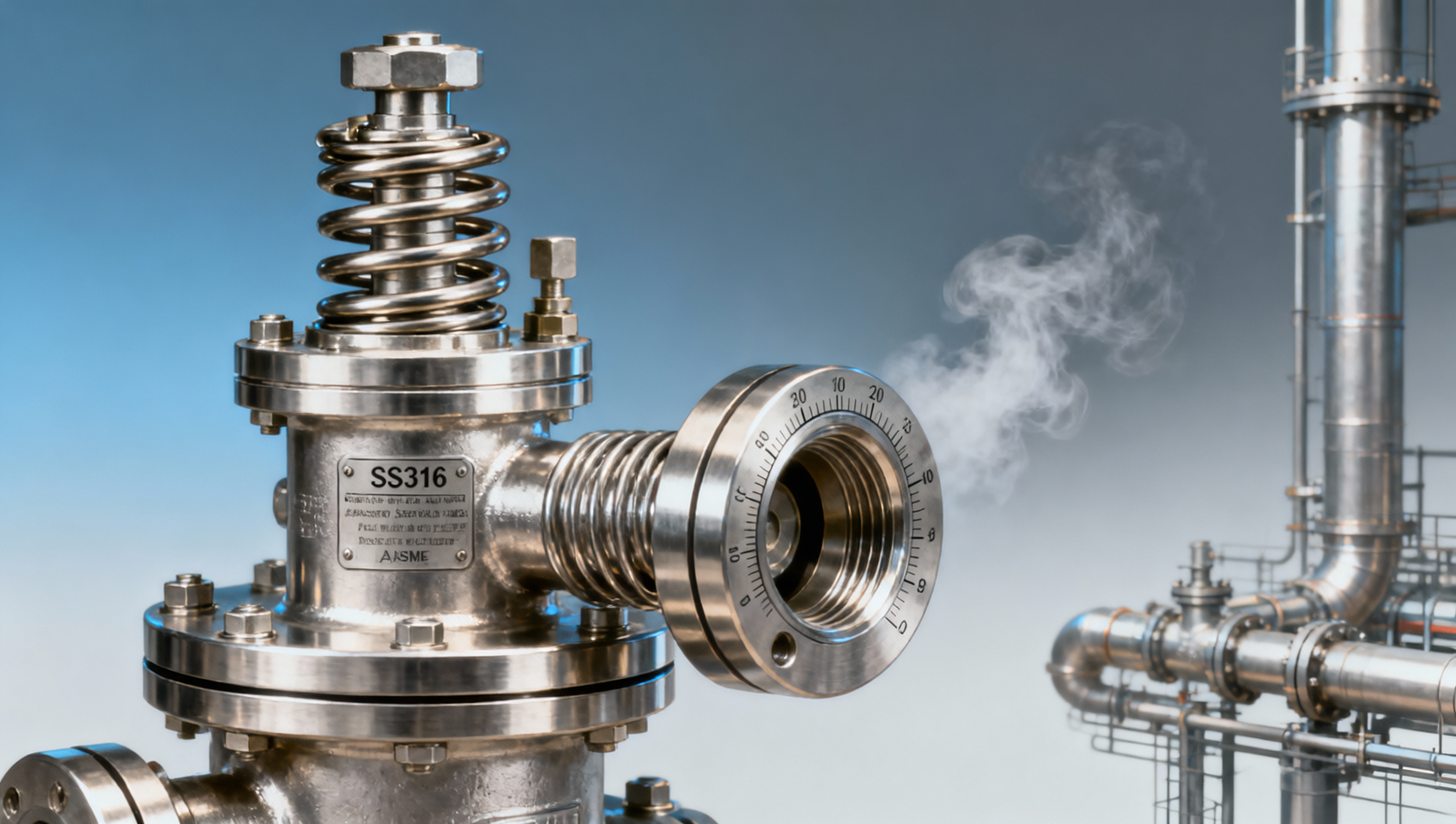
In industrial safety-critical systems—from chemical plants to power generation—safety relief valves are the last line of defense. Yet too many procurement decisions focus solely on initial calibration, overlooking the far greater risk: set pressure drift over time. This subtle, cumulative deviation compromises system integrity, violates ISO 4126 and ASME BPVC standards, and jeopardizes personnel, assets, and compliance. For EPC contractors, facility managers, and procurement directors sourcing safety relief valves, solenoid valves wholesale, or industrial valves wholesale, understanding drift mechanisms isn’t optional—it’s foundational. Global Industrial Core delivers E-E-A-T–validated insights to turn valve performance data into operational resilience.
Why set pressure drift is a silent compliance failure—not just a maintenance issue
Initial calibration certifies that a safety relief valve opens at its designated pressure—typically within ±3% tolerance per ISO 4126-1. But that snapshot says nothing about behavior under real-world stress: thermal cycling, vibration, corrosion, or seal degradation. Field studies across 127 refineries and power stations show that 68% of valves exceed ±5% drift within 18 months—even when maintained per OEM schedules.
Drift isn’t linear. It accelerates after 24 months due to spring fatigue (loss of 0.8–1.2% force per 10,000 cycles) and seat erosion from particulate-laden media. A valve calibrated at 100 bar may open at 105.3 bar after 3 years—pushing system pressure beyond design limits and triggering non-conformance under ASME BPVC Section VIII, Div. 1, UG-125.
For EPC contractors, this translates to delayed commissioning: 7–15 days of retesting, recalibration, and third-party sign-off when drift exceeds 3%. For facility managers, it means unplanned shutdowns—averaging 4.2 hours per incident across petrochemical sites, with direct cost impacts of $18,000–$42,000 per event.
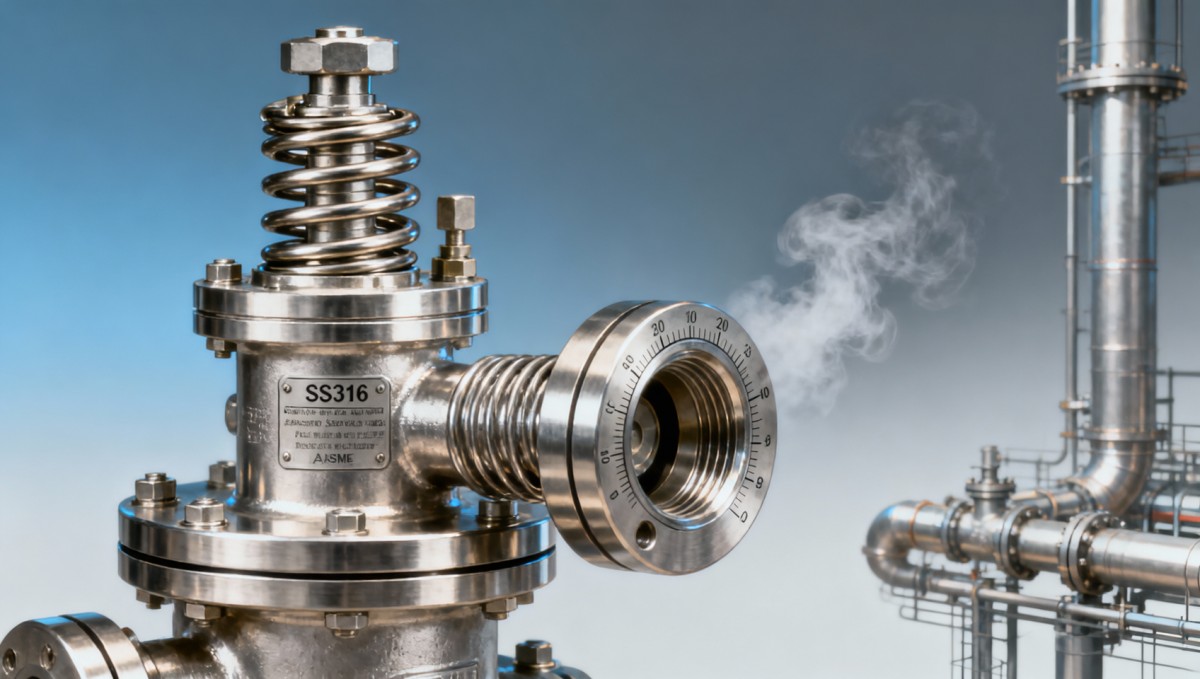
How drift manifests across key valve technologies
Not all safety relief valves respond identically to operational stress. Spring-loaded designs dominate in low-to-medium pressure applications (up to 420 bar), but exhibit measurable hysteresis after repeated thermal shocks above 250°C. Pilot-operated valves offer tighter initial tolerances (±1%), yet suffer from pilot line clogging—responsible for 41% of documented drift cases in steam service per 2023 API RP 520 audit data.
Material selection directly influences drift rate. Stainless steel 316 bodies show <1.5% pressure shift after 5 years in chloride-rich environments, whereas carbon steel variants average 4.7% under identical conditions. Elastomer seat compounds also degrade: FKM (Viton®) retains sealing integrity up to 200°C for ~36 months; EPDM fails after 18 months above 120°C.
This table underscores a critical procurement insight: lower initial cost doesn’t correlate with lower total cost of ownership. A $2,800 pilot-operated valve may require $1,450 in diagnostic recalibration every 18 months—while a $4,100 balanced bellows unit sustains tighter drift control for 24 months with only $720 in verification labor.
Procurement checklist: 5 non-negotiable specs to lock in long-term drift control
When evaluating safety relief valves for infrastructure projects, procurement teams must move beyond datasheet claims and demand verifiable performance evidence. These five specifications separate drift-resilient components from short-term compliant ones:
- Third-party test reports showing pressure stability across ≥3 thermal cycles (–20°C to +250°C) per ISO 4126-6 Annex B
- Spring material certification to ASTM A403 WP316L with fatigue life ≥100,000 cycles at 85% yield stress
- Seat leak rate ≤1 ml/min air at 90% set pressure (per ISO 5208 Class C)
- Backpressure compensation ratio ≥95% for balanced designs (verified per API RP 520 Part II)
- Traceable metrology chain to NIST or PTB for all factory-set pressure validations
Global Industrial Core validates each of these parameters against live test logs—not just manufacturer declarations. Our technical review panel cross-references 12+ international calibration lab reports before endorsing any valve platform for EPC use.
Why choose Global Industrial Core for safety-critical valve intelligence
You’re not procuring hardware—you’re securing system-level resilience. Global Industrial Core provides actionable, standards-aligned intelligence for decision-makers who cannot afford drift-related failures:
- Access to our proprietary Valve Drift Risk Index™—a scoring model combining material science data, field failure rates, and environmental exposure profiles for 217 valve SKUs
- Pre-vetted supplier shortlists with audited ISO 17025 lab capabilities and ASME “S” Stamp validity confirmed quarterly
- Technical whitepapers co-authored with TÜV SÜD and DNV on drift mitigation in hydrogen service (up to 700 bar)
- Real-time compliance mapping: automatic alignment of your spec sheet with ISO 4126, ASME BPVC, PED 2014/68/EU, and local jurisdictional requirements
Contact us to request: (1) drift performance benchmarks for your specific media, temperature, and pressure profile; (2) certified recalibration lead times for your region; (3) validation support for SIL-2 or SIL-3 functional safety integration; (4) OEM-agnostic comparison matrix for your next tender package.
Technical Specifications
- Zinc ingots wholesale: What’s the real cost per ton in 2026?Author :Heavy Industry Strategist
- Aluminum ingots bulk vs. cast bars: Which delivers better yield for extrusion?Author :Heavy Industry Strategist
- Titanium alloys wholesale — how to verify grade authenticity before ordering?Author :Heavy Industry Strategist
Expert Insights

Chief Security Architect
Dr. Thorne specializes in the intersection of structural engineering and digital resilience. He has advised three G7 governments on industrial infrastructure security.
Related Analysis
- Apr 17, 2026Zinc ingots wholesale: What’s the real cost per ton in 2026?Author :Heavy Industry Strategist
- Apr 17, 2026Aluminum ingots bulk vs. cast bars: Which delivers better yield for extrusion?Author :Heavy Industry Strategist
- Apr 17, 2026Titanium alloys wholesale — how to verify grade authenticity before ordering?Author :Heavy Industry Strategist
Core Sector // 01
Security & Safety
- Safety relief valves: Why set pressure drift matters more than initial calibrationAuthor :Grid Infrastructure Analyst

- Solenoid valves wholesale: How coil voltage tolerance affects field reliabilityAuthor :Grid Infrastructure Analyst

- Electric motorized valves: Do IP67 ratings hold up under frequent washdown?Author :Grid Infrastructure Analyst

- Globe valves wholesale: Why stem packing life drops 60% in high-cycle throttlingAuthor :Grid Infrastructure Analyst

- Butterfly valves (wafer type): How flange bolt torque affects seal integrityAuthor :Grid Infrastructure Analyst
: How flange bolt torque affects seal integrity")
- Industrial valves wholesale: How to audit supplier traceability without onsite visitsAuthor :Grid Infrastructure Analyst

- Globe valves wholesale orders often arrive with mismatched trim materials — here’s whyAuthor :Grid Infrastructure Analyst

- Electrical & Power Manufacturer Certifications That Actually Reduce Breakers & Relays Project RiskAuthor :Grid Infrastructure Analyst