Roots blower wholesale deals can hide maintenance tradeoffs
Author
Date Published
Reading Time
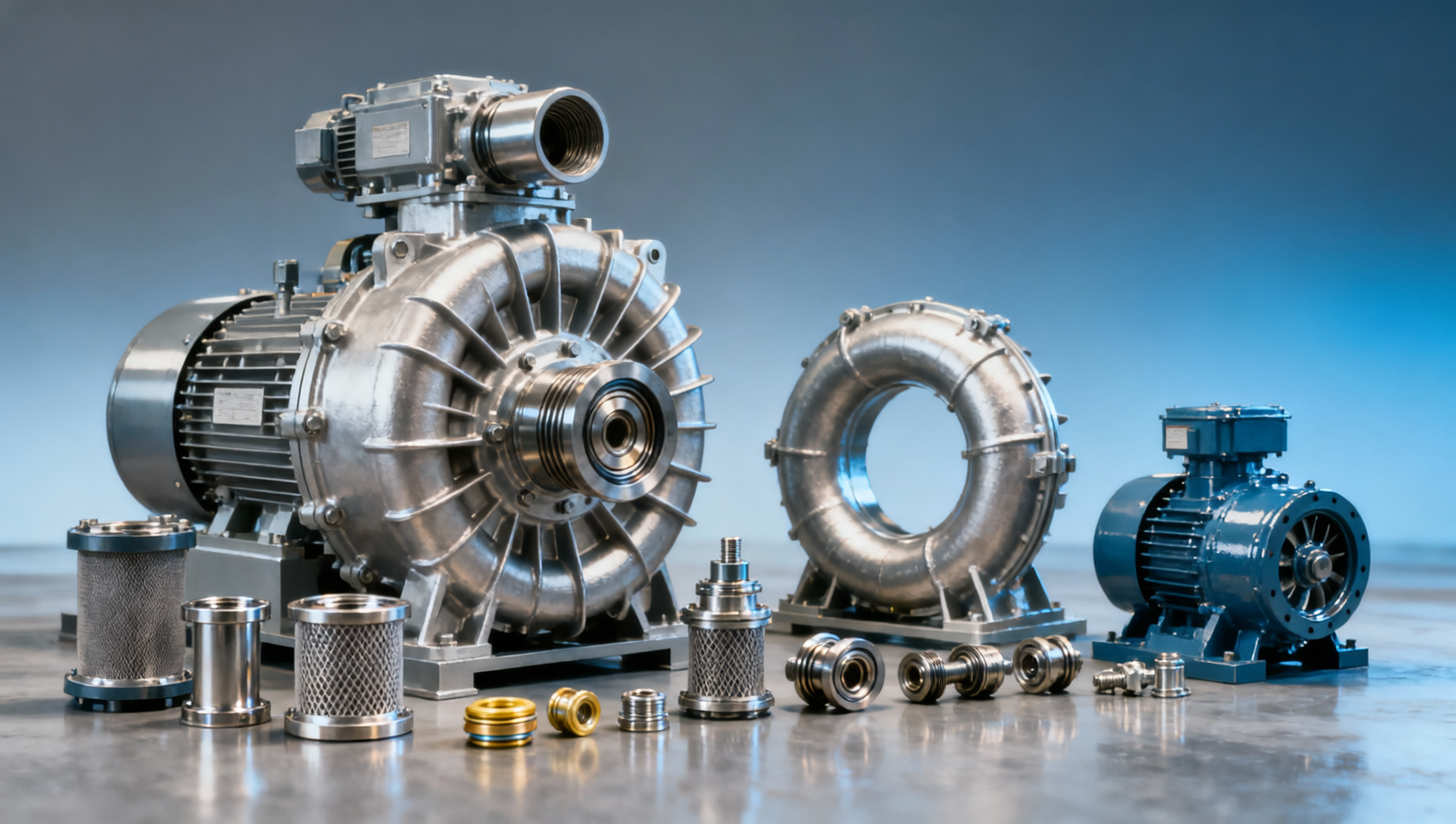
A low quoted price on roots blower wholesale can look attractive, but hidden maintenance costs often reshape the real ROI. For buyers comparing ring blower manufacturer options, industrial dust collector systems, or centrifugal water pumps, understanding service intervals, spare-part quality, and lifecycle reliability is essential. This article helps procurement teams, operators, and decision-makers evaluate whether short-term savings truly support long-term industrial performance.
In industrial procurement, the invoice price is only one layer of the decision. A roots blower that is 8% to 15% cheaper at purchase can become more expensive within 12 to 24 months if it requires frequent shutdowns, unstable bearing life, or hard-to-source consumables. The same logic applies when evaluating adjacent equipment such as ring blowers, dust collection packages, and centrifugal pumps.
For EPC contractors, plant managers, and sourcing leaders, lifecycle thinking matters because downtime affects production, environmental compliance, and labor planning. A realistic evaluation must look at maintenance intervals, power efficiency, spare-part standardization, service access, and the supplier’s technical responsiveness during the first 3 to 5 years of operation.
Why low wholesale pricing can distort the real cost picture
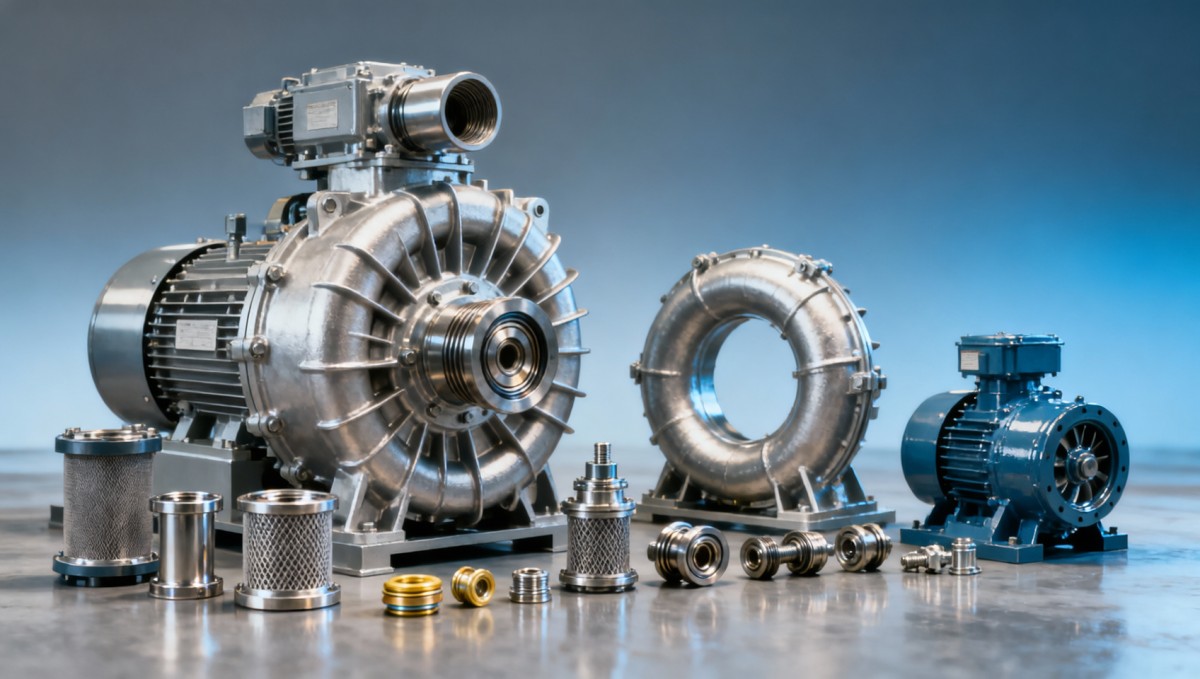
A low roots blower wholesale quote often reflects more than simple production efficiency. It may indicate downgraded bearing brands, reduced machining tolerances, thinner acoustic enclosures, limited testing time, or a stripped-down spare-parts package. None of these issues is always visible in the initial proposal, especially when different suppliers present similar flow and pressure numbers on paper.
In many industrial settings, the cost of one unplanned shutdown exceeds the savings from a lower purchase price. If a blower serving pneumatic conveying or wastewater aeration fails during a peak production window, even 4 to 8 hours of stoppage can trigger labor idle time, product delay, and emergency logistics costs. For high-utilization assets operating 16 to 24 hours per day, maintenance reliability quickly becomes a board-level concern.
Another distortion comes from incomplete scope comparison. One supplier may quote only the blower package, while another includes inlet filters, relief valves, flexible joints, check valves, base frame alignment, and commissioning guidance. On a spreadsheet, the first quote looks cheaper. In practice, the second may reduce installation risk, startup time, and maintenance troubleshooting by a meaningful margin.
This is why procurement teams should compare total ownership cost across at least 6 dimensions: acquisition, installation, energy use, planned maintenance, spare inventory, and downtime exposure. For roots blower wholesale projects above 5 units, even a small variance in service cost per unit can compound into a major annual budget difference.
Common cost areas that are underestimated
- Lubrication and filter replacement every 2,000 to 4,000 operating hours.
- Bearing and seal replacement cycles that vary widely by build quality and load profile.
- Operator time required for vibration checks, noise diagnosis, and alignment inspection.
- Emergency freight for non-standard spare parts with lead times of 2 to 6 weeks.
- Energy penalties caused by lower volumetric efficiency or oversized motor selection.
The table below shows how an apparently lower quote can shift the total cost profile over a typical operating horizon.
The key takeaway is simple: the cheapest roots blower wholesale offer may still be the most expensive operational choice. Buyers should normalize every quote into a 3-year or 5-year ownership model before making a final sourcing decision.
Maintenance tradeoffs buyers should verify before placing an order
Not all maintenance risks are obvious from a product brochure. In roots blowers, the most important tradeoffs usually involve rotor timing stability, bearing arrangement, seal durability, lubrication management, and ease of inspection access. If one of these areas is compromised to reach an aggressive wholesale price, the maintenance burden often shifts to the end user.
For example, a unit with limited service clearance may add 30 to 60 minutes to a routine maintenance task. That may seem minor for one machine, but in a facility running 10 to 20 rotating assets, labor time accumulates quickly. Likewise, proprietary seals or non-standard filters can increase inventory complexity and delay repairs when local stock is unavailable.
Operators should also check whether the blower is being applied within its realistic duty range. A package running near maximum differential pressure every day will face greater thermal stress than one operating with a 15% to 20% design margin. Buying a lower-cost model without verifying actual process conditions often leads to shortened component life.
A disciplined pre-order review should include technical, operational, and service-side questions. The goal is not only to confirm rated capacity, but also to confirm how maintainable the unit will be after 6 months, 18 months, and 36 months in the field.
Priority checkpoints for procurement and maintenance teams
- Verify service interval guidance for oil, filters, belts, bearings, and seals in operating-hour terms.
- Confirm whether wear parts are standard industrial items or supplier-specific custom parts.
- Request exploded drawings or maintenance manuals before PO issuance, not after delivery.
- Check available support response time, such as same-day remote review or 24–72 hour technical feedback.
- Align motor, base, coupling, and vibration requirements with site conditions and foundation quality.
Maintenance signals that deserve extra scrutiny
If a quote omits recommended spare kits for the first year, that is a warning sign. If the supplier cannot clarify acceptable vibration limits, lubrication volume, or inspection frequency, buyers should slow the process. In industrial service environments, unclear maintenance documentation usually creates higher field risk than a slightly higher upfront price.
This issue is not limited to roots blowers. A ring blower manufacturer with weak after-sales support or a centrifugal water pump supplier with inconsistent seal kits can create the same lifecycle problem. Industrial procurement works best when maintainability is treated as a specification, not an afterthought.
The comparison below can help teams score maintenance-related tradeoffs across multiple supplier offers.
Using a structured checklist like this helps procurement, operations, and engineering teams align on the same decision logic. It also makes supplier comparisons easier when 3 to 5 shortlisted vendors appear similar at first glance.
How to compare roots blowers with ring blowers, dust collection systems, and centrifugal pumps
Industrial buyers often review several air- or fluid-moving technologies at the same time, especially during plant expansion or line retrofits. Although roots blowers, ring blowers, industrial dust collector systems, and centrifugal water pumps serve different process roles, they should all be evaluated through a shared framework: duty stability, maintenance burden, service accessibility, and energy fit.
A roots blower is commonly selected for steady positive displacement air delivery, such as wastewater aeration, pneumatic conveying, and combustion support. A ring blower manufacturer usually targets lower-pressure air or vacuum needs with compact, low-pulsation operation. Industrial dust collector systems involve not only fan performance but also filter loading, cleaning cycles, and emissions management. Centrifugal water pumps focus more heavily on hydraulic efficiency, NPSH considerations, seal life, and solids handling.
Because each system fails in different ways, maintenance comparisons must be technology-specific. A low-cost roots blower may generate vibration or timing issues. A low-cost ring blower may run hot under continuous duty. A poorly specified dust collector may suffer from rapid filter clogging. An aggressively priced centrifugal water pump may require frequent seal replacement if actual fluid conditions were not fully captured during selection.
For mixed equipment procurement, decision-makers should resist using price-per-unit as the main benchmark. Instead, compare maintenance events per year, average service hours per intervention, and expected spare-parts stock value across the full package. This approach better reflects plant-level cost and reliability.
Cross-equipment selection lens
The table below offers a practical comparison model for teams that are sourcing more than one equipment type during the same project cycle.
This comparison shows why a good industrial sourcing process cannot rely on one generic price benchmark. Each asset type has a different failure pattern, and each demands a different maintenance plan. Procurement teams should ask each supplier for a first-year maintenance matrix and a recommended critical spares list before final approval.
A practical rule for multi-equipment projects
If two offers are within 5% to 8% of each other, the one with better documentation, clearer service intervals, and faster spare support is often the safer industrial decision. In large facilities, predictable uptime is usually worth more than minimal upfront savings.
A procurement framework for evaluating lifecycle value
A strong procurement framework turns technical uncertainty into comparable decision criteria. For roots blower wholesale sourcing, that means moving beyond brochure-level performance and requiring a structured vendor response. The most effective teams typically assess 4 core areas: technical fit, maintenance profile, supply assurance, and commercial clarity.
Technical fit begins with actual operating data. Buyers should define flow, pressure, ambient temperature, duty cycle, altitude if relevant, site power conditions, and contamination exposure. Even a small mismatch between stated and real conditions can lead to overheating, poor efficiency, or frequent trip events. A machine that performs well at 8-hour intermittent duty may not hold the same reliability at 24/7 service.
Maintenance profile should be scored in measurable terms. Ask how many scheduled interventions are expected per year, what parts are typically replaced in each interval, and whether service can be completed by in-house technicians or requires factory guidance. This matters especially for overseas projects where on-site support may take 3 to 10 days to mobilize.
Supply assurance includes lead time, spare-parts stocking strategy, and documentation completeness. Commercial clarity means the quote clearly states inclusions, exclusions, warranty scope, commissioning support, and packing terms. Without this, a low price can conceal later variation orders or accessory costs.
Recommended supplier evaluation matrix
- Technical compliance: duty point, motor match, materials, vibration and noise expectations.
- Serviceability: access layout, manuals, part interchangeability, first-year spares guidance.
- Operational risk: downtime sensitivity, application criticality, backup configuration needs.
- Commercial transparency: lead time, warranty limits, shipping scope, excluded accessories.
The matrix below is useful when procurement must justify a recommendation to technical reviewers and senior management.
When this method is used, internal approvals become easier because the decision is tied to measurable risk and operational impact rather than only to headline price. That is particularly valuable for buyers responsible for critical infrastructure, process continuity, and cross-border sourcing.
Implementation, service planning, and frequently asked buyer questions
Even the right equipment can underperform if commissioning and service planning are weak. Industrial buyers should treat installation, startup, baseline inspection, and first-year maintenance as part of the procurement scope. In many plants, reliability problems that appear to be product defects are actually caused by alignment error, dirty intake conditions, unstable foundations, or incomplete operator training.
A practical implementation plan usually has 5 stages: specification review, factory acceptance if required, installation and alignment, startup validation, and scheduled inspection after the first 250 to 500 operating hours. This early review helps detect abnormal heat, noise, or vibration before those issues become larger failures.
For distributed industrial groups, standardizing service documents across multiple sites can also reduce risk. If the same roots blower wholesale package is deployed in 3 plants or more, spare-part codes, lubrication schedules, and operator checklists should be harmonized. That lowers inventory confusion and improves training efficiency.
Below are common questions that arise when buyers try to balance budget pressure with lifecycle reliability.
How many spare parts should be ordered with the first shipment?
For critical-duty applications, a first-year spare set is usually a prudent starting point. This often includes filters, seals, belts if applicable, lubricant, and selected wear components. If the site operates 24/7 or is located far from the supplier’s service hub, buyers may need 12 to 18 months of critical consumables on hand.
What delivery timeline is realistic for industrial orders?
Standard industrial equipment may ship in 2 to 6 weeks, while engineered packages with custom motors, acoustic covers, or special materials often require 6 to 12 weeks. Buyers should also separate manufacturing lead time from documentation approval, export packing, and transit duration.
Is the cheapest offer ever the right choice?
It can be, but only when scope, materials, test standards, service intervals, and spare-parts access are genuinely comparable. If those elements are unclear, the lowest quote is often a pricing shortcut rather than a true value advantage.
Final decision guidance
Roots blower wholesale decisions should be made with the same rigor applied to any mission-critical industrial asset. Price matters, but uptime, maintainability, and support depth matter more over the operating life of the equipment. The same principle holds when comparing ring blower manufacturer proposals, industrial dust collector systems, and centrifugal water pumps.
If your team needs a sourcing framework that balances budget discipline with long-term operating reliability, Global Industrial Core can help you evaluate specifications, supplier tradeoffs, maintenance exposure, and procurement risk in a more structured way. Contact us to discuss your application, request a tailored comparison approach, or learn more solutions for resilient industrial sourcing.
Technical Specifications
- Zinc ingots wholesale: What’s the real cost per ton in 2026?Author :Heavy Industry Strategist
- Aluminum ingots bulk vs. cast bars: Which delivers better yield for extrusion?Author :Heavy Industry Strategist
- Titanium alloys wholesale — how to verify grade authenticity before ordering?Author :Heavy Industry Strategist
Expert Insights

Chief Security Architect
Dr. Thorne specializes in the intersection of structural engineering and digital resilience. He has advised three G7 governments on industrial infrastructure security.
Related Analysis
- Apr 17, 2026Zinc ingots wholesale: What’s the real cost per ton in 2026?Author :Heavy Industry Strategist
- Apr 17, 2026Aluminum ingots bulk vs. cast bars: Which delivers better yield for extrusion?Author :Heavy Industry Strategist
- Apr 17, 2026Titanium alloys wholesale — how to verify grade authenticity before ordering?Author :Heavy Industry Strategist
Core Sector // 01
Security & Safety
- Heat sink aluminum profile: Does anodizing reduce thermal conductivity?Author :Heavy Industry Strategist

- T-slot aluminum framing: What slot tolerance causes misalignment in modular assembly?Author :Heavy Industry Strategist

- Pneumatic actuator valves: What supply pressure drop kills response time?Author :Heavy Industry Strategist

- What separates a reliable ring blower manufacturer from a low cost oneAuthor :Heavy Industry Strategist

- Roots blower wholesale deals can hide maintenance tradeoffsAuthor :Heavy Industry Strategist

- Wholesale alternators with identical specs behave differently under transient loads — here’s why winding tolerance mattersAuthor :Heavy Industry Strategist

- Diesel generator canopy corrosion starts before commissioning — are your mounting fasteners accelerating it?Author :Heavy Industry Strategist

- Generator sets manufacturer certifications don’t guarantee field reliability — what field failure logs actually showAuthor :Heavy Industry Strategist