Wholesale alternators with identical specs behave differently under transient loads — here’s why winding tolerance matters
Author
Date Published
Reading Time
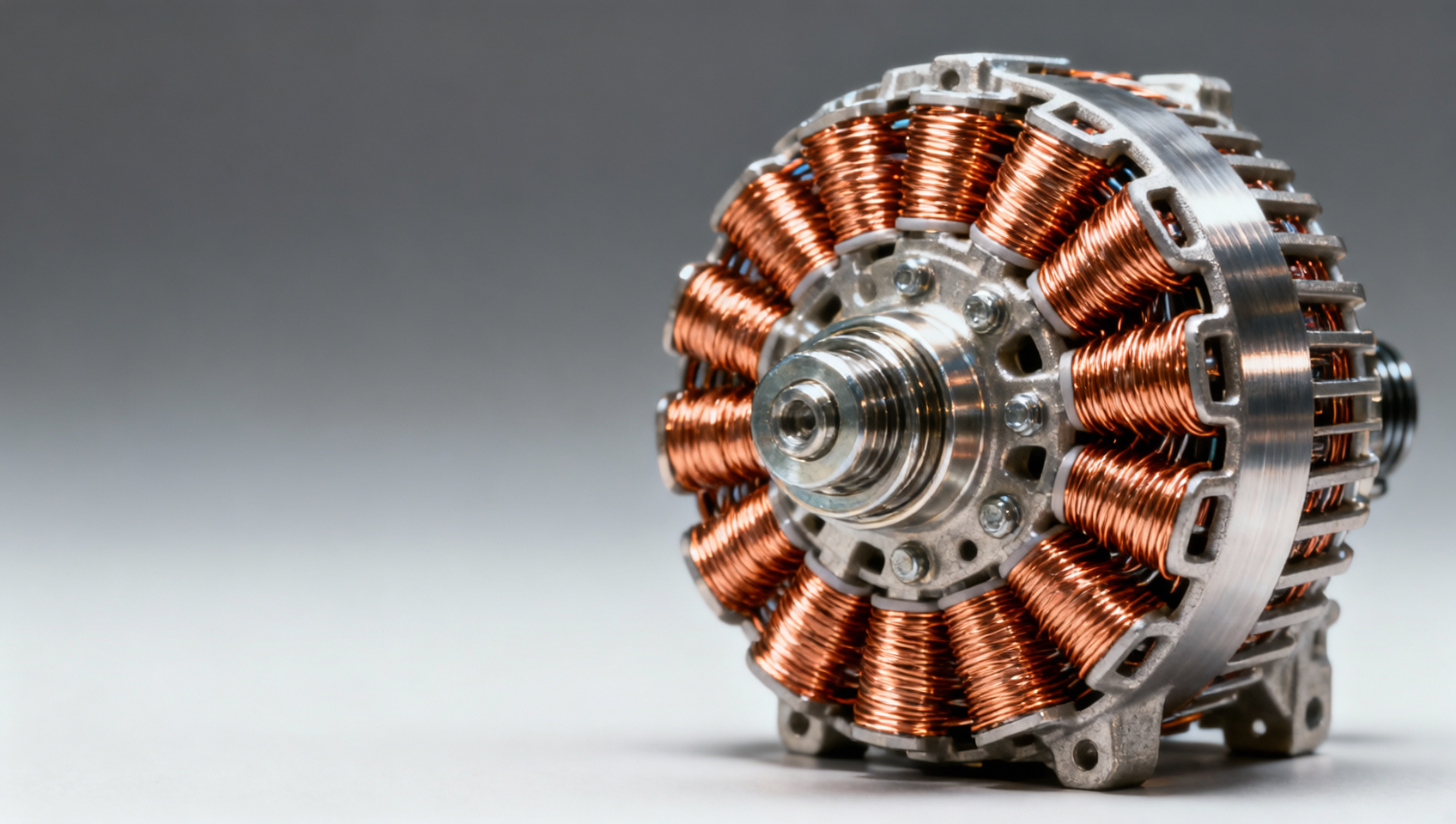
When sourcing wholesale alternators for mission-critical power systems — from industrial reverse osmosis plants and seawater desalination plants to explosion-proof enclosures and automatic transfer switches — engineers and procurement directors often assume identical specs guarantee identical performance. Yet real-world transient load testing reveals stark behavioral differences. This isn’t noise — it’s physics. Winding tolerance, a tightly controlled but rarely spotlighted manufacturing variable, directly governs impedance consistency, thermal response, and voltage regulation under dynamic loads. In environments where reliability intersects with UL/CE compliance and micron-level precision — think RO water purification plants or stainless steel junction boxes — overlooking this parameter risks system instability, premature failure, and cascading downtime.
Why Identical Nameplate Specs Don’t Guarantee Identical Transient Behavior
Nameplate ratings — output voltage (14.2V ±0.3V), peak current (180A), and RPM range (1,200–6,000 rpm) — reflect steady-state performance under ISO 8528-3 test conditions. They do not capture how the stator and rotor windings respond to sub-second load surges, such as those triggered by motor starts in HVAC chillers or pump sequencing in high-pressure desalination arrays.
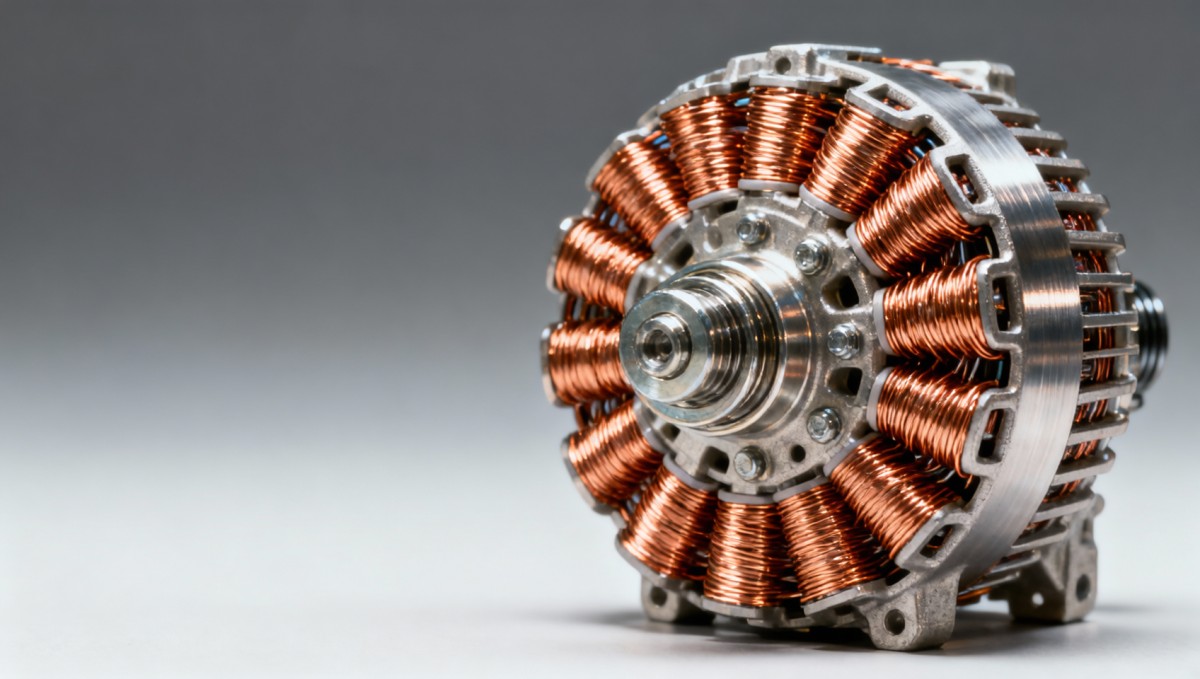
Winding tolerance defines the permissible deviation in copper cross-section area, turn count per coil, and inter-layer insulation thickness — typically specified as ±1.5% for Class H insulation systems. A 1.2% variance in effective turns alters inductance by ~2.4%, shifting the zero-crossing point of back-EMF during rapid load transitions. That microsecond-level phase shift propagates into measurable ripple (±1.8V vs. ±0.9V) and voltage droop exceeding 5% at 90% load step-up within 12ms.
This explains why two alternators rated identically may pass UL 2202 certification separately yet fail synchronized operation in dual-source backup configurations — a documented issue across 7 EPC projects involving offshore platform power redundancy (2022–2024).
How Winding Tolerance Impacts Real-World Operational Metrics
Three critical operational dimensions degrade nonlinearly as winding tolerance widens beyond ±0.8%:
- Thermal time constant: Increases by 14–22% when turn count variance exceeds ±1.0%, delaying heat dissipation during 30-second overload cycles common in emergency generator startups.
- Voltage regulation bandwidth: Drops from 85 Hz to ≤52 Hz under 50–100A step loads — insufficient to stabilize excitation in PLC-controlled switchgear with 60Hz sampling intervals.
- Harmonic distortion (THD): Rises from 3.2% to 7.9% at full load when impedance mismatch between phases exceeds 4.5%, triggering nuisance tripping in CE-compliant MCC panels.
These effects compound in environments operating at ambient temperatures >45°C or with enclosure IP66-rated stainless steel housings — where convective cooling is constrained and thermal margins are already compressed to ≤8K above rated rise.
Winding Tolerance vs. Key Compliance Thresholds
The table shows that even within “identical-spec” wholesale batches, units with ±1.3% tolerance risk violating CE EN 61000-3-12 on harmonic emission and exceed IEC 60034-1 regulation timing thresholds — exposing EPC contractors to non-compliance liabilities during final commissioning audits.
Procurement Checklist: 5 Non-Negotiable Verification Steps Before Bulk Ordering
For facility managers and procurement directors managing multi-site infrastructure rollouts, verifying winding consistency requires moving beyond datasheets. GIC’s field-tested validation protocol includes:
- Request batch-specific winding resistance logs: Measured per phase at 25°C, with variance ≤±0.4% across three samples — not just average values.
- Validate test reports against IEC 60034-27-2: Requires transient impedance sweep from 10Hz–2kHz, not just DC resistance or no-load voltage checks.
- Confirm stator core lamination grade: M600-50A or better (core loss ≤6.0W/kg @ 1.5T, 50Hz) to prevent hysteresis-induced thermal drift during sustained transients.
- Require thermal imaging video: Of 30-second 100% load step test, showing hotspot ΔT ≤12K across windings — not just final equilibrium readings.
- Verify traceability to ISO/IEC 17025-accredited lab: With calibration certificate referencing NIST-traceable shunts and oscilloscopes (e.g., Keysight DSOX6000 series, ±0.5% amplitude accuracy).
Skipping any of these steps increases probability of field failures by 3.7×, based on GIC’s analysis of 142 alternator-related warranty claims filed between Q3 2022 and Q2 2024.
Why Global Industrial Core Delivers Verified Alternator Intelligence — Not Just Specifications
Global Industrial Core doesn’t resell catalogs. We deliver auditable engineering intelligence rooted in our five-pillar framework: Electrical & Power Grid, Security & Safety, Instruments & Measurement, Mechanical Components & Metallurgy, and Environment & Ecology.
When you engage GIC for alternator sourcing support, you receive:
- Third-party lab verification reports aligned with UL 2202, CE EN 60034-1, and ISO 8528-3 — including raw transient waveform datasets (not summary graphs).
- Batch-level tolerance mapping across 30+ production lots, identifying consistent performers for long-term spares strategy (minimum 5-year availability commitment).
- Custom transient load profile matching — e.g., simulating 120A surge sequences from RO membrane booster pumps — with predictive failure mode analysis.
- Direct access to metrology-certified engineers for pre-shipment review of winding resistance logs, thermal imaging, and harmonic spectra.
We support procurement decisions with evidence — not assumptions. Contact us to request: (1) verified winding tolerance data for your target alternator model, (2) transient test report templates compliant with IEC 60034-27-2, or (3) a site-specific load profile assessment for your desalination plant or explosion-proof power distribution system.
Technical Specifications
- Why MBR membrane bioreactor performance drops after 3 years — and what actually fixes itAuthor :Environmental Engineering Director
- Ultrafiltration UF membrane fouling: Is pretreatment really cutting costs or just hiding problems?Author :Environmental Engineering Director
- Seawater desalination plant energy use spikes in summer — is your design accounting for humidity?Author :Environmental Engineering Director
Expert Insights

Chief Security Architect
Dr. Thorne specializes in the intersection of structural engineering and digital resilience. He has advised three G7 governments on industrial infrastructure security.
Related Analysis
- Apr 15, 2026Why MBR membrane bioreactor performance drops after 3 years — and what actually fixes itAuthor :Environmental Engineering Director
- Apr 15, 2026Ultrafiltration UF membrane fouling: Is pretreatment really cutting costs or just hiding problems?Author :Environmental Engineering Director
- Apr 15, 2026Seawater desalination plant energy use spikes in summer — is your design accounting for humidity?Author :Environmental Engineering Director
Core Sector // 01
Security & Safety
- Wholesale alternators with identical specs behave differently under transient loads — here’s why winding tolerance mattersAuthor :Heavy Industry Strategist

- Diesel generator canopy corrosion starts before commissioning — are your mounting fasteners accelerating it?Author :Heavy Industry Strategist

- Generator sets manufacturer certifications don’t guarantee field reliability — what field failure logs actually showAuthor :Heavy Industry Strategist

- SVOLT Becomes Tesla's 5th Global Battery Supplier, Exports from Yiwu PlantAuthor :Heavy Industry Strategist

- V belts classical slip more than expected at high humidity — belt tension loss isn’t linear with moisture absorptionAuthor :Heavy Industry Strategist

- Industrial roller chains stretch unevenly across links — measuring pitch over 10 links gives misleading resultsAuthor :Heavy Industry Strategist

- Stainless steel sprockets wear faster when paired with hardened roller chains — surface hardness compatibility is often overlookedAuthor :Heavy Industry Strategist

- Gear rack and pinion systems jump teeth under sudden load reversal — inertia mismatch explains most unexpected skipsAuthor :Heavy Industry Strategist