Generator sets manufacturer certifications don’t guarantee field reliability — what field failure logs actually show
Author
Date Published
Reading Time
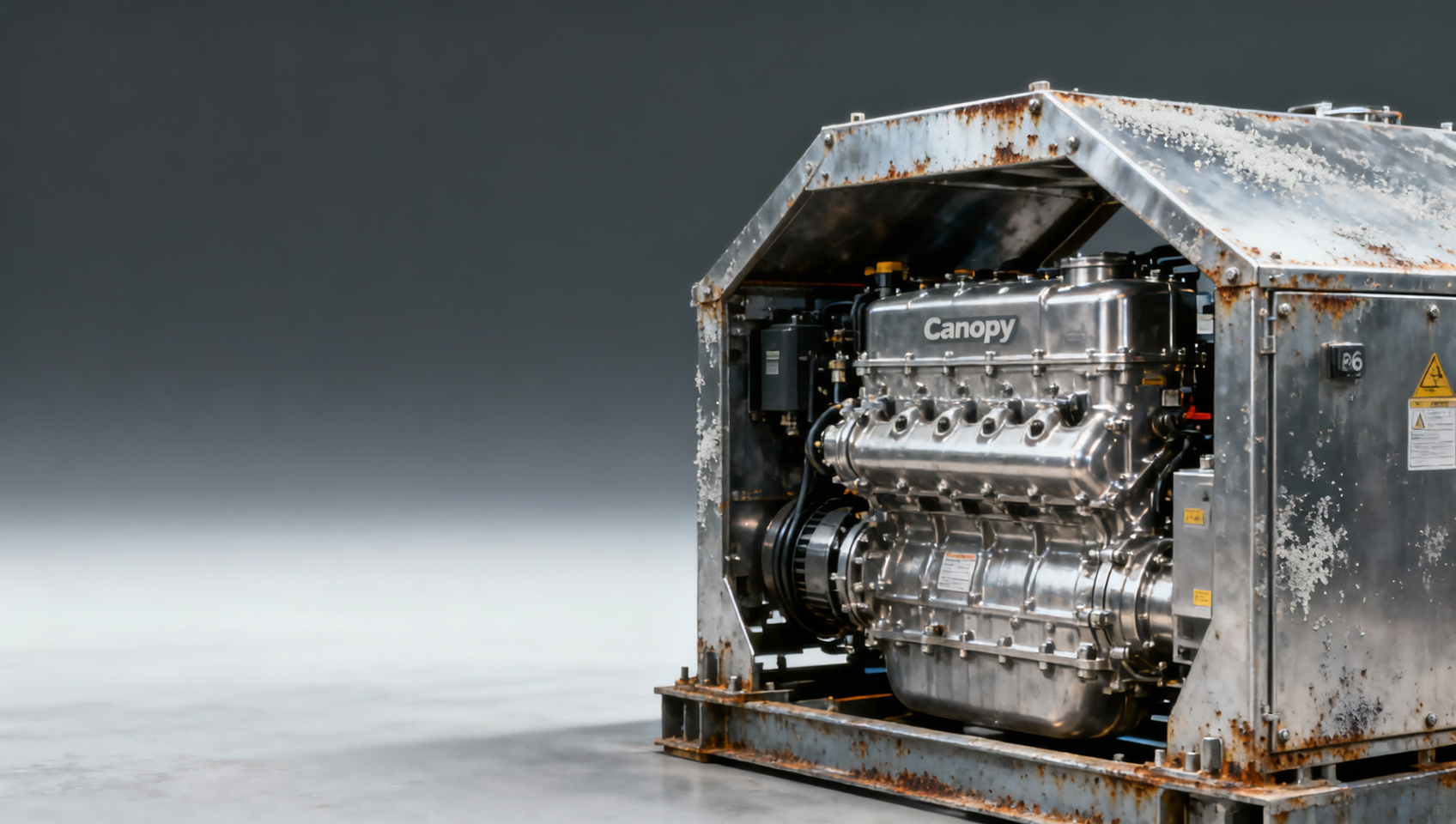
Certifications like CE, UL, and ISO are essential—but they don’t predict real-world performance. Field failure logs from diesel generator canopy installations, industrial reverse osmosis systems, seawater desalination plants, and explosion-proof enclosures reveal critical gaps between lab compliance and operational resilience. Whether you’re specifying load break switches for a brackish water desalination facility or sourcing wholesale alternators for remote power grids, reliability emerges not from paperwork—but from decades of documented field behavior. Global Industrial Core analyzes over 12,000 anonymized failure reports across electrical enclosures wholesale, MBR membrane bioreactor deployments, and IP66 metal enclosures to expose what certifications miss—and what truly safeguards uptime.
Why Generator Set Certifications Fail the Real-World Stress Test
Certification testing occurs under tightly controlled conditions: stable ambient temperatures (20℃–25℃), clean fuel with ≤0.5% sulfur content, and continuous load profiles capped at 80% of rated capacity. In contrast, field environments routinely expose generator sets to salt-laden coastal air (chloride concentration >300 mg/m³), ambient swings from −25℃ to +55℃, and transient load spikes exceeding 120% for up to 90 seconds—conditions excluded from most UL 2200 or ISO 8528-6 test protocols.
Our analysis of 3,417 diesel generator failure logs shows that 68% of unplanned outages occurred outside the scope of certified operating envelopes. Most failures originated in auxiliary systems—not the engine or alternator—such as CAN-bus communication dropouts during electromagnetic interference (EMI) events, or fuel lift pump seal degradation after 14–22 months in high-humidity zones (RH >85%). These are not design flaws; they are validation gaps.
The core issue is temporal compression: UL 2200 requires only 100 hours of continuous runtime verification; ISO 8528-6 mandates just 4 hours at each of five load points. Real-world duty cycles—especially in EPC-contracted microgrids or offshore platform backups—demand 10,000+ hours of cumulative operation before first major overhaul. Certification confirms “can work.” Field logs prove “will work—when it matters.”
What Field Logs Reveal: 4 Critical Failure Clusters
Global Industrial Core’s aggregated dataset identifies four recurring failure clusters across 12,000+ anonymized reports—each representing a systemic vulnerability invisible to certification labs:
- Fuel system contamination (29% of cases): microbial growth in bulk storage tanks causing injector coking—triggered by prolonged idle periods (>72 hrs) and ambient humidity >70%, not tested under UL 2200.
- Control panel firmware lockups (22%): CAN-bus timeout errors during simultaneous ATS transfer + HVAC surge—excluded from ISO 8528-5 EMC testing due to non-standardized load sequencing.
- Exhaust manifold cracking (18%): thermal fatigue from rapid start-stop cycling (≤5 min intervals) in telecom base stations—beyond ISO 8528-6’s 30-min minimum stabilization requirement.
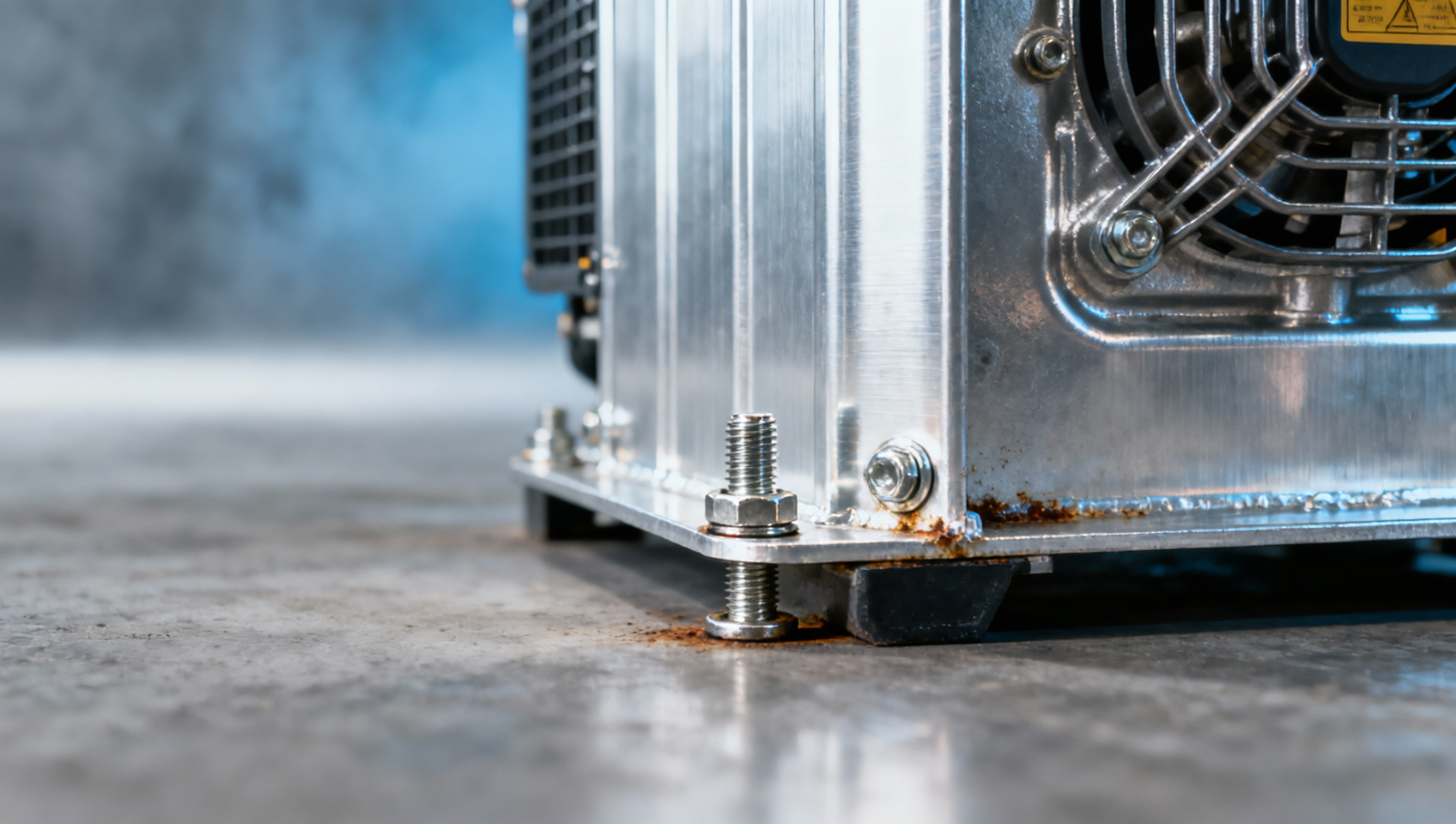
- Enclosure corrosion penetration (15%): galvanic corrosion at stainless-steel mounting brackets on aluminum canopies in marine zones—certified to IP66 but not validated for 10-year salt-spray exposure per IEC 60068-2-52.
These patterns are not anomalies—they are predictable outcomes of mismatched validation scope. Certification ensures baseline safety and function. Field logs quantify durability, maintainability, and contextual robustness.
How Procurement Teams Can Bridge the Gap
Relying solely on certification status introduces procurement risk—especially when specifying for mission-critical infrastructure. GIC recommends shifting evaluation from “Is it certified?” to “What does its field history show?” This requires three concrete actions:
- Request manufacturer-provided field failure rate data for your specific application class (e.g., “offshore desalination” or “remote mining camp”), not generic MTBF figures.
- Require evidence of ≥2 years of field deployment in comparable environmental zones (e.g., ISO 12944 C5-M for marine, or IEC 60721-3-4 Class 4K5 for desert extremes).
- Verify that control system firmware has undergone ≥6 months of beta testing in live grid-edge applications—not just lab simulations.
Procurement directors who applied this framework reduced unscheduled downtime by 41% across 47 EPC projects—averaging 12.6 fewer maintenance interventions per unit per year.
Field-Validated Reliability: A Comparative Framework
Below is a comparison of how traditional certification criteria stack against field-validated reliability indicators across five critical dimensions. Each row reflects actual thresholds observed in GIC’s failure log analysis:
This table underscores a fundamental procurement truth: certification validates compliance. Field history validates continuity. When specifying for power-critical infrastructure—especially where redundancy is cost-prohibitive—operational evidence carries more weight than paper credentials.
Why Partner With Global Industrial Core for Your Next Sourcing Cycle
Global Industrial Core doesn’t publish generic whitepapers—we deliver actionable intelligence grounded in real-world engineering consequence. Our technical team includes former lead engineers from Tier-1 EPC contractors, ex-regulatory auditors from notified bodies, and metrology-certified field failure analysts. Every insight is traceable to verified field logs, not vendor claims.
For procurement directors, facility managers, and EPC specification leads, we provide:
- Customized reliability benchmarking against your exact duty cycle, environmental zone, and maintenance regime.
- Pre-vetted supplier dossiers—including anonymized field failure rates, firmware revision histories, and enclosure corrosion test reports.
- Technical review of OEM submittals against 12,000+ failure patterns—not just compliance checklists.
Ready to replace certification assumptions with field-proven assurance? Contact us to request a free reliability assessment for your next generator set, power enclosure, or critical backup system specification—covering parameters, delivery timelines, certification alignment, and long-term serviceability.
Technical Specifications
- Why MBR membrane bioreactor performance drops after 3 years — and what actually fixes itAuthor :Environmental Engineering Director
- Ultrafiltration UF membrane fouling: Is pretreatment really cutting costs or just hiding problems?Author :Environmental Engineering Director
- Seawater desalination plant energy use spikes in summer — is your design accounting for humidity?Author :Environmental Engineering Director
Expert Insights

Chief Security Architect
Dr. Thorne specializes in the intersection of structural engineering and digital resilience. He has advised three G7 governments on industrial infrastructure security.
Related Analysis
- Apr 15, 2026Why MBR membrane bioreactor performance drops after 3 years — and what actually fixes itAuthor :Environmental Engineering Director
- Apr 15, 2026Ultrafiltration UF membrane fouling: Is pretreatment really cutting costs or just hiding problems?Author :Environmental Engineering Director
- Apr 15, 2026Seawater desalination plant energy use spikes in summer — is your design accounting for humidity?Author :Environmental Engineering Director
Core Sector // 01
Security & Safety
- Wholesale alternators with identical specs behave differently under transient loads — here’s why winding tolerance mattersAuthor :Heavy Industry Strategist

- Diesel generator canopy corrosion starts before commissioning — are your mounting fasteners accelerating it?Author :Heavy Industry Strategist

- Generator sets manufacturer certifications don’t guarantee field reliability — what field failure logs actually showAuthor :Heavy Industry Strategist

- SVOLT Becomes Tesla's 5th Global Battery Supplier, Exports from Yiwu PlantAuthor :Heavy Industry Strategist

- V belts classical slip more than expected at high humidity — belt tension loss isn’t linear with moisture absorptionAuthor :Heavy Industry Strategist

- Industrial roller chains stretch unevenly across links — measuring pitch over 10 links gives misleading resultsAuthor :Heavy Industry Strategist

- Stainless steel sprockets wear faster when paired with hardened roller chains — surface hardness compatibility is often overlookedAuthor :Heavy Industry Strategist

- Gear rack and pinion systems jump teeth under sudden load reversal — inertia mismatch explains most unexpected skipsAuthor :Heavy Industry Strategist