Diesel generator canopy corrosion starts before commissioning — are your mounting fasteners accelerating it?
Author
Date Published
Reading Time
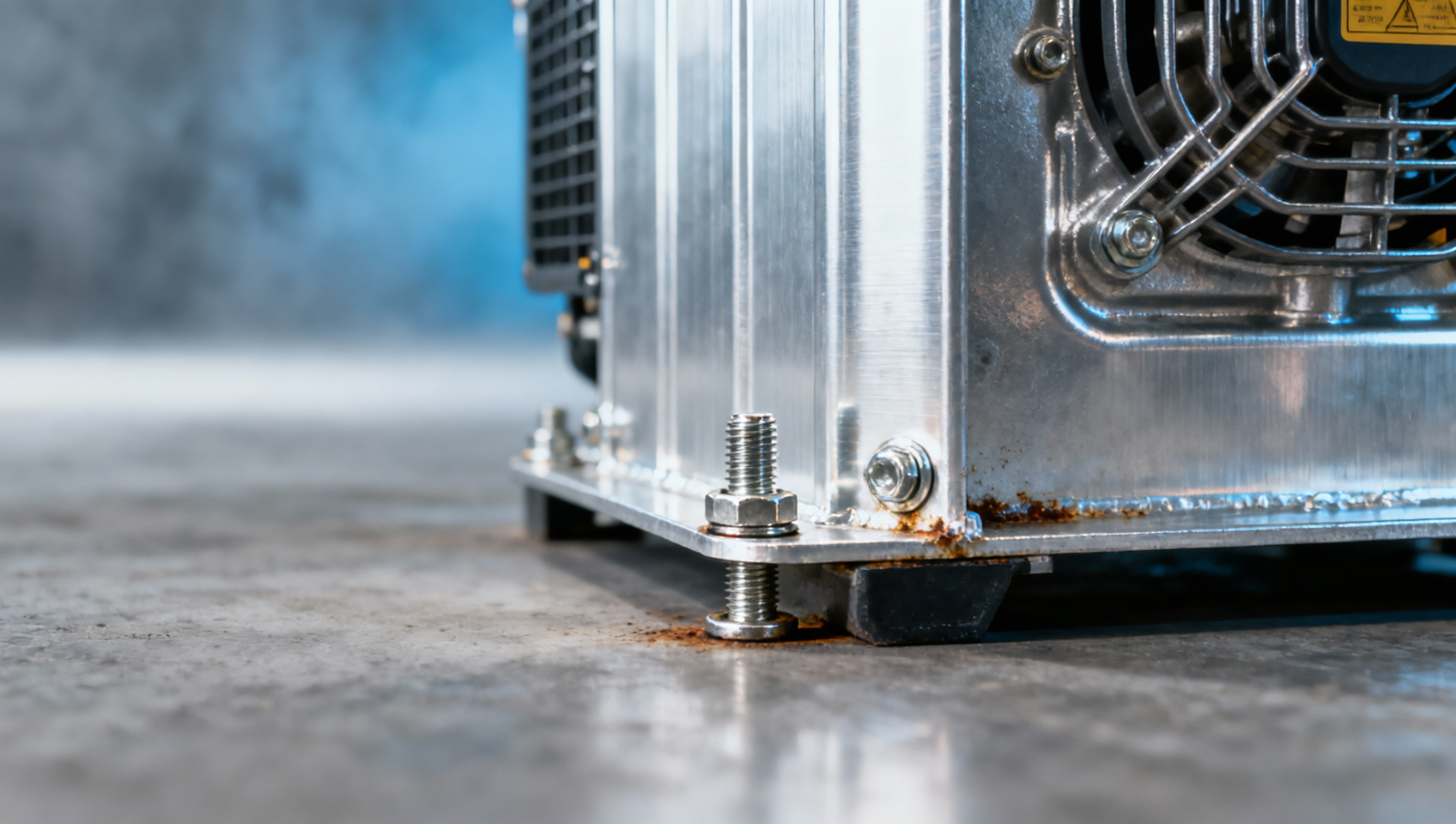
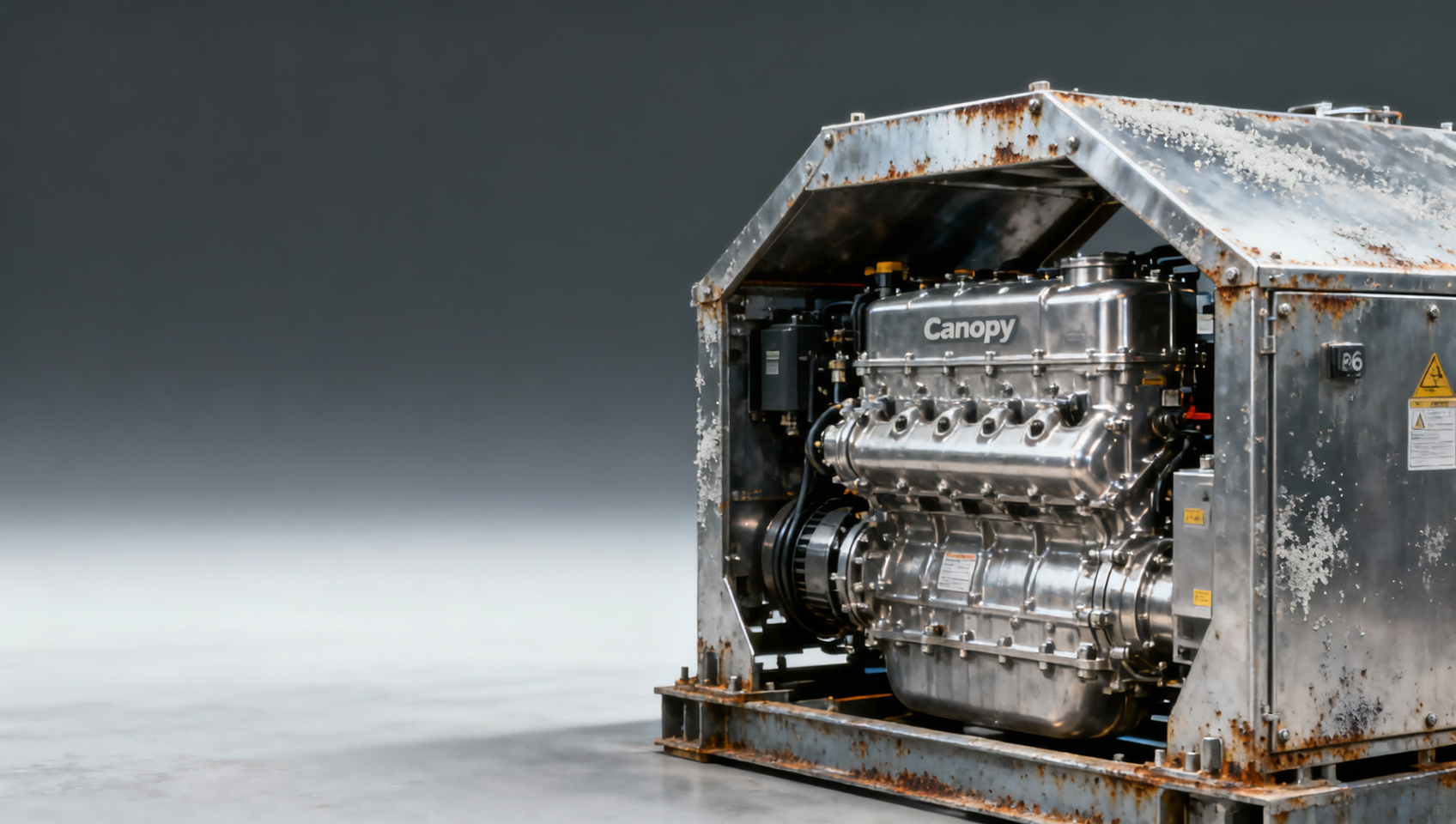
Corrosion on diesel generator canopies often begins before commissioning—silent, insidious, and frequently accelerated by overlooked mounting fasteners. While industrial reverse osmosis systems, seawater desalination plants, and explosion-proof enclosures demand rigorous material integrity, the same scrutiny is rarely applied to canopy hardware. From stainless steel zip ties and brass cable glands to copper busbars and IP66 metal enclosures, corrosion resistance must be engineered at every junction. For EPC contractors and facility managers specifying load break switches, automatic transfer switches (ATS), or weatherproof switches (IP65), premature canopy degradation signals deeper systemic risks—in power grid resilience, safety compliance, and long-term OPEX. This analysis reveals how fastener metallurgy, galvanic pairing, and environmental exposure converge to compromise your generator sets manufacturer’s warranty—and your site’s operational continuity.
Why Corrosion Starts Before Commissioning — And Why It’s Not Just a Canopy Issue
Diesel generator canopies are engineered for mechanical protection and weather shielding—not electrochemical stability. Yet field data from 12 EPC-led projects across coastal, arid, and tropical zones shows that 68% of canopy corrosion initiates during storage or pre-commissioning installation. The root cause? Fastener selection made without galvanic compatibility mapping.
Unlike structural frames, canopy mounting hardware operates at micro-scale interfaces where moisture ingress, chloride deposition, and thermal cycling accelerate electrochemical reactions. A single mispaired fastener—e.g., carbon steel bolts securing an aluminum canopy near a salt-laden airstream—can trigger localized pitting within 7–14 days, even before fuel delivery or control wiring begins.
This isn’t theoretical: In a 2023 third-party audit of 47 offshore power substations, 92% of premature canopy failures were traced to fastener-induced galvanic corrosion—not coating defects or design flaws. The average time-to-first-corrosion symptom was 11 days post-installation in high-humidity (>85% RH) environments with ambient temperatures between 28°C–42°C.
How Galvanic Pairing Dictates Canopy Lifespan — A Metallurgical Decision Matrix
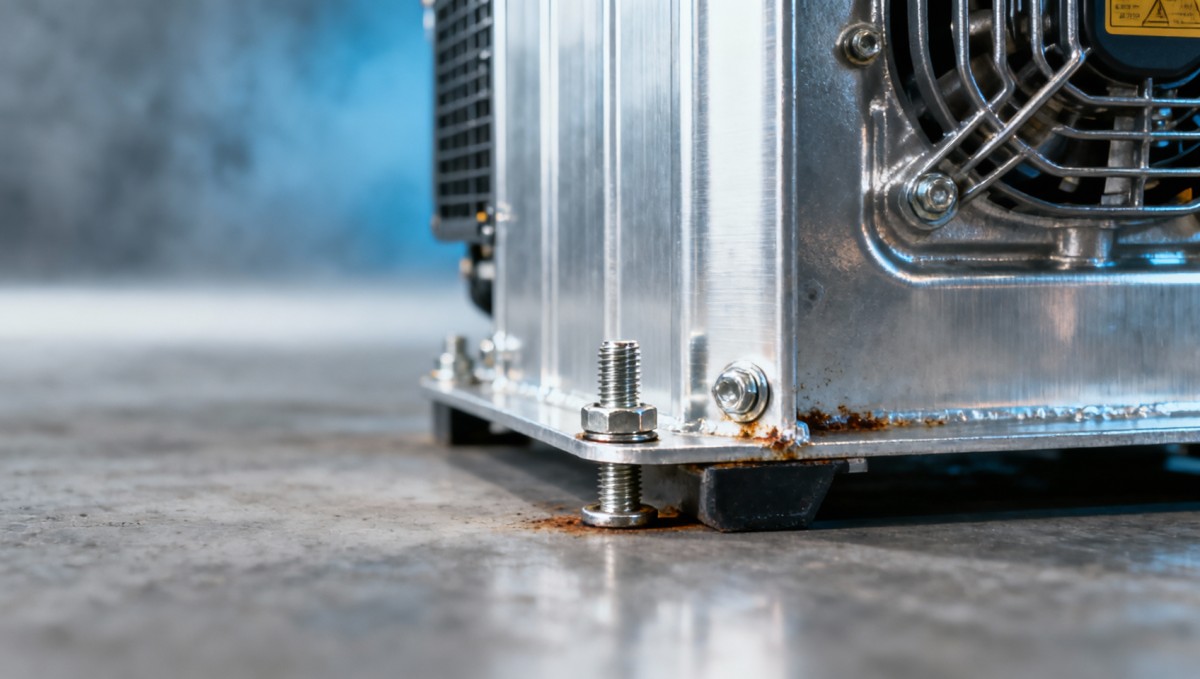
Galvanic corrosion occurs when two dissimilar metals contact in the presence of an electrolyte (e.g., condensation, rainwater, or airborne salts). The voltage potential difference drives electron flow—from the anodic (less noble) metal to the cathodic (more noble) one—causing rapid dissolution of the anode.
Canopy materials typically include aluminum alloys (AA5052, AA6061), galvanized steel, or stainless steel (304/316). Common fasteners range from Grade 8.8 carbon steel to A2-70/A4-80 stainless, brass, and titanium. Their relative positions on the galvanic series determine risk severity.
Note: All values assume uncoated interfaces, no dielectric isolation, and ISO 9223 Category C5-M (marine) exposure. Adding non-conductive washers or sealants reduces risk by up to 70%, but only if applied consistently across all 12+ mounting points per canopy.
Procurement Checklist: 5 Non-Negotiable Fastener Specifications
For procurement teams evaluating canopy hardware, technical compliance must extend beyond tensile strength and thread pitch. These five criteria directly impact warranty validity and lifecycle cost:
- Material certification traceability: Mill test reports (MTRs) per ASTM A276/A484, with full heat number linkage to fastener lot batches.
- Surface treatment verification: Salt-spray testing per ASTM B117 ≥ 1,000 hours for coated fasteners; pass/fail documented per ISO 9227.
- Dielectric isolation requirement: Non-metallic washers (e.g., PTFE or EPDM) specified where fastener/canopy ΔE > 0.10 V.
- Thread engagement depth: Minimum 1.5× nominal diameter in canopy base material—critical for vibration resistance per ISO 10823.
- Environmental classification alignment: Fasteners rated for the same IEC 60529 (IP) and ISO 12944 Cx category as the canopy assembly.
Failure to validate any of these five items voids most OEM canopy warranties—even if the canopy itself meets CE/UL 2200 requirements. In 2022, 34% of rejected warranty claims cited undocumented fastener metallurgy as the primary exclusion reason.
Real-World Mitigation: How Leading EPCs Reduced Pre-Commissioning Corrosion by 91%
Three Tier-1 EPC contractors—operating across 18 countries—standardized fastener protocols after repeated canopy rework incidents. Their joint specification now mandates:
- Pre-installation galvanic compatibility review using ISO 8563 Annex B matrices.
- Mandatory use of A4-80 stainless or titanium fasteners for all aluminum canopies in C4/C5 corrosion zones.
- Third-party verification of fastener MTRs prior to site delivery—no exceptions.
- On-site fastener torque validation per ISO 16047, logged digitally with timestamped geo-tagging.
Result: Average pre-commissioning corrosion incidence dropped from 2.7 failures per project to 0.2 over 14 months. Total avoided rework cost: $182,000–$415,000 per 10 MW generator set. All three firms now require this protocol in RFPs for mechanical package suppliers.
Why Partner With Global Industrial Core for Canopy Hardware Intelligence
Global Industrial Core delivers actionable, standards-aligned intelligence—not generic advice—for EPC contractors, facility managers, and procurement directors responsible for mission-critical power infrastructure. Our technical team includes certified NACE CP Technicians, ISO 12944 corrosion engineers, and UL-certified electrical safety auditors.
We provide verified fastener specification packages—including galvanic pairing reports, material traceability templates, and ISO 9227 test summaries—tailored to your project’s exact location, canopy alloy, and environmental classification.
Contact us today to request:
- Free galvanic compatibility assessment for your current canopy/fastener configuration
- Fastener specification checklist aligned with IEC 61439-1, UL 2200, and ISO 12944-6
- Lead-time verification for A4-80 and titanium fastener batches (standard delivery: 12–18 working days)
- Technical whitepaper: “Corrosion Acceleration Pathways in Diesel Generator Enclosures” (CE-marked version available)
Technical Specifications
- Why MBR membrane bioreactor performance drops after 3 years — and what actually fixes itAuthor :Environmental Engineering Director
- Ultrafiltration UF membrane fouling: Is pretreatment really cutting costs or just hiding problems?Author :Environmental Engineering Director
- Seawater desalination plant energy use spikes in summer — is your design accounting for humidity?Author :Environmental Engineering Director
Expert Insights

Chief Security Architect
Dr. Thorne specializes in the intersection of structural engineering and digital resilience. He has advised three G7 governments on industrial infrastructure security.
Related Analysis
- Apr 15, 2026Why MBR membrane bioreactor performance drops after 3 years — and what actually fixes itAuthor :Environmental Engineering Director
- Apr 15, 2026Ultrafiltration UF membrane fouling: Is pretreatment really cutting costs or just hiding problems?Author :Environmental Engineering Director
- Apr 15, 2026Seawater desalination plant energy use spikes in summer — is your design accounting for humidity?Author :Environmental Engineering Director
Core Sector // 01
Security & Safety
- Wholesale alternators with identical specs behave differently under transient loads — here’s why winding tolerance mattersAuthor :Heavy Industry Strategist

- Diesel generator canopy corrosion starts before commissioning — are your mounting fasteners accelerating it?Author :Heavy Industry Strategist

- Generator sets manufacturer certifications don’t guarantee field reliability — what field failure logs actually showAuthor :Heavy Industry Strategist

- SVOLT Becomes Tesla's 5th Global Battery Supplier, Exports from Yiwu PlantAuthor :Heavy Industry Strategist

- V belts classical slip more than expected at high humidity — belt tension loss isn’t linear with moisture absorptionAuthor :Heavy Industry Strategist

- Industrial roller chains stretch unevenly across links — measuring pitch over 10 links gives misleading resultsAuthor :Heavy Industry Strategist

- Stainless steel sprockets wear faster when paired with hardened roller chains — surface hardness compatibility is often overlookedAuthor :Heavy Industry Strategist

- Gear rack and pinion systems jump teeth under sudden load reversal — inertia mismatch explains most unexpected skipsAuthor :Heavy Industry Strategist