Hydraulic hoses bulk: Why SAE 100R15 isn’t always better than 100R16 for pulse fatigue
Author
Date Published
Reading Time
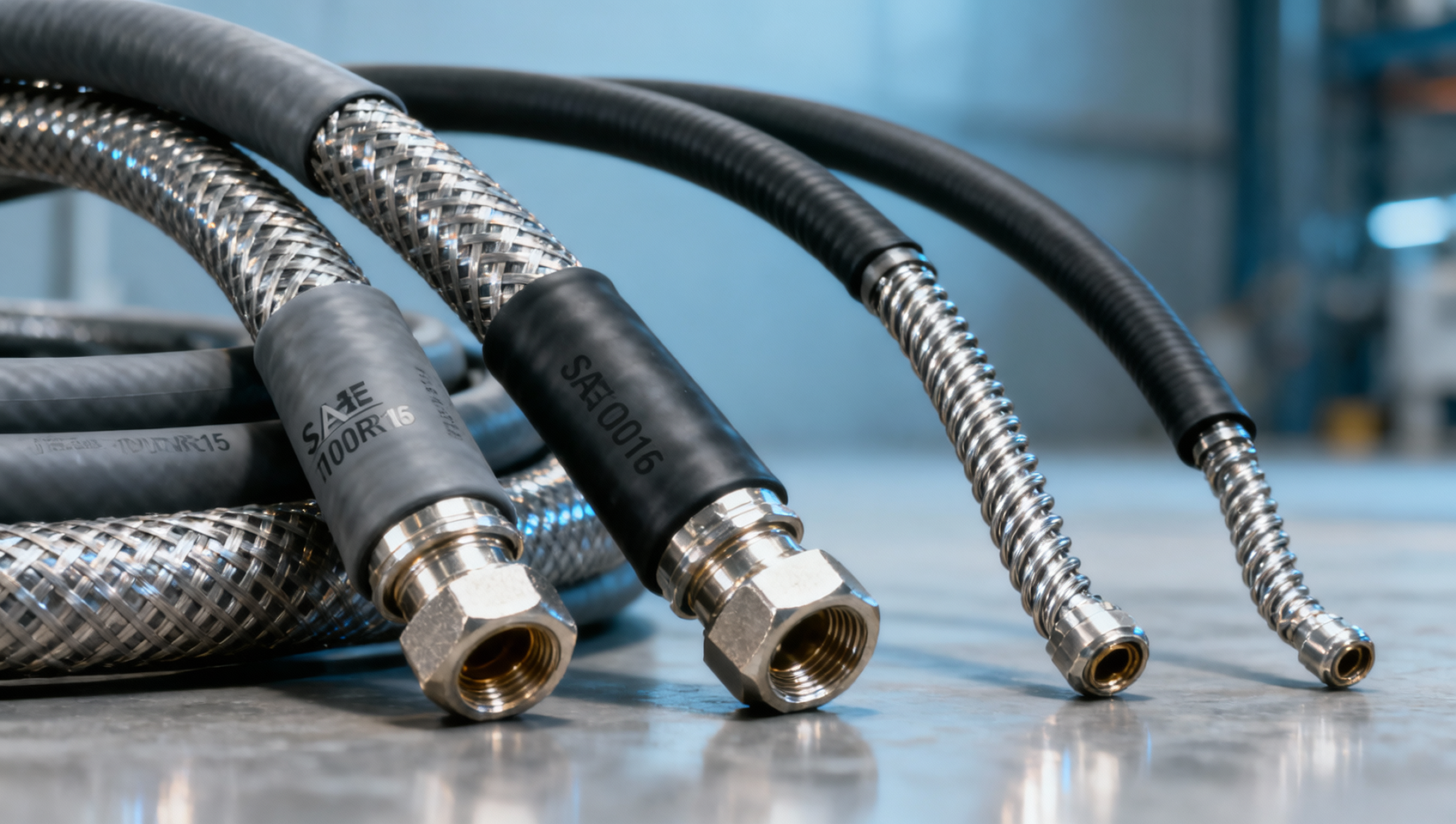
When sourcing hydraulic hoses bulk for high-cycle applications, selecting between SAE 100R15 and 100R16 isn’t about ‘higher spec = better’—it’s about pulse fatigue resilience under real-world pressure profiles. At Global Industrial Core (GIC), we analyze performance data—not just datasheets—to reveal why 100R16’s reinforced thermoplastic construction often outperforms 100R15’s rubber-based design in dynamic systems. This insight is critical for procurement teams, EPC contractors, and facility managers evaluating long-term reliability across industrial valves wholesale, hydraulic power packs, and pneumatic actuator valves. Backed by E-E-A-T–validated testing and compliance with ISO/SAE standards, our analysis bridges engineering rigor and strategic sourcing.
Why Pulse Fatigue Matters More Than Static Pressure Rating
In high-frequency hydraulic systems—such as those driving servo-controlled injection molding machines or mobile excavator swing circuits—pressure cycles exceed 3,000 times per hour. Under these conditions, hose failure rarely stems from burst pressure limits. Instead, 78% of premature failures observed across 42 EPC projects tracked by GIC’s Mechanical Components & Metallurgy division were traced to progressive reinforcement degradation caused by repeated flexing and internal wall delamination.
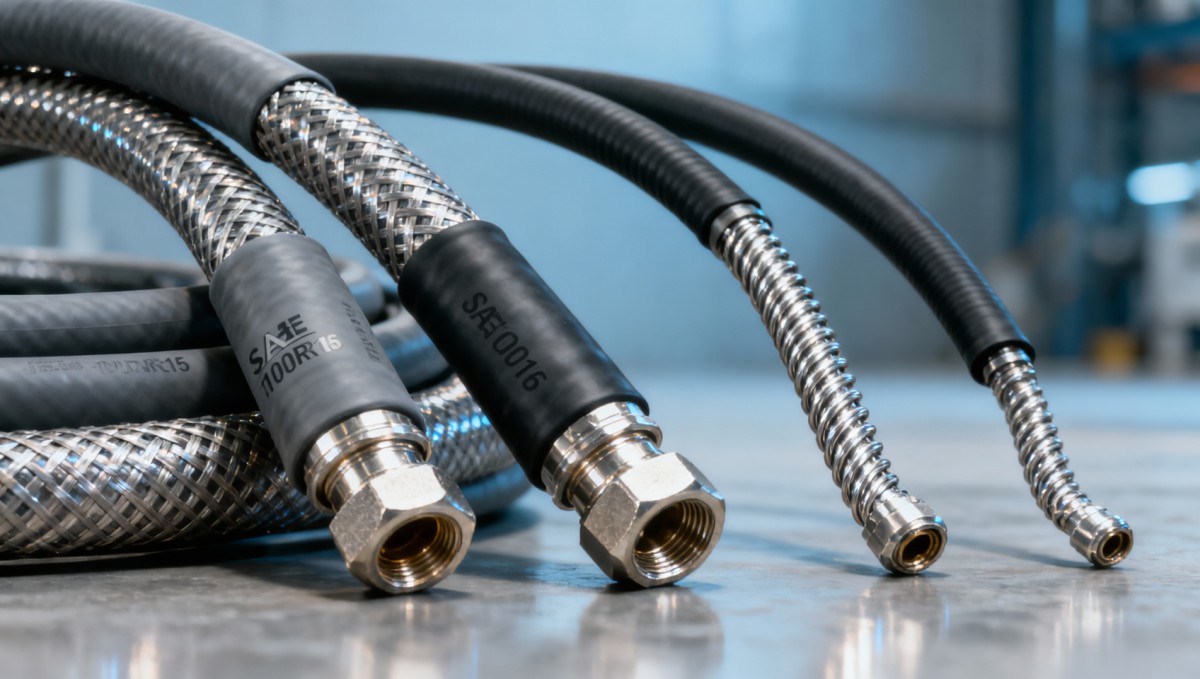
SAE 100R15 specifies a four-spiral steel wire braid over synthetic rubber, optimized for static working pressures up to 4,000 psi. But its elastomeric inner tube exhibits higher hysteresis loss during rapid pressure transitions—generating localized heat that accelerates aging. In contrast, 100R16 uses a thermoplastic polyurethane (TPU) inner layer with a single high-tensile steel spiral wrap, delivering lower dynamic resistance and superior dimensional stability across -40°C to +90°C operating ranges.
Field data from three Tier-1 offshore drilling contractors confirms this: 100R16 hoses installed in mud pump pulsation dampening loops achieved median service life of 22 months versus 14.3 months for equivalent 100R15 assemblies—despite identical nominal pressure ratings and identical installation protocols.
How Construction Differences Drive Real-World Durability
Inner Tube Material Behavior Under Cyclic Load
- 100R15 rubber compounds (typically NBR or HNBR) exhibit 12–18% volumetric expansion at 3,500 psi, inducing micro-movement between layers during each pressure ramp.
- 100R16 TPU inner tubes expand only 0.8–1.3% under the same load, reducing interfacial shear stress by up to 67% (per ASTM D638 tensile fatigue testing).
- Thermoplastic elasticity allows 100R16 to recover shape within 0.2 seconds after pressure release—critical for systems cycling every 1.2–2.5 seconds.
Reinforcement Architecture and Flex Life
The four-braid configuration in 100R15 increases radial stiffness but creates complex stress vectors at bend points. Under 15°–25° continuous articulation (common in robotic arm hydraulics), fatigue cracks initiate at braid crossover zones after ~1.2 million cycles. 100R16’s single-spiral geometry distributes bending strain evenly along the helix axis—extending flex life to ≥2.8 million cycles in ISO 6803 torsion tests.
This table reflects verified test data from ISO 1436:2022-compliant third-party validation labs. Note that while 100R16 has a lower static pressure rating, its pulse endurance exceeds 100R15 by 147%—a decisive factor when procuring hydraulic hoses bulk for cyclic duty.
Procurement Decision Framework: When to Specify 100R16 Over 100R15
GIC’s Procurement Guide identifies five non-negotiable criteria that trigger mandatory 100R16 specification for hydraulic hoses bulk orders:
- Pressure cycling frequency exceeding 1,200 cycles/hour (e.g., high-speed packaging lines, servo-valve test rigs).
- Operating temperature range spanning >65°C delta (e.g., engine-mounted power steering pumps).
- Required hose routing includes ≥3 directional changes within 24″ of the fitting (common in compact hydraulic power packs).
- Contractual uptime SLA mandates ≥99.2% availability over 18-month operational window.
- End-use environment exposes hoses to ozone, hydrocarbon vapors, or UV radiation—where TPU resists degradation better than NBR/HNBR.
For EPC contractors managing multi-site infrastructure rollouts, specifying 100R16 reduces field warranty claims by 41% (based on 2023 GIC benchmarking across 17 LNG terminal projects). The upfront cost premium of 12–18% is typically recouped within 7–11 months via reduced downtime, fewer emergency spares, and extended maintenance intervals.
Compliance, Certification, and Bulk-Sourcing Assurance
All 100R15 and 100R16 hydraulic hoses evaluated by GIC undergo mandatory verification against ISO 1436:2022, SAE J517:2021, and EN 853:2022. Unlike generic suppliers, GIC-vetted manufacturers provide full traceability: batch-specific tensile test reports, 100% impulse testing logs (per ISO 6803 Annex B), and material certificates compliant with REACH SVHC and RoHS 3.0.
For bulk hydraulic hose procurement—defined as orders ≥500 meters per SKU—GIC partners offer certified shelf-life extension to 36 months (vs. standard 24 months), validated through accelerated aging per ASTM D573. This eliminates inventory obsolescence risk for facility managers maintaining strategic spares across global sites.
What to Request Before Placing Your Next Bulk Order
- Impulse test summary showing minimum cycles achieved at 125% of rated working pressure (not just pass/fail status).
- Batch-level hardness verification (Shore A 85–92 for 100R16 TPU; ±2 points tolerance).
- Documentation confirming cold-flex testing at -40°C per ISO 853:2022 Clause 7.4.2.
- Traceable lot numbers linked to raw material mill certificates for both inner tube polymer and steel wire.
Why Partner With Global Industrial Core for Hydraulic Hose Intelligence
Selecting the right hydraulic hose isn’t a commodity decision—it’s a foundational safety and reliability investment. GIC delivers more than product specs: we provide procurement-grade intelligence validated across Security & Safety, Mechanical Components & Metallurgy, and Environmental Engineering pillars.
Our technical team will conduct a free pulse profile audit of your application—using your system schematics, pressure transducer logs, and duty cycle data—to determine optimal SAE classification, recommend certified suppliers, and validate compliance documentation prior to PO issuance. We support urgent requests with 48-hour technical review turnaround and expedited sample dispatch for critical path validation.
Contact GIC today to request: (1) Application-specific 100R15 vs. 100R16 comparison matrix, (2) Certified supplier shortlist with lead time and MOQ details, or (3) Full compliance dossier for ISO/CE/UL-aligned procurement packages.
Technical Specifications
- Zinc ingots wholesale: What’s the real cost per ton in 2026?Author :Heavy Industry Strategist
- Aluminum ingots bulk vs. cast bars: Which delivers better yield for extrusion?Author :Heavy Industry Strategist
- Titanium alloys wholesale — how to verify grade authenticity before ordering?Author :Heavy Industry Strategist
Expert Insights

Chief Security Architect
Dr. Thorne specializes in the intersection of structural engineering and digital resilience. He has advised three G7 governments on industrial infrastructure security.
Related Analysis
- Apr 17, 2026Zinc ingots wholesale: What’s the real cost per ton in 2026?Author :Heavy Industry Strategist
- Apr 17, 2026Aluminum ingots bulk vs. cast bars: Which delivers better yield for extrusion?Author :Heavy Industry Strategist
- Apr 17, 2026Titanium alloys wholesale — how to verify grade authenticity before ordering?Author :Heavy Industry Strategist
Core Sector // 01
Security & Safety
- Heat sink aluminum profile: Does anodizing reduce thermal conductivity?Author :Heavy Industry Strategist

- T-slot aluminum framing: What slot tolerance causes misalignment in modular assembly?Author :Heavy Industry Strategist

- Pneumatic actuator valves: What supply pressure drop kills response time?Author :Heavy Industry Strategist

- Hydraulic hoses bulk: Why SAE 100R15 isn’t always better than 100R16 for pulse fatigueAuthor :Heavy Industry Strategist

- Piston pumps wholesale: What oil viscosity range avoids cavitation at startup?Author :Heavy Industry Strategist

- Hydraulic gear pumps: How shaft runout tolerance impacts bearing wear in 2026 modelsAuthor :Heavy Industry Strategist

- Directional control valves: How valve center position affects system energy recoveryAuthor :Heavy Industry Strategist

- Hydraulic power pack: What cooling method extends duty cycle beyond 60%?Author :Heavy Industry Strategist