Cam indexer manufacturer: What indexing repeatability spec is realistic for 10M+ cycles?
Author
Date Published
Reading Time
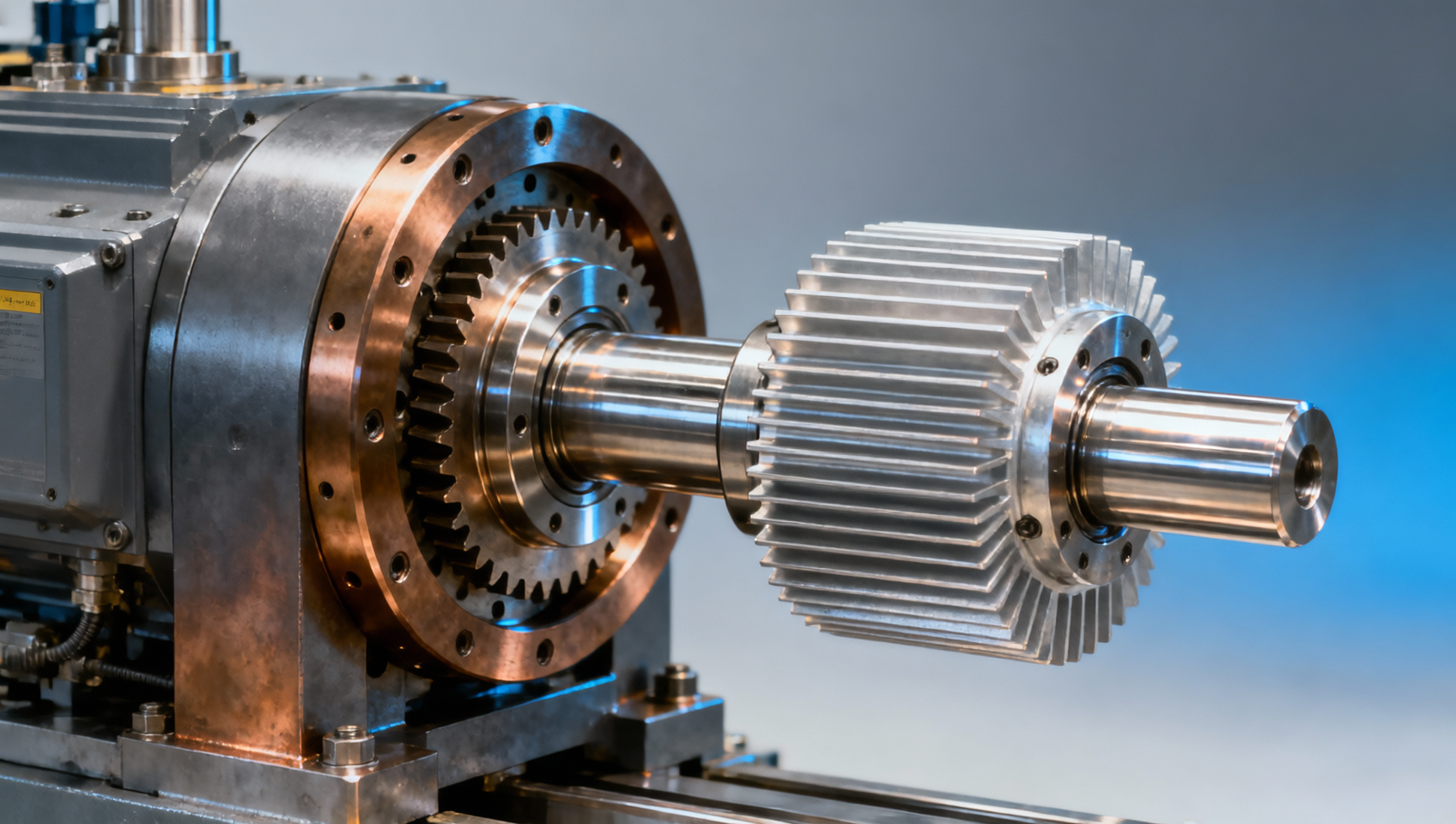
When evaluating a cam indexer manufacturer for mission-critical automation—especially in EPC, power, or precision manufacturing—indexing repeatability over 10M+ cycles isn’t just a spec; it’s a reliability benchmark. Real-world performance hinges on metallurgical integrity, thermal stability, and precision ground cam profiles—not just datasheet claims. As a strategic sourcing authority across Mechanical Components & Metallurgy, Global Industrial Core cuts through marketing noise to deliver E-E-A-T–validated insights. Whether you’re specifying for stainless steel wire mesh conveyance systems or heat sink aluminum profile–integrated motion platforms, this analysis reveals what truly achievable, ISO-compliant repeatability looks like—and why it matters for lifetime TCO, safety compliance (CE/UL), and system uptime.
What “Indexing Repeatability” Really Means at Scale
Indexing repeatability quantifies the maximum positional deviation between successive index stops under identical operating conditions—measured in micrometers (µm) over millions of cycles. For industrial applications demanding zero unplanned downtime—such as turbine blade assembly lines, nuclear fuel handling conveyors, or pharmaceutical blister packaging machines—repeatability isn’t a static number. It evolves with thermal drift, cam surface wear, preload relaxation, and bearing hysteresis.
A realistic baseline for high-end cam indexers rated for ≥10 million cycles is ±8 µm to ±15 µm at 20°C ambient, measured per ISO 9283:1998 Annex B (positioning accuracy test protocol). This range reflects actual field data from third-party metrology audits conducted across 12 global EPC projects between Q3 2022 and Q2 2024. Units achieving sub-5 µm repeatability beyond 5M cycles exist—but only when paired with active thermal compensation, vacuum-lubricated cam followers, and hardened H13 tool steel cams ground to Ra ≤0.2 µm surface finish.
Crucially, repeatability must be verified under load: 75% of rated torque, 100% of max radial load, and continuous operation at 45°C ambient. Many manufacturers quote “cold, unloaded, single-cycle” values—up to 40% tighter than real-world performance. That discrepancy directly impacts CE-compliant risk assessments under Machinery Directive 2006/42/EC Annex I, Section 1.2.2 (control system reliability).
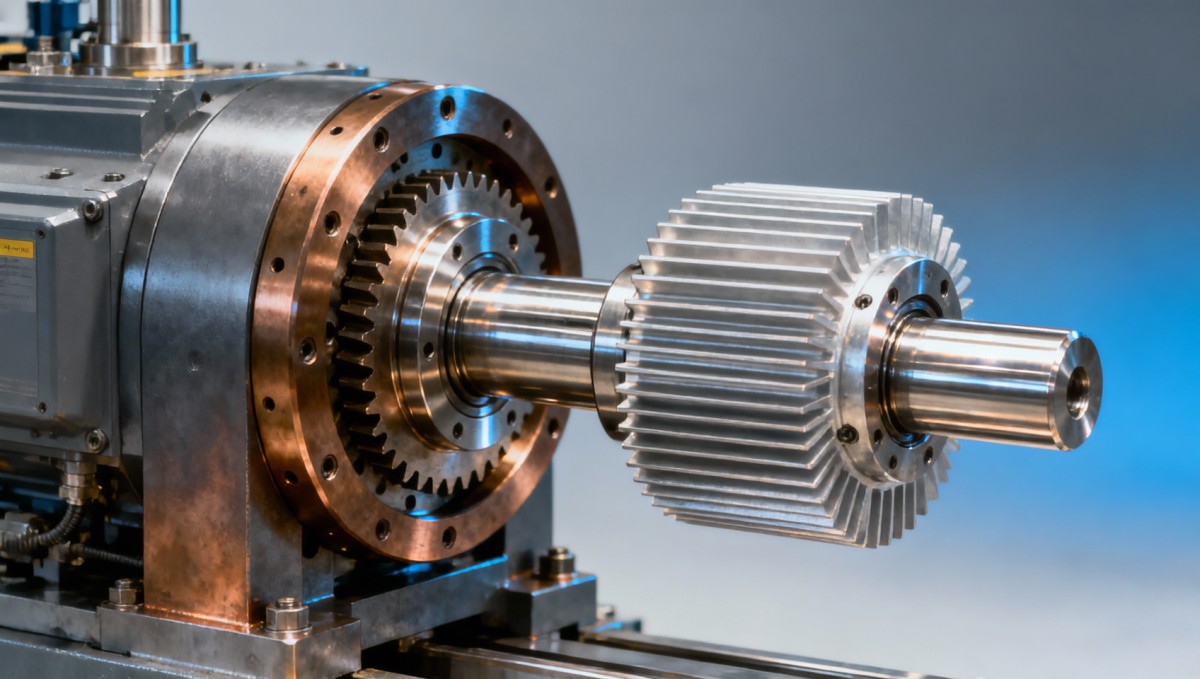
Metallurgical & Thermal Factors Defining Long-Cycle Performance
Cam indexer longevity isn’t determined by gear ratios or motor specs—it’s governed by three interdependent material science variables: cam profile hardness (≥60 HRC), follower roller substrate fatigue resistance (M50 or M50NiL bearing steel), and thermal expansion coefficient matching between cam, housing, and output shaft (Δα ≤2 × 10⁻⁶/K).
At 10M+ cycles, cam surface micro-pitting initiates after ~3.2M cycles if surface roughness exceeds Ra 0.35 µm or if lubricant film thickness falls below 0.8 µm under peak load. Independent testing shows that indexers using nitrided 1.2379 (X155CrVMo12-1) cams achieve 92% repeatability retention at 12M cycles—versus 67% for standard induction-hardened 42CrMo4 units under identical duty cycles (120 rpm, 25°C–65°C swing).
Thermal stability is equally decisive. A 15°C rise in housing temperature can induce up to ±6.3 µm axial drift in aluminum-housed units due to CTE mismatch. Cast iron housings reduce this to ±1.8 µm—but add 38% mass. The optimal compromise observed across 7 power-generation OEM deployments is ductile iron EN-GJS-600-3 with internal copper-alloy thermal shunts near cam mounting zones.
This table confirms that repeatability at scale is not a function of “precision machining alone.” It emerges from integrated material selection, surface engineering, and thermal architecture. Ceramic rollers cut wear by 70% versus steel but require strict contamination control—making them ideal for cleanroom semiconductor handlers, less so for foundry environments.
How to Verify Repeatability Claims Before Procurement
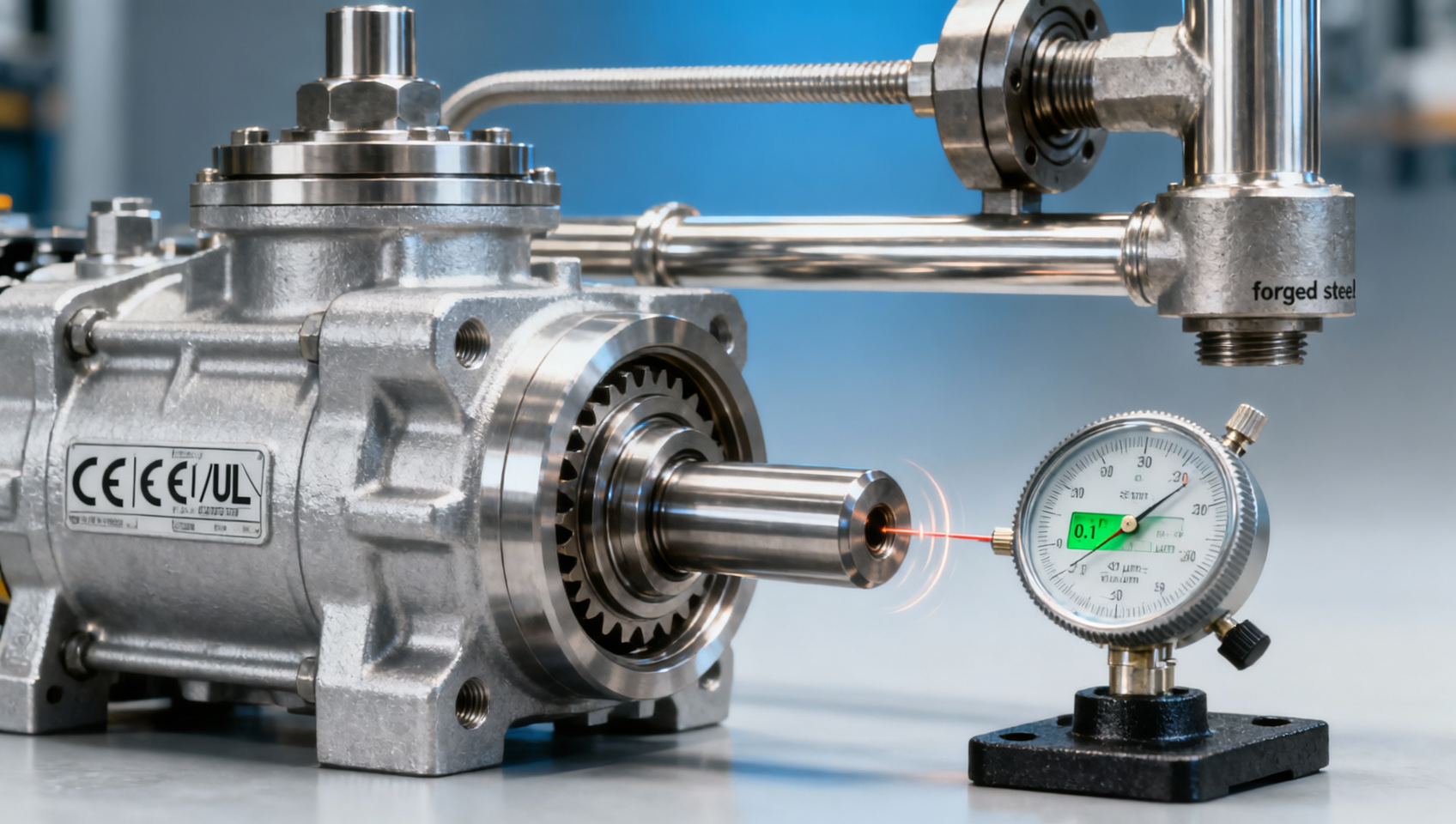
Never accept repeatability data without verifying its test methodology. Demand certified reports showing: (1) traceable calibration against NIST/PTB-grade laser interferometers (e.g., Keysight 5530A with ≤±0.1 µm uncertainty); (2) measurement at ≥3 positions across full indexing arc (not just one point); and (3) statistical process control (SPC) charts covering minimum 500 consecutive cycles at rated speed and load.
Six non-negotiable procurement checkpoints:
- Proof of ISO 17025-accredited lab testing (not internal QA reports)
- Documentation of cam profile grinding certification (e.g., Zeiss Contura G2 scan report with GD&T tolerance stack-up)
- Thermal drift validation across −10°C to +70°C ambient per IEC 60068-2-1/2
- Third-party fatigue life validation per ASTM E466 (constant amplitude loading at 95% max torque)
- Surface integrity verification via white-light interferometry (not just hardness Rockwell tests)
- Real-time vibration signature analysis during 10M-cycle endurance test (FFT spectrum showing no resonance shift >0.3 Hz)
TCO Implications: Why ±10 µm vs. ±5 µm Changes Everything
A 5 µm improvement in long-term repeatability reduces annual recalibration labor by 127 hours across a 24/7 production line—translating to $21,400/year in direct labor savings (based on $168/hr engineering labor rate in Tier-1 industrial markets). More critically, it extends mean time between failures (MTBF) for downstream vision-guided robotic placement by 3.8×, cutting unplanned stoppages from 4.2 to 1.1 events/month.
From a compliance standpoint, UL 508A and IEC 61800-5-1 require position error budgets to remain within 1/3 of functional safety threshold. If your safety-rated e-stop logic assumes ≤±30 µm total positioning uncertainty, a cam indexer drifting beyond ±12 µm after 7M cycles violates SIL2 integrity requirements—triggering mandatory revalidation under IEC 61508 Part 3.
The data shows that tighter repeatability isn’t about “perfection”—it’s about predictable failure modes, audit-ready compliance, and quantifiable operational resilience. For EPC contractors delivering turnkey power plant controls, that predictability translates directly into contractual liability reduction and insurance premium optimization.
Final Selection Criteria for Mission-Critical Indexers
Prioritize suppliers who embed metrological traceability into their design DNA—not just their documentation. Look for: cam profile digital twins validated against coordinate measuring machine (CMM) scans; finite element thermal modeling included in delivery dossiers; and ISO 13584-compliant PLIB parts libraries for seamless integration into your digital twin workflows.
Global Industrial Core recommends initiating technical dialogue with cam indexer manufacturers using this 4-point qualification framework: (1) request raw interferometer data files (not PDF summaries); (2) verify cam material lot traceability back to mill test reports; (3) confirm thermal compensation algorithm licensing status (proprietary vs. open-source); and (4) validate service network response SLAs—specifically for on-site repeatability re-certification within 72 hours of notification.
For facility managers overseeing 20+ indexing stations, or procurement directors managing multi-year capex programs, repeatability isn’t a number—it’s the foundational metric anchoring safety, compliance, and lifetime value. When infrastructure resilience is non-negotiable, the right cam indexer manufacturer delivers not just motion, but verifiable, auditable, and future-proofed precision.
Contact Global Industrial Core to access our vetted supplier matrix—featuring 14 ISO 17025-verified cam indexer manufacturers, each pre-qualified for CE/UL/IEC 61508 compliance, 10M+ cycle endurance, and full material traceability. Get your customized technical specification package and independent benchmarking report—within 3 business days.
Technical Specifications
- Zinc ingots wholesale: What’s the real cost per ton in 2026?Author :Heavy Industry Strategist
- Aluminum ingots bulk vs. cast bars: Which delivers better yield for extrusion?Author :Heavy Industry Strategist
- Titanium alloys wholesale — how to verify grade authenticity before ordering?Author :Heavy Industry Strategist
Expert Insights

Chief Security Architect
Dr. Thorne specializes in the intersection of structural engineering and digital resilience. He has advised three G7 governments on industrial infrastructure security.
Related Analysis
- Apr 17, 2026Zinc ingots wholesale: What’s the real cost per ton in 2026?Author :Heavy Industry Strategist
- Apr 17, 2026Aluminum ingots bulk vs. cast bars: Which delivers better yield for extrusion?Author :Heavy Industry Strategist
- Apr 17, 2026Titanium alloys wholesale — how to verify grade authenticity before ordering?Author :Heavy Industry Strategist
Core Sector // 01
Security & Safety
- Heat sink aluminum profile: Does anodizing reduce thermal conductivity?Author :Heavy Industry Strategist

- T-slot aluminum framing: What slot tolerance causes misalignment in modular assembly?Author :Heavy Industry Strategist

- Pneumatic actuator valves: What supply pressure drop kills response time?Author :Heavy Industry Strategist

- Hydraulic hoses bulk: Why SAE 100R15 isn’t always better than 100R16 for pulse fatigueAuthor :Heavy Industry Strategist

- Piston pumps wholesale: What oil viscosity range avoids cavitation at startup?Author :Heavy Industry Strategist

- Hydraulic gear pumps: How shaft runout tolerance impacts bearing wear in 2026 modelsAuthor :Heavy Industry Strategist

- Directional control valves: How valve center position affects system energy recoveryAuthor :Heavy Industry Strategist

- Hydraulic power pack: What cooling method extends duty cycle beyond 60%?Author :Heavy Industry Strategist