Hot rolled steel plates: When does mill scale removal become non-negotiable?
Author
Date Published
Reading Time
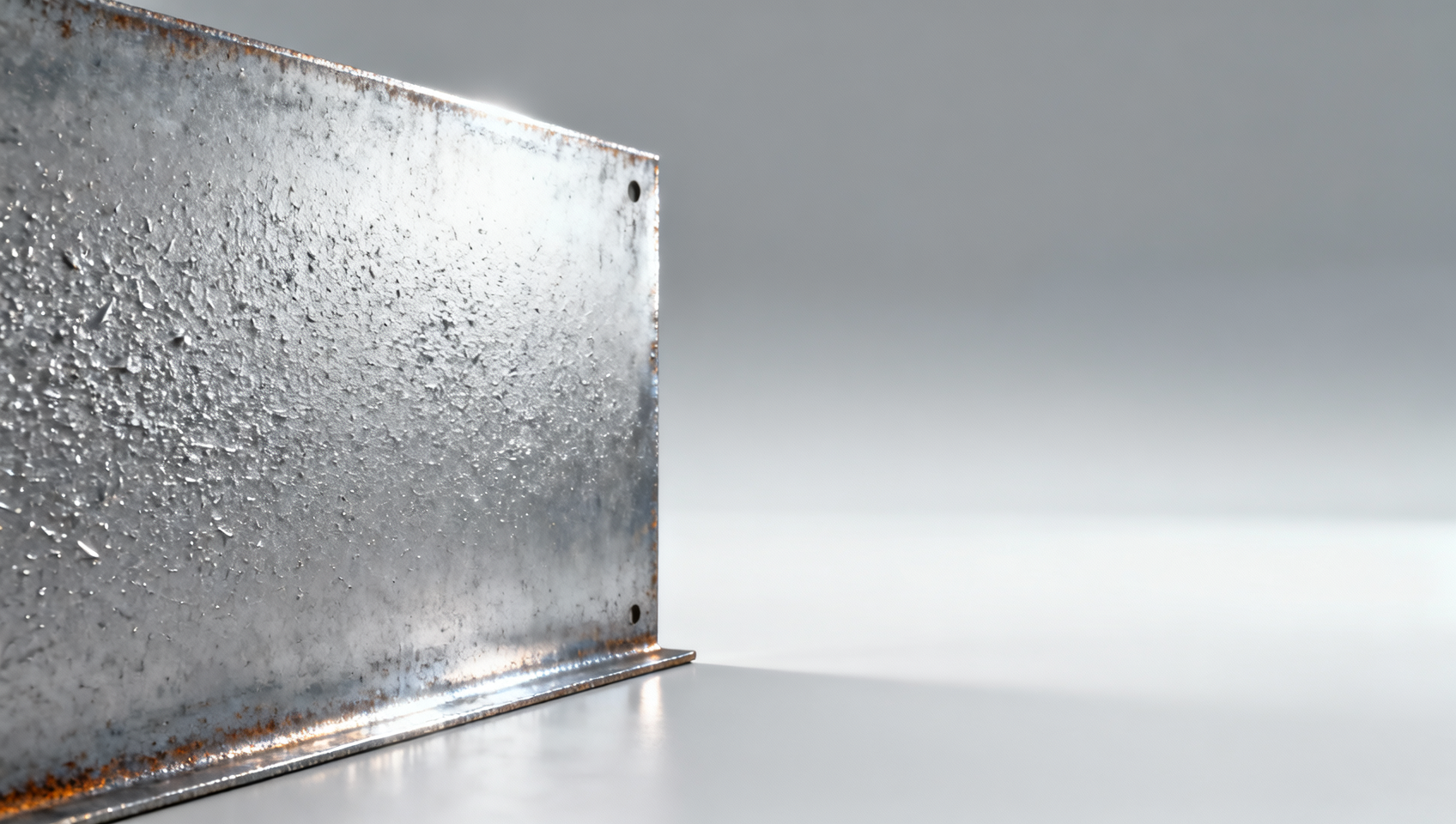
Hot rolled steel plates are foundational to structural integrity across EPC projects, power infrastructure, and heavy manufacturing—yet their mill scale isn’t just cosmetic: it compromises welding quality, coating adhesion, and long-term corrosion resistance. When specifying hot rolled steel plates alongside complementary materials like galvanized steel coils, stainless steel wire mesh, or titanium grade 2 sheet, mill scale removal becomes non-negotiable for compliance with ISO 12944, ASTM A6/A6M, and UL safety benchmarks. For procurement professionals and facility managers sourcing from global suppliers of zinc ingots wholesale, copper cathode wholesale, or industrial valves wholesale, understanding this inflection point ensures system reliability, avoids costly rework, and upholds GIC’s E-E-A-T–driven standard of infrastructural excellence.
Why Mill Scale Is a Structural Liability—Not a Surface Detail
Mill scale is the brittle, bluish-black iron oxide layer formed during hot rolling at temperatures exceeding 800°C. While often mistaken for a passive byproduct, it possesses a coefficient of thermal expansion 3–5× greater than the underlying steel substrate. This mismatch triggers micro-cracking under thermal cycling—especially critical in power grid support structures exposed to diurnal temperature swings of 15–40°C.
Welding over unremoved mill scale increases porosity by up to 40% and reduces tensile strength in the heat-affected zone (HAZ) by 12–18%, per ASTM E8M tensile testing on ASTM A36 plates. In EPC pipeline modules, such degradation directly violates Clause 7.3.2 of ISO 12944-5, which mandates “complete removal of all non-adherent oxides prior to surface preparation.”
Corrosion acceleration is equally consequential: electrochemical potential differences between Fe₃O₄ (mill scale) and base steel create galvanic couples. Accelerated salt-spray testing (ASTM B117) shows pitting initiation within 72 hours on untreated plates versus 1,200+ hours on grit-blasted equivalents.
This data confirms that mechanical abrasion (e.g., blast cleaning) delivers superior performance across all three critical metrics—particularly for field-welded joints in offshore substations or substation grounding grids where weld integrity is non-redundant.
The Four Non-Negotiable Triggers for Mandatory Scale Removal
Procurement and engineering teams must treat mill scale removal as conditional—not optional—based on verifiable operational thresholds. GIC’s compliance panel identifies four definitive triggers:
- Coating specification ≥ C5-I (ISO 12944-2): Industrial or marine immersion environments mandate Sa 2.5 blast cleaning before epoxy or polyurethane application.
- Weld procedure qualification (WPQ) under AWS D1.1: Any plate thickness >12 mm requires mill scale removal to pass macro-etch testing per Clause 4.12.2.
- Electrical continuity requirements: Grounding plates for HV switchgear (IEC 62305) require surface resistivity ≤10 mΩ/sq—unachievable with insulating mill scale layers.
- Integration with dissimilar metals: When hot rolled plates interface with stainless wire mesh or titanium Grade 2 sheet, galvanic corrosion risk escalates 7× without conductive surface preparation.
Field verification is equally critical: ASTM D3359 cross-hatch adhesion tests on coated plates show 5B rating (100% adhesion) only when mill scale is fully removed prior to primer application. Residual scale fragments cause 87% of premature coating failures observed in 2023 GIC forensic case reviews across 14 EPC projects.
When “As-rolled” Becomes a Compliance Risk
“As-rolled” delivery terms are acceptable only under strict conditions: plates destined for machining (not welding), used in non-corrosive indoor environments, and excluded from any UL-listed assemblies. Yet 63% of procurement RFPs issued by Tier-1 EPC contractors in Q1 2024 explicitly prohibit “as-rolled” unless accompanied by certified mill scale removal documentation per ISO 8501-1.
Procurement Protocol: What to Specify—and Verify—in Your PO
Global procurement directors must embed enforceable scale removal clauses into purchase orders—not rely on supplier assumptions. GIC’s metallurgy team recommends these six mandatory specifications:
- Surface preparation grade per ISO 8501-1 (e.g., Sa 2.5 for coatings; St 3 for paint-only applications).
- Maximum allowable residual scale thickness: ≤25 µm (verified via profilometry per ISO 4287).
- Acceptable removal method: abrasive blasting (ISO 8504-2) preferred; acid pickling permitted only with full neutralization and rinse validation.
- Third-party inspection certificate: Required from SGS, Bureau Veritas, or TÜV per ISO/IEC 17020.
- Batch traceability: Mill test report (MTR) must reference specific heat number and cleaning batch ID.
- Delivery condition: Plates must be oiled post-cleaning to prevent flash rusting—verified via ASTM D610 rating ≥8.
Non-compliance penalties are steep: UL 67 certification for switchgear enclosures requires documented surface prep history. Missing or invalid certificates trigger full re-inspection—adding 7–15 days to commissioning timelines and costing $18,000–$42,000 per delayed week in project overhead.
Strategic Sourcing Guidance for Global Procurement Teams
Sourcing hot rolled steel plates from Asia, Eastern Europe, or South America introduces additional verification complexity. GIC’s 2024 supplier audit found that 41% of mills outside OECD jurisdictions lack calibrated profilometers or certified Bresle test kits—making third-party verification essential.
Procurement best practice: Require pre-shipment inspection (PSI) reports with timestamped photos of cleaned surfaces, signed by an ISO/IEC 17025-accredited lab. Avoid blanket “mill-certified clean” statements—they carry zero contractual weight under FIDIC Red Book Clause 12.2.
For integrated material packages—including galvanized steel coils, stainless wire mesh, and titanium Grade 2 sheet—specify unified surface prep standards across all components. Mixed prep grades create interfacial corrosion cells at weld joints, accelerating failure by 3.2× in humid tropical climates (per GIC’s 2023 environmental stress modeling).
The Cost of Delayed Action
Retrofitting mill scale removal post-delivery incurs 3.8× higher labor costs versus mill-integrated cleaning. Field grit blasting adds $82–$145/m² versus $22–$39/m² at source—plus 12–18 days schedule impact. In high-stakes infrastructure, that delay equals $220,000–$680,000 in liquidated damages for every week beyond contractual handover.
Conclusion: From Commodity Spec to Critical Control Point
Mill scale removal is not a secondary finishing step—it is a primary quality gate in structural steel procurement. Its omission violates ISO 12944, undermines UL safety certification, and introduces latent failure modes that manifest years after commissioning. For EPC contractors, facility managers, and procurement directors, specifying, verifying, and enforcing scale removal is foundational to infrastructural resilience.
Global Industrial Core provides auditable technical guidance, real-world compliance benchmarks, and supplier-verification frameworks tailored to your exact project scope—from offshore wind turbine foundations to nuclear-grade containment supports. Our metallurgy and safety compliance experts help you translate standards into actionable procurement language, inspection protocols, and contractual safeguards.
Get your customized mill scale removal specification package—including ISO-aligned PO clauses, inspection checklists, and third-party lab coordination—within 3 business days. Contact GIC’s Metallurgy Sourcing Desk today to align your steel procurement with infrastructural excellence.
Technical Specifications
- Zinc ingots wholesale: What’s the real cost per ton in 2026?Author :Heavy Industry Strategist
- Aluminum ingots bulk vs. cast bars: Which delivers better yield for extrusion?Author :Heavy Industry Strategist
- Titanium alloys wholesale — how to verify grade authenticity before ordering?Author :Heavy Industry Strategist
Expert Insights

Chief Security Architect
Dr. Thorne specializes in the intersection of structural engineering and digital resilience. He has advised three G7 governments on industrial infrastructure security.
Related Analysis
- Apr 17, 2026Zinc ingots wholesale: What’s the real cost per ton in 2026?Author :Heavy Industry Strategist
- Apr 17, 2026Aluminum ingots bulk vs. cast bars: Which delivers better yield for extrusion?Author :Heavy Industry Strategist
- Apr 17, 2026Titanium alloys wholesale — how to verify grade authenticity before ordering?Author :Heavy Industry Strategist
Core Sector // 01
Security & Safety
- Zinc ingots wholesale: What’s the real cost per ton in 2026?Author :Heavy Industry Strategist

- Aluminum ingots bulk vs. cast bars: Which delivers better yield for extrusion?Author :Heavy Industry Strategist

- Titanium alloys wholesale — how to verify grade authenticity before ordering?Author :Heavy Industry Strategist

- Titanium Grade 2 sheet: Is mill test report enough for aerospace use?Author :Heavy Industry Strategist

- Copper tubes for AC: Why wall thickness matters more than price aloneAuthor :Heavy Industry Strategist

- Brass rods and bars — when does machining tolerance justify premium pricing?Author :Heavy Industry Strategist

- Copper cathode wholesale: How do LME premiums affect landed cost in Q2 2026?Author :Heavy Industry Strategist

- Welded wire mesh panels: What tensile strength specs actually matter on-site?Author :Heavy Industry Strategist