Wholesale Safety Nets: What to Check Before Buying for Construction Sites
Author
Date Published
Reading Time
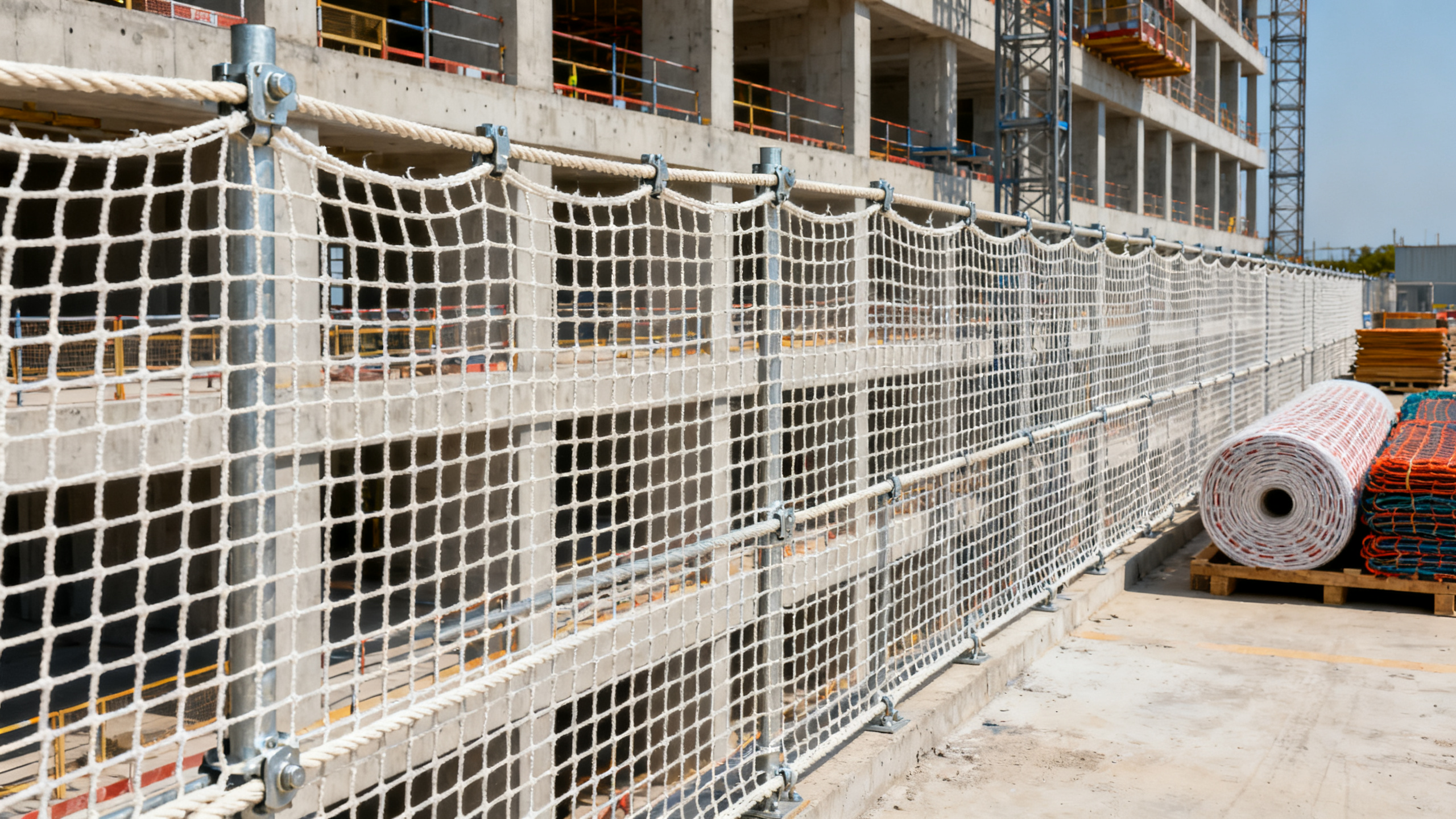
Why do wholesale safety nets deserve closer scrutiny before any order?
Buying wholesale safety nets is a risk decision before it becomes a cost decision.
On active construction sites, a net must do more than look compliant on paper.
It has to absorb impact, remain stable in weather, and fit the fall protection layout without weak points.
That is why experienced industrial sourcing teams rarely compare price alone.
They examine certification scope, yarn strength, knot consistency, UV resistance, edge rope design, and installation compatibility.
In practical terms, poor wholesale safety nets can trigger rework, failed inspections, shipment replacement, or worse, a site incident.
For heavy industry and EPC environments, those hidden costs usually exceed the initial discount.
This is also where a data-led sourcing approach matters.
Global Industrial Core follows that logic across safety, engineering, and compliance topics.
The point is not promotion.
The point is disciplined verification, especially when infrastructure failure is unacceptable.
What exactly should a construction-grade safety net prove before you buy?
A reliable answer starts with performance evidence, not catalog language.
Wholesale safety nets for construction use should demonstrate several things at the same time.
- Impact absorption that matches expected fall energy and working height.
- Material stability under sunlight, moisture, abrasion, and dust exposure.
- Consistent mesh opening and rope diameter across the full production batch.
- Edge reinforcement and connection points that suit the support structure.
- Clear traceability for test records, batch numbers, and manufacturing dates.
Many buyers ask whether polypropylene, polyethylene, or nylon is best.
The better question is which material fits the exposure profile and loading method.
Nylon may offer strong energy absorption.
Polyethylene often performs better against weather and chemical exposure.
Polypropylene may help with weight and cost, but only if the specification is realistic.
Another useful checkpoint is whether the supplier explains testing conditions.
A passing result without test method details tells you very little.
Look for references to recognized standards, sample frequency, and whether the report covers finished nets instead of raw material alone.
Which specifications separate dependable wholesale safety nets from risky inventory?
This is where many orders go wrong.
The net may be labeled for construction, yet key details remain vague.
A quick comparison table helps narrow the review.
In actual projects, the border rope and attachment method deserve extra attention.
A net with strong mesh but weak perimeter construction is not a safe compromise.
It is also wise to request dimensional tolerance data.
Large-span wholesale safety nets that arrive undersized can disrupt installation sequencing and force field adjustments.
Are certifications enough, or do you still need to audit the supplier?
Certifications matter, but they are not the full answer.
A serious supplier should connect certificates with production control, inspection discipline, and after-sales accountability.
If a document looks impressive but the factory cannot explain sampling or failure handling, treat that as a warning sign.
More reliable supplier screening usually includes these checks.
- Ask whether testing is done in-house, by a third party, or both.
- Review recent reports, not only legacy certificates.
- Confirm whether the tested sample matches the exact net specification offered.
- Check packaging, storage guidance, and shelf-life recommendations.
- Request references for similar construction or industrial site applications.
This is where strategic sourcing platforms often add value.
GIC’s editorial approach reflects a broader industrial reality.
Safety procurement works best when technical review, compliance evidence, and supplier credibility are assessed together.
That approach supports stronger trust signals and fewer surprises during execution.
How do cost, lifespan, and replacement cycles change the buying decision?
Low unit pricing can be misleading when comparing wholesale safety nets.
The real question is total site value over the expected service period.
For example, a lower-priced net may require earlier replacement after UV exposure or heavy debris contact.
That creates extra logistics, disposal cost, labor time, and possible schedule interruption.
A slightly higher-grade option may reduce replacement frequency and inspection failures.
In many cases, that is the more economical route.
It helps to evaluate cost through a simple decision lens.
- Purchase price per square meter
- Expected outdoor service life
- Inspection and replacement interval
- Compatibility with existing anchors and supports
- Lead time for repeat orders or urgent replenishment
- Risk cost if a batch fails acceptance
A common mistake is ordering too much generic stock without matching it to phase-by-phase site conditions.
More efficient planning often splits orders by span size, exposure level, and installation sequence.
What mistakes show up most often when sourcing wholesale safety nets?
Some errors look minor during procurement but become expensive in the field.
The most frequent issue is assuming all wholesale safety nets marketed for construction deliver the same protection level.
They do not.
Another mistake is focusing on headline breaking strength while ignoring installation geometry.
A strong net can still perform poorly if sag, anchoring distance, or edge fixation is wrong.
Buyers also overlook storage conditions.
Improper warehousing before installation can shorten usable life before the net even reaches service.
The final blind spot is paperwork quality.
If documents are incomplete, future inspections, incident reviews, or cross-border shipments become harder to manage.
A practical safeguard is to prepare a pre-order checklist and use it for every supplier quote.
That keeps technical and commercial comparisons aligned.
So, what is the smartest next step before confirming a wholesale safety nets supplier?
Start by defining the application, not the product label.
Clarify fall height, span, debris risk, weather exposure, and site installation constraints.
Then compare wholesale safety nets using evidence that can be verified.
That means test data, material details, edge construction, batch traceability, and realistic lead times.
If two offers appear close in price, the deciding factor is usually lifecycle reliability, not the first invoice.
The strongest sourcing decisions tend to follow the same pattern.
- Map site risk and performance requirements.
- Shortlist suppliers with current compliance evidence.
- Review sample quality and dimensional consistency.
- Compare total ownership cost, not only unit price.
- Document acceptance criteria before the shipment leaves the factory.
That process takes more effort up front.
Still, it usually delivers safer installation, steadier schedules, and fewer procurement corrections later.
When wholesale safety nets are treated as engineered safety assets rather than commodity mesh, the buying decision becomes much clearer.
Technical Specifications
- How to Select Electronic Hotel Key Card Locks for Guest Rooms and Staff AreasAuthor :Safety Compliance Lead
- How to Select Lab Instruments for Reliable Chemical Analysis WorkflowsAuthor :Precision Metrology Expert
- How to Size a UPS for Server Rooms: Load, Runtime, and Redundancy FactorsAuthor :Grid Infrastructure Analyst
Expert Insights

Chief Security Architect
Dr. Thorne specializes in the intersection of structural engineering and digital resilience. He has advised three G7 governments on industrial infrastructure security.
Related Analysis
- Sep 17, 2026How to Select Electronic Hotel Key Card Locks for Guest Rooms and Staff AreasAuthor :Safety Compliance Lead
- Sep 16, 2026How to Select Lab Instruments for Reliable Chemical Analysis WorkflowsAuthor :Precision Metrology Expert
- Sep 15, 2026How to Size a UPS for Server Rooms: Load, Runtime, and Redundancy FactorsAuthor :Grid Infrastructure Analyst
Core Sector // 01
Security & Safety
- Can One Supplier Provide Both IEC- and ATEX-Certified Safety Equipment?Author :Safety Compliance Lead

- Are Dual IEC and NEC Safety Certifications Worth the Cost?Author :Safety Compliance Lead

- What Is the Difference Between Class I and Class II PPE?Author :Safety Compliance Lead

- Which Oil and Gas Safety Standards Should Contractors Meet Before Site Mobilization?Author :Safety Compliance Lead

- EU REACH Adds PFAS Cap for PPE WorkwearAuthor :Safety Compliance Lead

- How to Evaluate a Chemical Resistant Suit Supplier for Industrial Safety ProcurementAuthor :Safety Compliance Lead

- EU REACH Sets 50 ppb PFAS Cap for PPE WorkwearAuthor :Safety Compliance Lead

- EU Tightens PFOA Limit for PPE and Industrial Filter MediaAuthor :Safety Compliance Lead