Tactical Helmets Wholesale: How to Compare MOQs, Certifications, and Supplier Options
Author
Date Published
Reading Time
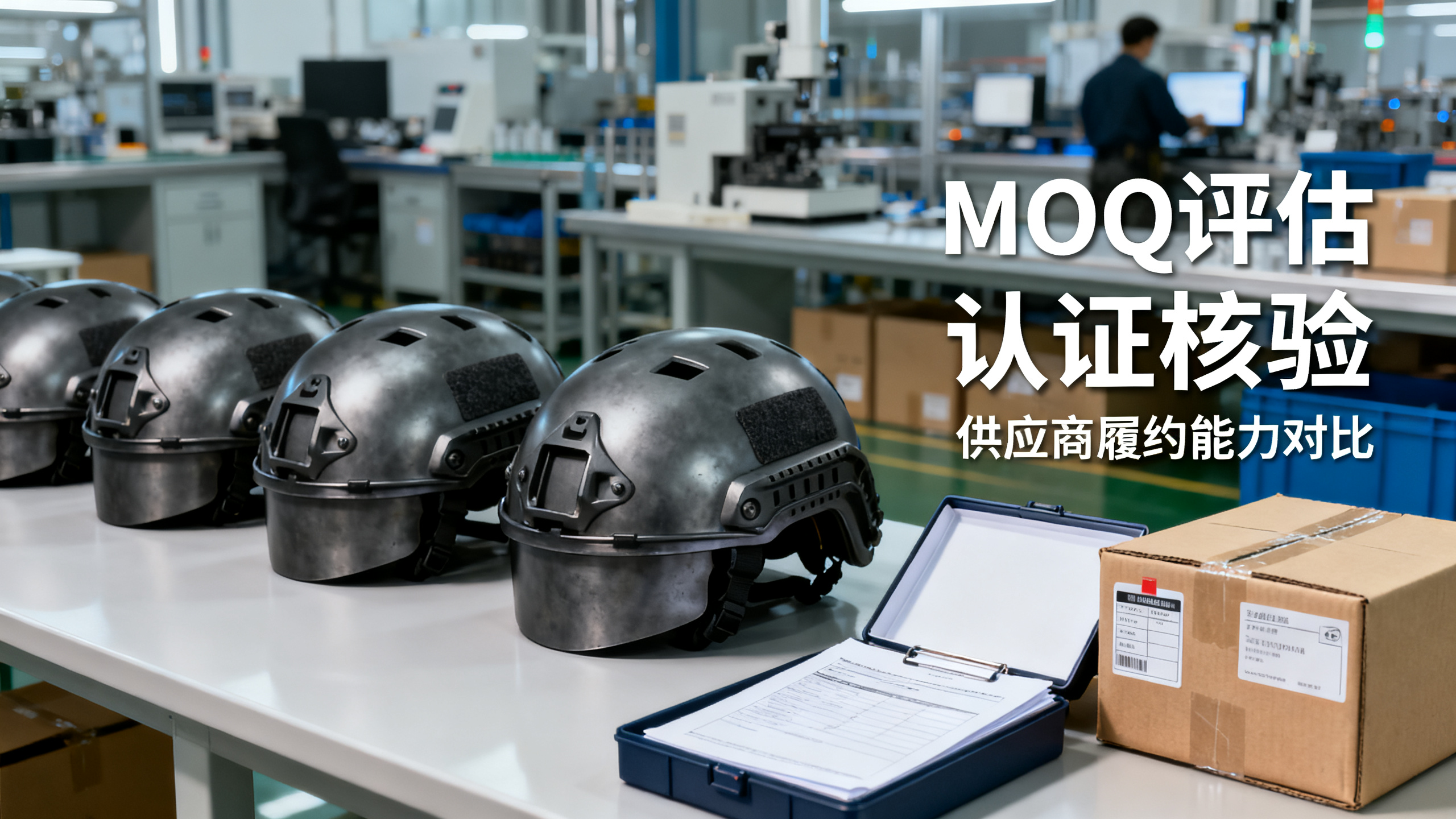
Tactical Helmets Wholesale: How to Compare MOQs, Certifications, and Supplier Options
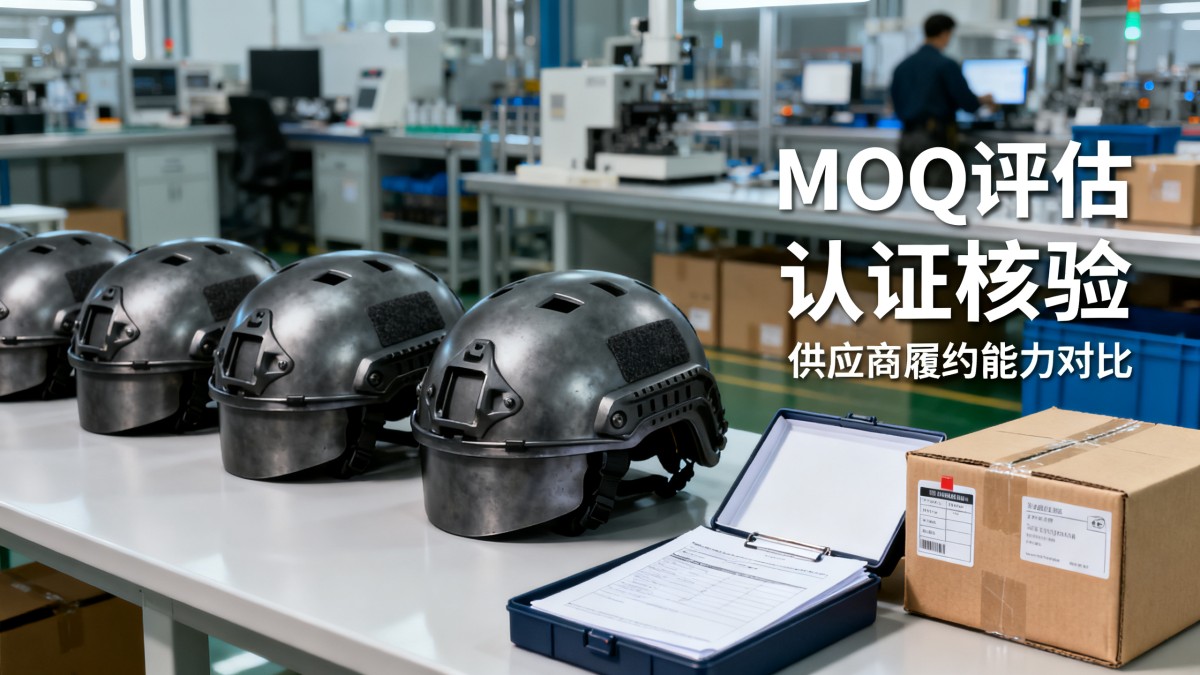
When evaluating tactical helmets wholesale options, price is only one part of the decision. The bigger issue is whether a supplier can meet compliance, volume, and delivery expectations without creating hidden risk.
In practice, buyers usually compare three things first. These are MOQ, certification status, and supply reliability. Once those are clear, cost analysis becomes far more accurate.
That matters because tactical helmets wholesale projects often involve mixed order sizes, strict documentation, and application-specific requirements. A low quote can quickly lose value if testing records, lead times, or packaging standards fall short.
This guide breaks down how to compare suppliers with a practical sourcing lens. The goal is simple: reduce procurement risk while improving long-term purchasing control.
Start with the Real MOQ, Not the Advertised MOQ
Many tactical helmets wholesale suppliers publish a minimum order quantity that looks manageable. The problem is that this number often applies only to standard shells, basic colors, or existing molds.
Once custom rails, pads, logos, packaging, or accessory bundles are added, the effective MOQ can rise sharply. This is where early clarification saves time and budget.
Questions worth asking before comparing quotes
- Is the MOQ based on one model, one color, or one full configuration?
- Does the MOQ change for custom branding or private labeling?
- Are different helmet sizes allowed in one production batch?
- Can accessories be mixed under the same order value?
- Is there a trial order option before a container-scale commitment?
A useful comparison method is to calculate cost at three levels: pilot order, standard repeat order, and annual forecast volume. This gives a more realistic view than a single MOQ number.
For tactical helmets wholesale sourcing, flexible MOQ policies can be more valuable than the lowest unit price. They help absorb demand shifts and reduce inventory pressure.
Verify Certifications with Documents, Test Scope, and Validity
Certification review should never stop at a logo on a product page. For tactical helmets wholesale procurement, the real task is checking whether the document matches the exact model being purchased.
More importantly, confirm whether the certification covers the shell only, or the full assembled helmet. That distinction affects compliance and liability.
What to review in supplier documentation
- Certification number and issuing body
- Test standard edition and applicable region
- Model name, material type, and product photos
- Issue date, expiry date, and revision history
- Impact, retention, penetration, and environmental test scope
Depending on the target market, review standards such as NIJ references, ISO quality systems, or other required safety documentation. Regional import rules may also require lab reports and traceability records.
In actual purchasing work, the safer approach is to request the latest test report directly from the lab or ask for a verifiable copy. This reduces the risk of outdated or misapplied certificates.
Strong tactical helmets wholesale suppliers usually respond quickly here. They know serious buyers will examine compliance before discussing volume commitments.
Compare Supplier Types Before You Compare Prices
Not every supplier plays the same role. Some are direct manufacturers. Others are trading firms, brand owners, or mixed sourcing companies. Each model affects cost, customization, and communication speed.
This becomes more obvious when a tactical helmets wholesale project includes frequent design changes or recurring tenders. Operational fit starts to matter as much as base pricing.
A quick comparison table
For tactical helmets wholesale decisions, ask who controls tooling, raw materials, final inspection, and export paperwork. That answer tells you more than a polished catalog ever will.
Check Production Capacity and Lead Time Under Load
Lead time is easy to promise during quotation. It becomes harder during peak demand, material shortages, or model changes. This is where supplier screening needs more depth.
Ask for monthly output by model, not total factory capacity alone. Tactical helmets wholesale orders often depend on specific shell materials, suspension systems, and finishing processes.
Capacity checks that improve forecast accuracy
- Average lead time for repeat orders
- Lead time for first custom production
- Buffer stock for key raw materials
- Backup plan for subcontracted components
- On-time delivery rate over the last 12 months
A reliable tactical helmets wholesale partner should also explain quality checkpoints across molding, assembly, fitting, and packaging. Shorter lead time means little if defect rates rise during rush production.
Look Beyond Unit Price to Total Procurement Cost
The lowest quote is not always the lowest landed cost. Tactical helmets wholesale buying includes packaging, testing, inspection, freight, duties, replacement risk, and sometimes retraining costs for new product variants.
This is why experienced buyers build a total cost sheet before selecting finalists. It creates a fair basis for comparing suppliers with different service levels.
Cost items often missed in early evaluation
- Third-party inspection fees
- Retesting for market compliance
- Higher carton volume from retail packaging
- Spare parts support and after-sales claims
- Delays caused by incomplete export documents
A practical tactic is to score tactical helmets wholesale offers on both price and execution risk. Sometimes a quote that is 4 percent higher reduces far larger downstream costs.
Use a Simple Supplier Scorecard for Faster Decisions
Once several options are on the table, informal judgment becomes inconsistent. A scorecard helps keep the process disciplined and easier to defend internally.
For tactical helmets wholesale sourcing, a weighted model usually works well. It balances commercial terms with compliance and operational performance.
Suggested scorecard categories
- Certification quality and document traceability
- MOQ flexibility and customization support
- Lead time reliability and capacity depth
- Sample quality and fit consistency
- Total landed cost and payment terms
- Communication speed and issue resolution
This approach also supports future negotiations. When a supplier knows how tactical helmets wholesale bids are scored, discussions become more concrete and productive.
Final Take: Build the Decision Around Risk Control
The best tactical helmets wholesale decision rarely comes from price comparison alone. It comes from matching volume needs, certification strength, factory capability, and total cost visibility.
A strong supplier should be able to prove compliance, explain MOQ logic, support consistent lead times, and respond clearly when technical questions appear. That combination is what lowers procurement risk over time.
For teams reviewing tactical helmets wholesale options this quarter, the most useful next step is to standardize supplier questions, compare total landed cost, and verify every certification against the exact product configuration.
That process is not complicated, but it does require discipline. Done well, it leads to better supplier selection, steadier delivery performance, and more confident purchasing decisions.
Technical Specifications
- Air Handling Unit Supplier Checklist: Performance Data, Lead Times, and SupportAuthor :Environmental Engineering Director
- Buying Fiberglass Water Tanks Wholesale: Compare Quotes and Delivery CostsAuthor :Environmental Engineering Director
- Choosing an XLPE Power Cable Supplier: Test Reports, Traceability, and Lead TimesAuthor :Grid Infrastructure Analyst
Expert Insights

Chief Security Architect
Dr. Thorne specializes in the intersection of structural engineering and digital resilience. He has advised three G7 governments on industrial infrastructure security.
Related Analysis
- Oct 19, 2026Air Handling Unit Supplier Checklist: Performance Data, Lead Times, and SupportAuthor :Environmental Engineering Director
- Oct 18, 2026Buying Fiberglass Water Tanks Wholesale: Compare Quotes and Delivery CostsAuthor :Environmental Engineering Director
- Oct 17, 2026Choosing an XLPE Power Cable Supplier: Test Reports, Traceability, and Lead TimesAuthor :Grid Infrastructure Analyst
Core Sector // 01
Security & Safety
- Can One Supplier Provide Both IEC- and ATEX-Certified Safety Equipment?Author :Safety Compliance Lead

- Are Dual IEC and NEC Safety Certifications Worth the Cost?Author :Safety Compliance Lead

- What Is the Difference Between Class I and Class II PPE?Author :Safety Compliance Lead

- Which Oil and Gas Safety Standards Should Contractors Meet Before Site Mobilization?Author :Safety Compliance Lead

- EU REACH Adds PFAS Cap for PPE WorkwearAuthor :Safety Compliance Lead

- How to Evaluate a Chemical Resistant Suit Supplier for Industrial Safety ProcurementAuthor :Safety Compliance Lead

- EU REACH Sets 50 ppb PFAS Cap for PPE WorkwearAuthor :Safety Compliance Lead

- EU Tightens PFOA Limit for PPE and Industrial Filter MediaAuthor :Safety Compliance Lead