CPSC Recalls 234,000 Industrial Respirator Filters
Author
Date Published
Reading Time

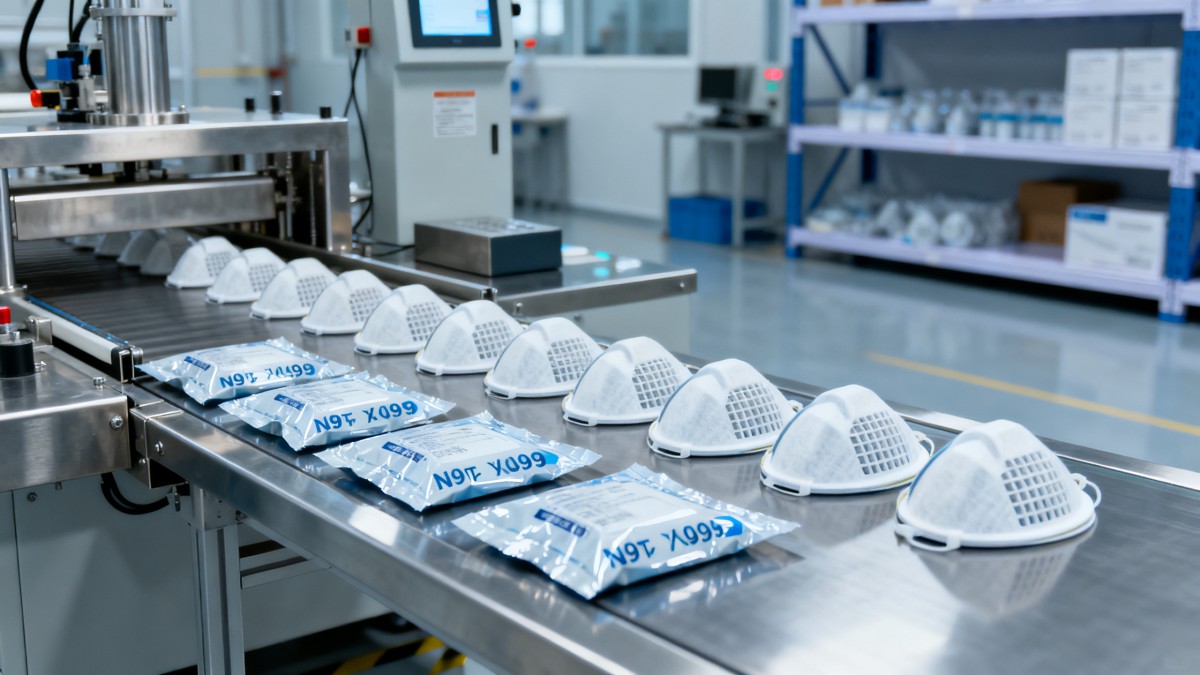
The timing of the underlying product issue is not clearly stated in the available information, but the regulatory action is clear: on June 24, 2026, the U.S. Consumer Product Safety Commission (CPSC) announced an emergency recall covering 234,000 imported N95/N99 industrial respirator filters, including models in the SafeCore™ Pro series. The case deserves close attention from PPE manufacturers, traders, sourcing teams, importers, and industrial buyers because it combines a product-performance problem under high-humidity conditions with a supply-chain traceability review tied to non-origin-country labeling.
What the recall notice confirms
According to the information provided, the recalled products were labeled under Vietnam and Malaysia, while the core filter media and assembly were produced in eastern China. The recall involves 234,000 imported industrial respirator filters rated at the N95/N99 level, including the SafeCore™ Pro series.
The stated reason for the recall is that third-party laboratory retesting found filtration performance in high-humidity conditions fell below the NIOSH certification threshold, at less than 94%. The same information also states that the incident has triggered a CPSC supply-chain traceability review focused on non-origin-country labeling.
Why this matters across the PPE supply chain
Pressure on cross-border trading and import handling
From an industry perspective, direct trading companies and import-facing businesses may be affected first because the case links product compliance with labeling and sourcing transparency. The most immediate pressure point is likely to be customs handling, document review, and the frequency of follow-up inspection for similar PPE shipments.
Higher scrutiny for manufacturing and contract production
For processors, assemblers, and OEM/ODM participants, the issue is not limited to whether a product passed an initial standard. Analysis shows the combination of high-humidity performance failure and multi-country labeling can shift attention toward how filter materials, assembly, and labeling claims are aligned across the production chain.
Procurement and end-user risk management
Industrial buyers, distributors, and end users may need to pay closer attention to model traceability, product documentation, and the conditions under which filtration performance is represented. What deserves closer attention is whether purchasing and qualification processes are relying too heavily on label presentation without enough verification of underlying production and compliance records.
Supply-chain service providers may face timing risk
Logistics, customs, and other supply-chain service providers may not be the direct subject of the recall, but they could still feel the impact if clearance times for comparable PPE products become less predictable. Observably, this matters most where delivery schedules depend on stable import processing windows.
What companies should monitor now
Watch for follow-up regulatory wording
Companies dealing in similar PPE categories should monitor whether later official statements further define the scope of the traceability review, especially around non-origin-country labeling. The current information confirms review activity, but it does not yet establish a broader final rule change.
Recheck product files tied to humidity-sensitive performance
For manufacturers, brand owners, and sourcing teams, a practical focus is whether technical files and test records clearly address the conditions under which filtration efficiency is claimed. In this case, the recall reason specifically refers to high-humidity retesting, so that condition should not be treated as a minor detail in product review.
Prepare for document-based verification in trade execution
Importers, exporters, and fulfillment teams should be ready for closer checks on origin-related documentation, supplier records, and product traceability materials. Analysis shows the operational issue may be less about a single recalled model and more about whether supporting documents can withstand additional review during shipment execution.
Align customer communication with verified facts
Distributors and account teams should keep customer communication tightly tied to confirmed information. Where there are questions about affected product lines, labeling structure, or delivery timing, it is more appropriate to distinguish verified recall facts from ongoing review rather than present assumptions as settled outcomes.
How to read the signal at this stage
Observably, this development should be read as more than a standalone product recall, but not yet as proof of a finalized market-wide enforcement shift. The confirmed facts point to two connected signals: performance verification under real-use conditions and deeper scrutiny of supply-chain labeling when branding and production locations do not fully align.
Analysis shows that the stronger industry message is procedural rather than dramatic. Businesses in PPE and adjacent industrial safety trade should pay attention to how traceability, testing context, and labeling consistency are being evaluated together. At the same time, the available information does not justify broader conclusions beyond the recalled products and the stated review trigger.
A short-term disruption with a longer compliance signal
At present, it is more appropriate to understand this event as a short-term recall with a potentially longer compliance signal for similar PPE categories. The immediate issue is product recall and possible trade friction around comparable imports; the longer-term question is whether traceability review and inspection intensity become more routine for products involving complex cross-border manufacturing and labeling structures.
A neutral reading is that the event merits continued monitoring rather than overstatement. The recall itself is confirmed, while the broader commercial impact will depend on how future review actions, customs handling, and enforcement language develop.
Basis of this article
This article is generated from the user-provided news title, event timing note, and event summary. The specific official source link was not provided in the input, so continued verification remains necessary.
For this type of development, commonly relevant source categories include official regulatory notices, company statements, industry association updates, authoritative media coverage, and standard-setting organization documents. The next points to monitor are whether additional official clarification is issued on traceability review, whether similar PPE categories face higher inspection frequency, and whether customs processing for related products shows measurable delays.
Technical Specifications
- Air Handling Unit Supplier Checklist: Performance Data, Lead Times, and SupportAuthor :Environmental Engineering Director
- Buying Fiberglass Water Tanks Wholesale: Compare Quotes and Delivery CostsAuthor :Environmental Engineering Director
- Choosing an XLPE Power Cable Supplier: Test Reports, Traceability, and Lead TimesAuthor :Grid Infrastructure Analyst
Expert Insights

Chief Security Architect
Dr. Thorne specializes in the intersection of structural engineering and digital resilience. He has advised three G7 governments on industrial infrastructure security.
Related Analysis
- Oct 19, 2026Air Handling Unit Supplier Checklist: Performance Data, Lead Times, and SupportAuthor :Environmental Engineering Director
- Oct 18, 2026Buying Fiberglass Water Tanks Wholesale: Compare Quotes and Delivery CostsAuthor :Environmental Engineering Director
- Oct 17, 2026Choosing an XLPE Power Cable Supplier: Test Reports, Traceability, and Lead TimesAuthor :Grid Infrastructure Analyst
Core Sector // 01
Security & Safety
- Can One Supplier Provide Both IEC- and ATEX-Certified Safety Equipment?Author :Safety Compliance Lead

- Are Dual IEC and NEC Safety Certifications Worth the Cost?Author :Safety Compliance Lead

- What Is the Difference Between Class I and Class II PPE?Author :Safety Compliance Lead

- Which Oil and Gas Safety Standards Should Contractors Meet Before Site Mobilization?Author :Safety Compliance Lead

- EU REACH Adds PFAS Cap for PPE WorkwearAuthor :Safety Compliance Lead

- How to Evaluate a Chemical Resistant Suit Supplier for Industrial Safety ProcurementAuthor :Safety Compliance Lead

- EU REACH Sets 50 ppb PFAS Cap for PPE WorkwearAuthor :Safety Compliance Lead

- EU Tightens PFOA Limit for PPE and Industrial Filter MediaAuthor :Safety Compliance Lead