US Customs Tightens PPE Testing Entry Rules
Author
Date Published
Reading Time

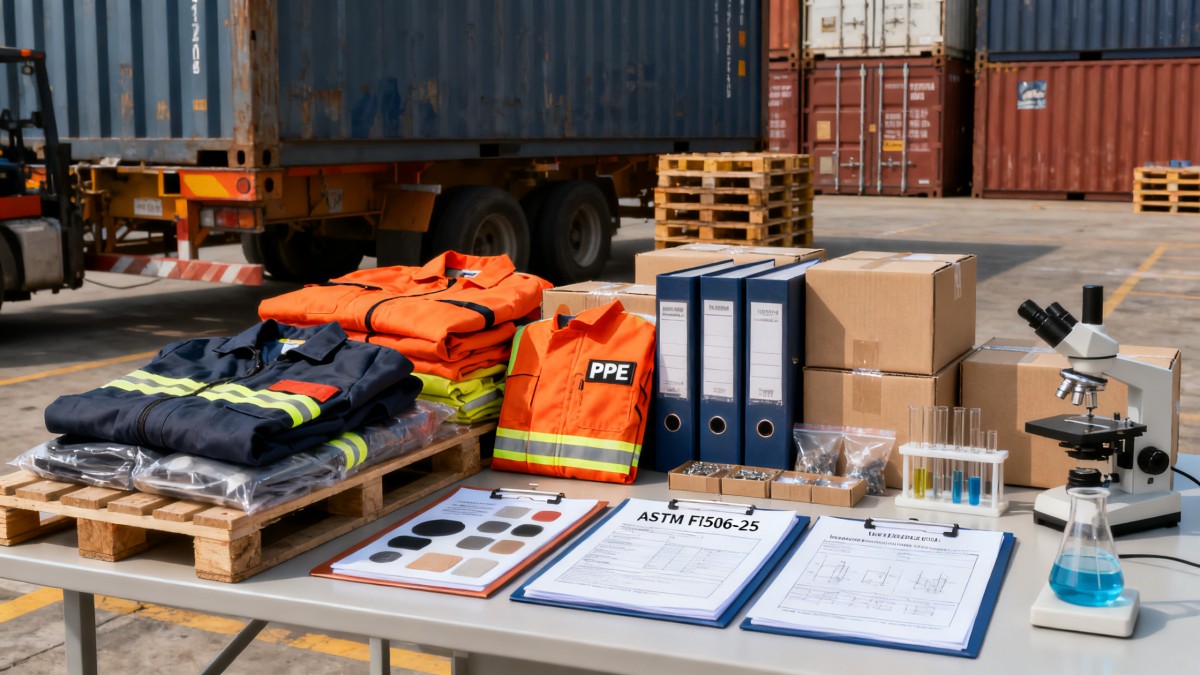
On June 26, 2026, a new U.S. customs enforcement move put imported PPE and workwear under closer scrutiny by linking port entry directly to updated ASTM F1506-25 arc-flash resistance testing compliance. The development matters not only to exporters and importers, but also to manufacturers, sourcing teams, compliance staff, and logistics partners, because the requirement now affects whether goods can clear port at all rather than remaining a documentation issue handled later in the supply chain.
What the Import Alert changes immediately
U.S. CBP activated Import Alert 99-37 for imported PPE and workwear that do not meet the updated ASTM F1506-25 flame resistance testing requirements tied to arc-flash performance. According to the provided information, the measure is effective immediately.
The key enforcement point is document-based but operationally significant: shipments that do not include third-party lab reports from ISO/IEC 17025-accredited laboratories will be detained at port.
The provided summary also states that more than 62% of recent non-compliance cases involved garments of Chinese origin that lacked traceable test records.
Where the pressure is likely to be felt first
Importers face a direct clearance risk
From an industry perspective, importers are the first group likely to feel the impact because detention happens at the port-of-entry stage. The practical effect is likely to center on customs clearance, shipment timing, and the ability to present compliant testing files at the moment goods arrive.
Manufacturers and exporters may be pushed upstream on documentation
Analysis shows that manufacturers and export-side suppliers are likely to face greater pressure to prove that testing records are complete, traceable, and tied to the updated ASTM F1506-25 requirement. For businesses shipping PPE or workwear into the U.S., the issue is no longer limited to product claims; it also touches record readiness and how testing evidence travels with the shipment.
Sourcing and procurement teams may need to reassess supplier readiness
What deserves closer attention is the sourcing side of the chain. Procurement teams that rely on external factories or trading partners may be affected if supplier files cannot support immediate customs review. The reference to recent non-compliance cases involving Chinese-origin garments suggests that buyers working with that supply base may pay closer attention to document traceability and testing provenance.
Logistics and supply chain service providers may see more exception handling
Observably, freight, customs, and supply chain coordination roles may be drawn more deeply into pre-shipment checks. Their exposure comes less from the testing standard itself and more from managing detained cargo, missing reports, and communication between importer, supplier, and customs-facing teams.
What companies should watch now
Whether shipment files match the new enforcement threshold
Companies involved in U.S.-bound PPE and workwear shipments should focus on whether each shipment file includes third-party test reports from ISO/IEC 17025-accredited labs, because that is the enforcement trigger described in the provided information.
Which product lines carry the highest near-term exposure
Businesses should look closely at PPE and workwear categories marketed with flame resistance or arc-flash related performance attributes. Analysis shows that the immediate business risk is highest where customs detention could interrupt delivery commitments.
The difference between a standard requirement and a port-enforcement action
What deserves closer attention is the distinction between having a technical requirement in the market and seeing customs turn it into a real-time entry control. This development should be read not just as a testing matter, but as an enforcement condition that can affect shipment release.
Supplier communication and record traceability
For companies working across multiple factories or intermediaries, traceable testing records now appear central to shipment continuity. The reference to non-compliance cases lacking traceable records indicates that supplier communication, document collection, and pre-shipment verification may become more important in day-to-day execution.
Why this looks larger than a routine compliance update
Analysis shows that this is more than a narrow procedural notice because it connects an updated technical standard to immediate detention risk at the border. That changes the commercial importance of lab accreditation and document traceability.
At the same time, it is more appropriate to understand this as a targeted enforcement signal rather than a fully mapped long-term market outcome. The provided information confirms the alert, the detention condition, and the recent non-compliance pattern, but it does not yet establish how broadly trade flows, sourcing strategies, or supplier structures will shift over time.
How the market may frame this development
From an industry perspective, the current development is best read as an immediate operational change with possible longer-term implications. In the short term, the clearest effect is on shipment readiness and customs clearance. Over a longer horizon, continued attention will likely depend on whether enforcement remains concentrated around documentation gaps or expands into a broader compliance filtering mechanism.
A measured conclusion is that the notice already matters in practical terms, but its wider structural significance still requires observation.
Basis of this article and what still needs verification
This article is based on the user-provided news title, event date, and event summary regarding U.S. CBP Import Alert 99-37 and updated ASTM F1506-25 testing-related enforcement for imported PPE and workwear.
For developments of this kind, common source types typically include official government notices, company disclosures, industry association updates, standards organization documents, and reporting by authoritative trade media. A specific official source link was not provided in the input, so further verification remains necessary.
Follow-up attention should remain on any later official clarifications, scope details, or implementation updates related to detention practice, documentation expectations, and enforcement continuity.
Technical Specifications
- Air Handling Unit Supplier Checklist: Performance Data, Lead Times, and SupportAuthor :Environmental Engineering Director
- Buying Fiberglass Water Tanks Wholesale: Compare Quotes and Delivery CostsAuthor :Environmental Engineering Director
- Choosing an XLPE Power Cable Supplier: Test Reports, Traceability, and Lead TimesAuthor :Grid Infrastructure Analyst
Expert Insights

Chief Security Architect
Dr. Thorne specializes in the intersection of structural engineering and digital resilience. He has advised three G7 governments on industrial infrastructure security.
Related Analysis
- Oct 19, 2026Air Handling Unit Supplier Checklist: Performance Data, Lead Times, and SupportAuthor :Environmental Engineering Director
- Oct 18, 2026Buying Fiberglass Water Tanks Wholesale: Compare Quotes and Delivery CostsAuthor :Environmental Engineering Director
- Oct 17, 2026Choosing an XLPE Power Cable Supplier: Test Reports, Traceability, and Lead TimesAuthor :Grid Infrastructure Analyst
Core Sector // 01
Security & Safety
- Can One Supplier Provide Both IEC- and ATEX-Certified Safety Equipment?Author :Safety Compliance Lead

- Are Dual IEC and NEC Safety Certifications Worth the Cost?Author :Safety Compliance Lead

- What Is the Difference Between Class I and Class II PPE?Author :Safety Compliance Lead

- Which Oil and Gas Safety Standards Should Contractors Meet Before Site Mobilization?Author :Safety Compliance Lead

- EU REACH Adds PFAS Cap for PPE WorkwearAuthor :Safety Compliance Lead

- How to Evaluate a Chemical Resistant Suit Supplier for Industrial Safety ProcurementAuthor :Safety Compliance Lead

- EU REACH Sets 50 ppb PFAS Cap for PPE WorkwearAuthor :Safety Compliance Lead

- EU Tightens PFOA Limit for PPE and Industrial Filter MediaAuthor :Safety Compliance Lead