How to Evaluate a Reflective Safety Vests Bulk Supplier for Compliance and Lead Time
Author
Date Published
Reading Time

Why does a reflective safety vests bulk supplier need more than a low quote?
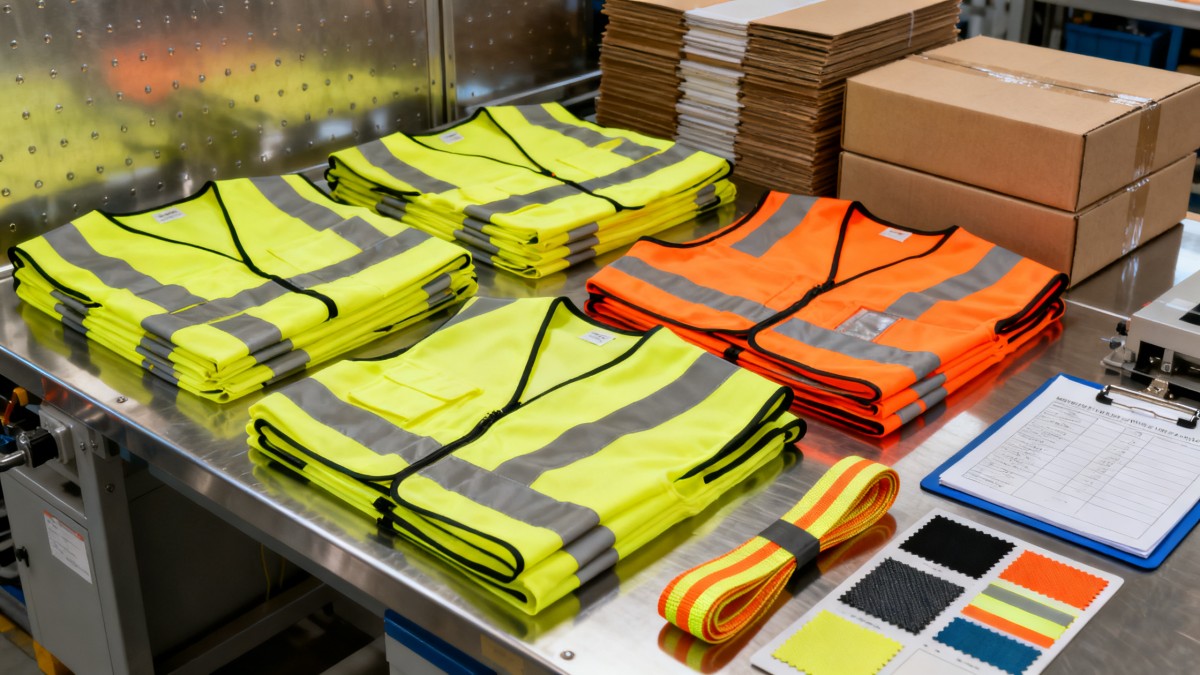
Price matters, but it is rarely the deciding factor in safety apparel sourcing.
A reflective safety vests bulk supplier affects worker visibility, audit readiness, and site continuity at the same time.
If the vests fail compliance checks, the real cost appears later through rejected shipments, site delays, and urgent replacement orders.
In heavy industry, construction, utilities, logistics, and infrastructure maintenance, that risk is rarely acceptable.
A stronger evaluation starts with two linked questions.
Can the supplier prove compliance for the target market, and can the same supplier keep lead times stable when order volume rises?
That is why Global Industrial Core frames supplier selection around verified standards, production control, and delivery performance rather than unit cost alone.
In practice, the best reflective safety vests bulk supplier is one that protects both people and schedules.
Which compliance documents should you check before comparing lead time?
It helps to separate marketing claims from auditable evidence.
A reliable reflective safety vests bulk supplier should provide certification and test records tied to the exact vest model, fabric, and reflective tape used.
For many industrial buyers, the common checkpoints include ANSI/ISEA visibility classes, EN ISO 20471, CE documentation, and relevant ISO quality management records.
Needle-point detail matters here.
A certificate that covers a similar product is not enough if the ordered vest uses different mesh weight, trim width, zipper type, or dye lot.
More careful buyers also ask for recent lab reports covering retroreflective performance after washing, colorfastness, tear strength, and dimensional stability.
If the supplier hesitates, sends expired files, or cannot match test documents to the current SKU, that is an early warning sign.
A quick document check is often more useful than a long presentation
This step may look basic, yet it often decides whether later negotiations are grounded in facts.
How can you tell if production consistency is real, not just promised?
A compliant sample is useful, but bulk consistency is the real test.
The stronger reflective safety vests bulk supplier usually has visible process control rather than vague assurances.
That means controlled raw material sourcing, incoming inspection, in-line sewing checks, final AQL inspection, and traceable batch labeling.
Ask how reflective tape is approved, how color variance is controlled, and whether replacement material requires revalidation.
These details directly affect whether one shipment matches the next.
A practical way to check this is to request evidence from a recent mass production run.
- Packed carton photos with date codes and lot numbers.
- Inspection records showing defects by category.
- A bill of materials locked to the approved sample.
- Wash-care and label artwork approval history.
If the supplier cannot show process discipline, the risk is not only quality drift.
It also increases the chance of rework, missed packing dates, and unstable lead time.
What does a believable lead time look like for bulk safety vest orders?
Lead time should be explained in layers, not as one simple number.
An experienced reflective safety vests bulk supplier breaks it into sample approval, raw material booking, production, inspection, packing, and shipping release.
That breakdown tells you whether the timeline is managed or guessed.
For standard vest styles with stocked materials, lead time may be relatively short.
For custom colors, printed logos, special closures, or higher visibility classes, the calendar usually expands.
The more useful question is not “What is your fastest lead time?”
It is “What conditions could change the promised date, and how early will we know?”
Signals that the lead time estimate deserves trust
- The supplier distinguishes material lead time from sewing capacity.
- Capacity planning is shared by week or production slot.
- There is a stated buffer for inspection and rework.
- Shipping terms are separated from ex-factory completion.
- Rush orders have clear limits and surcharge rules.
In actual sourcing, unrealistic speed is often a bigger warning than a slightly longer but stable schedule.
A predictable supplier helps planning, even when the quoted timeline is not the shortest.
Where do compliance failures and delivery delays usually begin?
Most problems start upstream, well before the shipment date.
One common issue is assuming all reflective tape performs the same.
Another is approving a sample without freezing the full specification.
When the purchase order lacks precise fabric weight, closure details, label language, carton standards, or test requirements, the supplier may substitute without clear notice.
That creates a chain reaction.
Material changes can trigger retesting, packing revisions, or destination compliance problems, which then affect lead time and total landed cost.
Another frequent mistake is overlooking geography.
A reflective safety vests bulk supplier may perform well for one region but lack document readiness for another.
That matters when orders support multinational projects, EPC contractors, or industrial service networks operating across standards regimes.
A more resilient approach is to map risks before issuing the final order.
- Define the target standard by destination market.
- Freeze technical specifications at approval stage.
- Set an inspection method and acceptance level.
- Confirm contingency plans for material shortages.
How should you compare suppliers when cost, compliance, and lead time pull in different directions?
A side-by-side scorecard usually works better than chasing the lowest unit price.
This is especially true when the order supports ongoing operations rather than a one-off event.
A reflective safety vests bulk supplier with slightly higher pricing may still produce lower total risk if documentation is complete and delivery reliability is proven.
To keep the comparison practical, focus on measurable points.
This kind of comparison is consistent with the way GIC evaluates industrial supply chains.
The point is not to eliminate cost pressure.
It is to keep cost analysis anchored to compliance exposure and schedule reliability.
What is the smartest next step before placing the order?
Move from verbal confirmation to a controlled pre-order checklist.
That means locking the approved sample, collecting current compliance files, confirming the production calendar, and documenting inspection expectations in the purchase order.
If the order will repeat, ask the reflective safety vests bulk supplier how they manage replenishment, material reservation, and change notification.
Those answers reveal whether the supplier is prepared for long-term support or only for a first transaction.
A sound decision usually comes down to this.
Choose the supplier that can prove the vest will meet the required standard, arrive within a realistic window, and remain consistent when volumes increase.
Before final approval, build a short scorecard for compliance, batch consistency, and lead time assumptions.
That single step often prevents the most expensive sourcing mistakes.
Technical Specifications
- How to Select Electronic Hotel Key Card Locks for Guest Rooms and Staff AreasAuthor :Safety Compliance Lead
- How to Select Lab Instruments for Reliable Chemical Analysis WorkflowsAuthor :Precision Metrology Expert
- How to Size a UPS for Server Rooms: Load, Runtime, and Redundancy FactorsAuthor :Grid Infrastructure Analyst
Expert Insights

Chief Security Architect
Dr. Thorne specializes in the intersection of structural engineering and digital resilience. He has advised three G7 governments on industrial infrastructure security.
Related Analysis
- Sep 17, 2026How to Select Electronic Hotel Key Card Locks for Guest Rooms and Staff AreasAuthor :Safety Compliance Lead
- Sep 16, 2026How to Select Lab Instruments for Reliable Chemical Analysis WorkflowsAuthor :Precision Metrology Expert
- Sep 15, 2026How to Size a UPS for Server Rooms: Load, Runtime, and Redundancy FactorsAuthor :Grid Infrastructure Analyst
Core Sector // 01
Security & Safety
- Can One Supplier Provide Both IEC- and ATEX-Certified Safety Equipment?Author :Safety Compliance Lead

- Are Dual IEC and NEC Safety Certifications Worth the Cost?Author :Safety Compliance Lead

- What Is the Difference Between Class I and Class II PPE?Author :Safety Compliance Lead

- Which Oil and Gas Safety Standards Should Contractors Meet Before Site Mobilization?Author :Safety Compliance Lead

- EU REACH Adds PFAS Cap for PPE WorkwearAuthor :Safety Compliance Lead

- How to Evaluate a Chemical Resistant Suit Supplier for Industrial Safety ProcurementAuthor :Safety Compliance Lead

- EU REACH Sets 50 ppb PFAS Cap for PPE WorkwearAuthor :Safety Compliance Lead

- EU Tightens PFOA Limit for PPE and Industrial Filter MediaAuthor :Safety Compliance Lead