Facility Management Scope and Responsibilities: What Services Are Usually Included?
Author
Date Published
Reading Time

Facility management covers far more than fixing faults or arranging cleaning schedules. It is the operating framework that keeps buildings usable, compliant, secure, and cost-aware across their full lifecycle.
That broad scope matters in offices, hospitals, campuses, warehouses, plants, and mixed-use sites alike. When uptime, safety, and asset performance are critical, unclear responsibilities create avoidable risk.
In industrial and infrastructure-facing environments, the subject becomes even more important. Standards, environmental controls, power resilience, and mechanical reliability all sit close to the core of effective facility management.
What Facility Management Really Includes
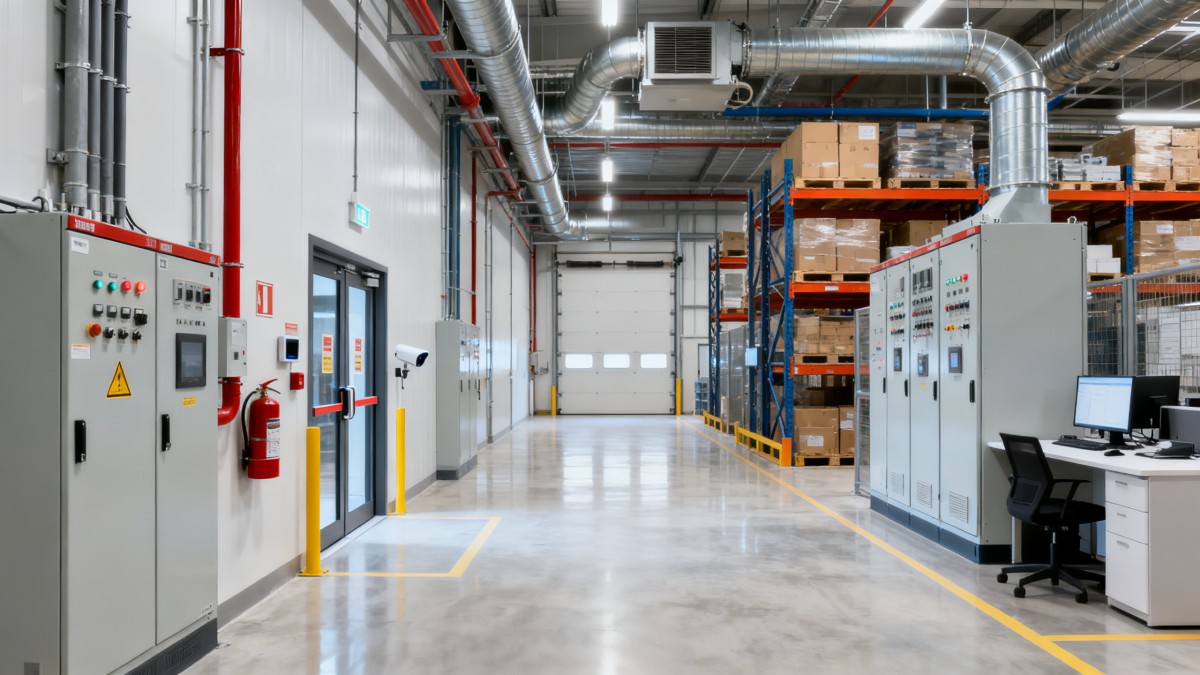
At its simplest, facility management is the coordinated oversight of buildings, systems, services, and support functions required for normal operations.
It usually combines technical services with workplace or site services. The technical side protects infrastructure. The support side keeps the space functional for daily use.
This is why the term can mean different things in different contracts. One provider may handle only maintenance. Another may manage hard services, soft services, compliance, vendors, and reporting together.
A practical definition is more useful than a narrow one. Facility management is the discipline of making sure a site performs as intended, within legal, operational, and financial limits.
Hard Services and Soft Services
The most common distinction is between hard and soft services.
- Hard services relate to physical assets such as HVAC, electrical systems, plumbing, fire protection, lifts, backup power, and building fabric.
- Soft services include cleaning, waste handling, landscaping, reception, catering support, mailroom activity, and other site experience functions.
Most real-world facility management models blend both, even when they are sourced through different vendors.
Core Responsibilities Usually Found in a Facility Management Scope
Although contracts vary, several responsibilities appear repeatedly across sectors. They form the baseline of a competent facility management program.
Maintenance and Asset Reliability
Preventive maintenance is usually the backbone. It covers scheduled inspections, servicing, calibration, minor repairs, and replacement planning.
Reactive maintenance is also included, especially for urgent breakdowns. The quality difference appears in how quickly issues are triaged, documented, and resolved.
In high-dependency facilities, maintenance also supports business continuity. A failed chiller, switchgear fault, or pump issue may affect production, storage conditions, or safety barriers.
Health, Safety, and Regulatory Compliance
Facility management often owns or coordinates inspections, permits, documentation, contractor controls, and emergency procedures.
That can include fire system testing, evacuation readiness, lockout procedures, confined space controls, PPE policies, and audit preparation.
For sites exposed to CE, UL, ISO, or local statutory requirements, compliance is not a side task. It shapes service schedules, spare parts choices, and recordkeeping discipline.
Cleaning, Hygiene, and Waste Control
Cleaning remains one of the most visible services, but its value is operational as much as cosmetic.
In offices, it supports user comfort and presentation. In industrial or technical sites, poor cleaning can affect contamination control, safety, and equipment performance.
Waste streams also matter. General waste, recyclables, hazardous residues, and regulated disposal routes often sit within the wider facility management scope.
Security and Access Management
Security services may include guarding, CCTV oversight, badge access, visitor controls, perimeter checks, and incident reporting.
For logistics yards, utilities, and critical infrastructure, access rules are closely linked to operational safety. The wrong person in the wrong zone can create both security and process hazards.
Energy, Utilities, and Environmental Performance
Energy monitoring has moved from a cost issue to a management discipline. Facility management teams now track usage patterns, peak demand, leaks, power quality, and efficiency opportunities.
Water consumption, emissions-related data, indoor air quality, and environmental reporting are also increasingly included, especially where sustainability targets are formalized.
Why the Scope Has Expanded
Facility management used to be seen mainly as a support cost. That view no longer fits complex operating environments.
Buildings now contain more automation, tighter safety obligations, more data points, and greater stakeholder scrutiny. A small service gap can trigger downtime, compliance failure, or reputational damage.
This is especially visible in sectors covered by Global Industrial Core. Security and safety systems, precision instruments, power infrastructure, environmental controls, and mechanical assets all depend on disciplined site stewardship.
In that context, facility management is not just about keeping a building open. It supports resilience across the systems that power and protect operations.
How Responsibilities Change by Site Type
The same term can cover very different service mixes. A useful way to understand facility management is to look at the operating context.
The lesson is straightforward. Facility management scope should reflect operational consequence, not just building size.
What to Look for in Practice
A service list alone does not show whether a facility management arrangement is strong. The real test is how responsibilities are defined, measured, and connected.
Clarity of Ownership
Ambiguity causes missed inspections and duplicated work. Each system, zone, and compliance task should have a named owner, response rule, and reporting path.
Service Levels That Match Risk
Not every fault needs the same response time. Critical electrical, fire, water, or environmental systems need tighter service levels than low-risk administrative areas.
Data and Documentation
Modern facility management relies on records. Work orders, asset histories, calibration logs, incident reports, and compliance evidence support better decisions over time.
This is where informed sourcing and technical intelligence become useful. GIC’s emphasis on verified standards, engineering case material, and compliance-aware analysis reflects the kind of evidence serious operations increasingly require.
Vendor Coordination
Many sites depend on multiple contractors. Cleaning, fire systems, elevators, pest control, security, and electrical testing may all sit with different parties.
Effective facility management connects those services instead of treating them as isolated work packages.
Common Gaps That Deserve Attention
Scope problems often appear in familiar ways. They usually surface after a disruption, but they can be spotted much earlier.
- Preventive maintenance exists on paper, but completion rates are weak.
- Compliance checks are scheduled, yet evidence trails are incomplete.
- Energy costs are tracked, but root causes of waste remain unclear.
- Security systems are installed, though access protocols are outdated.
- Vendors meet their task lists, while no one manages cross-system risk.
These gaps show why facility management should be reviewed as an operating system, not a checklist.
A Practical Way to Assess the Next Step
A useful starting point is to map the site’s most critical assets, legal obligations, and service dependencies. That usually reveals whether the current facility management scope is too narrow, too fragmented, or simply outdated.
From there, compare service responsibilities against actual operational risk. Look closely at uptime targets, emergency readiness, documentation quality, environmental controls, and vendor accountability.
For buildings tied to industrial output or infrastructure reliability, that review should also include standards exposure, equipment conditions, and the resilience of power, safety, and monitoring systems.
Facility management works best when the scope is explicit, evidence-based, and aligned with the real consequence of failure. That is the point where service delivery becomes easier to judge, and future improvements become easier to prioritize.
Technical Specifications
- Air Handling Unit Supplier Checklist: Performance Data, Lead Times, and SupportAuthor :Environmental Engineering Director
- Buying Fiberglass Water Tanks Wholesale: Compare Quotes and Delivery CostsAuthor :Environmental Engineering Director
- Choosing an XLPE Power Cable Supplier: Test Reports, Traceability, and Lead TimesAuthor :Grid Infrastructure Analyst
Expert Insights

Chief Security Architect
Dr. Thorne specializes in the intersection of structural engineering and digital resilience. He has advised three G7 governments on industrial infrastructure security.
Related Analysis
- Oct 19, 2026Air Handling Unit Supplier Checklist: Performance Data, Lead Times, and SupportAuthor :Environmental Engineering Director
- Oct 18, 2026Buying Fiberglass Water Tanks Wholesale: Compare Quotes and Delivery CostsAuthor :Environmental Engineering Director
- Oct 17, 2026Choosing an XLPE Power Cable Supplier: Test Reports, Traceability, and Lead TimesAuthor :Grid Infrastructure Analyst
Core Sector // 01
Security & Safety
- How to Build an Equipment Budget for EPC Projects Without Underestimating Lifecycle CostsAuthor :Safety Compliance Lead

- Selecting EPC Procurement Support Tools to Reduce Vendor and Delivery DelaysAuthor :Safety Compliance Lead

- How to Select an Access Control Management System for Multi-Site FacilitiesAuthor :Safety Compliance Lead

- How to Select Electronic Hotel Key Card Locks for Guest Rooms and Staff AreasAuthor :Safety Compliance Lead

- How to Evaluate a Hotel Key Card Lock Supplier for Multi-Property RolloutsAuthor :Safety Compliance Lead

- Pre-Contract Audit Checklist for Verified Production Safety and Environmental ComplianceAuthor :Safety Compliance Lead

- How Can Distributors Build Procurement-Oriented Industrial Content That Drives RFQs?Author :Safety Compliance Lead

- EU Mandates EN 50131-1:2026 for Security SystemsAuthor :Safety Compliance Lead