China Activates HS 8531.90.91, Speeds Security Equipment Exports
Author
Date Published
Reading Time

On June 15, 2026, China’s customs authority formally put into use HS 8531.90.91 as a dedicated export classification code for industrial safety equipment. The change directly concerns exporters, manufacturers, compliance teams, customs brokers, and overseas buyers involved in CCTV systems, access control systems, fire alarm control panels, and linked firefighting equipment. What makes this update worth industry attention is not only the new code itself, but the fact that it combines unified classification, pre-positioned inspection standards, and smart document review to shorten average clearance time from 72 hours to about 50 hours, improving both compliance efficiency and shipment predictability.

A More Defined Export Path for Industrial Safety Equipment
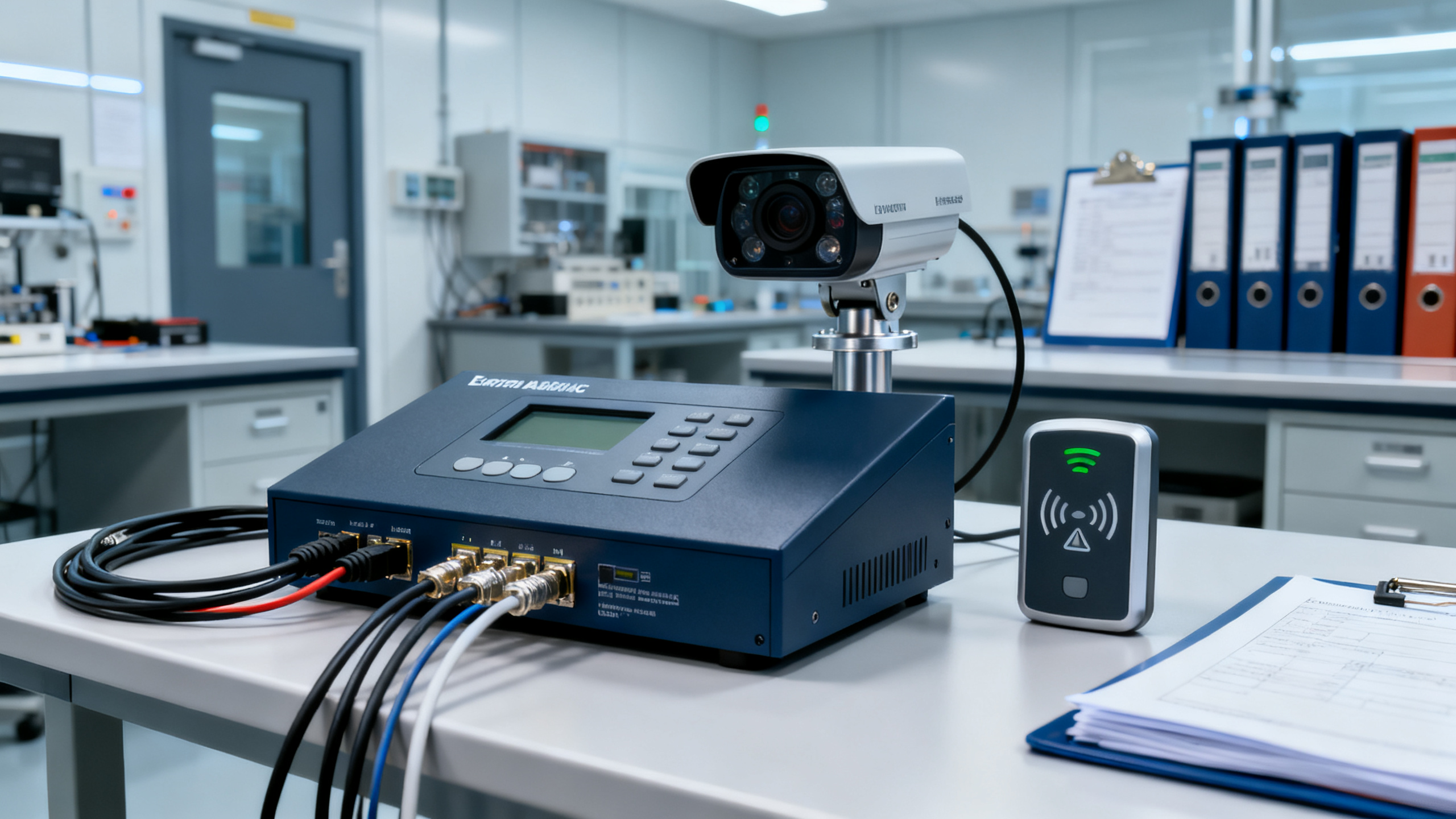
According to the information provided, China’s General Administration of Customs officially launched the dedicated export classification code HS 8531.90.91 on June 15, 2026. The code applies to industrial safety equipment categories including CCTV monitoring systems, entrance and exit control systems, fire alarm controllers, and linked firefighting equipment.
The confirmed operational changes attached to this code are unified classification, inspection standards moved earlier in the process, and direct smart review of customs documentation. Based on the same provided information, average customs clearance time has been reduced from 72 hours to around 50 hours.
Where the Operational Impact May Be Felt First
Export-facing manufacturers may see the most immediate procedural effect
From an industry perspective, manufacturers shipping covered products are likely to feel the change first because product classification and customs documentation sit directly within their outbound process. The practical impact may appear in product filing, internal compliance review, and the coordination between sales, logistics, and customs documentation teams. What deserves closer attention is whether existing product descriptions and declaration materials are fully aligned with the new dedicated code.
Trading companies and customs service providers will need cleaner document coordination
Analysis shows that companies handling export execution for multiple brands or product types may be affected through document consistency and category matching. Because the update is tied to unified classification and smart review, the quality and standardization of declarations may matter more in day-to-day operations. For customs brokers and related service providers, the change may shift attention toward earlier verification rather than later-stage correction.
Overseas buyers and project-side procurement may benefit from better timing visibility
Observably, buyers sourcing security screening and fire safety equipment may not be the direct subject of the customs rule, but they are connected to its timing effect. If average clearance becomes more predictable, the main benefit may appear in delivery planning, project scheduling, and communication on lead times. What deserves closer attention is not only faster passage, but whether delivery commitments can be framed with greater certainty.
What Companies Should Watch in Practice
Check whether covered products are consistently mapped to the new code
Companies dealing in CCTV systems, access control systems, fire alarm controllers, and linked firefighting equipment should focus on whether internal product classification, export declarations, and supporting descriptions are all using the same logic. The key issue is less about speed alone and more about avoiding mismatch between product attributes and declared category.
Separate policy wording from execution details
Analysis shows that a dedicated code and shorter average clearance time are important signals, but execution quality still depends on how each shipment is documented and reviewed. Businesses should pay attention to how operational teams interpret the scope of covered products and how consistently that interpretation is applied across orders.
Prepare customer communication around delivery predictability
For exporters and account teams, a shorter average clearance window may support more precise communication with customers, but it should not automatically be treated as a fixed guarantee for every shipment. A practical focus is to update lead-time explanations, contract communication, and shipment expectations in a measured way.
Keep monitoring any follow-up clarification
What deserves closer attention is whether any later official wording, implementation notes, or operational clarifications further define the boundary of applicable products or documentation expectations. For now, businesses should treat the new code as an active compliance topic rather than only a logistics improvement.
Why This Looks Like More Than a One-Day Procedural Update
Observably, this development can be read as more than a short-term customs efficiency adjustment because it links classification, inspection preparation, and smart review into one export process. At the same time, it would be premature to treat it as a fully settled long-term outcome for every shipment scenario. It is more appropriate to understand this as a concrete operational change with a broader administrative signal: industrial safety equipment exports are being handled with more structured categorization and more process visibility.
How This Update Is Best Understood Right Now
At this stage, the industry significance lies in improved export consistency and a clearer customs handling path for covered security and fire protection products. The confirmed facts support the view that clearance efficiency and predictability have improved. Still, from an industry perspective, this is best understood as a practical rule change with ongoing implications for documentation, coordination, and delivery planning, rather than as a final conclusion about all future export outcomes.
Basis of This Article and What Still Needs Verification
This article is generated from the user-provided news title, event date, and event summary. For this type of industry update, commonly relevant source categories may include official customs notices, company disclosures, industry association updates, authoritative media reporting, and standards-related documents. A specific official source link was not provided in the input, so the exact primary publication path still needs continued verification. If the market continues to track this topic, the next points to watch are any follow-up official clarifications and how the new code is applied in actual export operations.
Technical Specifications
- How to Select Electronic Hotel Key Card Locks for Guest Rooms and Staff AreasAuthor :Safety Compliance Lead
- How to Select Lab Instruments for Reliable Chemical Analysis WorkflowsAuthor :Precision Metrology Expert
- How to Size a UPS for Server Rooms: Load, Runtime, and Redundancy FactorsAuthor :Grid Infrastructure Analyst
Expert Insights

Chief Security Architect
Dr. Thorne specializes in the intersection of structural engineering and digital resilience. He has advised three G7 governments on industrial infrastructure security.
Related Analysis
- Sep 17, 2026How to Select Electronic Hotel Key Card Locks for Guest Rooms and Staff AreasAuthor :Safety Compliance Lead
- Sep 16, 2026How to Select Lab Instruments for Reliable Chemical Analysis WorkflowsAuthor :Precision Metrology Expert
- Sep 15, 2026How to Size a UPS for Server Rooms: Load, Runtime, and Redundancy FactorsAuthor :Grid Infrastructure Analyst
Core Sector // 01
Security & Safety
- How to Select Electronic Hotel Key Card Locks for Guest Rooms and Staff AreasAuthor :Safety Compliance Lead

- How to Evaluate a Hotel Key Card Lock Supplier for Multi-Property RolloutsAuthor :Safety Compliance Lead

- Pre-Contract Audit Checklist for Verified Production Safety and Environmental ComplianceAuthor :Safety Compliance Lead

- How Can Distributors Build Procurement-Oriented Industrial Content That Drives RFQs?Author :Safety Compliance Lead

- EU Mandates EN 50131-1:2026 for Security SystemsAuthor :Safety Compliance Lead

- EU EN 50131-1:2026 Takes Effect on CCTV ComplianceAuthor :Safety Compliance Lead

- IEC Issues CCTV Interoperability Test StandardAuthor :Safety Compliance Lead

- EN 50131-4:2026 Raises EU Security Compliance BarAuthor :Safety Compliance Lead