How to Choose OBD2 Code Readers for DIY Diagnostics and Professional Repair
Author
Date Published
Reading Time
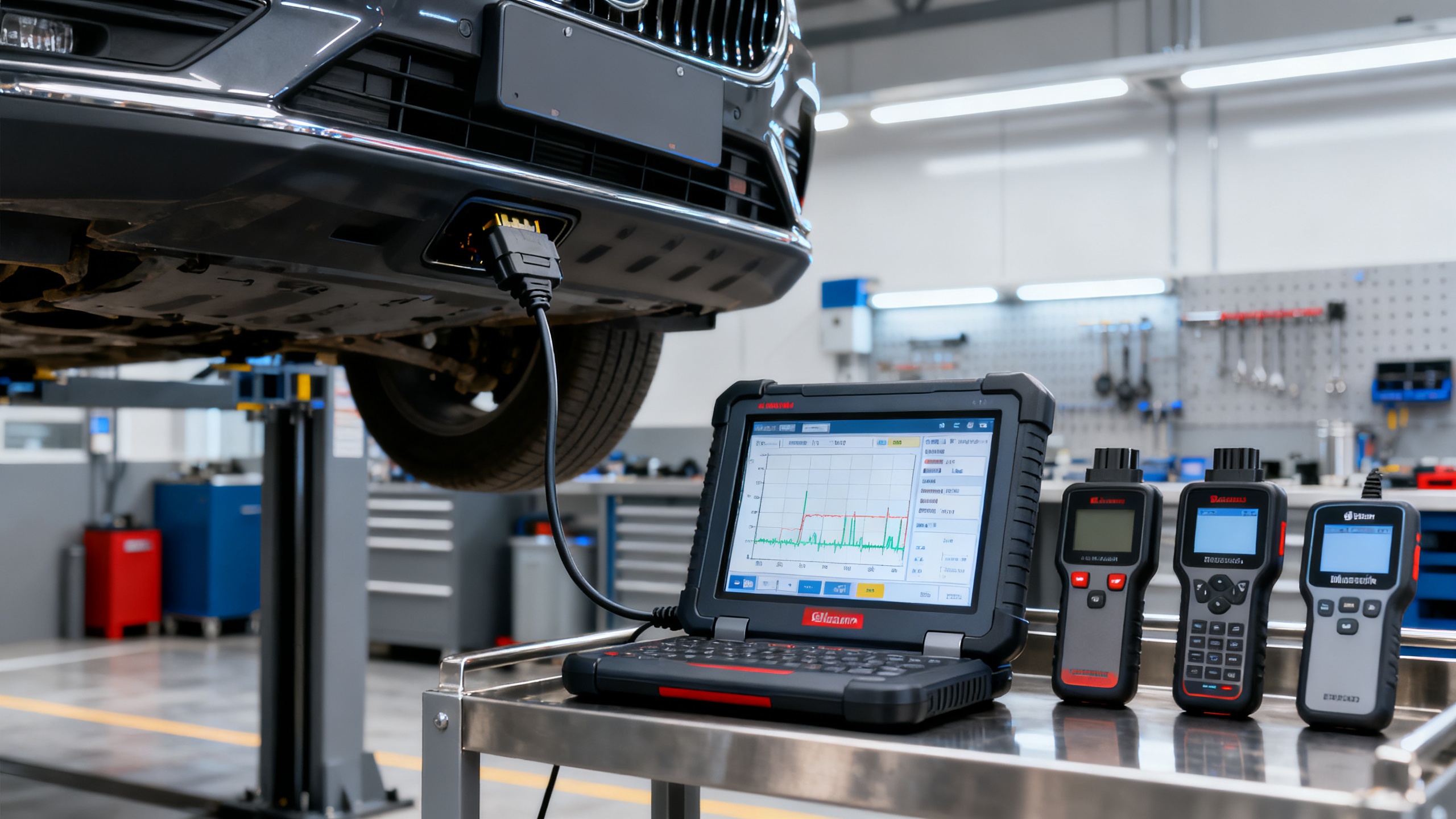
Choosing between different obd2 code readers is no longer a minor buying decision. The tool now sits at the center of faster troubleshooting, cleaner repairs, and better maintenance records.
For occasional garage work, a basic scanner may be enough. In a busy repair setting, the wrong device can slow diagnosis, miss system-level faults, and create unnecessary parts replacement.
That is why selection should focus less on price alone and more on function, coverage, update support, and operating conditions. A code reader is only valuable when it produces reliable decisions.
From the broader perspective of Global Industrial Core, this fits a larger pattern across modern industry: tools that combine measurement, safety, and data quality tend to deliver stronger operational resilience.
What OBD2 code readers actually do
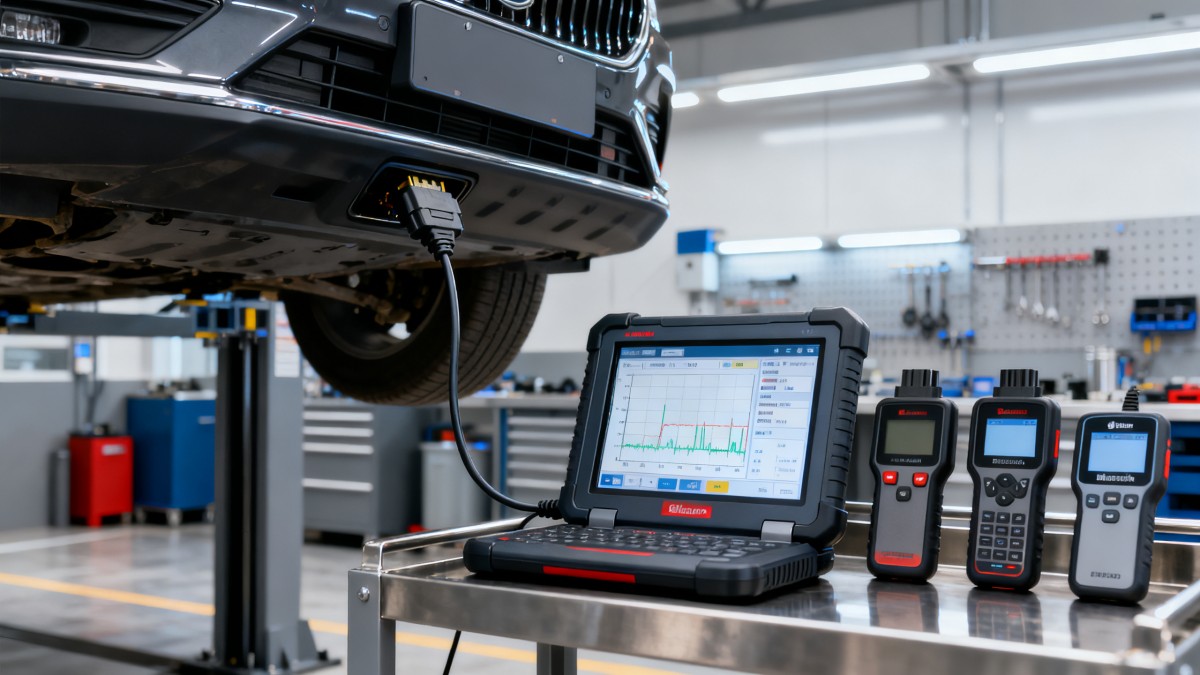
At the simplest level, obd2 code readers connect to a vehicle’s diagnostic port and retrieve trouble codes stored by onboard control modules.
That sounds straightforward, but capability varies widely. Some units only read and clear generic powertrain codes. Others access ABS, SRS, transmission, battery management, and manufacturer-specific systems.
More advanced readers also show live data streams. These include sensor voltage, fuel trim, coolant temperature, oxygen sensor activity, and misfire counters.
The best models go further with active tests and service functions. They can command components, reset maintenance intervals, perform throttle relearns, or support battery registration.
In practice, this means not every diagnostic tool should be judged by its ability to display a fault code. The real difference is how much evidence it provides before a repair decision is made.
Why selection matters more now
Vehicle electronics have become denser, more networked, and more software-dependent. Even a routine warning light may involve multiple modules and several possible root causes.
Hybrid systems, ADAS features, start-stop controls, and stricter emissions management have changed the diagnostic landscape. Older scan tools often fall short in these areas.
This matters beyond passenger vehicles. Fleets, utility service vehicles, site support trucks, and mobile maintenance units all depend on accurate fault identification to reduce downtime.
In environments where uptime, compliance, and traceable maintenance matter, diagnostic equipment starts to resemble any other industrial instrument: it must be dependable, current, and fit for purpose.
That is also consistent with GIC’s editorial focus. Whether the subject is metrology, electrical systems, or field diagnostics, the core issue is the same: good data prevents expensive guesswork.
The main categories to compare before buying
A quick comparison helps separate entry-level tools from equipment designed for deeper troubleshooting.
The right category depends on how often the tool is used, how many vehicle brands are involved, and whether the goal is quick screening or verified repair diagnosis.
Features that influence real repair accuracy
Vehicle and system coverage
Coverage should be checked first. Many obd2 code readers look similar on paper but differ sharply in brand support, model-year range, and access to non-powertrain modules.
A tool that works well on one domestic platform may be weak on European or Asian vehicles. Manufacturer-specific diagnostics often matter more than generic code reading.
Live data quality
Live data is where deeper diagnosis starts. The question is not only whether data is available, but whether it is fast, organized, graphable, and easy to compare.
A slow or cluttered interface can hide intermittent faults. Good readers make it easier to spot patterns in fuel correction, temperature drift, sensor lag, or charging performance.
Bidirectional control
Bidirectional control allows the tool to command a component rather than only observe it. This is useful for actuators, fans, injectors, relays, EVAP functions, and calibration checks.
When available, this feature reduces uncertainty. It helps separate wiring, control, and component faults without disassembly.
Update policy and software support
Modern obd2 code readers are partly hardware and partly software. Update frequency determines how well the tool keeps pace with newer systems and service functions.
Before buying, check whether updates are free, subscription-based, or limited after the first year. A low purchase price may hide long-term support costs.
Different use settings call for different tools
Selection becomes easier when the working context is clear.
- For home maintenance, focus on ease of use, reliable code definitions, live data basics, and broad compatibility.
- For mixed-vehicle service work, prioritize module coverage, service resets, update support, and stable wireless connectivity.
- For fleet maintenance, reporting functions, VIN identification, battery and charging analysis, and rugged hardware become more important.
- For advanced repair, bidirectional controls, guided tests, waveform integration, and OEM-level functions offer better value than low-cost alternatives.
In other words, the best obd2 code readers are not universal winners. They are the ones aligned with the failure patterns, vehicle mix, and diagnostic depth actually encountered.
What to check beyond the spec sheet
Published specifications are useful, but they do not tell the whole story. Day-to-day usability often determines whether a tool gets trusted or ignored.
- Boot speed matters when repeated checks are common.
- Screen readability matters in bright workshops or outdoor service areas.
- Cable quality and connector fit matter when vehicles are checked frequently.
- Battery life matters for mobile work.
- Report export matters when maintenance documentation must be retained.
- Technical support matters when a tool behaves inconsistently on uncommon models.
This is familiar territory in industrial sourcing. Measurement and diagnostic devices are judged not only by feature count, but by repeatability, supportability, and field reliability.
Common buying mistakes to avoid
Many disappointing purchases follow the same pattern. The tool is chosen for one headline feature, then fails in normal use.
- Confusing code clearing with full diagnosis.
- Ignoring subscription costs and update restrictions.
- Assuming all vehicles support the same functions.
- Overlooking data speed and interface quality.
- Buying professional-level complexity for occasional light use.
- Buying entry-level tools for recurring advanced repairs.
A better approach is to map likely repair tasks first, then compare obd2 code readers against those tasks rather than against marketing claims.
A practical way to make the final decision
Start with three questions: which vehicles will be scanned, which systems need access, and how often advanced functions are genuinely required.
Then compare short-listed tools on coverage, updates, data quality, and service support. If possible, review sample reports and real menu structure before purchase.
For operations that treat maintenance as a controlled process, it also helps to align the tool with documentation needs, safety routines, and long-term equipment planning.
That is where a disciplined evaluation framework becomes useful. The same logic used for industrial instruments applies here: define the job, verify compatibility, test the data path, and judge lifecycle value.
When obd2 code readers are selected this way, they become more than fault-code tools. They become reliable diagnostic assets that support better repair decisions from the first scan onward.
Technical Specifications
- How to Select Electronic Hotel Key Card Locks for Guest Rooms and Staff AreasAuthor :Safety Compliance Lead
- How to Select Lab Instruments for Reliable Chemical Analysis WorkflowsAuthor :Precision Metrology Expert
- How to Size a UPS for Server Rooms: Load, Runtime, and Redundancy FactorsAuthor :Grid Infrastructure Analyst
Expert Insights

Chief Security Architect
Dr. Thorne specializes in the intersection of structural engineering and digital resilience. He has advised three G7 governments on industrial infrastructure security.
Related Analysis
- Sep 17, 2026How to Select Electronic Hotel Key Card Locks for Guest Rooms and Staff AreasAuthor :Safety Compliance Lead
- Sep 16, 2026How to Select Lab Instruments for Reliable Chemical Analysis WorkflowsAuthor :Precision Metrology Expert
- Sep 15, 2026How to Size a UPS for Server Rooms: Load, Runtime, and Redundancy FactorsAuthor :Grid Infrastructure Analyst
Core Sector // 01
Security & Safety
- What to Check When Sourcing Vibration Meters Wholesale for Industrial MaintenanceAuthor :Precision Metrology Expert

- How to Select Process Control Instruments for Accuracy, Safety, and UptimeAuthor :Precision Metrology Expert

- What Should Standards Compliance Analysis Training Cover Before an Audit?Author :Precision Metrology Expert

- Why Do Pressure Instruments Fail in High-Vibration Sites?Author :Precision Metrology Expert

- Is FM Software Integration Needed for Overseas Instrument Maintenance?Author :Precision Metrology Expert

- What Are the Differences Between Lab and Field Testing Equipment?Author :Precision Metrology Expert

- Is Independent Testing Necessary for Critical Safety Components?Author :Precision Metrology Expert

- How to Validate Industrial Application Scenarios Before ProcurementAuthor :Precision Metrology Expert