Brazil Updates ANATEL Rules for LoRaWAN 1.0.4 Test Instruments
Author
Date Published
Reading Time

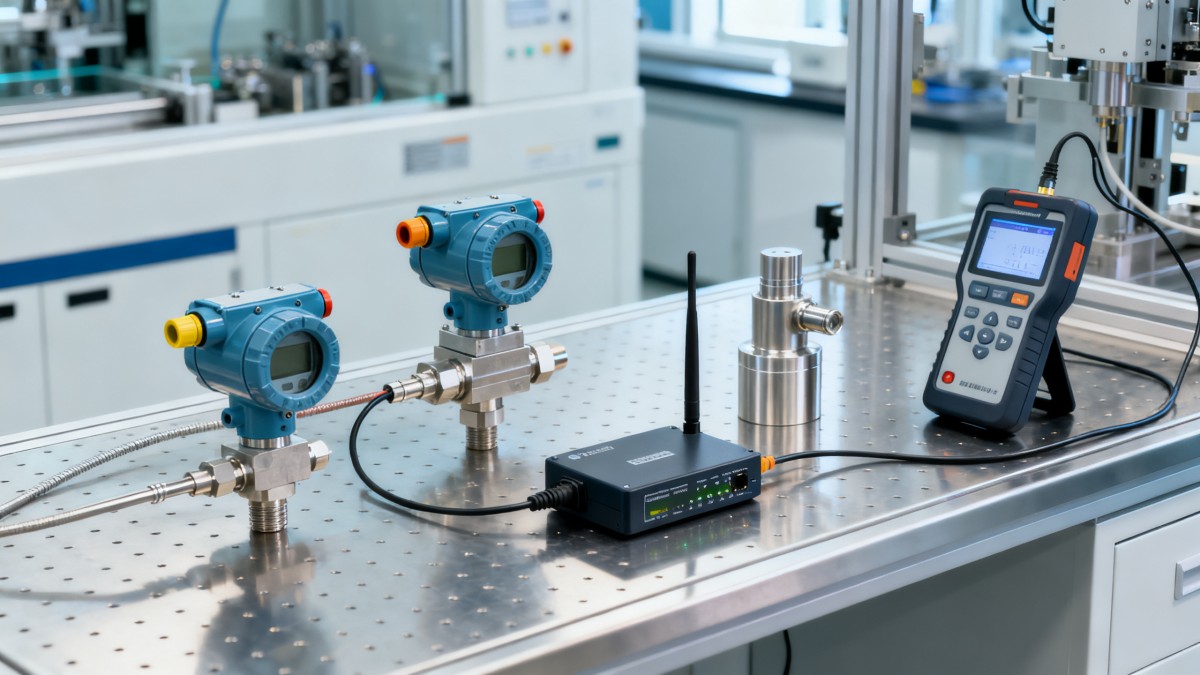
On June 17, 2026, Brazil’s telecommunications regulator ANATEL issued a revised Resolution No. 712 that changes the market access conditions for industrial test instruments connected to public IoT networks. From October 1, 2026, affected devices, including pressure, temperature and vibration transmitters as well as portable calibrators, must obtain ANATEL certification and natively support LoRaWAN 1.0.4. This is worth close attention for manufacturers, exporters, certification teams, procurement functions and after-sales operators because network access eligibility now connects directly to product compliance, project acceptance and operational data return.
What the revised ANATEL resolution now requires
The confirmed change is limited but clear. ANATEL formally released the revised Resolution No. 712 on June 17, 2026. The rule sets an effective date of October 1, 2026 for industrial test instruments that access public IoT networks. Under the revised requirement, those products must pass ANATEL certification and must natively support the LoRaWAN 1.0.4 protocol.
The summary provided for this update also makes clear that devices incompatible with older protocol expectations will not be granted network access approval. In practical terms, that affects whether equipment can be admitted for network use and can also influence project acceptance and the return of operation and maintenance data.
Where the compliance change may be felt first
Product design and export readiness
From an industry perspective, manufacturers and export-oriented suppliers are likely to feel the impact first because protocol compatibility is no longer only a technical feature discussion; it becomes part of the access condition for equipment intended for public IoT network use in Brazil. The main pressure point is likely to be the alignment between product specifications, native LoRaWAN 1.0.4 support and ANATEL certification preparation before shipment or market entry.
Procurement and project delivery alignment
Procurement teams and project owners may also need to review how they define acceptable equipment in purchasing documents and delivery checks. Analysis shows that if a device cannot obtain network access approval, the issue may move beyond a technical mismatch and become a delivery and acceptance risk, especially where data transmission is part of the expected operating result.
Certification and test service workflows
Certification-related service providers and testing organizations may see increased attention on protocol evidence, product documentation and submission consistency. What deserves closer attention is whether technical files, test reports and product declarations are sufficiently aligned with the native LoRaWAN 1.0.4 requirement before formal certification steps proceed.
After-sales and operational continuity
For service teams responsible for installed equipment, the change may affect maintenance planning and data return continuity where public IoT network connectivity is required. Observably, the issue is not only whether a device can be sold, but also whether it can remain usable in projects that depend on compliant network access and ongoing operation data transmission.
What companies should review now
Recheck certification status against the new condition
Companies handling relevant instruments should review whether current or planned models intended for Brazil both require ANATEL certification and can demonstrate native support for LoRaWAN 1.0.4. If existing product lines were prepared around earlier protocol assumptions, this becomes an immediate compliance screening point rather than a later filing detail.
Examine technical files and bid documents
Technical documentation, product specifications, declarations and tender materials deserve a fresh review. Analysis shows that mismatches between claimed connectivity capability and the new protocol requirement could create avoidable friction in certification review, procurement evaluation or final project acceptance.
Review delivery schedules and supplier qualifications
Importers, distributors and procurement teams should pay attention to delivery timing around the October 1, 2026 implementation date. It is more appropriate to understand this as a timing-sensitive compliance checkpoint, particularly for orders, inventory planning and supplier qualification where public IoT network access is part of the product’s intended use.
Keep watching for implementation language
The provided information confirms the rule change and effective date, but it does not provide detailed enforcement language beyond the stated requirement and consequence for network access approval. For that reason, companies should continue monitoring official wording, certification practice, tender language changes and market-side execution feedback before treating all operating details as settled.
Why this reads as an execution signal
Analysis shows that this update is more than a general policy direction because it names a concrete protocol requirement, ties it to ANATEL certification and sets a defined implementation date. At the same time, it should not be overstated as a fully exhausted compliance picture, since the input does not include detailed procedural guidance, transition treatment or market-level enforcement examples.
Observably, the most useful reading for the industry today is that Brazil is drawing a clearer line between IoT network access, certification eligibility and protocol-level compatibility for industrial test instruments. That makes this a practical execution signal for product planning and transaction preparation, while still leaving room for continued observation of how the rule is applied in documentation, certification review and project acceptance practice.
How the market may reasonably interpret this update
The immediate significance of this development lies in its effect on market access conditions for connected industrial test instruments rather than in broad sector narratives. A neutral reading is that companies involved in supply, export, procurement, certification and service should treat the rule as a real compliance threshold with near-term operational implications.
Current observation suggests that the update is best understood as a landed regulatory change with direct relevance to certification and delivery decisions, while some execution details still warrant follow-up. That is why the near-term priority is not speculation, but disciplined checking of product compatibility, certification readiness and project document alignment.
Basis of this article and points still to verify
This article is generated from the user-provided news title, event date and event summary. For developments of this kind, commonly relevant source types may include official regulatory announcements, releases from supervisory authorities, trade or customs information, industry association notices, standards body documents and reporting by established professional media. A specific official source link was not provided in the input, so the exact source document and any later interpretive materials still need ongoing verification.
Further observation should focus on any additional official wording, certification implementation practice, changes in tender or procurement documents, market feedback from affected companies and the actual execution status after the October 1, 2026 date.
Technical Specifications
- How to Select Electronic Hotel Key Card Locks for Guest Rooms and Staff AreasAuthor :Safety Compliance Lead
- How to Select Lab Instruments for Reliable Chemical Analysis WorkflowsAuthor :Precision Metrology Expert
- How to Size a UPS for Server Rooms: Load, Runtime, and Redundancy FactorsAuthor :Grid Infrastructure Analyst
Expert Insights

Chief Security Architect
Dr. Thorne specializes in the intersection of structural engineering and digital resilience. He has advised three G7 governments on industrial infrastructure security.
Related Analysis
- Sep 17, 2026How to Select Electronic Hotel Key Card Locks for Guest Rooms and Staff AreasAuthor :Safety Compliance Lead
- Sep 16, 2026How to Select Lab Instruments for Reliable Chemical Analysis WorkflowsAuthor :Precision Metrology Expert
- Sep 15, 2026How to Size a UPS for Server Rooms: Load, Runtime, and Redundancy FactorsAuthor :Grid Infrastructure Analyst
Core Sector // 01
Security & Safety
- What to Check When Sourcing Vibration Meters Wholesale for Industrial MaintenanceAuthor :Precision Metrology Expert

- How to Select Process Control Instruments for Accuracy, Safety, and UptimeAuthor :Precision Metrology Expert

- What Should Standards Compliance Analysis Training Cover Before an Audit?Author :Precision Metrology Expert

- Why Do Pressure Instruments Fail in High-Vibration Sites?Author :Precision Metrology Expert

- Is FM Software Integration Needed for Overseas Instrument Maintenance?Author :Precision Metrology Expert

- What Are the Differences Between Lab and Field Testing Equipment?Author :Precision Metrology Expert

- Is Independent Testing Necessary for Critical Safety Components?Author :Precision Metrology Expert

- How to Validate Industrial Application Scenarios Before ProcurementAuthor :Precision Metrology Expert