Brazil ANATEL Rule 712 Adds LoRaWAN 1.0.4 for Test Instruments
Author
Date Published
Reading Time
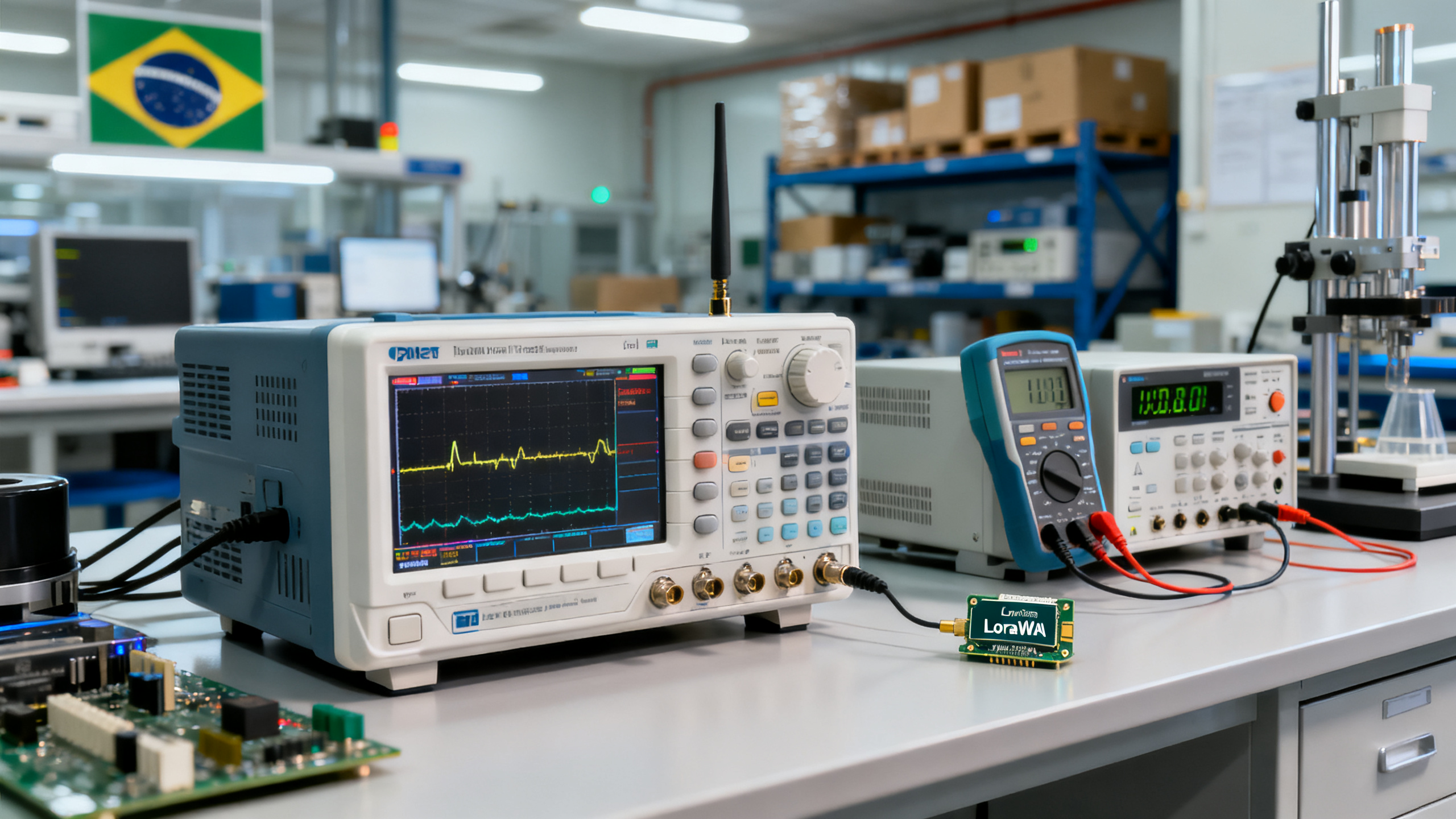
Effective September 1, 2026, Brazil’s ANATEL will require industrial testing and measurement instruments filed for network access to obtain ANATEL certification and include a LoRaWAN 1.0.4 protocol stack. The update, published on June 16, 2026 as an amendment to Resolution No. 712, puts immediate focus on exporters, product compliance teams, device designers, certification coordinators, and Brazilian buyers because it links market access for most connected Testing & Measurement products to both certification and protocol capability.
What the amendment explicitly requires
According to the information provided, ANATEL published an amendment to Resolution No. 712 on June 16, 2026. From September 1, 2026, all industrial-grade testing and measurement instruments submitted for network access in Brazil must pass ANATEL certification and must have a built-in LoRaWAN 1.0.4 protocol stack.
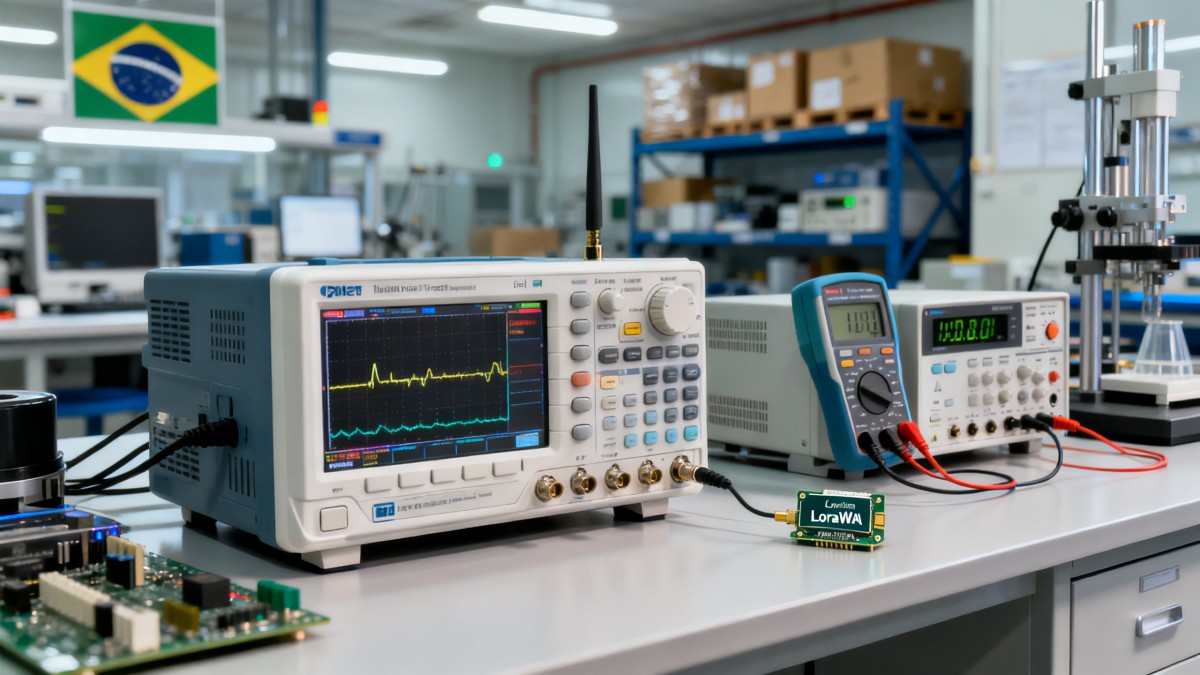
The requirement applies to industrial testing and measurement equipment including multimeters, oscilloscopes, and data acquisition devices. The stated purpose is to meet Brazil’s mandatory connectivity requirement for Industry 4.0 remote calibration and status monitoring.
The exemption is limited to non-networked devices used only for internal laboratory calibration. The information provided also states that the new rule covers more than 95% of Testing & Measurement products exported to Brazil.
Where the impact is likely to be felt first
Export-facing product lines move into a stricter compliance path
From an industry perspective, manufacturers and trading companies that ship connected test instruments to Brazil are likely to feel the impact first because the rule is tied directly to market entry. The most affected business stages are likely to be product definition, model selection for Brazil, certification preparation, and shipment planning.
Engineering and product teams face protocol-level decisions
Analysis shows that the requirement is not limited to paperwork. If a device is filed for network access, the product itself must include LoRaWAN 1.0.4. That makes hardware-software coordination, firmware planning, and version control more relevant for instruments that were previously positioned mainly around measurement performance rather than mandatory connectivity features.
Certification and delivery coordination become more time-sensitive
For compliance service providers, local representatives, distributors, and procurement teams, the main pressure point is likely to be execution timing. The rule takes effect on a fixed date, so document readiness, certification sequencing, and delivery commitments may all need closer review where Brazil-bound connected models are concerned.
Buyers in Brazil may narrow accepted product configurations
Observably, Brazilian industrial buyers and channel partners may pay closer attention to whether a model is intended for internal laboratory-only use or for networked industrial deployment. That distinction matters because the exemption appears narrow, while the coverage of export-oriented Testing & Measurement products is described as broad.
What companies should watch now
Separate exempt devices from in-scope models
What deserves closer attention is whether each product is genuinely a non-networked device used only for internal laboratory calibration, or whether it falls into the broader connected industrial category. This distinction is practical, not merely descriptive, because it affects certification and product configuration decisions.
Check whether Brazil-bound models already align with LoRaWAN 1.0.4
Companies should review current model portfolios for Brazil and identify which instruments already include the required protocol stack and which do not. For products such as multimeters, oscilloscopes, and data acquisition devices, the issue is whether the marketed configuration for Brazil matches the new requirement from the start of September 2026.
Recheck certification files and delivery commitments
Analysis shows that technical readiness alone may not be enough if supporting certification materials, filing plans, or customer documentation remain out of sync. Teams involved in compliance, sales operations, and order fulfillment should pay attention to whether pending projects, quotations, and deliveries assume a product status that may change under the updated rule.
Keep watching for further official clarification
It is more appropriate to understand this as a rule with immediate operational consequences but also with details that may still require close reading in practice. Companies should continue to monitor whether ANATEL issues additional wording, implementation clarification, or related guidance that affects classification, filing, or interpretation of the exemption.
Why this looks like more than a routine certification update
As an editorial observation, this development signals that for Brazil’s industrial environment, connectivity expectations for testing and measurement equipment are being treated as part of regulatory access rather than as an optional product feature. That does not by itself prove how every market participant will respond, but it does suggest that compliance, communications capability, and industrial serviceability are becoming more closely linked in this product category.
It is also more appropriate to understand this as both a near-term compliance change and a longer-term policy signal. The near-term element is clear because a specific effective date has been given. The longer-term signal is that remote calibration and status monitoring are being reflected in access requirements for industrial instruments, which is relevant for product planning beyond a single shipment cycle.
How the market may best interpret the change today
At this stage, the most balanced reading is that the amendment creates a concrete compliance threshold for connected industrial test instruments entering Brazil, while leaving companies responsible for translating that threshold into product scope, certification workflow, and customer communication. The rule should not be treated as a minor documentation adjustment, but it also should not be overstated beyond the facts provided. For now, it is best understood as an actionable regulatory change with broader strategic implications that still merit continued monitoring.
Basis of this article and what still needs verification
This article is generated from the user-provided news title, event date, and event summary. The factual basis described here relies on the provided information about ANATEL’s amendment to Resolution No. 712, the September 1, 2026 effective date, the LoRaWAN 1.0.4 requirement, the limited exemption for non-networked internal laboratory calibration devices, and the stated coverage of more than 95% of Testing & Measurement products exported to Brazil.
For this type of industry update, relevant source categories typically include official regulatory notices, company compliance notices, industry association updates, authoritative media reporting, and standard-related documents. A specific official source link was not provided in the input, so the exact official publication path still requires follow-up verification. Continued attention should focus on any later ANATEL clarification affecting scope, filing practice, or interpretation of the exemption.
Technical Specifications
- How to Select Electronic Hotel Key Card Locks for Guest Rooms and Staff AreasAuthor :Safety Compliance Lead
- How to Select Lab Instruments for Reliable Chemical Analysis WorkflowsAuthor :Precision Metrology Expert
- How to Size a UPS for Server Rooms: Load, Runtime, and Redundancy FactorsAuthor :Grid Infrastructure Analyst
Expert Insights

Chief Security Architect
Dr. Thorne specializes in the intersection of structural engineering and digital resilience. He has advised three G7 governments on industrial infrastructure security.
Related Analysis
- Sep 17, 2026How to Select Electronic Hotel Key Card Locks for Guest Rooms and Staff AreasAuthor :Safety Compliance Lead
- Sep 16, 2026How to Select Lab Instruments for Reliable Chemical Analysis WorkflowsAuthor :Precision Metrology Expert
- Sep 15, 2026How to Size a UPS for Server Rooms: Load, Runtime, and Redundancy FactorsAuthor :Grid Infrastructure Analyst
Core Sector // 01
Security & Safety
- What to Check When Sourcing Vibration Meters Wholesale for Industrial MaintenanceAuthor :Precision Metrology Expert

- How to Select Process Control Instruments for Accuracy, Safety, and UptimeAuthor :Precision Metrology Expert

- What Should Standards Compliance Analysis Training Cover Before an Audit?Author :Precision Metrology Expert

- Why Do Pressure Instruments Fail in High-Vibration Sites?Author :Precision Metrology Expert

- Is FM Software Integration Needed for Overseas Instrument Maintenance?Author :Precision Metrology Expert

- What Are the Differences Between Lab and Field Testing Equipment?Author :Precision Metrology Expert

- Is Independent Testing Necessary for Critical Safety Components?Author :Precision Metrology Expert

- How to Validate Industrial Application Scenarios Before ProcurementAuthor :Precision Metrology Expert