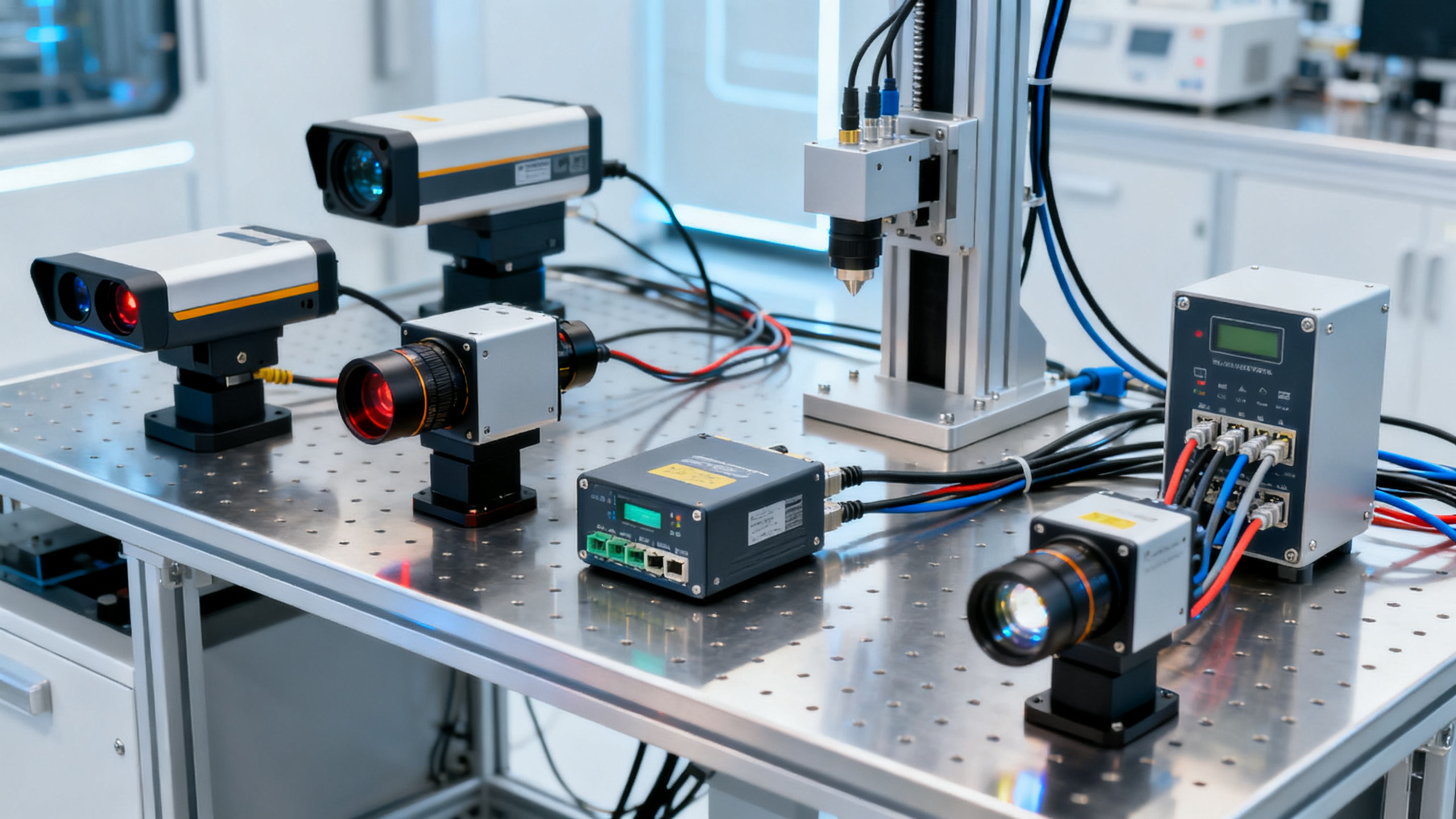
Global Embodied AI Market CAGR Reaches 73% Amid Surge in Industrial Optics & Servo Motor Exports
Author
Date Published
Reading Time
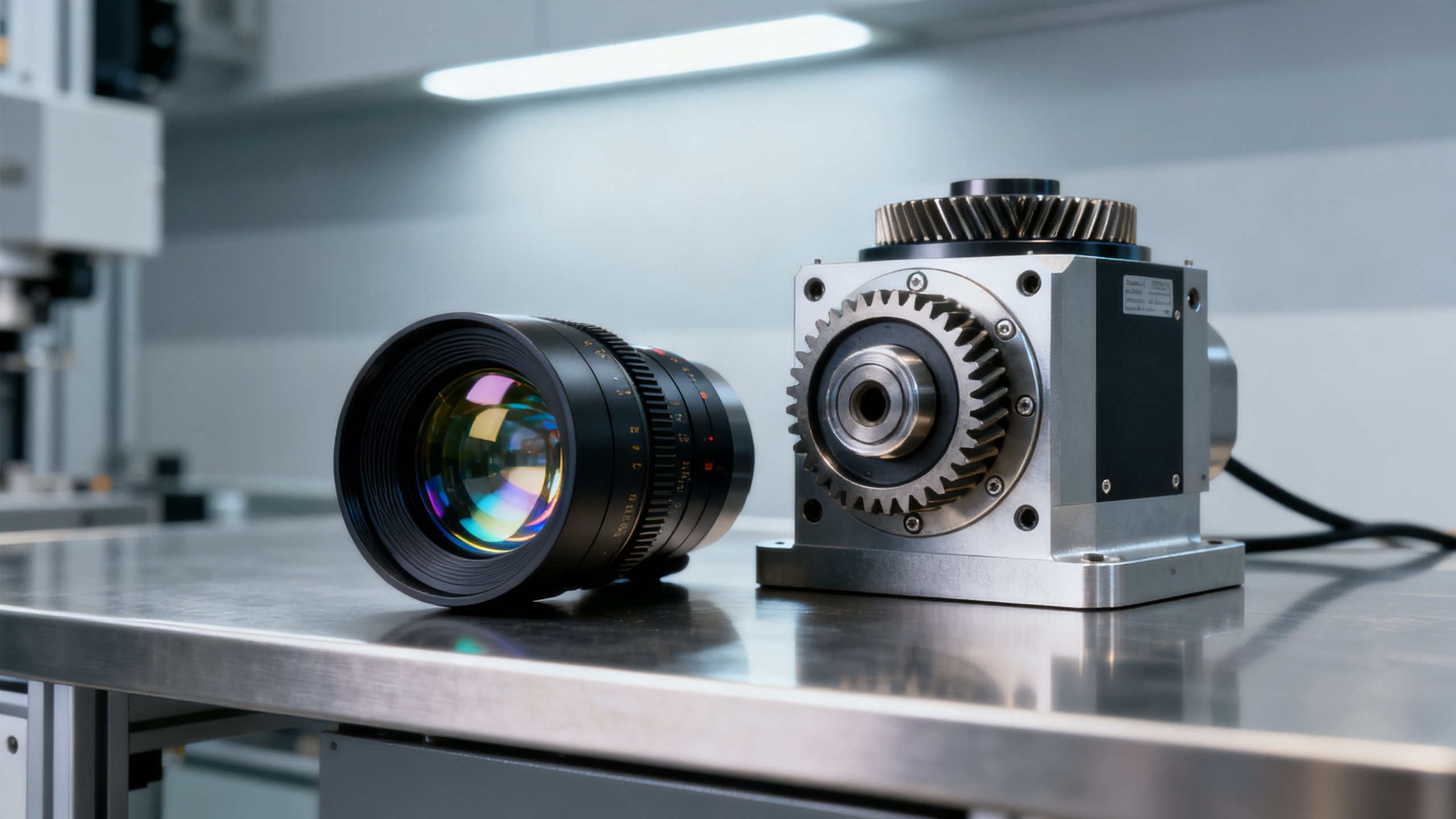
On March 26, 2026, the China Electronics Standardization Institute (CESI) released its Top Ten Future Industry Tracks 2026 report, highlighting rapid growth in embodied AI — particularly human-like robots — with a projected market size of RMB 238.8 billion by 2030. Industrial manufacturing and specialized applications are currently the primary deployment domains. This development is already translating into tangible export demand: industrial optics and power transmission enterprises in Shenzhen and Suzhou report a 140% year-on-year increase in April orders for machine vision lenses and precision harmonic reducers destined for European and U.S. system integrators, with delivery schedules extended to Q4 2026. Stakeholders in industrial automation components, motion control systems, and machine vision supply chains should monitor this trend closely — it signals early-stage commercial traction beyond R&D demonstration.
Event Overview
On March 26, 2026, the China Electronics Standardization Institute (CESI) published the Top Ten Future Industry Tracks 2026 report. It estimates that the global embodied AI market — centered on human-like robots — will reach RMB 238.8 billion by 2030, growing at a five-year compound annual growth rate (CAGR) of 73%. The report identifies industrial manufacturing and specialized applications as the current primary adoption segments. Concurrently, multiple industrial optics and power transmission enterprises based in Shenzhen and Suzhou confirmed that their April 2026 export orders for machine vision lenses and precision harmonic reducers to European and U.S. system integrators rose 140% year-on-year, with confirmed delivery windows now extending to Q4 2026.
Impact on Specific Subsectors
Direct Exporters (Industrial Optics & Precision Drive Components)
These firms are experiencing immediate order volume pressure and capacity constraints. Impact manifests as extended lead times, intensified production planning cycles, and heightened scrutiny of quality consistency across high-volume shipments.
Raw Material Suppliers (e.g., Optical Glass, Specialty Alloys)
Upstream suppliers face increased demand visibility but limited advance notice. Impact includes tighter inventory management requirements, potential price negotiation shifts, and greater need for traceability documentation aligned with export destination compliance standards.
Contract Manufacturers & Assemblers (OEM/ODM Providers)
Firms engaged in lens assembly or reducer integration are seeing revised build schedules and stricter tolerance validation protocols. Impact centers on calibration repeatability, thermal stability testing under sustained duty cycles, and documentation alignment with end-integrator certification requirements.
Distribution & Channel Partners (Regional Distributors, Logistics Integrators)
Channel players report higher inquiry volumes from integrators seeking localized technical support and faster customs clearance pathways. Impact involves expanded logistics coordination scope, increased demand for bilingual technical documentation, and tighter coordination with OEMs on shipment staging and documentation accuracy.
Supply Chain Service Providers (Certification Agencies, Testing Labs)
Third-party service providers observe rising requests for pre-shipment verification against EU CE and U.S. UL/ANSI standards. Impact includes longer queue times for test scheduling and greater emphasis on harmonized reporting formats accepted by both U.S. and EU authorities.
Key Considerations for Enterprises & Practitioners
Monitor official policy alignment with commercial rollout
While CESI’s report reflects institutional recognition of embodied AI’s trajectory, no new national export incentives or regulatory frameworks were announced alongside its release. Enterprises should track upcoming Ministry of Commerce (MOFCOM) and MIIT guidance documents scheduled for Q2 2026 — these may clarify classification codes, tariff treatment, or technical conformity pathways for robotics-related components.
Focus on high-leverage product categories and destination-specific compliance
The reported surge centers specifically on machine vision lenses and harmonic reducers — not broad-spectrum robotics parts. Firms should prioritize technical documentation updates for these two categories, especially EN ISO 13849-1 (PLd) for reducers and ISO 10110-3 optical surface specifications for lenses, per EU integrator requirements.
Distinguish between near-term order velocity and long-term platform adoption
The 140% YoY growth reflects short-cycle procurement by system integrators preparing for pilot deployments — not yet evidence of large-scale, repeatable platform integration. Companies should avoid overextending capital expenditure on fully automated lines before confirming multi-year contract commitments from top-tier integrators.
Strengthen cross-functional readiness for delivery execution
With deliveries scheduled through Q4 2026, procurement, QA, and logistics teams must jointly validate material availability, test capacity, and freight booking windows. Preemptive alignment with forwarders on Incoterms 2020 (especially DAP vs. DPU) and EU EORI registration status is recommended for all active exporters.
Editorial Perspective / Industry Observation
Observably, this data point functions more as an early commercial signal than a mature market outcome. The 73% CAGR projection remains forward-looking and model-dependent; however, the concrete 140% export order increase — verified across multiple independent manufacturers in key industrial clusters — confirms that embodied AI is transitioning from lab validation to component-level procurement. Analysis shows that the bottleneck is shifting from algorithmic capability to physical subsystem reliability and interoperability. From an industry perspective, this indicates that supply chain responsiveness — not just technical performance — is becoming a decisive competitive factor for component suppliers. Continued attention is warranted because sustained order flow beyond Q4 2026 would suggest deeper integration into Western robotics platforms — a development that could reshape long-term sourcing strategies across the motion control and vision ecosystems.
Conclusion
This update reflects initial commercial validation of embodied AI’s hardware layer — not broad-based sector transformation. Its significance lies in confirming real-world demand for specific subcomponents within defined industrial use cases. Current interpretation should emphasize measured scaling: firms should treat the surge as evidence of viable near-term revenue channels, not justification for unqualified expansion. A rational, operationally grounded response — prioritizing delivery discipline, compliance readiness, and selective capacity investment — remains more appropriate than strategic repositioning at this stage.
Source Attribution:
Main source: China Electronics Standardization Institute (CESI), Top Ten Future Industry Tracks 2026, released March 26, 2026.
Supplementary input: Verified export order feedback from industrial optics and power transmission enterprises headquartered in Shenzhen and Suzhou, as cited in the CESI report.
Note: CESI’s 2030 market size projection and CAGR figure remain forward-looking estimates. The 140% YoY export order growth is reported as observed and confirmed for April 2026 shipments only; sustained trends beyond Q4 2026 require further observation.
Technical Specifications
- How to Select Electronic Hotel Key Card Locks for Guest Rooms and Staff AreasAuthor :Safety Compliance Lead
- How to Select Lab Instruments for Reliable Chemical Analysis WorkflowsAuthor :Precision Metrology Expert
- How to Size a UPS for Server Rooms: Load, Runtime, and Redundancy FactorsAuthor :Grid Infrastructure Analyst
Expert Insights

Chief Security Architect
Dr. Thorne specializes in the intersection of structural engineering and digital resilience. He has advised three G7 governments on industrial infrastructure security.
Related Analysis
- Sep 17, 2026How to Select Electronic Hotel Key Card Locks for Guest Rooms and Staff AreasAuthor :Safety Compliance Lead
- Sep 16, 2026How to Select Lab Instruments for Reliable Chemical Analysis WorkflowsAuthor :Precision Metrology Expert
- Sep 15, 2026How to Size a UPS for Server Rooms: Load, Runtime, and Redundancy FactorsAuthor :Grid Infrastructure Analyst
Core Sector // 01
Security & Safety
- IEC 62443-3-3:2026 Raises Cybersecurity Bar for Industrial OpticsAuthor :Precision Metrology Expert

- EU Sets New CE Rules for Industrial OpticsAuthor :Precision Metrology Expert

- How to Evaluate a Metallurgical Microscope Exporter for Image Quality and ComplianceAuthor :Precision Metrology Expert

- UL Expands Certification Route for Hazardous-Area OpticsAuthor :Precision Metrology Expert

- Shanghai Port Delays Deepen Under Origin ChecksAuthor :Precision Metrology Expert

- CIOE 2026 to Spotlight Vision and Tactile SensorsAuthor :Precision Metrology Expert

- MWC Shanghai 2026 Opens June 24 With CPO and Industrial Security in FocusAuthor :Precision Metrology Expert

- Brazil Tightens INMETRO Rules for Industrial Optical LensesAuthor :Precision Metrology Expert