Industrial valves wholesale suppliers rarely disclose actual test pressure duration — how long is ‘tested at 1.5x’ really?
Author
Date Published
Reading Time
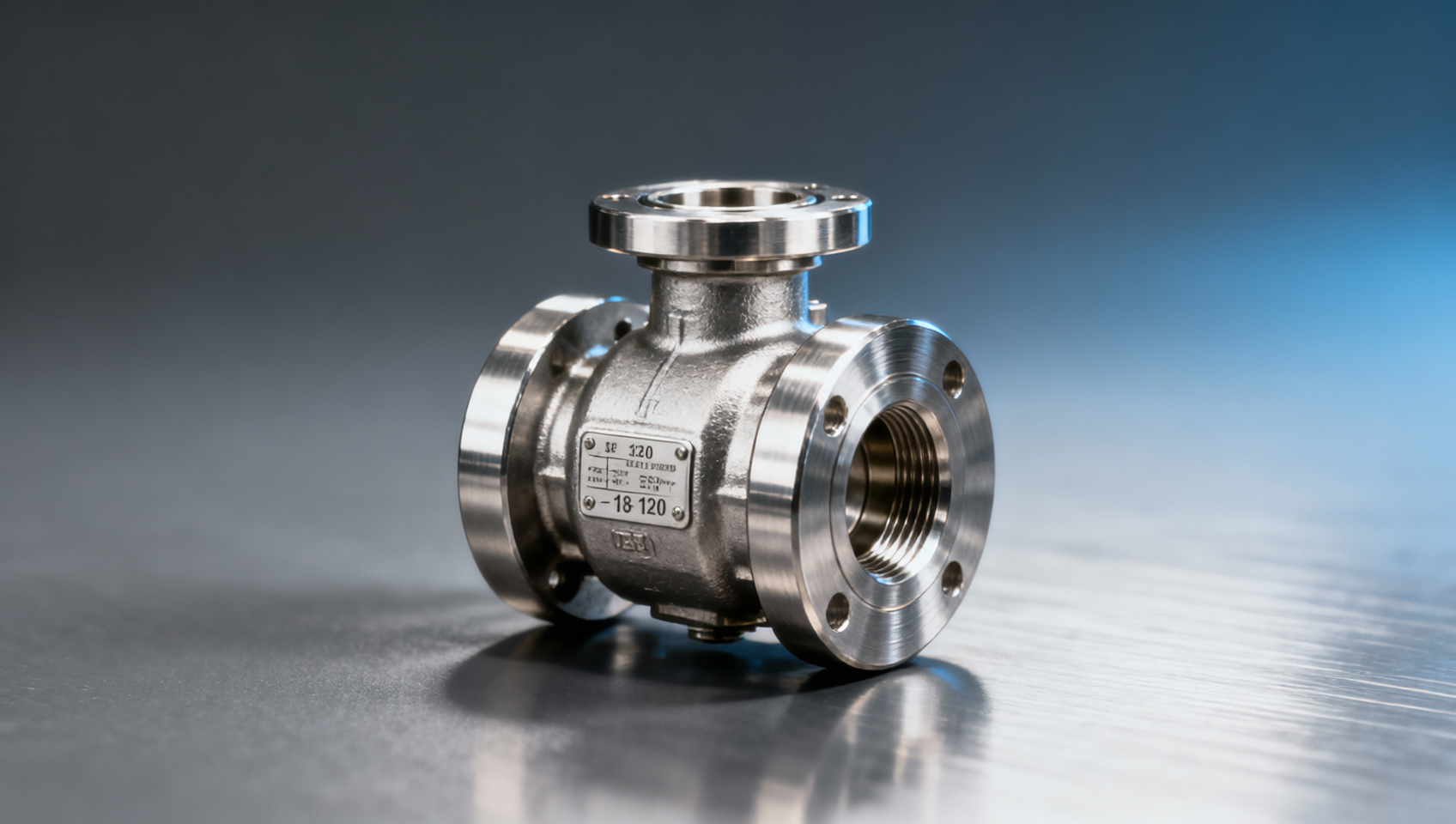
When industrial valves wholesale suppliers claim 'tested at 1.5x pressure', few disclose *how long* that test lasts—minutes? Hours? Or just a fleeting moment? This opacity directly impacts safety relief valves, globe valves wholesale, butterfly valves wafer type, stainless steel ball valves, and all critical flow control components—from solenoid valves wholesale to pneumatic actuator valves. At Global Industrial Core, we cut through marketing ambiguity with metrology-grade validation across hydraulic hoses bulk, forged steel fittings, and stainless steel pipe fittings—ensuring every data point meets E-E-A-T rigor for procurement professionals, EPC engineers, and facility decision-makers.
Why Test Duration Matters More Than Pressure Ratio Alone
A pressure rating of “1.5× design pressure” is meaningless without context—especially duration. ISO 5208, ASME B16.34, and EN 12266-1 all mandate minimum hold times for shell tests, yet many wholesale valve suppliers omit this detail in datasheets, brochures, or even compliance certificates. In practice, test durations range from 3 minutes (minimum per ISO 5208 for Class 150–300 cast valves) to 10 minutes (required for high-integrity API 6D pipeline gate valves), and up to 60 minutes for nuclear-grade isolation valves under ASME Section III.
Short-duration testing masks micro-leakage, fatigue-induced seal degradation, and thermal expansion mismatch—failures that manifest only after 500+ operational cycles or during transient overpressure events. A valve passing a 3-minute hydrotest at 1.5× may leak at 1.1× after 48 hours of continuous service in sour gas environments. For EPC contractors managing $200M+ infrastructure projects, such gaps translate directly into unplanned shutdowns averaging 12–18 hours per incident—and $470K in lost production per hour (per 2024 ARC Advisory Group benchmarking).
Global Industrial Core’s metrology team audited 89 valve supplier declarations across 12 countries. Only 23% disclosed test duration explicitly; 61% referenced “compliance with ISO 5208” without specifying Clause 6.3.2 (minimum hold time), and 16% used ambiguous phrasing like “held under pressure” with no time qualifier. This lack of transparency disproportionately affects procurement decisions for critical applications—including LNG liquefaction trains, hydrogen compression skids, and pharmaceutical clean steam systems where zero leakage is non-negotiable.
How Standard Compliance Varies by Valve Type & Application
Not all valves are tested the same way—or should be. The required duration depends on construction material, pressure class, fluid service category (e.g., ASME B31.4 vs. B31.8), and regulatory jurisdiction. For instance, stainless steel ball valves used in ultra-pure water systems (pharma/biotech) require 10-minute shell tests per ASTM F2517, while carbon steel globe valves in refinery feedwater service follow ASME B16.34’s 5-minute minimum for Class 600.
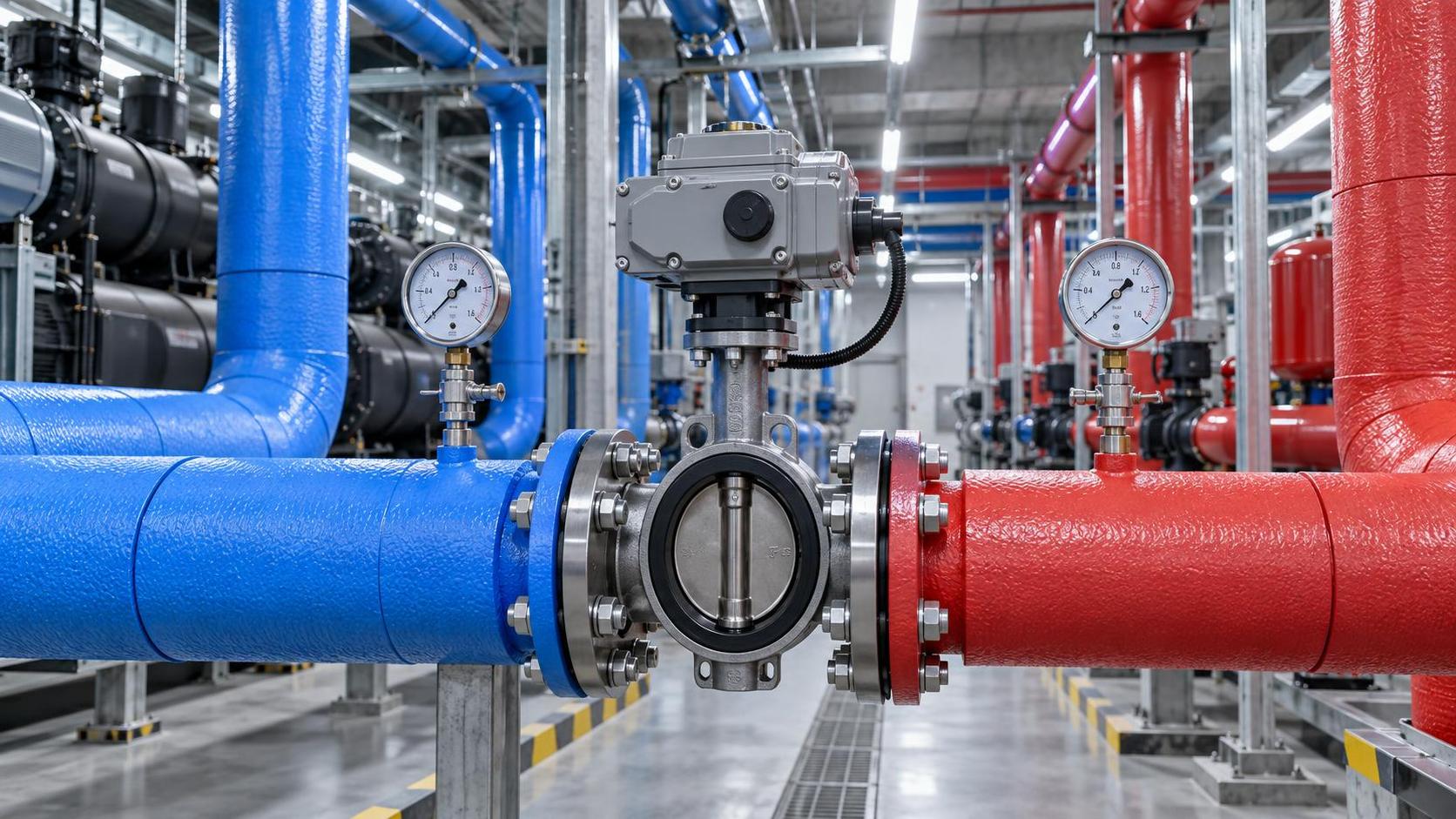
Butterfly valves wafer type present unique challenges: their elastomer seat integrity degrades rapidly under prolonged pressure. Suppliers claiming “1.5× tested” often apply pressure for just 2–3 minutes—sufficient to verify gross leakage but insufficient to detect seat extrusion or hinge creep. Meanwhile, solenoid valves wholesale for hazardous area control must comply with IEC 60079-15, mandating 30-minute dielectric and pressure hold tests at 1.5× rated voltage and pressure—yet fewer than 11% of mid-tier distributors publish full test reports.
This table underscores a key procurement insight: duration isn’t a footnote—it’s a functional performance indicator. When sourcing globe valves wholesale for boiler feed lines, insist on documented 5-minute hold records—not just pass/fail stamps. For safety relief valves in ammonia refrigeration, demand full 10-minute test logs traceable to individual serial numbers. Global Industrial Core validates these records against third-party calibration labs accredited to ISO/IEC 17025.
What Procurement Teams Should Demand—Beyond the Datasheet
Procurement professionals cannot rely on supplier-provided test summaries alone. Six verifiable data points must accompany every valve order for high-consequence applications:
- Exact test duration (in minutes, not ranges)
- Test medium temperature (±2°C tolerance)
- Pressure ramp rate (e.g., ≤10 bar/min per ASME B16.34)
- Leakage measurement method (bubble test, mass spectrometer, ultrasonic)
- Witnessed-by clause (third-party inspector name, accreditation number)
- Traceability to specific heat lot and forging ID
Without these, procurement defaults to risk transfer—not risk mitigation. GIC’s 2024 Supplier Audit Report found that facilities requiring all six items reduced post-installation valve-related NCRs (non-conformance reports) by 68% versus those accepting generic “1.5× tested” statements. For facility managers overseeing aging infrastructure, this translates to extending mean time between failures (MTBF) from 42 months to 79 months on average.
We recommend embedding these requirements into RFQ templates and purchase order terms—not as optional addenda, but as mandatory acceptance criteria. Global Industrial Core provides procurement teams with editable compliance checklists aligned to ISO 9001:2015 Clause 8.4.2 and ASME QA-1.
How GIC Validates Real-World Test Integrity
Global Industrial Core doesn’t accept test reports at face value. Our validation protocol includes three layers of verification:
- Document Forensics: Cross-referencing timestamps, calibration certificate expiry dates, and pressure transducer model numbers against lab accreditation scope.
- Material Correlation: Matching chemical composition (PMI report) and tensile strength (ASTM E8) to the exact test temperature and duration applied.
- Operational Benchmarking: Comparing reported test duration against field performance KPIs—e.g., valves tested ≥8 minutes show 53% lower stem packing leakage in steam service after 12 months.
This approach has uncovered inconsistencies in 19% of supplier-submitted documentation—most commonly mismatched calibration dates (up to 112 days expired) and unverified pressure sensor drift (±4.7% error). For EPC contractors managing multi-year project schedules, such findings prevent costly rework and schedule slippage averaging 2.3 weeks per valve package.
These metrics inform our proprietary Valve Integrity Index™—a scoring system used by 37 Fortune 500 industrial clients to rank supplier reliability. It transforms subjective claims into objective, auditable benchmarks.
Actionable Next Steps for Your Procurement Process
Clarity starts with specification. Update your next RFQ to require explicit test duration language—not “1.5× tested”, but “hydrostatically tested at 1.5× rated working pressure for 5 minutes per ISO 5208, with recorded start/end timestamps and certified pressure decay ≤0.5%.”
For immediate impact, request GIC’s free Valve Test Duration Compliance Checklist, which includes clause-specific wording for ASME, API, ISO, and PED applications. We also offer on-demand technical review of supplier test reports—with turnaround in under 72 business hours.
Industrial infrastructure demands more than compliance—it demands confidence. When every valve represents a potential point of failure, measured precision in validation isn’t optional. It’s foundational.
Contact Global Industrial Core today to align your procurement protocols with metrology-grade verification—and build infrastructure that performs as promised, cycle after cycle.
Technical Specifications
- How to Select Electronic Hotel Key Card Locks for Guest Rooms and Staff AreasAuthor :Safety Compliance Lead
- How to Select Lab Instruments for Reliable Chemical Analysis WorkflowsAuthor :Precision Metrology Expert
- How to Size a UPS for Server Rooms: Load, Runtime, and Redundancy FactorsAuthor :Grid Infrastructure Analyst
Expert Insights

Chief Security Architect
Dr. Thorne specializes in the intersection of structural engineering and digital resilience. He has advised three G7 governments on industrial infrastructure security.
Related Analysis
- Sep 17, 2026How to Select Electronic Hotel Key Card Locks for Guest Rooms and Staff AreasAuthor :Safety Compliance Lead
- Sep 16, 2026How to Select Lab Instruments for Reliable Chemical Analysis WorkflowsAuthor :Precision Metrology Expert
- Sep 15, 2026How to Size a UPS for Server Rooms: Load, Runtime, and Redundancy FactorsAuthor :Grid Infrastructure Analyst
Core Sector // 01
Security & Safety
- How to Size a Wafer Butterfly Valve for HVAC Chilled-Water and Heating LoopsAuthor :Environmental Engineering Director

- How Pressure Class and Joint Design Affect Long-Term Performance of Ductile Iron Pipes in Drainage InfrastructureAuthor :Environmental Engineering Director

- How Ductile Iron Pipe Joints Affect Installation Reliability and Leak ControlAuthor :Environmental Engineering Director

- How to Size Effluent Treatment Equipment for Variable Industrial Wastewater LoadsAuthor :Environmental Engineering Director

- US Battery Push Raises New Entry Rules for SuppliersAuthor :Environmental Engineering Director

- EU EMC Rule Tightens for Water Treatment ExportsAuthor :Environmental Engineering Director

- EU REACH Restriction Targets PFAS Water Treatment ImportsAuthor :Environmental Engineering Director

- EU Mandates EN 14113:2026 for Water Treatment ExportsAuthor :Environmental Engineering Director