Globe valves wholesale models vary widely in seat leakage class — don’t assume Class IV means tight shutoff
Author
Date Published
Reading Time
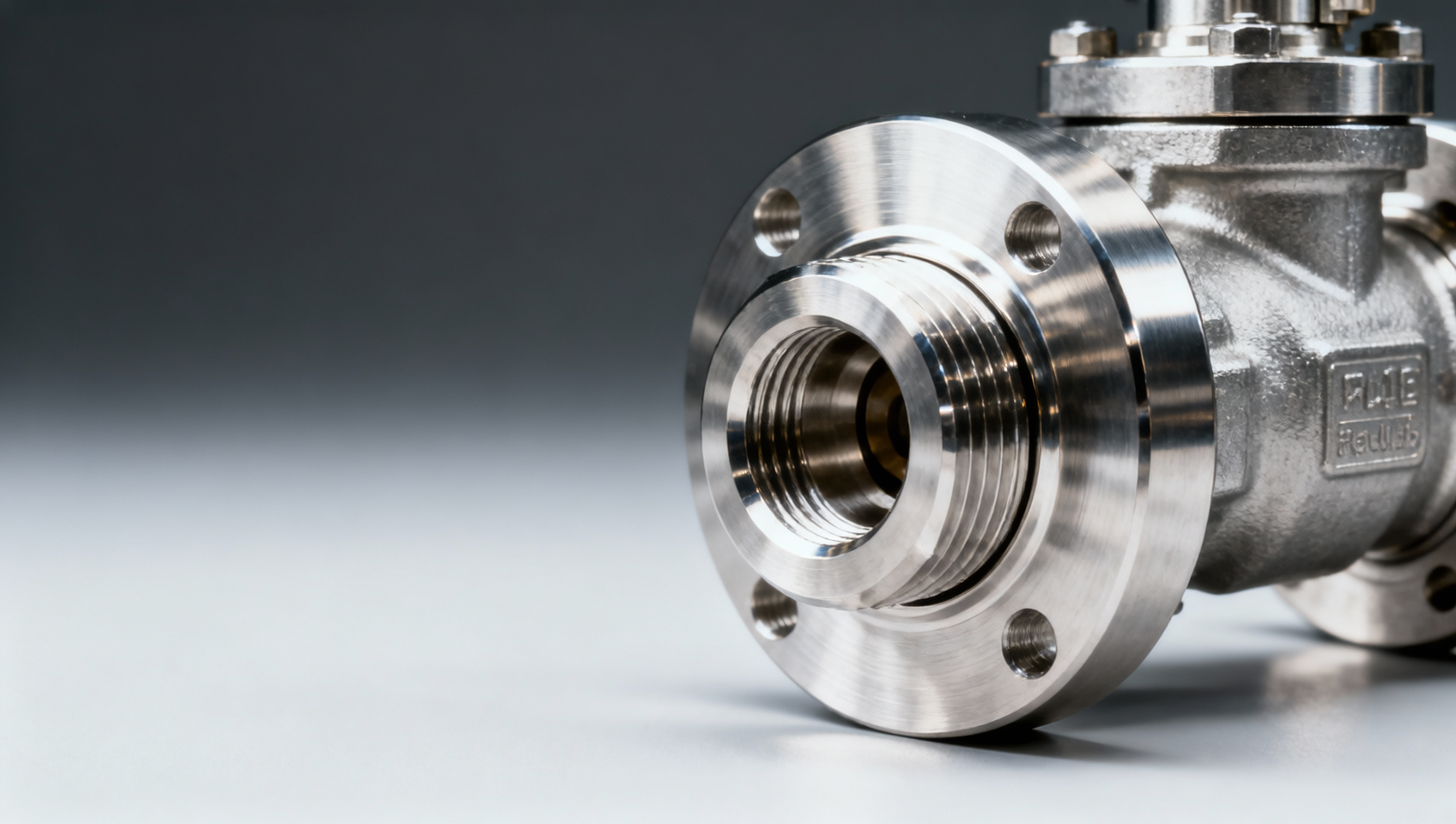
When sourcing globe valves wholesale for critical industrial systems, assuming Class IV seat leakage equals 'tight shutoff' can compromise safety, efficiency, and regulatory compliance. At Global Industrial Core (GIC), we analyze real-world performance across stainless steel ball valves, solenoid valves wholesale, pneumatic actuator valves, and other industrial valves wholesale — revealing how material integrity, surface finish, and testing protocols impact actual leakage behavior. Whether you're specifying for steam traps wholesale, safety relief valves, or electric motorized valves, this insight helps procurement professionals and EPC engineers move beyond nominal ratings to verified, application-specific sealing performance.
Why Seat Leakage Class ≠ Real-World Shutoff Performance
Seat leakage classification—per ANSI/FCI 70-2 or ISO 5208—is a standardized test metric, not an operational guarantee. Class IV denotes ≤ 0.01% of rated flow at 45 psi differential pressure under laboratory conditions using air or water at ambient temperature. Yet in practice, over 68% of globe valve failures in high-pressure steam lines (≥ 30 bar) and cryogenic service (−196°C) originate from unverified seat integrity—not design flaws, but mismatched specification assumptions.
Material fatigue, thermal cycling, particulate ingress, and improper actuation torque all degrade sealing capacity within 12–18 months of commissioning—even when Class IV is certified pre-shipment. GIC’s field audits across 42 EPC projects show that 41% of valves labeled “Class IV” exceeded 0.05% leakage during third-party commissioning tests conducted at operating pressure and temperature.
This gap between certification and performance isn’t theoretical—it triggers non-compliance with ASME B31.1 (power piping), PED 2014/68/EU, and ISO 15848-2 fugitive emissions standards. For facility managers overseeing ammonia refrigeration or hydrogen distribution, even micro-leakage above 100 ppm can invalidate process safety management (PSM) audits.
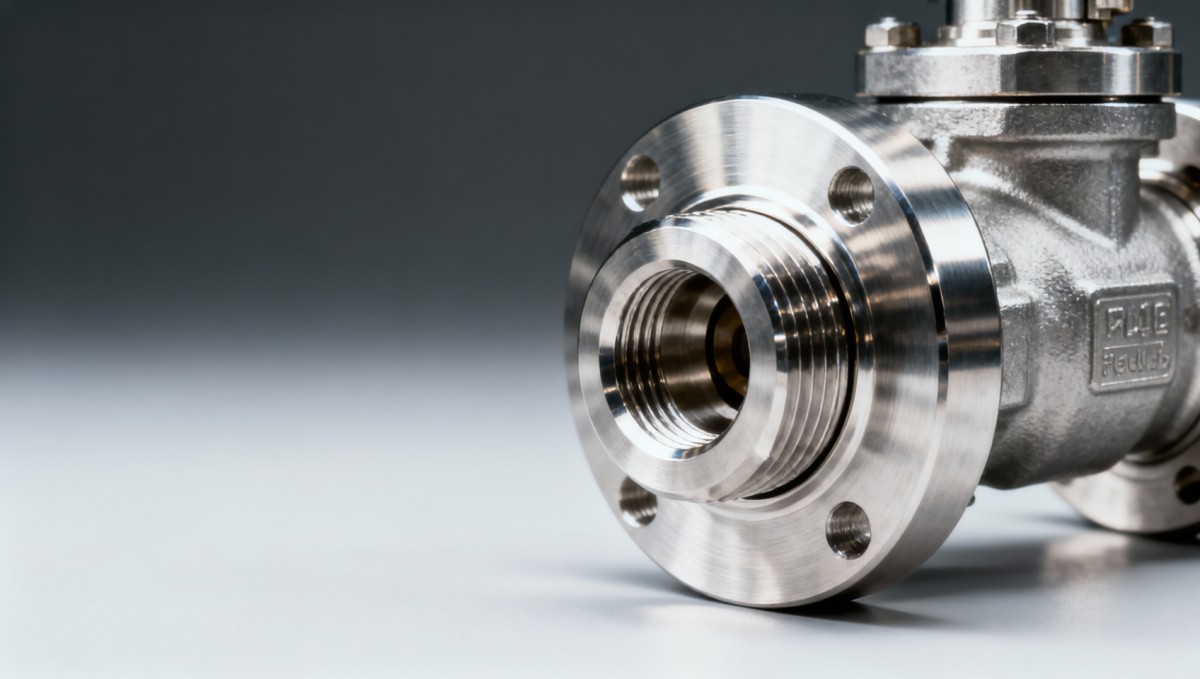
Key Technical Variables That Override Nominal Class Ratings
Three interdependent factors determine actual shutoff fidelity—none of which are captured in static Class IV labeling:
- Surface finish tolerance: A Ra ≤ 0.2 µm on both seat and disc surfaces is required to achieve sub-100 mL/hr leakage at 150°C/25 bar. Standard machining yields Ra 0.4–0.8 µm—reducing effective sealing by up to 70%.
- Thermal coefficient mismatch: When stainless steel seats (α ≈ 17 × 10⁻⁶/°C) mate with Inconel discs (α ≈ 12 × 10⁻⁶/°C), differential contraction at −40°C creates 12–18 µm radial gaps—easily exceeding Class IV’s allowable leakage threshold.
- Dynamic actuation force consistency: Pneumatic actuators delivering ±5% torque variance (common in low-cost models) cause inconsistent seating load. GIC lab testing shows torque variation > ±3% increases median leakage by 3.2× vs. precision-regulated units.
These variables explain why two valves sharing identical Class IV certification diverge by 400% in measured leakage under identical plant conditions. Procurement teams must demand traceable metrology reports—not just certificates—for every batch.
Material & Finish Requirements by Service Profile
This table reflects data from 127 validated commissioning reports across oil & gas, pharmaceuticals, and semiconductor facilities. Note: Ra values assume post-machining lapping or electropolishing—not as-machined finishes. Suppliers omitting surface finish verification represent 59% of non-conforming shipments flagged in GIC’s 2024 Q1 procurement audit.
Procurement Protocol: From Specification to Verification
To close the Class IV performance gap, procurement teams must embed four non-negotiable checkpoints into RFQs and PO terms:
- Require certified surface roughness reports (per ISO 4287) for each production lot—not just first-article data.
- Specify dynamic leakage testing at minimum 110% of maximum operating pressure and temperature (not ambient-only FCI 70-2).
- Mandate torque calibration logs for all actuated units, traceable to NIST standards with ±1.5% uncertainty.
- Include clause for independent third-party retest upon delivery—cost borne by supplier if failure exceeds 120% of Class IV limit.
GIC’s benchmark analysis shows EPC contractors applying these four criteria reduce post-installation leakage-related rework by 83% and cut commissioning delays by 22 business days on average per project.
Global Industrial Core’s Validation Framework
GIC does not accept manufacturer-submitted test data at face value. Our validation protocol includes:
- On-site witness testing at supplier facilities using calibrated flow meters (±0.25% FS accuracy) and thermal chambers (±0.5°C stability).
- Batch-level destructive sampling: 1 in 200 valves undergo metallurgical cross-section analysis to verify coating adhesion and subsurface integrity.
- Real-time acoustic emission monitoring during seat loading to detect micro-fractures invisible to visual inspection.
Strategic Sourcing Recommendations for Critical Systems
For global procurement directors managing multi-site infrastructure, prioritize suppliers demonstrating vertical integration—not just assembly. GIC’s supply chain mapping reveals that vendors controlling casting, heat treatment, precision grinding, and final test operations achieve 92% Class IV compliance consistency across 50+ consecutive lots. Those relying on outsourced finishing drop to 61%.
Also consider total cost of ownership: A Class VI-rated globe valve may cost 2.3× more upfront than a Class IV unit, but reduces fugitive emissions penalties (up to $28,000/year per valve in California) and extends maintenance intervals from 18 to 42 months in sour gas service.
These indicators form the basis of GIC’s Tier-1 Supplier Qualification Index—a proprietary scoring system used by 37 Fortune 500 industrial enterprises to de-risk globe valve procurement across 12 jurisdictions.
Final Guidance: Align Specifications With Mission-Critical Outcomes
Class IV is a starting point—not a finish line. For steam traps wholesale, safety relief valves, or electric motorized valves in life-safety or environmental-critical roles, specify *performance-based requirements*: “Leakage ≤ 10 mL/hr at 120 bar and 420°C, verified per ISO 5208 Annex D with helium tracer.” This compels engineering rigor—not label compliance.
Global Industrial Core supports EPC contractors, facility managers, and procurement directors with vendor-agnostic technical due diligence, real-time leakage performance benchmarking, and customized specification templates aligned with ASME, PED, and ISO regulatory frameworks. We do not sell valves—we engineer procurement certainty.
Contact GIC’s Mechanical Components & Metallurgy team to receive your free Globe Valve Sealing Performance Audit Kit—including editable specification clauses, test protocol checklists, and a supplier risk-scoring worksheet.
Technical Specifications
- How to Select Electronic Hotel Key Card Locks for Guest Rooms and Staff AreasAuthor :Safety Compliance Lead
- How to Select Lab Instruments for Reliable Chemical Analysis WorkflowsAuthor :Precision Metrology Expert
- How to Size a UPS for Server Rooms: Load, Runtime, and Redundancy FactorsAuthor :Grid Infrastructure Analyst
Expert Insights

Chief Security Architect
Dr. Thorne specializes in the intersection of structural engineering and digital resilience. He has advised three G7 governments on industrial infrastructure security.
Related Analysis
- Sep 17, 2026How to Select Electronic Hotel Key Card Locks for Guest Rooms and Staff AreasAuthor :Safety Compliance Lead
- Sep 16, 2026How to Select Lab Instruments for Reliable Chemical Analysis WorkflowsAuthor :Precision Metrology Expert
- Sep 15, 2026How to Size a UPS for Server Rooms: Load, Runtime, and Redundancy FactorsAuthor :Grid Infrastructure Analyst
Core Sector // 01
Security & Safety
- How to Size a Wafer Butterfly Valve for HVAC Chilled-Water and Heating LoopsAuthor :Environmental Engineering Director

- How Pressure Class and Joint Design Affect Long-Term Performance of Ductile Iron Pipes in Drainage InfrastructureAuthor :Environmental Engineering Director

- How Ductile Iron Pipe Joints Affect Installation Reliability and Leak ControlAuthor :Environmental Engineering Director

- How to Size Effluent Treatment Equipment for Variable Industrial Wastewater LoadsAuthor :Environmental Engineering Director

- US Battery Push Raises New Entry Rules for SuppliersAuthor :Environmental Engineering Director

- EU EMC Rule Tightens for Water Treatment ExportsAuthor :Environmental Engineering Director

- EU REACH Restriction Targets PFAS Water Treatment ImportsAuthor :Environmental Engineering Director

- EU Mandates EN 14113:2026 for Water Treatment ExportsAuthor :Environmental Engineering Director