Industrial Infrastructure Equipment Cost: What Drives Budget, Installation, and Lifecycle Spend?
Author
Date Published
Reading Time
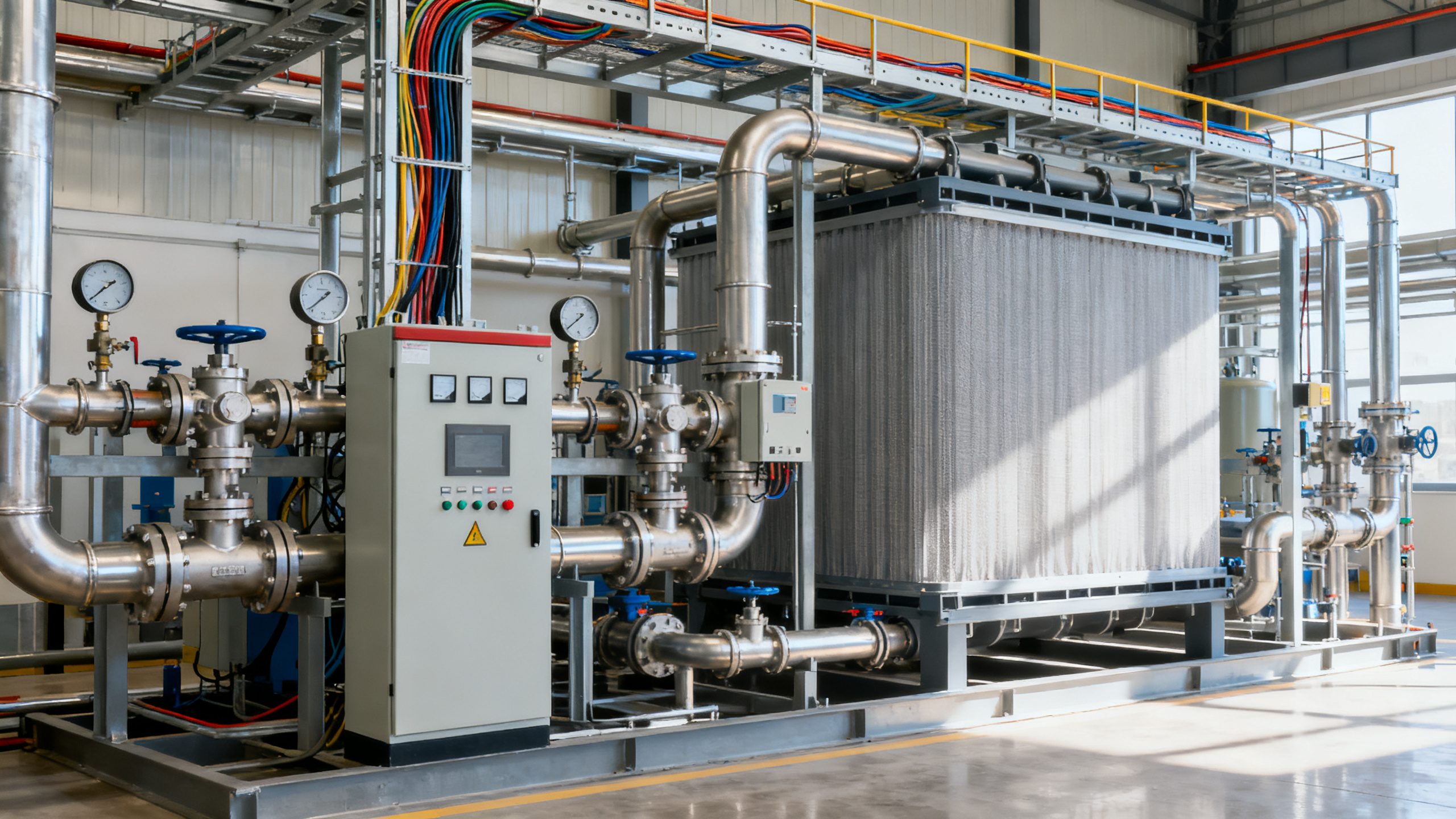
Why does industrial infrastructure equipment cost rarely match the quoted unit price?
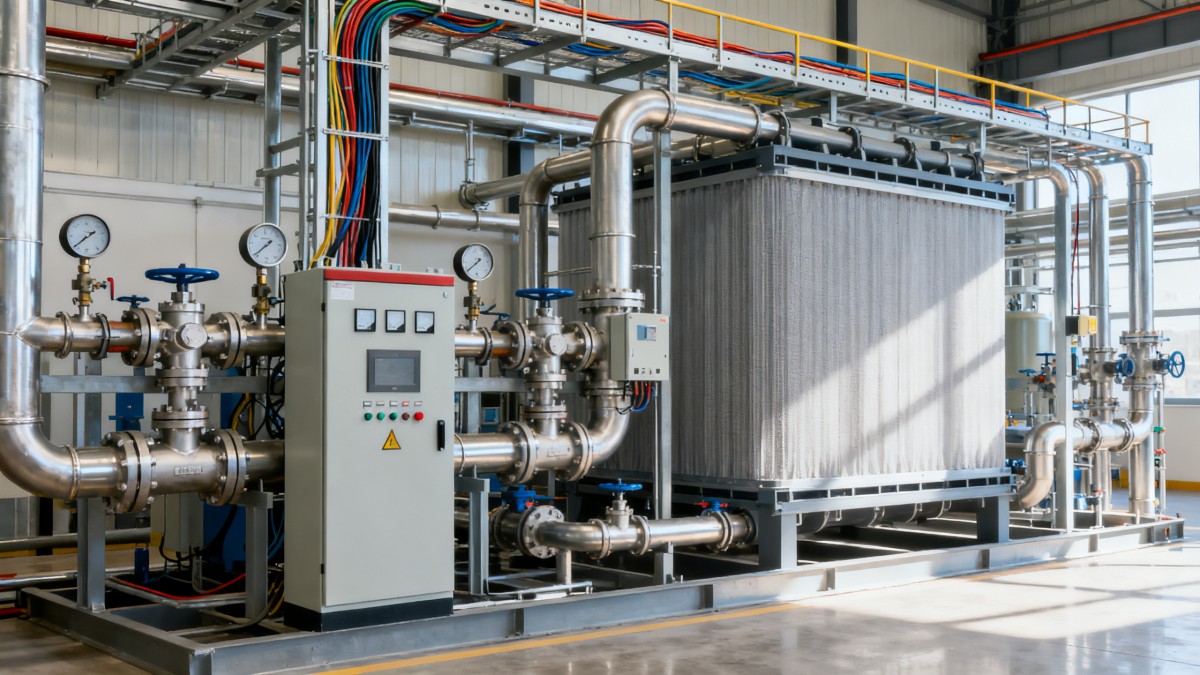
Industrial infrastructure equipment cost usually starts with a visible number and ends with a much larger budget discussion.
That gap exists because infrastructure purchases carry design, installation, certification, commissioning, and service consequences that ordinary equipment buying does not.
In practical terms, a switchgear package, emission control unit, flow instrument network, or metallurgical component can look affordable at first glance.
The real spend appears once site conditions, utility interfaces, labor constraints, and compliance obligations are added to the calculation.
This is why industrial infrastructure equipment cost should be treated as a lifecycle question, not a line-item price check.
Across heavy industry, the budget is often shaped by five cost layers:
- Base equipment and core materials
- Engineering adaptation to the facility
- Safety, CE, UL, ISO, and testing documentation
- Installation, commissioning, and startup risk
- Maintenance, spare parts, and downtime exposure
Global Industrial Core often frames cost analysis this way because foundational systems fail expensively, not cheaply.
A lower purchase price can still produce a higher total cost when reliability, environmental compliance, or measurement accuracy fall short.
Which specification choices move the budget the most?
Not every specification change matters equally. Some barely affect spending. Others alter industrial infrastructure equipment cost by double-digit percentages.
Material grade is one of the first drivers. Corrosive, abrasive, high-temperature, or outdoor environments push buyers toward stainless steel, coated alloys, or specialty metallurgy.
That decision improves service life, but it also increases fabrication cost, lead time, and repair complexity.
Accuracy requirements have a similar effect. In instruments and measurement systems, tighter tolerances usually mean better sensors, calibration protocols, and traceability records.
Those are justified in critical applications, but not every utility line needs laboratory-grade performance.
Electrical ratings also reshape cost quickly. Higher fault capacity, redundant feeders, arc-flash mitigation, and grid resilience features improve protection.
They also expand enclosure size, cable requirements, and testing scope.
A useful question is not, “What is the best specification?”
A better one is, “Which specification is required by process risk, regulation, and operating environment?”
That distinction keeps industrial infrastructure equipment cost aligned with business risk instead of engineering preference alone.
A quick budget screen before approval
This kind of table is especially useful when multiple technical teams request premium features for different reasons.
How much of industrial infrastructure equipment cost comes from installation and commissioning?
Often more than expected. For many infrastructure assets, installation and commissioning consume a meaningful share of total project spend.
The ratio changes by equipment type. A modular instrument skid installs differently from a large environmental treatment system or a power distribution upgrade.
Still, the same pattern appears repeatedly. Equipment that looks standardized on paper becomes site-specific once it meets real utilities, foundations, clearances, and shutdown windows.
Installation cost usually rises when any of the following are true:
- The site needs civil reinforcement or structural changes
- Existing systems are undocumented or poorly mapped
- Tie-ins must occur during short shutdown periods
- Hazardous area rules add labor controls and permits
- Commissioning needs third-party validation or witness testing
A common mistake is approving the equipment budget before installation assumptions are mature.
That is where industrial infrastructure equipment cost starts drifting, because field reality replaces early spreadsheet logic.
A stronger approach is to request three separate figures during approval:
- Delivered equipment cost
- Installed cost under current site assumptions
- Contingency for commissioning delays or scope discovery
That separation improves control and makes later variances easier to explain.
Where do compliance, safety, and environmental rules change the financial picture?
They change it early and often. Industrial infrastructure equipment cost is heavily influenced by the standards environment surrounding the project.
CE, UL, ISO, emissions thresholds, pressure directives, electrical codes, and local permitting rules all shape specification and documentation effort.
In some projects, compliance is a clear checklist. In others, it drives redesign, retesting, or supplier changes halfway through procurement.
That is why data quality matters. GIC’s editorial model is useful here because verified technical interpretation helps separate mandatory requirements from inherited over-specification.
There is also a timing issue. Compliance costs are cheaper when included in design, and much more expensive when added after vendor selection.
The same is true for environmental and ecology obligations. Filtration, wastewater handling, noise control, and monitoring systems are rarely optional once operating permits are involved.
When these factors are missed, industrial infrastructure equipment cost can escalate through change orders, schedule loss, and external review fees.
A practical checkpoint is to ask whether the project budget includes:
- Certification and document package review
- Factory acceptance or site acceptance testing
- Permit-related modifications
- Operator training and procedural updates
If those lines are missing, the budget is probably incomplete.
Is the cheaper option really cheaper over the lifecycle?
Sometimes yes, often no. The answer depends on how the asset affects uptime, safety exposure, maintenance labor, and replacement intervals.
Industrial infrastructure equipment cost should be compared against lifecycle spend, especially for assets supporting production continuity.
A lower-cost valve assembly, sensor network, cable system, or dust-control component may save capital today.
If it fails early or requires frequent calibration, the operating budget absorbs the difference later.
The more critical the asset, the less useful purchase price becomes as a standalone decision metric.
A simple lifecycle screen usually covers these areas:
- Expected service life under actual duty conditions
- Cost and availability of spare parts
- Maintenance hours and specialist skill requirements
- Energy use, media consumption, or waste handling cost
- Revenue loss or contractual exposure during downtime
This is where industrial infrastructure equipment cost becomes a strategic finance issue rather than a procurement comparison alone.
In heavy industrial settings, one unplanned stoppage can erase the savings from selecting the lowest bidder.
What usually gets missed before approval, and how can it be checked fast?
The most common gap is not price. It is incomplete scope.
Industrial infrastructure equipment cost is often underestimated when reviews focus on equipment lists but skip interfaces, documentation, and operating consequences.
Several warning signs appear repeatedly in delayed or over-budget projects:
- Vendor quotes exclude commissioning support
- Lead times assume standard materials despite aggressive environments
- Compliance responsibilities are split across parties without ownership
- Integration with legacy controls or power systems is loosely defined
- Maintenance access is ignored during layout review
A fast approval check does not need to be long. It needs to be disciplined.
When these answers are documented early, budget approval becomes more resilient and far easier to defend later.
So how should industrial infrastructure equipment cost be evaluated before the next commitment?
The clearest answer is to treat cost as a chain of decisions, not a single quotation event.
Industrial infrastructure equipment cost is shaped by specification discipline, installation reality, standards compliance, and lifecycle exposure.
When one of those elements is ignored, the budget usually reappears elsewhere as delay, rework, maintenance, or lost output.
A practical next step is to review each planned purchase across four lines: delivered price, installed price, compliance burden, and operating risk.
Then compare options against actual site conditions instead of generic catalog assumptions.
Where technical uncertainty is high, independent, standards-aware analysis is worth adding before final approval.
That is especially true for assets tied to safety, measurement accuracy, power continuity, environmental control, and critical mechanical performance.
The strongest decisions usually come from a simple discipline: define the duty, verify the standards, stress-test the installation assumptions, and price the full lifecycle.
That is how industrial infrastructure equipment cost becomes predictable enough to support confident capital planning.
Technical Specifications
- Air Handling Unit Supplier Checklist: Performance Data, Lead Times, and SupportAuthor :Environmental Engineering Director
- Buying Fiberglass Water Tanks Wholesale: Compare Quotes and Delivery CostsAuthor :Environmental Engineering Director
- Choosing an XLPE Power Cable Supplier: Test Reports, Traceability, and Lead TimesAuthor :Grid Infrastructure Analyst
Expert Insights

Chief Security Architect
Dr. Thorne specializes in the intersection of structural engineering and digital resilience. He has advised three G7 governments on industrial infrastructure security.
Related Analysis
- Oct 19, 2026Air Handling Unit Supplier Checklist: Performance Data, Lead Times, and SupportAuthor :Environmental Engineering Director
- Oct 18, 2026Buying Fiberglass Water Tanks Wholesale: Compare Quotes and Delivery CostsAuthor :Environmental Engineering Director
- Oct 17, 2026Choosing an XLPE Power Cable Supplier: Test Reports, Traceability, and Lead TimesAuthor :Grid Infrastructure Analyst
Core Sector // 01
Security & Safety
- Choosing a Step-Down Transformer Supplier: Test Reports, Lead Times, and WarrantyAuthor :Grid Infrastructure Analyst

- Metallurgy Processes That Improve Conductivity and Reliability in Power Grid ComponentsAuthor :Grid Infrastructure Analyst

- How to Size a UPS for Server Rooms: Load, Runtime, and Redundancy FactorsAuthor :Grid Infrastructure Analyst

- How to Choose a Step-Down Transformer for a Control Panel: Key Sizing FactorsAuthor :Grid Infrastructure Analyst

- How Often Should Overseas Power Systems Undergo Safety Inspections?Author :Grid Infrastructure Analyst

- How to Choose Panels for Extreme-Cold Industrial Sites?Author :Grid Infrastructure Analyst

- What Should a Cross-Border EPC Equipment Procurement Reference Include?Author :Grid Infrastructure Analyst

- How to Compare Low-Voltage Equipment for Panel IntegrationAuthor :Grid Infrastructure Analyst