RCEP Certificate Issuance Up 23.6%; Faster Clearance for Cables & Relays to ASEAN
Author
Date Published
Reading Time
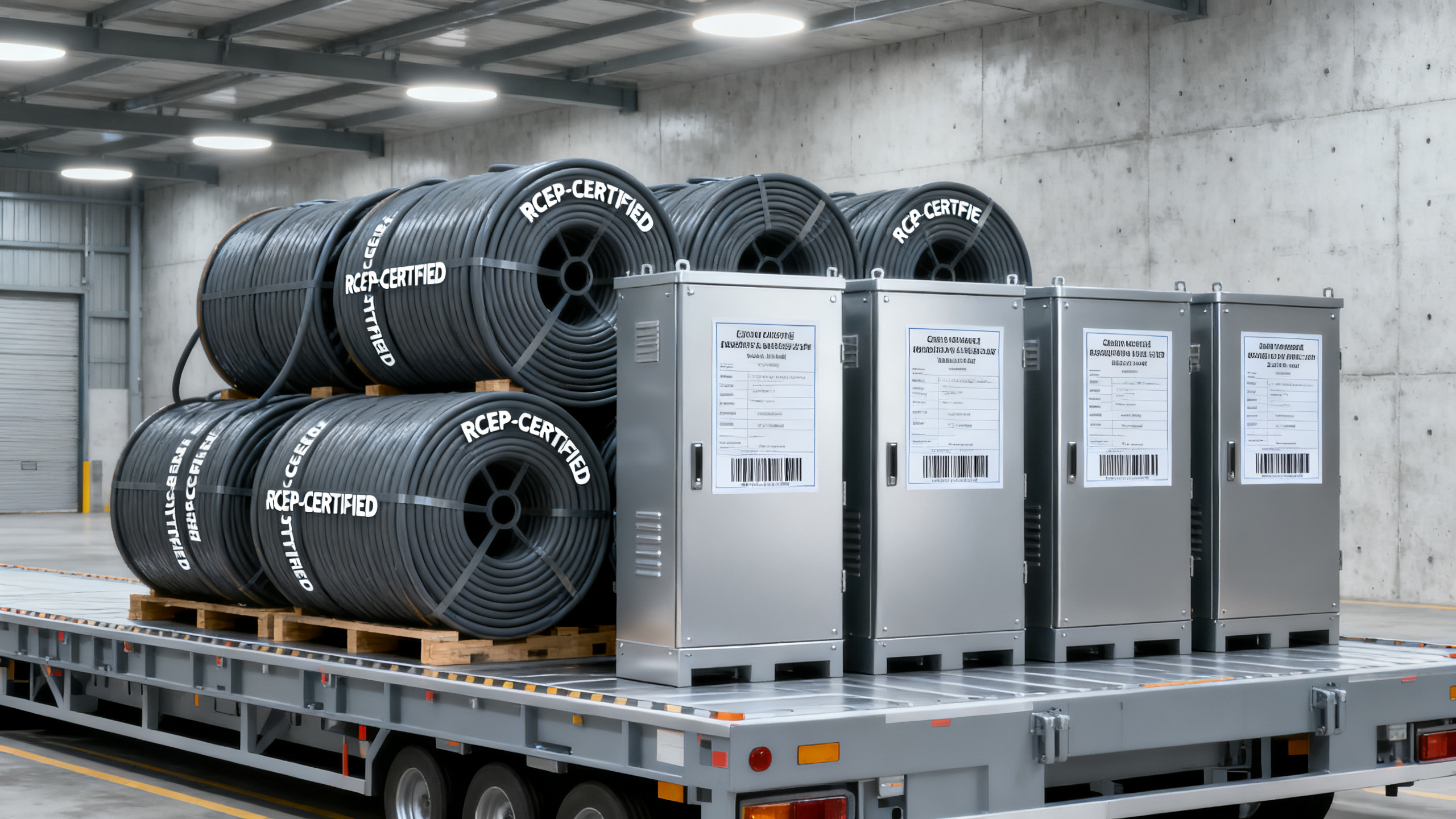
On 29 April 2026, new data revealed that RCEP preferential origin certification for industrial electrical products—particularly cables and wiring, breakers and relays—has accelerated customs clearance across ASEAN markets, driven by regulatory shifts including Thailand’s termination of EV import exemptions.
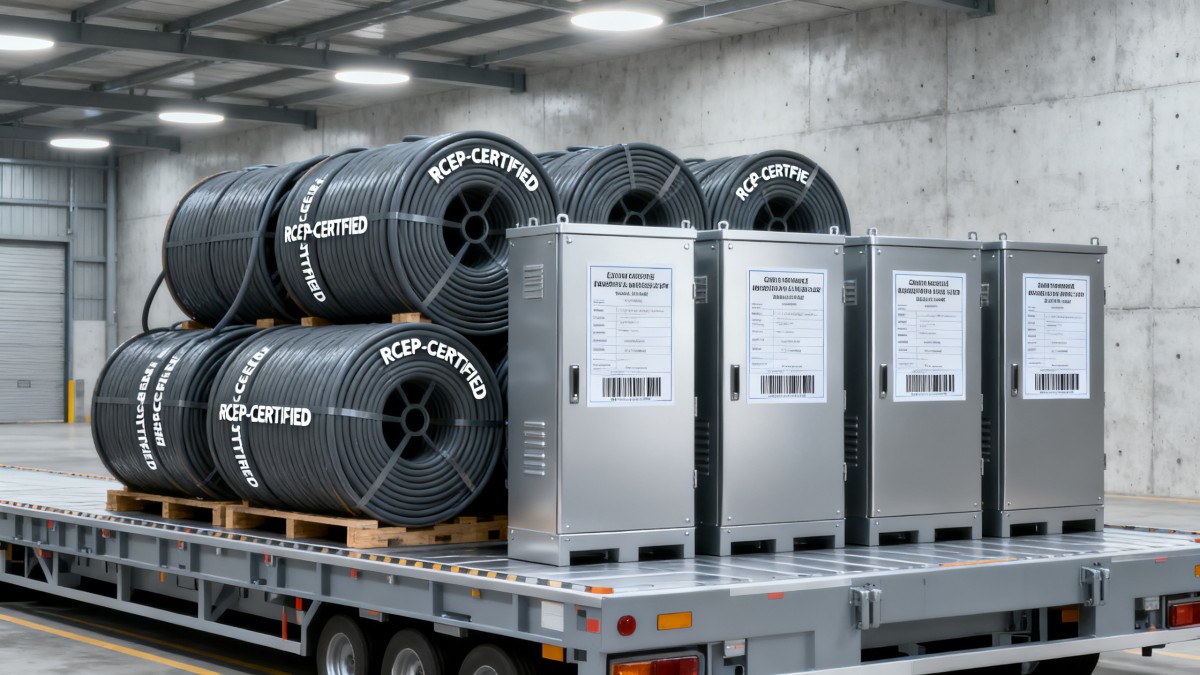
RCEP Origin Certification Growth and Regulatory Shifts
In Q1 2026, the China Council for the Promotion of International Trade (CCPIT) issued RCEP preferential origin certificates totaling USD 237.4 million, a 12.04% year-on-year increase. Certificates for Cables & Wiring and Breakers & Relays showed notably higher share growth. Concurrently, Thailand ended its EV import exemption policy, lowering entry requirements for traditional industrial electrical goods in ASEAN. Average customs clearance time for these products decreased by 2.3 working days.
Impact Across Supply Chain Roles
Direct Exporters
Exporters of cables, wiring, breakers, and relays benefit from faster ASEAN clearance and expanded tariff preferences under RCEP. This affects shipment scheduling, duty cost forecasting, and post-clearance compliance reporting.
Raw Material Procurement Firms
With rising demand for RCEP-eligible exports, procurement teams must verify supplier declarations on regional value content (RVC) and origin documentation traceability—especially for insulated conductors and electromagnetic relay components.
Manufacturing Enterprises
Producers face heightened scrutiny on production records and bill-of-materials alignment with RCEP origin criteria. Compliance readiness now directly influences certificate issuance speed and eligibility for preferential tariffs.
Supply Chain Service Providers
Freight forwarders and customs brokers report increased requests for RCEP origin advisory services, particularly for multi-country assembly scenarios involving China–Vietnam–Malaysia supply chains. Documentation accuracy is now critical to avoid clearance delays.
Key Operational Priorities for Enterprises
Verify Product-Specific RCEP Tariff Classification and Origin Rules
Cables & Wiring and Breakers & Relays fall under distinct HS codes with varying regional value content thresholds; enterprises must confirm correct classification and maintain supporting manufacturing cost records.
Update Technical Documentation for ASEAN Market Entry
With Thailand’s EV exemption removal, non-EV industrial electrical products face fewer overlapping regulatory layers—but technical standards (e.g., TISI for Thailand, SIRIM for Malaysia) remain mandatory and require up-to-date test reports and labeling compliance.
Optimize Certificate Application Timing and Workflow Integration
Average clearance acceleration of 2.3 days assumes timely certificate submission. Firms should integrate CCPIT e-certification platforms into ERP or export management systems to reduce lead time between shipment and certificate issuance.
Monitor ASEAN Member State Implementation Variations
While RCEP rules are harmonized, national customs authorities apply verification protocols differently. Indonesia and the Philippines have recently tightened post-clearance audits for electrical goods—warranting proactive internal audit readiness.
Industry Observation: Beyond Tariff Reduction
Analysis shows this trend reflects a broader recalibration of ASEAN market access: as EV-specific incentives phase out, conventional industrial electrical equipment gains relative advantage—not through new concessions, but via reduced regulatory friction and more predictable certification pathways. What deserves closer attention is how RCEP’s origin cumulation provisions may enable Chinese manufacturers to source qualified components from Vietnam or Thailand while retaining full preferential treatment—a shift that could reshape sourcing strategies over the next 12–18 months.
Strategic Implications for Industrial Electrical Trade
This development signals a maturing phase in RCEP implementation: preferential access is no longer theoretical but operationally tangible for mid-tier industrial goods. However, speed gains remain contingent on documentation precision—not just volume growth. Sustainable advantage will accrue to firms embedding origin compliance into design, procurement, and production—not treating it as a final-step administrative task.
Source Attribution and Verification Notes
This article synthesizes the user-provided title, event date (29 April 2026), and summary. It draws exclusively on the stated facts: Q1 2026 CCPIT RCEP certificate issuance value (USD 237.4 million, +12.04% YoY), elevated share for Cables & Wiring and Breakers & Relays, Thailand’s EV import exemption termination, and the resulting 2.3-working-day reduction in average clearance time. Specific official source links were not provided in the input and should be verified continuously. Ongoing monitoring is advised for ASEAN national customs circulars, updated RCEP origin verification guidelines, and tender specification revisions affecting industrial electrical procurement.
Technical Specifications
- How to Select Electronic Hotel Key Card Locks for Guest Rooms and Staff AreasAuthor :Safety Compliance Lead
- How to Select Lab Instruments for Reliable Chemical Analysis WorkflowsAuthor :Precision Metrology Expert
- How to Size a UPS for Server Rooms: Load, Runtime, and Redundancy FactorsAuthor :Grid Infrastructure Analyst
Expert Insights

Chief Security Architect
Dr. Thorne specializes in the intersection of structural engineering and digital resilience. He has advised three G7 governments on industrial infrastructure security.
Related Analysis
- Sep 17, 2026How to Select Electronic Hotel Key Card Locks for Guest Rooms and Staff AreasAuthor :Safety Compliance Lead
- Sep 16, 2026How to Select Lab Instruments for Reliable Chemical Analysis WorkflowsAuthor :Precision Metrology Expert
- Sep 15, 2026How to Size a UPS for Server Rooms: Load, Runtime, and Redundancy FactorsAuthor :Grid Infrastructure Analyst
Core Sector // 01
Security & Safety
- How to Select Electronic Hotel Key Card Locks for Guest Rooms and Staff AreasAuthor :Safety Compliance Lead

- How to Select Lab Instruments for Reliable Chemical Analysis WorkflowsAuthor :Precision Metrology Expert

- How to Size a UPS for Server Rooms: Load, Runtime, and Redundancy FactorsAuthor :Grid Infrastructure Analyst

- Stainless Steel Welded Tube Applications: Matching Tube Supply to Fabrication NeedsAuthor :Heavy Industry Strategist

- Selecting Low-Friction Pneumatic Seals for High-Cycle, Low-Pressure CylindersAuthor :Heavy Industry Strategist

- Selecting Spherical Roller Bearings for Mining: Load, Contamination, and Service LifeAuthor :Heavy Industry Strategist

- What to Check When Sourcing Vibration Meters Wholesale for Industrial MaintenanceAuthor :Precision Metrology Expert

- How to Size a Wafer Butterfly Valve for HVAC Chilled-Water and Heating LoopsAuthor :Environmental Engineering Director