FCC Expands Supply Chain Restrictions: New Module Certification for US-Bound Security Devices
Author
Date Published
Reading Time
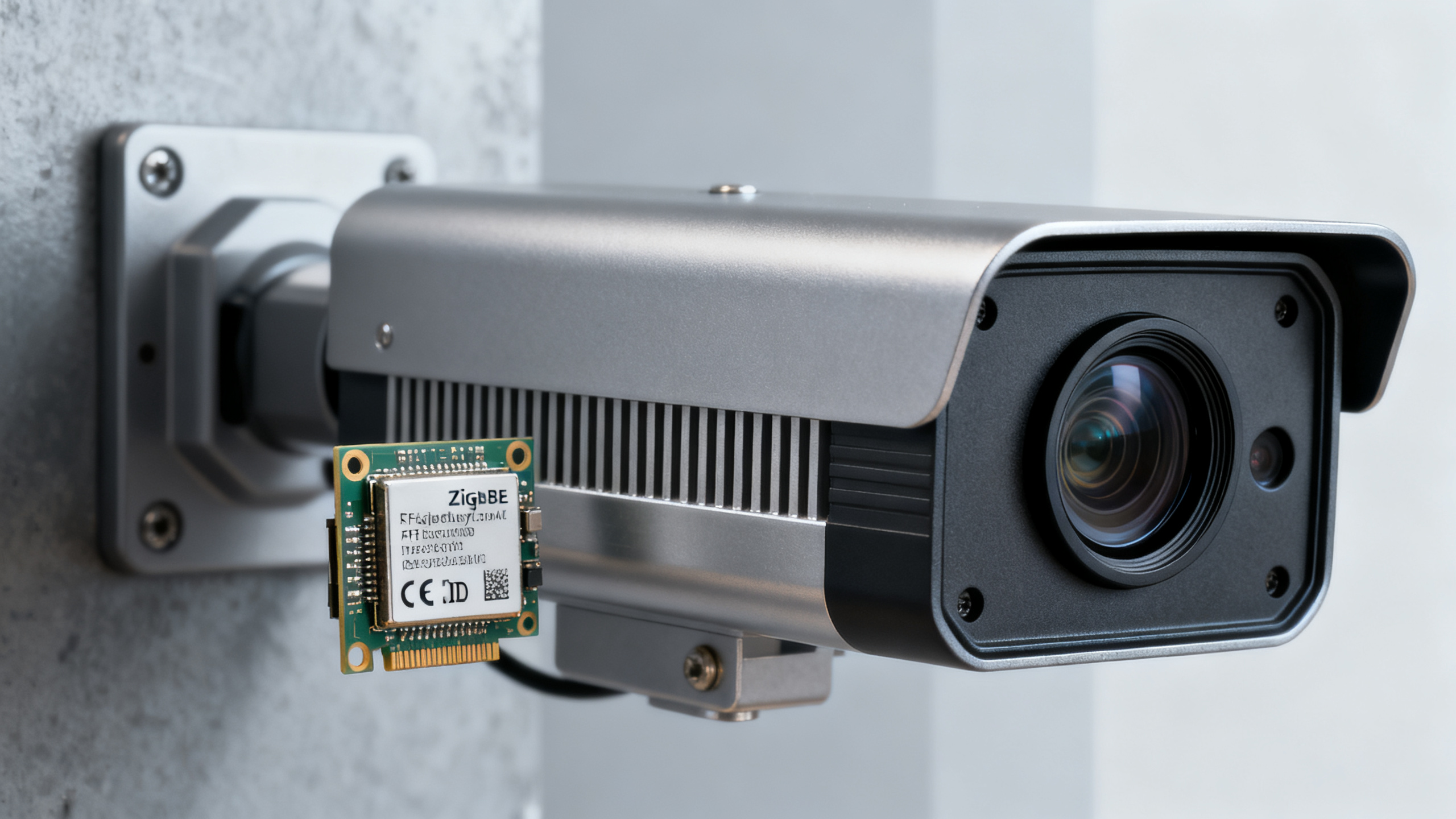
On May 23, 2026, the U.S. Federal Communications Commission (FCC) issued revised equipment authorization rules, expanding its communications supply chain restrictions to include radio frequency (RF) modules and AI edge computing units embedded in CCTV and access control devices. This update directly affects manufacturers and exporters of smart security hardware—particularly those shipping Wi-Fi-, Bluetooth-, or Zigbee-enabled cameras and door access controllers to the U.S. market—and signals a tightening of compliance requirements ahead of Q3 2026.
Event Overview
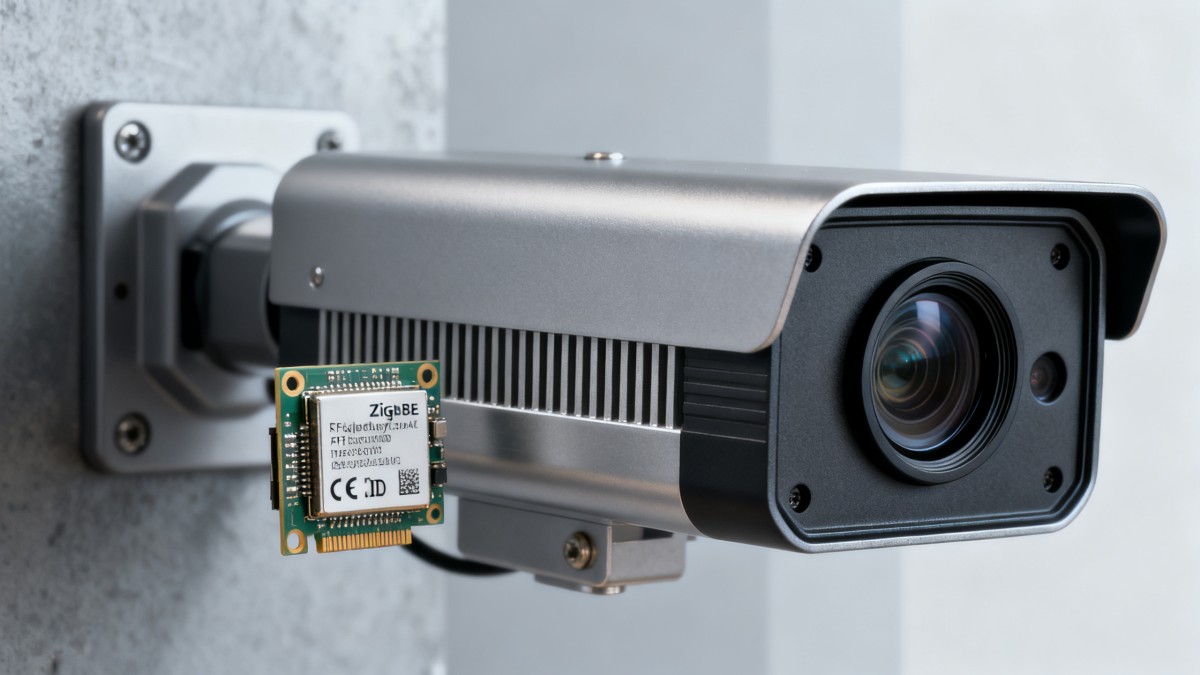
On May 23, 2026, the FCC published an amendment to its Equipment Authorization Rules. The revision explicitly adds CCTV and access control devices containing RF functionality (e.g., Wi-Fi, Bluetooth, Zigbee) and AI edge computing components to the list of products subject to mandatory FCC ID certification. Effective beginning in Q3 2026, all such devices exported to the United States must obtain dual certification: both full-device FCC ID authorization and separate FCC ID certification for each integrated RF or AI edge module. Devices lacking this dual certification will be prohibited from marketing and sale in the U.S.
Industries Affected by the Change
Direct Exporters and OEMs
Companies that manufacture or brand security devices for export to the U.S. are directly impacted because the new rule shifts certification responsibility from system-level only to include discrete modules. This increases testing scope, documentation burden, and time-to-market—especially for products with multiple RF interfaces or third-party AI accelerators.
Module Suppliers and Component Manufacturers
Suppliers of Wi-Fi/Bluetooth/Zigbee modules and AI edge compute units now face heightened demand for pre-certified, FCC-ID-registered components. Their customers—OEMs and ODMs—will require traceable, certified module variants, potentially limiting flexibility in component selection and driving consolidation toward pre-qualified suppliers.
Contract Manufacturers and EMS Providers
Electronics manufacturing services (EMS) providers assembling security hardware must verify module-level FCC IDs during build validation and ensure firmware configurations comply with certified RF operating parameters. Any post-certification firmware update affecting RF performance may trigger re-testing obligations under the revised rules.
Importers, Distributors, and Channel Resellers
U.S.-based importers and distributors handling CCTV or access control products will need updated compliance documentation—including proof of both device- and module-level FCC IDs—before clearing customs or listing on e-commerce platforms. Non-compliant inventory risks seizure or de-listing after Q3 2026.
What Enterprises and Practitioners Should Monitor and Do Now
Track official FCC guidance on implementation timelines and transitional provisions
The FCC’s May 23 notice initiates a formal rulemaking process; final effective dates, grace periods, and interpretation of ‘AI edge computing unit’ remain subject to clarification. Stakeholders should monitor the FCC’s public docket (ET Docket No. 26-XXX) and related public notices for updates before Q3 2026.
Identify high-risk product categories and review current certification status
Focus first on devices shipped to the U.S. with dual or multi-radio stacks (e.g., Wi-Fi + Bluetooth + Zigbee), or those integrating off-the-shelf AI inference modules (e.g., NPU-equipped SoMs). Audit whether existing FCC IDs cover all embedded RF functions—and whether module-level IDs have been obtained or are obtainable from suppliers.
Distinguish between policy signal and operational readiness
This rule reflects a broader U.S. regulatory emphasis on supply chain integrity—not just electromagnetic compatibility. However, enforcement capacity, testing lab availability for AI-edge modules, and harmonization with other agencies (e.g., NTIA) remain unconfirmed. Treat the rule as binding in intent but assess feasibility gaps before committing to new product launch schedules.
Initiate cross-functional alignment on procurement, labeling, and documentation workflows
Update supplier agreements to require module-level FCC ID disclosures and retain them in technical files. Revise packaging, user manuals, and web product pages to reflect dual-ID requirements. Assign internal ownership for maintaining version-controlled FCC documentation per SKU, especially where firmware or hardware revisions affect RF behavior.
Editorial Perspective / Industry Observation
Observably, this FCC action is less about technical nonconformance and more about reinforcing supply chain accountability—extending oversight from end devices down to critical subsystems. Analysis shows the inclusion of ‘AI edge computing units’ suggests a forward-looking posture toward emerging hardware architectures, even if precise definitions remain pending. From an industry perspective, the rule functions primarily as a regulatory signal: it confirms growing U.S. scrutiny of embedded intelligence and wireless interoperability in physical security infrastructure, but its full operational impact hinges on forthcoming implementation details and enforcement consistency. Continuous monitoring—not immediate overhauling—is currently more appropriate than broad-scale redesign or re-certification.
Conclusion
This FCC update marks a procedural escalation in U.S. market access requirements for security hardware, emphasizing granular, module-level compliance rather than system-level conformity alone. It does not introduce new technical limits but raises the evidentiary bar for demonstrating supply chain transparency. For now, it is best understood as a structured compliance evolution—not a sudden market barrier—requiring deliberate verification, documentation, and stakeholder coordination, rather than reactive overhaul.
Source Attribution
Main source: U.S. Federal Communications Commission (FCC), Equipment Authorization Rule Revision Notice, issued May 23, 2026.
Points requiring ongoing observation: Final effective date for Q3 2026 enforcement, definition of ‘AI edge computing unit’ in FCC context, and availability of accredited test labs for AI-accelerated RF module evaluation.
Technical Specifications
- How to Select Electronic Hotel Key Card Locks for Guest Rooms and Staff AreasAuthor :Safety Compliance Lead
- How to Select Lab Instruments for Reliable Chemical Analysis WorkflowsAuthor :Precision Metrology Expert
- How to Size a UPS for Server Rooms: Load, Runtime, and Redundancy FactorsAuthor :Grid Infrastructure Analyst
Expert Insights

Chief Security Architect
Dr. Thorne specializes in the intersection of structural engineering and digital resilience. He has advised three G7 governments on industrial infrastructure security.
Related Analysis
- Sep 17, 2026How to Select Electronic Hotel Key Card Locks for Guest Rooms and Staff AreasAuthor :Safety Compliance Lead
- Sep 16, 2026How to Select Lab Instruments for Reliable Chemical Analysis WorkflowsAuthor :Precision Metrology Expert
- Sep 15, 2026How to Size a UPS for Server Rooms: Load, Runtime, and Redundancy FactorsAuthor :Grid Infrastructure Analyst
Core Sector // 01
Security & Safety
- How to Select Electronic Hotel Key Card Locks for Guest Rooms and Staff AreasAuthor :Safety Compliance Lead

- How to Select Lab Instruments for Reliable Chemical Analysis WorkflowsAuthor :Precision Metrology Expert

- How to Size a UPS for Server Rooms: Load, Runtime, and Redundancy FactorsAuthor :Grid Infrastructure Analyst

- Stainless Steel Welded Tube Applications: Matching Tube Supply to Fabrication NeedsAuthor :Heavy Industry Strategist

- Selecting Low-Friction Pneumatic Seals for High-Cycle, Low-Pressure CylindersAuthor :Heavy Industry Strategist

- Selecting Spherical Roller Bearings for Mining: Load, Contamination, and Service LifeAuthor :Heavy Industry Strategist

- What to Check When Sourcing Vibration Meters Wholesale for Industrial MaintenanceAuthor :Precision Metrology Expert

- How to Size a Wafer Butterfly Valve for HVAC Chilled-Water and Heating LoopsAuthor :Environmental Engineering Director