17 Associations Launch Domestic Trade Transaction Guidelines
Author
Date Published
Reading Time
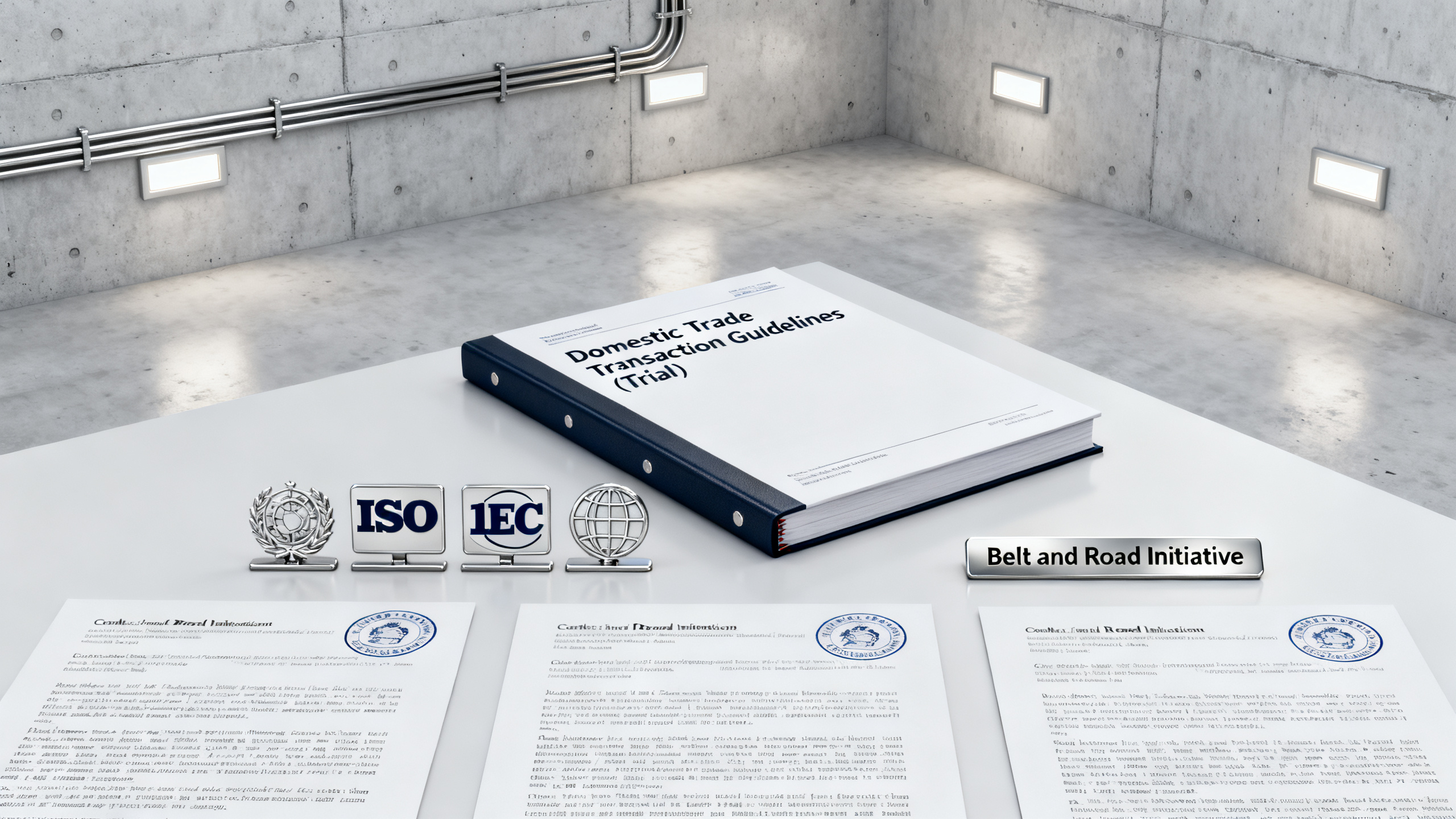
On May 8, 2026, a coalition of 17 national trade associations—including the China Chamber of Commerce for Import and Export of Machinery and Electronic Products—jointly issued the Domestic Trade Transaction Guidelines (Trial). The move marks a coordinated effort to standardize export documentation for industrial goods, with immediate implications for exporters navigating regulatory complexity across Belt and Road Initiative (BRI) markets.
Event Overview
On May 8, 2026, the China Chamber of Commerce for Import and Export of Machinery and Electronic Products and 16 other national industry associations jointly released the Domestic Trade Transaction Guidelines (Trial). The document standardizes 12 critical contractual clauses for industrial goods exports—including technical specification descriptions, referenced inspection standards, intellectual property ownership, and dispute resolution mechanisms. It has been designated by customs authorities in several Belt and Road countries as a ‘recommended reference text,’ and is expected to accelerate documentary review timelines for outbound shipments.
Industries Affected
Direct trading enterprises: These firms—especially SME exporters handling cross-border contracts without in-house legal or compliance teams—are directly impacted. Standardized clause templates reduce negotiation friction and lower the risk of contract rejection during customs clearance; however, adoption requires internal alignment on revised terms, potentially delaying initial transactions until internal SOPs are updated.
Raw material procurement enterprises: While not signatories to export contracts, these suppliers face downstream pressure to align certifications, test reports, and traceability documentation with the new contractual specifications—particularly where materials are incorporated into exported finished goods subject to third-party verification under the Guidelines.
Contract manufacturing enterprises: OEM/ODM manufacturers must now verify that their production records, quality control protocols, and IP licensing arrangements conform to the standardized clauses—especially around liability for design infringement or non-compliance with referenced international standards (e.g., ISO, IEC). This may necessitate updates to master service agreements with foreign buyers.
Supply chain service providers: Freight forwarders, customs brokers, and trade finance institutions are adjusting documentation workflows to accommodate the Guidelines’ prescribed formats. Some banks have begun requesting clause-specific attestations in letters of credit, indicating early operational integration beyond voluntary adoption.
Key Points for Enterprises and Practitioners
Review and localize existing contract templates
Enterprises should map current export contract language against the 12 standardized clauses—particularly those governing jurisdiction, force majeure definitions, and conformity assessment references—to identify gaps requiring revision ahead of BRI market submissions.
Validate upstream documentation alignment
Manufacturers and traders must confirm that supplier test reports, certificates of origin, and material declarations meet the precise referencing conventions outlined in the Guidelines—e.g., citing IEC 60950-1 (2013) rather than generic ‘IEC safety standards’—to avoid rework during customs scrutiny.
Engage with association-led implementation support
Several co-publishing associations have launched free webinars and bilingual clause libraries. Early adopters report that using these resources reduces internal legal review time by up to 40% for first-time compliant drafts.
Monitor bilateral recognition developments
Although currently labeled ‘recommended’ by select BRI customs agencies, formal inclusion in national import regulations remains pending. Companies should track official notices from partner-country customs administrations—not just press releases—to assess enforceability timing.
Editorial Perspective / Industry Observation
Analysis shows this initiative reflects a structural shift: rather than waiting for intergovernmental harmonization, Chinese industry associations are proactively building de facto documentation standards that gain traction through pragmatic utility—not regulatory mandate. Observably, the Guidelines’ emphasis on referencing internationally recognized standards (rather than domestic GB codes alone) signals a strategic pivot toward interoperability with global compliance ecosystems. From an industry perspective, this is less about regulatory enforcement and more about lowering transactional friction—making it a rare case of self-regulation achieving cross-border administrative weight. Current evidence suggests adoption is being driven by competitive pressure: exporters reporting faster clearance times are gaining tender advantages in infrastructure-linked BRI projects.
Conclusion
The release of the Domestic Trade Transaction Guidelines does not introduce new legal obligations—but it does redefine the baseline for commercial credibility in industrial exports. Its significance lies not in statutory force, but in its emerging role as a shared reference point across fragmented supply chains. For the sector, this represents a maturing of trade governance: one shaped by collective industry practice, validated through real-world customs feedback, and calibrated to actual clearance bottlenecks—not theoretical compliance ideals.
Source Attribution
Official joint announcement published on May 8, 2026, via the China Chamber of Commerce for Import and Export of Machinery and Electronic Products website; supplementary implementation notes issued by the China Council for the Promotion of International Trade (CCPIT); status of BRI customs recognition confirmed through bilateral customs cooperation memoranda (publicly available Annex III, April 2026). Ongoing observation required for: (1) formal incorporation into national import regulations by target BRI jurisdictions; (2) revisions to the Guidelines following the six-month trial period ending November 2026; (3) emergence of parallel initiatives in ASEAN or GCC markets.
Technical Specifications
- How to Select Electronic Hotel Key Card Locks for Guest Rooms and Staff AreasAuthor :Safety Compliance Lead
- How to Select Lab Instruments for Reliable Chemical Analysis WorkflowsAuthor :Precision Metrology Expert
- How to Size a UPS for Server Rooms: Load, Runtime, and Redundancy FactorsAuthor :Grid Infrastructure Analyst
Expert Insights

Chief Security Architect
Dr. Thorne specializes in the intersection of structural engineering and digital resilience. He has advised three G7 governments on industrial infrastructure security.
Related Analysis
- Sep 17, 2026How to Select Electronic Hotel Key Card Locks for Guest Rooms and Staff AreasAuthor :Safety Compliance Lead
- Sep 16, 2026How to Select Lab Instruments for Reliable Chemical Analysis WorkflowsAuthor :Precision Metrology Expert
- Sep 15, 2026How to Size a UPS for Server Rooms: Load, Runtime, and Redundancy FactorsAuthor :Grid Infrastructure Analyst
Core Sector // 01
Security & Safety
- How to Select Electronic Hotel Key Card Locks for Guest Rooms and Staff AreasAuthor :Safety Compliance Lead

- How to Select Lab Instruments for Reliable Chemical Analysis WorkflowsAuthor :Precision Metrology Expert

- How to Size a UPS for Server Rooms: Load, Runtime, and Redundancy FactorsAuthor :Grid Infrastructure Analyst

- Stainless Steel Welded Tube Applications: Matching Tube Supply to Fabrication NeedsAuthor :Heavy Industry Strategist

- Selecting Low-Friction Pneumatic Seals for High-Cycle, Low-Pressure CylindersAuthor :Heavy Industry Strategist

- Selecting Spherical Roller Bearings for Mining: Load, Contamination, and Service LifeAuthor :Heavy Industry Strategist

- What to Check When Sourcing Vibration Meters Wholesale for Industrial MaintenanceAuthor :Precision Metrology Expert

- How to Size a Wafer Butterfly Valve for HVAC Chilled-Water and Heating LoopsAuthor :Environmental Engineering Director