Wholesale Safety Padlocks: What to Look For
Author
Date Published
Reading Time
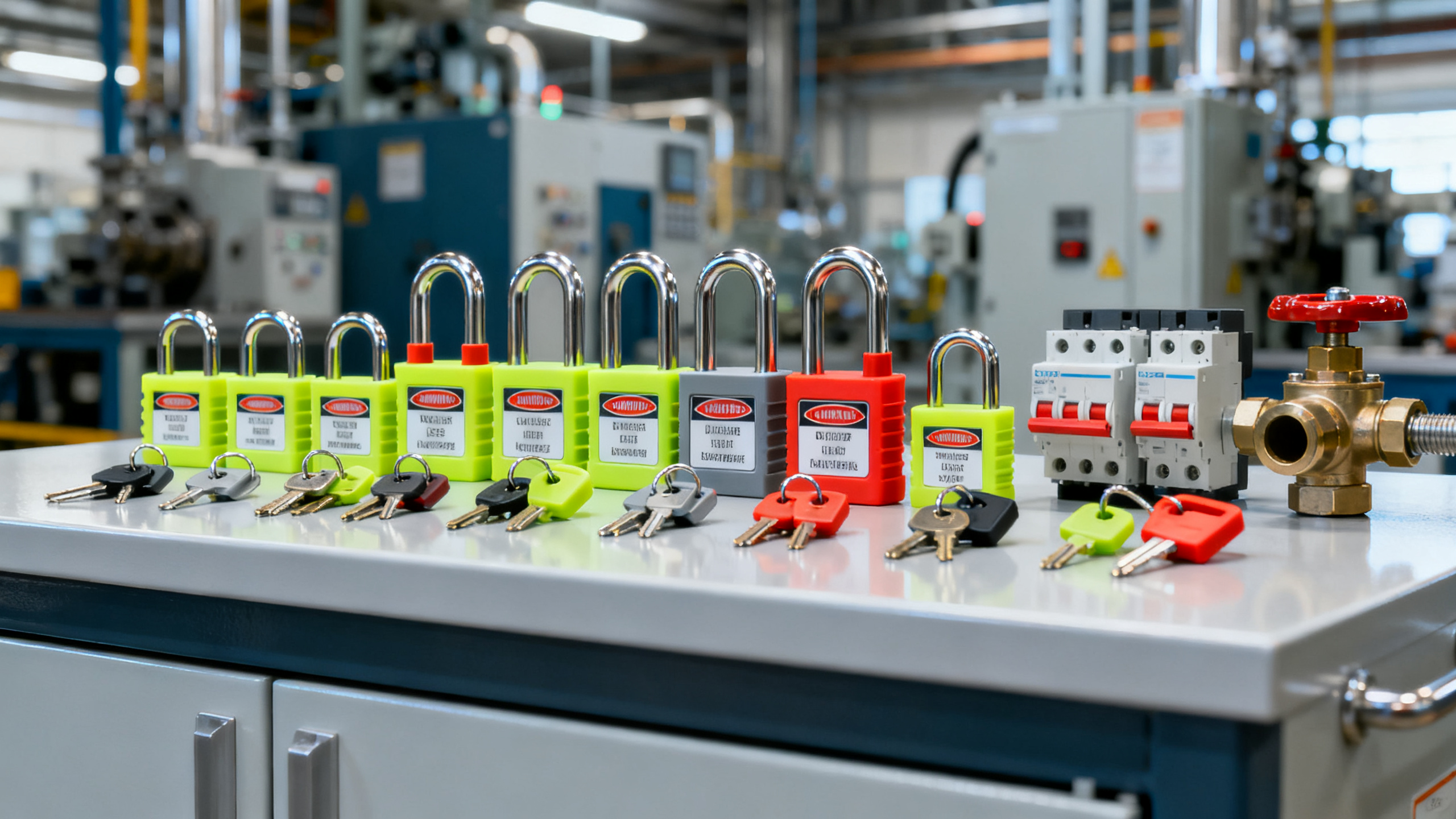
Choosing the right wholesale safety padlocks is not just about unit price. For industrial buyers, operators, and facility leaders, the real question is whether a padlock will support reliable lockout/tagout procedures, meet compliance expectations, stay identifiable in the field, and hold up under demanding plant conditions. In most cases, the best buying decision comes from evaluating safety padlocks as part of a risk-control system rather than as a simple hardware item.
This guide explains what to look for when sourcing safety padlocks in bulk, including body material, shackle type, keying options, labeling, standardization, visibility, and supplier consistency. Whether you are comparing vendors for a plant rollout or replacing mixed legacy stock, the goal is the same: source padlocks that improve control, reduce confusion, and support safer operations at scale.
What matters most when buying wholesale safety padlocks?
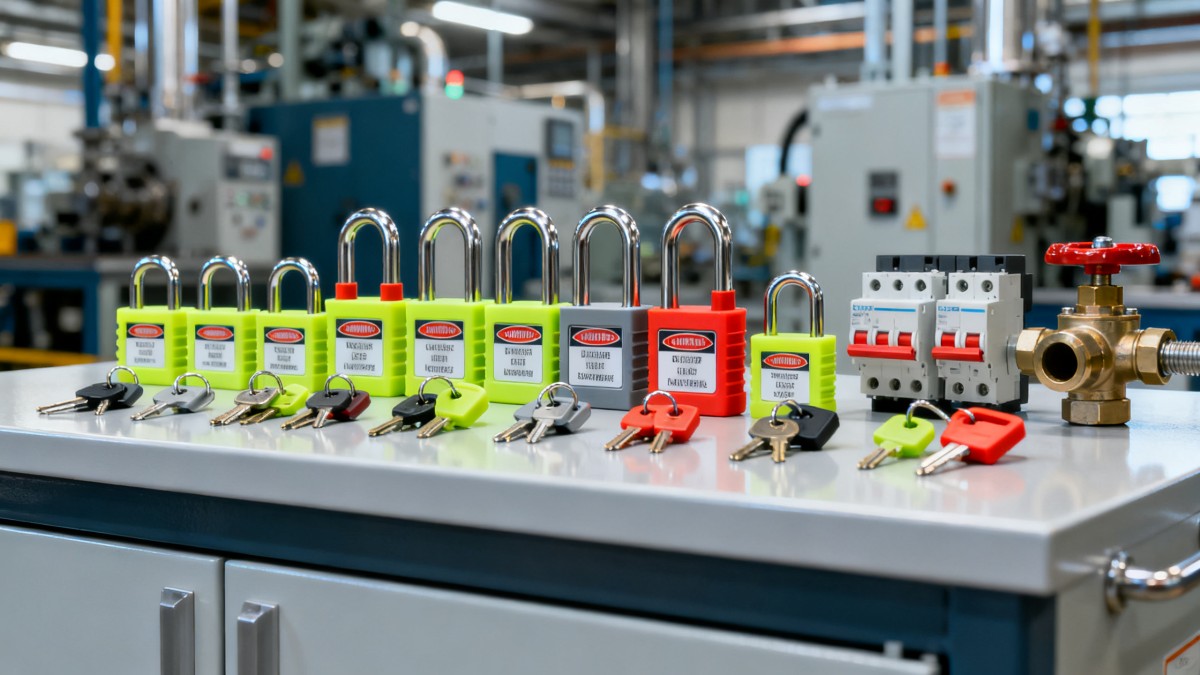
If you are buying at volume, the priority should be fit for your lockout/tagout program, not just catalog specifications. A low-cost padlock becomes expensive if it causes procedural errors, breaks in harsh environments, or creates key-management confusion across teams.
For most industrial applications, buyers should focus on five core criteria:
- Compliance suitability: Appropriate for lockout/tagout use and aligned with internal safety procedures and applicable standards.
- Durability: Resistant to chemicals, moisture, UV exposure, corrosion, impact, and temperature variation.
- Key control: Clear options for keyed different, keyed alike, master keying, and restricted key systems.
- Identification: Easy visual recognition through color coding, engraving, labels, and employee assignment.
- Supplier consistency: Reliable lead times, stable specifications, and documentation support across repeat orders.
For procurement teams, this means the best wholesale choice is usually the one that lowers operational risk and simplifies system-wide management, even if the unit cost is slightly higher.
Are the padlocks suitable for your lockout/tagout environment?
Not every padlock sold as a “safety lock” is equally suitable for industrial lockout/tagout. Before placing a wholesale order, confirm how the product will actually be used:
- Electrical isolation points
- Valve lockout applications
- Breaker lockouts
- Group lockout boxes and hasps
- Outdoor utility or field maintenance work
- Food, chemical, energy, manufacturing, or water treatment sites
Different environments create different requirements. For example, a dry indoor assembly plant may prioritize easy identification and compact sizing, while a chemical processing facility may need stronger resistance to corrosive substances and washdown exposure.
Ask these practical questions:
- Will the padlock be exposed to rain, steam, oils, solvents, or cleaning chemicals?
- Do employees need non-conductive lock bodies or shackles near energized equipment?
- Will workers wear gloves and need larger, easier-to-handle bodies and keys?
- Do lockout points require short, long, or thin shackles to fit devices correctly?
- Will the site need individualized employee-assigned locks or department-level keying systems?
A strong wholesale decision starts with matching the padlock to the operational reality, not assuming one model works everywhere.
Which materials and shackle types hold up best in industrial use?
Material selection directly affects service life, safety performance, and replacement frequency. In wholesale procurement, choosing the wrong material can create ongoing maintenance and compliance headaches.
Common body materials include:
- Thermoplastic bodies: Popular for lockout/tagout because they are lightweight, corrosion-resistant, and often electrically non-conductive. Well suited for many industrial safety programs.
- Laminated or metal bodies: Can offer strength, but may be less suitable in environments where corrosion resistance or electrical insulation is critical.
- Engineered polymers: Useful where chemical resistance and durability matter.
Common shackle options include:
- Hardened steel shackles: Strong and widely used, but may be less ideal in corrosive or electrically sensitive settings.
- Stainless steel shackles: Better for wet or corrosive environments.
- Nylon or non-conductive shackles: Valuable for electrical lockout applications where non-sparking or non-conductive properties are preferred.
Also check:
- Shackle diameter
- Vertical clearance
- Horizontal clearance
- Impact resistance of body material
- Resistance to cracking in low temperatures
For many industrial buyers, a thermoplastic safety padlock with a non-conductive or corrosion-resistant shackle is the most practical baseline choice for broad lockout/tagout deployment.
What keying system should you choose for wholesale safety padlocks?
Keying is one of the most important purchasing decisions because it affects both safety control and administrative efficiency. The right system depends on how your facility manages personal ownership, supervision, maintenance coordination, and emergency access.
Main keying options include:
- Keyed different: Each padlock has a unique key. This is often preferred for personal lockout because it reinforces individual control.
- Keyed alike: Multiple padlocks open with the same key. This can simplify some controlled applications, but may be less suitable for employee-specific lockout programs.
- Master keyed: Individual locks have unique keys, but authorized supervisors can open them with a master key. Useful in some administrative structures, though it must align with your safety policy.
- Grand master or hierarchical systems: Sometimes used across large, multi-site organizations, but they require strict governance.
When sourcing wholesale safety padlocks, ask suppliers these questions:
- How many unique key changes are available?
- Can duplicate key records be controlled?
- Are replacement keys traceable?
- Is the key code documentation secure and accurate?
- Can future expansion orders match the original keying plan?
For procurement leaders, keying consistency matters as much as lock quality. A capable supplier should be able to support both current deployment and future site growth without creating confusion in the field.
How important are color coding, labels, and employee identification?
In real operations, visibility is not a minor feature. It is a functional safety benefit. Clear visual identification helps workers recognize lock ownership, department assignment, contractor status, or hazard category quickly.
Important identification features include:
- Color-coded lock bodies: Often used by department, trade, site, or employee role.
- Laser engraving: Helps mark employee names, ID numbers, or company branding permanently.
- Writable labels: Useful for temporary assignment or procedure-specific marking.
- Photo labels or barcode integration: Helpful for larger facilities managing digital safety systems.
For operators, identification reduces mistakes. For managers, it improves accountability. For auditors, it shows that the lockout/tagout program is organized and enforceable.
If you are buying in bulk for multiple departments or sites, standardizing colors and marking conventions can significantly reduce training time and operational ambiguity.
What compliance and documentation should buyers verify?
Industrial buyers should not rely on marketing language alone. Safety padlock procurement should include a documentation review, especially when locks are being purchased for regulated or high-risk operations.
Depending on region and application, check for:
- Product specifications relevant to lockout/tagout use
- Material and performance data
- Manufacturer quality certifications
- Applicable CE, UL, or ISO-related documentation where relevant
- Traceability for batch or production consistency
- Testing information for corrosion resistance, dielectric properties, or temperature performance if needed
Also verify whether the supplier can provide consistent technical sheets, declarations, and labeling details for repeat procurement cycles. This matters for internal approvals, contractor alignment, and audit readiness.
For enterprise buyers, the issue is not just whether a lock “works,” but whether it can be justified, documented, and standardized across a formal safety management system.
How do you evaluate a wholesale supplier beyond price?
In wholesale sourcing, supplier reliability can be as important as product design. A padlock that performs well in a sample test is still a weak choice if the supplier cannot maintain quality, inventory, or keying accuracy over time.
Assess suppliers using these criteria:
- Production consistency: Are dimensions, materials, and keying specifications stable from batch to batch?
- Customization capability: Can they support engraving, color programs, labels, and tailored keying structures?
- Documentation support: Can they provide certifications, technical sheets, and traceable order records?
- MOQ and scalability: Are they suitable for both pilot orders and large rollouts?
- Lead time reliability: Can they support urgent replenishment without forcing specification changes?
- After-sales responsiveness: Do they resolve issues quickly if there are keying or product discrepancies?
For procurement teams managing plant uptime and compliance, the best supplier is one that reduces uncertainty. That includes stable communication, repeatable product quality, and the ability to support long-term standardization.
When does it make sense to standardize padlocks across a facility or group?
Standardization usually makes sense when an organization wants to improve training, reduce purchasing complexity, and tighten lockout/tagout control. Mixed padlock inventories often create avoidable problems: inconsistent fit, unclear ownership, scattered key records, and harder employee training.
Facility-wide or multi-site standardization can deliver benefits such as:
- Simpler operator training
- Clearer visual recognition
- Easier stock management
- More consistent replacement planning
- Better key record control
- Improved audit readiness
That said, standardization should not ignore application differences. A smart program often standardizes the core platform while allowing a few approved variants for specific environmental or mechanical needs.
A practical wholesale safety padlock checklist for buyers
Before finalizing an order, use this short checklist:
- Is the padlock appropriate for your actual lockout/tagout procedures?
- Does the body material suit your temperature, chemical, and moisture conditions?
- Is the shackle material and size compatible with your lockout devices?
- Does the keying system match your safety policy and administrative controls?
- Can each lock be clearly identified by person, department, or site?
- Is the product supported by reliable technical and compliance documentation?
- Can the supplier maintain consistency across repeat and expansion orders?
- Will standardization improve training, stock control, and audit performance?
If the answer to several of these questions is unclear, pause the purchase and review the broader lockout/tagout system requirements first.
Conclusion: buy for control, not just cost
The right wholesale safety padlocks should make your safety program easier to manage, not harder. For most industrial organizations, the best choice is one that combines durable materials, suitable shackle design, disciplined key control, strong visual identification, and dependable supplier support.
Buyers, operators, and decision-makers should evaluate safety padlocks as part of a larger operational risk strategy. When sourced correctly, they help strengthen compliance, reduce procedural errors, support worker protection, and create a more resilient lockout/tagout system across the facility.
In short, a good wholesale decision is not the cheapest lock per unit. It is the lock platform that performs reliably, scales cleanly, and supports safe industrial operations every day.
Expert Insights

Chief Security Architect
Dr. Thorne specializes in the intersection of structural engineering and digital resilience. He has advised three G7 governments on industrial infrastructure security.
Related Analysis
Core Sector // 01
Security & Safety
- Wholesale Safety Padlocks: What to Look ForAuthor :Safety Compliance Lead

- How to Place Eye Wash Stations IndustrialAuthor :Safety Compliance Lead

- CPSC Urgent Recall: ASTM F3502-23 Respiratory Resistance Re-Testing Required for Industrial PPE MasksAuthor :Safety Compliance Lead
![]()
- CPSC Mandates ASTM F3502-23 Respiratory Resistance Re-testing for Industrial Dust MasksAuthor :Safety Compliance Lead
![]()
- Breathability vs protection in safety equipmentAuthor :Safety Compliance Lead

- EU PPE Regulation (EU) 2026/789 Enforces Dual CE+UKCA for Chinese ExportsAuthor :Safety Compliance Lead
![]()
- Automatic hand sanitizers with sensors or pedals?Author :Safety Compliance Lead

- Does a wholesale shoe cover dispenser really reduce contamination?Author :Safety Compliance Lead