Plastic speed bumps or rubber: which lasts longer outdoors
Author
Date Published
Reading Time
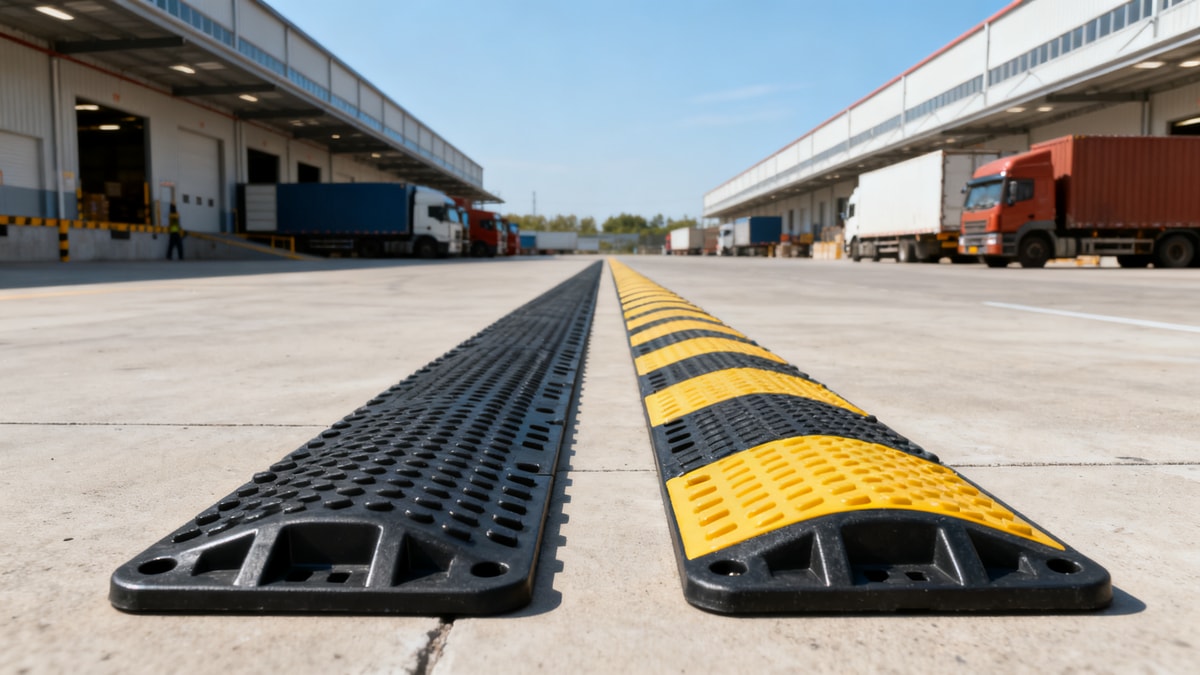
When evaluating plastic speed bumps for outdoor use, project managers need more than a simple price comparison. Longevity depends on UV exposure, temperature swings, traffic load, anchoring stability, and compliance with site safety requirements. This article examines how plastic and rubber perform in real-world industrial and commercial environments, helping engineering and procurement teams choose the option that delivers longer service life, lower maintenance, and better lifecycle value.
Understanding the outdoor durability question
For project leaders, the debate around plastic speed bumps versus rubber is not only about material preference. It is a site-performance question tied to safety, maintenance planning, and long-term operating cost. In logistics parks, industrial compounds, commercial facilities, schools, and mixed-use access roads, speed control devices remain exposed to sunlight, moisture, dust, heavy axle loads, and repeated impact from braking and turning vehicles. Under those conditions, the better choice is the one that preserves shape, visibility, fastening integrity, and friction over time.
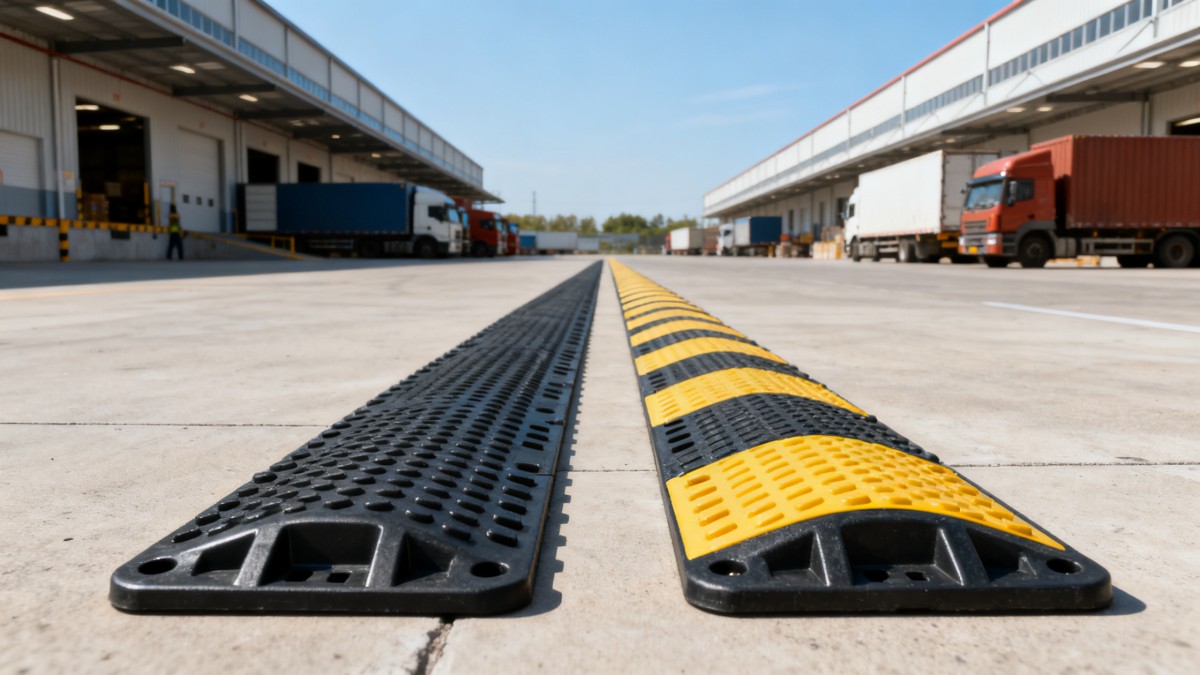
Plastic speed bumps are typically made from recycled or engineered polymers such as PVC, polyethylene, or polypropylene blends. Rubber units are commonly produced from recycled tire rubber or vulcanized compounds. Both can be effective, but they age differently outdoors. Plastic speed bumps usually retain a firm profile and consistent geometry when well designed, while rubber often offers better initial flexibility and shock absorption. The real question is not which sounds stronger in a catalog, but which survives local environmental and traffic conditions with fewer failures.
Why the industry pays close attention to material lifespan
Across industrial and infrastructure environments, seemingly simple safety products can become expensive if they fail early. A speed bump that cracks, shifts, curls at the edges, or loses reflective visibility creates risk for vehicles, pedestrians, and site operators. It also leads to repeated labor costs for inspection, replacement, re-anchoring, and traffic interruption. For EPC contractors and facility managers, those indirect costs matter as much as initial purchase price.
This is why buyers increasingly evaluate plastic speed bumps through a lifecycle lens. They want evidence of outdoor weathering resistance, load-bearing performance, reflector retention, and compatibility with asphalt or concrete substrates. In regulated sites, durability also intersects with safety compliance. A unit that deforms too quickly may no longer meet internal speed control plans or site marking expectations. In other words, outdoor lifespan is both an engineering issue and an operational governance issue.
What “lasting longer outdoors” really means
Longevity should be defined in practical terms. A speed bump lasts longer outdoors when it continues to perform its intended function without unacceptable deterioration. That includes maintaining structural shape, surface traction, color contrast, reflector effectiveness, and stable anchorage. A material can appear intact yet still fail functionally if it becomes slippery, fades beyond visibility requirements, or loosens from the pavement.
For project managers, a useful evaluation framework includes five factors: environmental resistance, mechanical endurance, installation quality, maintenance burden, and safety consistency. Plastic speed bumps may excel in one climate and underperform in another. Rubber may absorb impact well in cold regions yet soften excessively in prolonged heat. Outdoor service life is therefore conditional, not universal.
Material behavior in outdoor environments
The biggest difference between plastic and rubber outdoors is how each material responds to weather and stress over time. Plastic speed bumps generally offer stronger dimensional stability. They tend to keep their molded profile, which helps preserve height uniformity and vehicle-calming performance. Better-grade polymers can also resist chemicals, standing water, and abrasion effectively. However, lower-quality plastic may become brittle under intense UV exposure or repeated cold-weather impact.
Rubber, by contrast, is naturally more flexible. This flexibility can reduce cracking under repeated loading and may improve conformity on slightly uneven surfaces. Yet outdoor rubber can suffer from oxidation, softening in high temperatures, edge wear, and gradual distortion under constant truck traffic. In some climates, rubber’s flexibility becomes a weakness because the material compresses more and loses its original shape faster.
In high-UV regions, plastic speed bumps with UV stabilizers often outlast low-grade rubber alternatives. In cold climates with freeze-thaw cycling, robust rubber compounds may resist sudden impact better than brittle plastics. In hot industrial yards with turning heavy vehicles, reinforced plastic modules often keep their geometry longer than softer rubber units. Material quality, not label alone, is decisive.
Industry overview table: where each material tends to perform better
The table below offers a practical overview for engineering and procurement teams comparing outdoor performance priorities.
Typical outdoor scenarios and the better fit
Outdoor lifespan also depends on where the product is installed. A warehouse approach lane is different from a school drop-off area or a refinery service road. Project managers should align material choice with traffic mix and pavement condition rather than treating all sites alike.
The hidden factor: installation often determines service life
Many early failures blamed on material are actually installation failures. Even premium plastic speed bumps will not last if they are anchored into crumbling asphalt, mounted without correct fastener spacing, or installed on a surface with drainage problems. Water ingress, substrate movement, and repeated wheel strike at loose edges quickly shorten lifespan.
For outdoor performance, project teams should verify pavement condition, anchor specification, base cleanliness, and proper torque. Modular plastic speed bumps often require precise alignment to prevent uneven load transfer between sections. Rubber products may tolerate slight unevenness better, but they still fail prematurely if fasteners loosen or if the base material breaks down. The practical lesson is clear: proper engineering and installation can shift the durability outcome as much as material selection.
Lifecycle value for project managers and procurement teams
A longer-lasting product is not automatically the one with the longest theoretical material life. It is the one that delivers acceptable performance with the lowest total disruption over its service period. For many industrial sites, plastic speed bumps create strong lifecycle value because they maintain shape, modular consistency, and visual order over time. Replacement of individual sections can also be easier when systems are standardized.
Rubber can still be the right choice where ride comfort, vibration damping, or cold-weather flexibility is more important than rigid shape retention. However, procurement teams should compare expected maintenance intervals, reflector replacement frequency, and the cost of traffic control during repairs. A product that is cheaper upfront but requires frequent edge repair or re-fastening may cost more over three to five years than a better-engineered plastic alternative.
Key evaluation points before specifying plastic speed bumps
When reviewing technical data or supplier claims, teams should move beyond generic statements such as “weather resistant” or “heavy duty.” Outdoor longevity depends on specific design and testing details. The most reliable review process includes the following checkpoints:
- Polymer composition and UV stabilizer content
- Load rating under expected vehicle classes
- Performance in hot, cold, or coastal climates
- Reflective element durability and visibility retention
- Anchor type, spacing, and corrosion resistance
- Modular replacement capability and spare section availability
- Evidence of field use in similar industrial environments
For organizations guided by strict safety and quality frameworks, documented compliance and test transparency also matter. Suppliers that support products with clear installation instructions, technical drawings, and application-specific recommendations usually present lower project risk.
So, which lasts longer outdoors?
In many commercial and industrial outdoor settings, well-manufactured plastic speed bumps tend to last longer than rubber because they better preserve structural shape, resist compression, and maintain modular integrity under repeated traffic. This is especially true on stable pavement, in hot climates, and in areas with frequent heavy vehicle turning. That said, the advantage is not absolute. In cold environments or on imperfect surfaces, high-quality rubber may deliver more dependable service if impact flexibility is critical.
The strongest answer for project managers is therefore conditional: plastic speed bumps often win on outdoor lifespan when product quality, UV resistance, and installation are properly controlled; rubber can still outperform in niche conditions where flexibility matters more than rigid form retention. The right decision comes from matching material behavior to site reality.
Practical direction for specification and next-step planning
If your project involves industrial roads, logistics facilities, utility compounds, campus circulation zones, or mixed commercial sites, begin with a short field assessment: climate profile, pavement condition, vehicle mix, turning patterns, and visibility requirements. Then compare plastic speed bumps and rubber systems against those actual demands instead of relying on default preference. For many professional buyers, that process reveals whether the goal is maximum lifespan, lowest maintenance, better ride compliance, or the best lifecycle balance.
Global Industrial Core encourages engineering and procurement teams to treat speed-control hardware as part of a broader safety infrastructure strategy. A durable product, correctly specified and installed, protects not only the pavement and traffic pattern but also the reliability standards expected in modern industrial environments. If you are assessing plastic speed bumps for long-term outdoor use, prioritize verified material data, installation quality, and site-specific performance evidence before final approval.
Technical Specifications
Expert Insights

Chief Security Architect
Dr. Thorne specializes in the intersection of structural engineering and digital resilience. He has advised three G7 governments on industrial infrastructure security.
Related Analysis
- May 01, 2026PTZ dome camera placement mistakes that waste zoom performanceAuthor :Safety Compliance Lead
- May 01, 2026Biometric access control systems: where integration gets expensiveAuthor :Safety Compliance Lead
- May 01, 2026Facial recognition door lock accuracy drops in these common settingsAuthor :Safety Compliance Lead
Core Sector // 01
Security & Safety
- PTZ dome camera placement mistakes that waste zoom performanceAuthor :Safety Compliance Lead

- Biometric access control systems: where integration gets expensiveAuthor :Safety Compliance Lead

- Facial recognition door lock accuracy drops in these common settingsAuthor :Safety Compliance Lead

- Smart security alarms: fewer alerts can mean better protectionAuthor :Safety Compliance Lead

- RFID card readers wholesale: hidden differences in reading stabilityAuthor :Safety Compliance Lead

- Network video recorder NVR limits that only appear after expansionAuthor :Safety Compliance Lead

- CCTV camera wholesale: why image sensors change return ratesAuthor :Safety Compliance Lead

- What affects wholesale traffic cone pricing more than volumeAuthor :Safety Compliance Lead