Network video recorder NVR limits that only appear after expansion
Author
Date Published
Reading Time
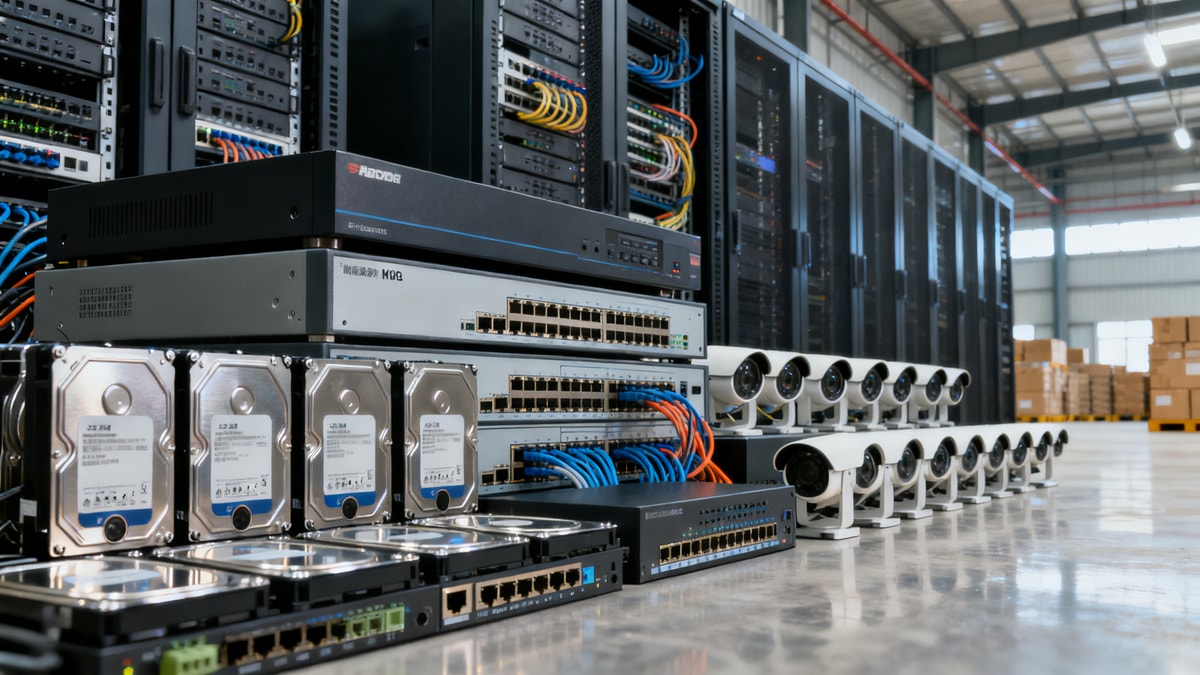
A network video recorder NVR often performs well at initial deployment, but hidden limits can emerge once channels, cameras, storage, and remote access demands expand. For project managers and engineering leads, overlooking these constraints can lead to recording gaps, bandwidth bottlenecks, and compliance risks. Understanding what changes after expansion is essential to protecting uptime, evidence integrity, and long-term system scalability.
Why do network video recorder NVR limits surface only after expansion?
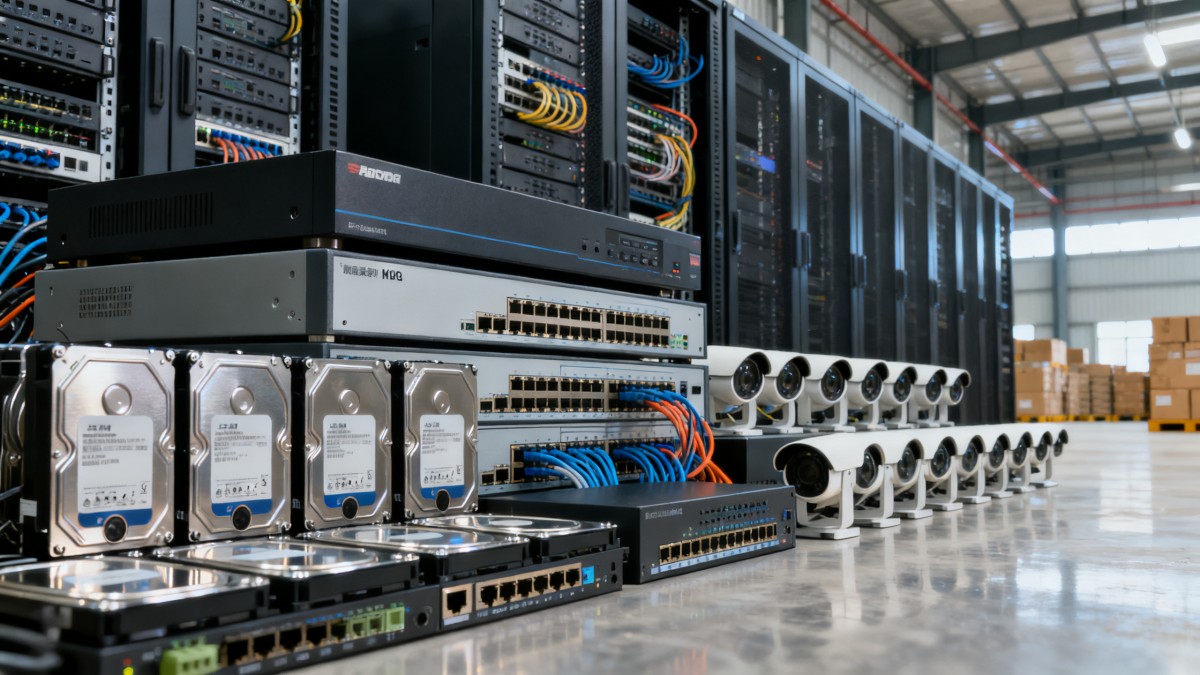
In early-stage deployment, a network video recorder NVR is usually sized around today’s camera count, current bitrate, and a modest retention target. The system appears stable because it operates below stress thresholds. Once a site adds more IP cameras, raises resolution, enables analytics, or opens remote viewing to multiple teams, the same recorder may hit processor, throughput, storage, or licensing ceilings that were not visible at commissioning.
This is especially common in industrial compounds, utility rooms, logistics yards, substations, treatment plants, and mixed-use facilities where surveillance scope expands with each project phase. A recorder that handled 32 channels well during handover may struggle when 32 cameras are no longer basic fixed streams, but a mix of 4 MP, 8 MP, thermal, PTZ, and analytic-enabled devices.
For project leaders, the issue is rarely the recorder alone. Expansion changes the whole surveillance load profile. Bandwidth increases, switch uplinks fill up, RAID rebuild times lengthen, and investigation workflows become more demanding. In practice, the limiting factor is often the interaction between recording throughput, network architecture, storage IOPS, and operational policy.
- More cameras mean more concurrent streams, but not all streams are equal. Frame rate, codec, scene complexity, and motion level can sharply change the recorder load.
- Higher retention periods increase disk occupancy and elevate the risk of storage contention during playback, export, and failover events.
- Remote users, mobile clients, and central monitoring can consume extra decode and outbound bandwidth that was not part of the original design brief.
- Compliance requirements often become stricter as the system grows, especially when video is used for incident investigation, contractor oversight, or regulated site security.
What actually changes after a network video recorder NVR is expanded?
Expansion affects more than channel count. A recorder may officially support a certain number of cameras, yet still underperform when aggregate incoming bitrate, simultaneous playback, event indexing, and export tasks rise together. The table below highlights the most common post-expansion constraints that project managers should review before approving a phased capacity increase.
The practical lesson is clear: rated specifications for a network video recorder NVR should never be read as a promise of equal performance across all deployment conditions. Industrial buyers need design margin, not just headline capacity.
Hidden pressure points that are easy to miss
Several issues stay invisible during FAT, SAT, or early operation because the system is not yet loaded the way it will be six or twelve months later. Project teams often validate live view and short-term recording but skip worst-case stress scenarios such as simultaneous playback, alarm bursts, network failback, or high-motion night scenes.
- Dual-stream and sub-stream settings may be inconsistent across camera groups, creating decode inefficiency and poor remote user experience.
- PoE budgets and switch backplanes may be sufficient for initial loads but inadequate after camera additions or heater-enabled outdoor devices.
- Time synchronization drift can become an evidence issue when multiple recorders are expanded without disciplined NTP policy.
- Firmware variation across cameras can cause unstable ONVIF behavior, event loss, or inconsistent retention after system growth.
Which technical limits matter most in industrial and infrastructure projects?
In heavy-duty and multi-building environments, the network video recorder NVR must support more than basic office surveillance. Industrial sites create demanding conditions: vibration, dust, temperature variation, long cable runs, segmented networks, and the need to coordinate security, safety, and operations teams. The recorder is part of a larger mission-critical architecture, not a standalone appliance.
1. Recording throughput versus advertised channels
A recorder rated for a fixed channel count may still underperform if actual incoming bitrate rises too high. Resolution upgrades, scene complexity, and PTZ presets increase codec demand. The better buying question is not “How many channels?” but “How many channels at what bitrate, frame rate, codec, and retention target?”
2. Storage design versus retention policy
Many expansions fail at the storage layer. Teams add cameras but keep the same retention requirement, sometimes 30, 60, or 90 days. If storage was sized tightly, the recorder may overwrite earlier than expected or lower recording consistency during heavy access periods. Surveillance-grade disks, RAID strategy, hot spares, and rebuild windows all matter.
3. Network segmentation and remote viewing load
When security teams, plant managers, contractors, and off-site stakeholders all require access, the recorder’s outbound capacity becomes critical. VLAN design, uplink sizing, WAN latency, and user privilege management should be reviewed together. Otherwise, operators may think the recorder is failing when the true issue is network saturation or poor stream policy.
4. Event handling, analytics, and integration overhead
A network video recorder NVR becomes more complex when tied to access control, alarm systems, perimeter analytics, or central VMS platforms. Event metadata, rule processing, and alarm playback place extra demand on CPU and database performance. This is common in industrial compounds where surveillance must support both security and incident reconstruction.
How should project managers evaluate NVR expansion before procurement approval?
A structured evaluation prevents costly late-stage redesign. Before approving camera expansion or recorder replacement, compare current load, future load, and operational requirements. The following matrix helps engineering and procurement teams judge whether the existing network video recorder NVR can scale or whether a distributed or higher-tier architecture is needed.
This type of evaluation is where specialist sourcing support becomes valuable. Global Industrial Core helps procurement and project teams translate technical language into purchasing decisions that protect uptime, compliance, and lifecycle cost rather than only initial capex.
A practical pre-approval checklist
- Document current camera count, codec, frame rate, and average plus peak bitrate by zone.
- Model future expansion using realistic assumptions, not nominal vendor channel limits.
- Verify storage retention against actual scene activity, not static calculator defaults.
- Test simultaneous recording, playback, export, and remote viewing under peak conditions.
- Review failover, power protection, and environmental suitability for the installation room.
- Confirm interoperability, firmware policy, and user access governance before adding devices.
Should you scale one recorder, add another NVR, or move to a broader architecture?
There is no single answer for every site. The best path depends on growth speed, resilience needs, investigation workflow, and available network backbone. For some projects, upgrading a single network video recorder NVR is enough. For others, zoning by building, process area, or risk level provides better operational continuity.
The comparison below can guide concept-stage decisions before tendering or variation approval.
A common mistake is choosing the cheapest short-term expansion path without calculating the operational cost of downtime, missing footage, or delayed investigation. In infrastructure and industrial settings, failure impact can outweigh equipment savings very quickly.
What compliance and reliability issues become more serious after NVR expansion?
As surveillance systems grow, recorded video is more likely to be used for audits, contractor dispute review, health and safety analysis, and incident escalation. That raises the importance of consistent timestamps, controlled access, export traceability, and equipment suitability for the operating environment.
- Electrical safety and installation conformity should align with applicable project specifications and recognized standards such as CE, UL, or relevant local requirements when equipment is supplied into regulated markets.
- Cybersecurity posture becomes more important when remote access, third-party maintenance, or cross-site visibility is enabled. Password governance, firmware update policy, and segmented access are not optional details.
- Environmental suitability matters for industrial deployments. Dust, heat, cabinet ventilation, and power quality all affect recorder stability and storage lifespan.
- Evidence handling procedures should define who can view, export, and archive footage, especially when incidents involve contractors or external stakeholders.
Global Industrial Core approaches these issues from both sourcing and operational perspectives. For project teams, that means evaluating not only whether a recorder can record video, but whether the expanded system can continue to support safety, auditability, and maintainability under real site conditions.
Common mistakes and FAQ about network video recorder NVR expansion
Is channel count the most important specification?
No. Channel count is only one dimension. For a network video recorder NVR, incoming bitrate, storage throughput, concurrent users, analytics load, and retention policy often matter more in expanded deployments. Two systems with the same channel count can perform very differently depending on camera profiles and usage patterns.
Can storage calculators alone guarantee retention after expansion?
Not reliably. Many calculators assume ideal settings and average scene behavior. Real industrial sites include high-motion areas, changing light, weather exposure, and event-triggered peaks. Storage estimates should be validated with conservative assumptions and reserve capacity.
When should a project team split cameras across multiple NVRs?
Splitting is often wise when the site has multiple buildings, distinct risk zones, different retention classes, or a requirement to limit failure impact. A zoned approach can simplify troubleshooting and preserve recording in unaffected areas if one recorder fails.
What is the most overlooked risk during expansion?
Many teams overlook operational concurrency. The recorder may seem stable until an incident occurs and several people try to review, export, and share footage at once. Testing under incident conditions is more useful than testing under routine daily load.
Why choose us for NVR sizing, sourcing, and expansion planning?
Global Industrial Core supports project managers, EPC teams, facility operators, and procurement leaders who need more than generic product lists. We help frame the right technical questions before purchase orders are placed, especially where surveillance intersects with safety, infrastructure reliability, and compliance-sensitive operations.
You can consult us on practical expansion topics such as channel and bitrate confirmation, recorder architecture options, storage retention estimation, environmental suitability, remote access load, integration considerations, delivery planning, and documentation requirements for international sourcing. We can also help structure vendor comparison criteria so your team can evaluate proposals on lifecycle risk, not only unit price.
- Need to confirm whether your current network video recorder NVR can support the next phase? Share camera count, resolution, retention target, and user profile for a structured assessment.
- Need guidance on product selection? We can help define evaluation criteria covering throughput, storage, resilience, and deployment environment.
- Need clarity on lead time, alternative configurations, or certification-related procurement questions? We can support specification review before RFQ release.
If your surveillance system is about to scale, this is the right stage to review recorder limits before hidden constraints turn into recording loss or rework. Contact us to discuss parameter validation, architecture options, delivery expectations, compliance concerns, and quotation planning for your next expansion phase.
Technical Specifications
Expert Insights

Chief Security Architect
Dr. Thorne specializes in the intersection of structural engineering and digital resilience. He has advised three G7 governments on industrial infrastructure security.
Related Analysis
- May 01, 2026PTZ dome camera placement mistakes that waste zoom performanceAuthor :Safety Compliance Lead
- May 01, 2026Biometric access control systems: where integration gets expensiveAuthor :Safety Compliance Lead
- May 01, 2026Facial recognition door lock accuracy drops in these common settingsAuthor :Safety Compliance Lead
Core Sector // 01
Security & Safety
- PTZ dome camera placement mistakes that waste zoom performanceAuthor :Safety Compliance Lead

- Biometric access control systems: where integration gets expensiveAuthor :Safety Compliance Lead

- Facial recognition door lock accuracy drops in these common settingsAuthor :Safety Compliance Lead

- Smart security alarms: fewer alerts can mean better protectionAuthor :Safety Compliance Lead

- RFID card readers wholesale: hidden differences in reading stabilityAuthor :Safety Compliance Lead

- Network video recorder NVR limits that only appear after expansionAuthor :Safety Compliance Lead

- CCTV camera wholesale: why image sensors change return ratesAuthor :Safety Compliance Lead

- What affects wholesale traffic cone pricing more than volumeAuthor :Safety Compliance Lead