CCTV camera wholesale: why image sensors change return rates
Author
Date Published
Reading Time
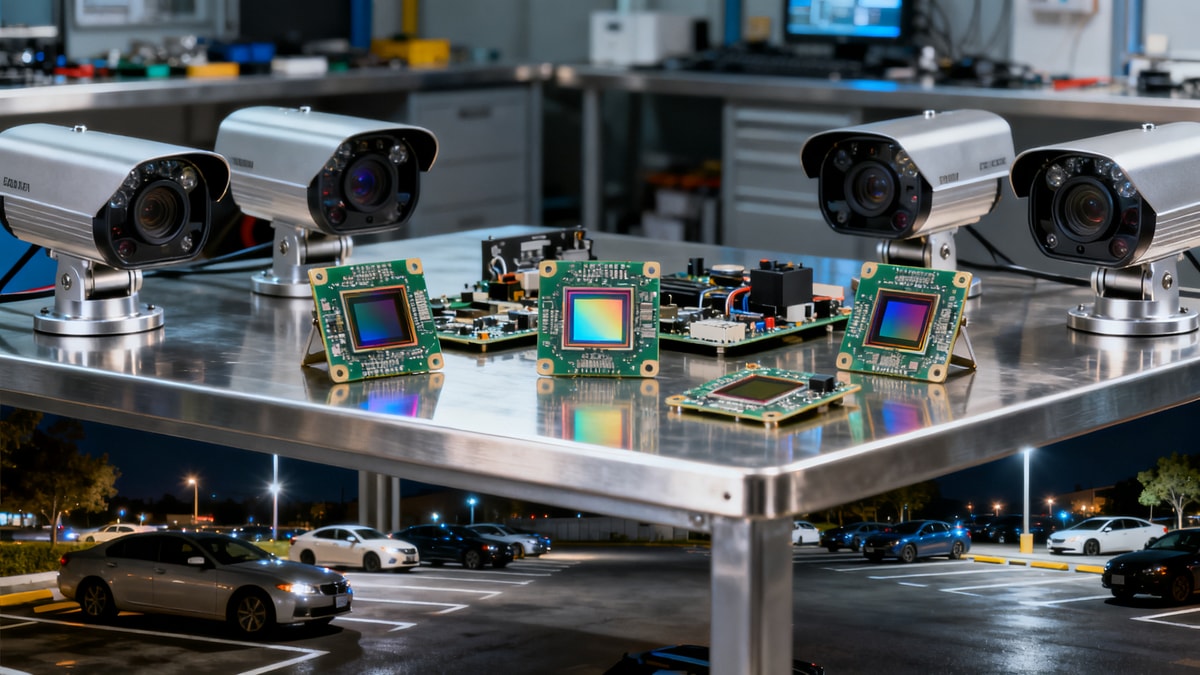
In cctv camera wholesale, image sensors do far more than shape picture quality—they directly influence return rates, reseller margins, and customer trust. For distributors, agents, and dealers, choosing the right sensor can mean fewer complaints about blurry night footage, color distortion, or failed performance in real conditions. This article explains why sensor selection matters commercially as much as technically.
Why image sensors matter more than many CCTV wholesalers expect
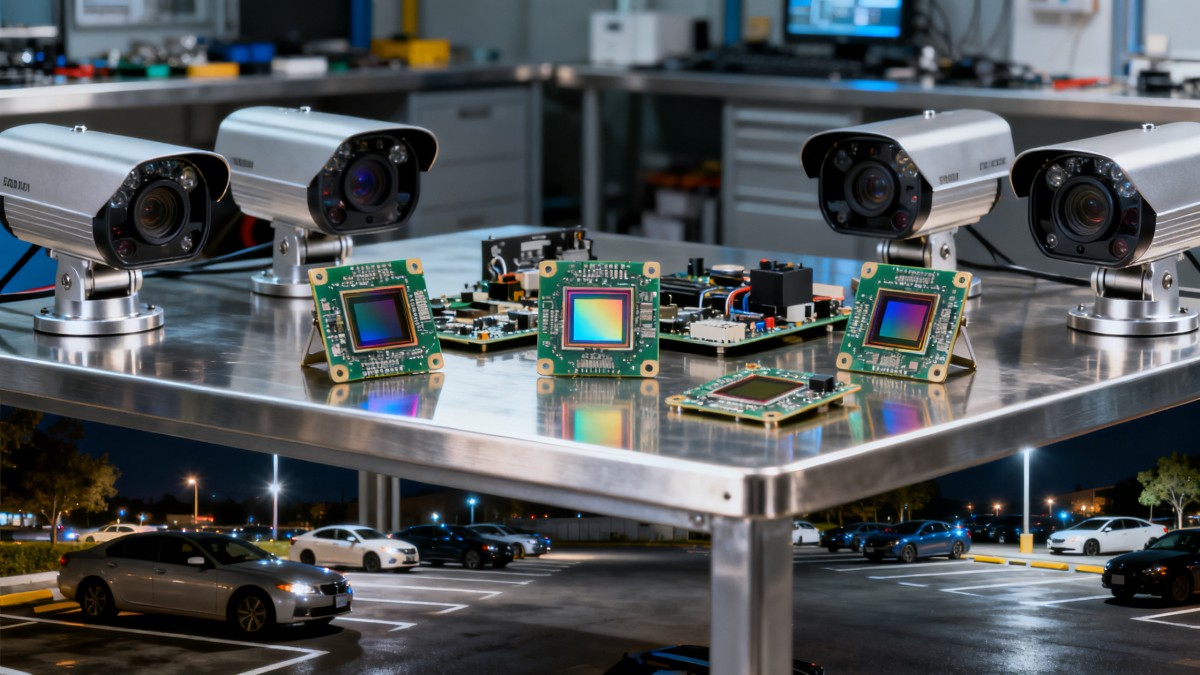
For distributors and channel partners, the biggest mistake in CCTV camera wholesale is treating the image sensor as just another spec-sheet item. In practice, the sensor often determines whether the end customer feels the product works as promised after installation.
When a camera is returned, the stated reason may be “poor night vision,” “unclear images,” or “does not match sample quality.” Behind many of those complaints is a mismatch between the sensor’s real-world capability and the sales promise made upstream. That is why image sensors have a direct effect on return rates.
The commercial reality is simple: low-performing sensors can create hidden costs far beyond the product’s purchase price. Returns, technical support time, replacement shipping, installer dissatisfaction, and damage to dealer credibility all reduce margin. A camera that looks competitive on price can become expensive once post-sale failure costs are included.
For wholesalers, agents, and resellers, the right question is not only “What is the sensor model?” but “What kind of customer complaints will this sensor help prevent?” That shift in thinking leads to better sourcing, better product positioning, and healthier repeat business.
What buyers in the channel actually care about
Most professional buyers are not searching for sensor theory. They want practical guidance that helps them choose camera models that are easier to sell and less likely to come back. Their real concern is risk control.
Distributors usually care about five issues above all: how stable the image is at night, whether the camera performs consistently across batches, whether the supplier’s claims match field results, how easily the product fits different market segments, and how likely the product is to create warranty pressure.
Dealers and agents also worry about expectation gaps. A camera can look acceptable in a showroom or under daylight testing, yet disappoint badly in parking lots, warehouses, access roads, or retail exteriors after dark. When that happens, the end customer blames the seller, not the sensor supplier.
That is why sensor selection is not only a technical procurement issue. It is also a channel management issue. The better the match between sensor performance and end-use scenario, the lower the complaint rate and the stronger the reseller’s reputation.
How image sensors drive the most common return reasons
In cctv camera wholesale, returns usually happen because the delivered experience does not match operational needs. Image sensors influence several of the most common failure points.
Low-light disappointment is one of the biggest triggers. If the sensor has limited sensitivity, images may become noisy, soft, or unusable at night. Even if infrared is present, poor sensor performance can still reduce detail, making faces, plates, or movement hard to identify.
Motion blur is another major issue. In busy entrances, factories, loading bays, and road-facing scenes, a weak sensor paired with aggressive noise reduction may produce smearing. Customers often describe this as “ghosting” or “blur when people move.” That quickly becomes a return risk when surveillance is needed for evidence, not just monitoring.
Color inaccuracy also matters more than some wholesalers assume. If daytime colors look unnatural or shift under mixed lighting, customers may perceive the whole product as low quality. In retail, hospitality, and commercial buildings, image appearance strongly affects satisfaction.
Dynamic range limitations create another complaint pattern. Entrances, lobbies, gates, and outdoor perimeters often have strong contrast between bright and dark areas. A sensor with weak wide dynamic range performance may lose face detail in highlights or shadows. Customers may say the camera “cannot handle sunlight” even when all other hardware appears fine.
Inconsistency across batches is especially dangerous for wholesalers. If one shipment performs well and the next performs worse, return rates rise because installers and dealers cannot predict customer results. This is why sensor sourcing discipline matters as much as raw sensor specification.
Not all megapixels are equal in real wholesale performance
One of the most common sourcing traps is relying too heavily on megapixel count. Higher resolution sounds easier to sell, but resolution alone does not guarantee lower returns. In many cases, it can do the opposite if the sensor is too small or weak for the intended scene.
A high-megapixel camera with a compromised sensor may look impressive in marketing materials but struggle in low light, produce more noise, or require more aggressive image processing. That can result in sharper still images on paper but worse usable footage in actual surveillance environments.
For channel partners, the smarter approach is to evaluate resolution together with sensor size, pixel performance, low-light behavior, dynamic range, and the image signal processing pipeline. A 2MP or 4MP camera with a strong sensor can outperform a cheaper 5MP or 8MP unit in the field, especially at night.
This matters commercially because end users do not return products for having “insufficient megapixels” nearly as often as they return products for not capturing actionable footage. Usable image quality beats headline specs when warranty costs are involved.
Why low-light performance has the strongest link to return rates
If wholesalers had to focus on one performance area above all others, it would be low-light capability. Many CCTV cameras are installed specifically because something important happens at night: theft, trespassing, perimeter activity, after-hours access, or logistics movement.
When a camera fails in daylight, the issue is visible during testing. When it fails at night, the problem may only appear after installation, when replacing the product becomes costly and frustrating for everyone in the chain.
Image sensors with stronger light sensitivity, cleaner signal handling, and better noise performance typically produce fewer complaints in these deployments. Even if the unit cost is slightly higher, the reduction in returns and support burden can more than offset that premium.
For distributors, this creates a useful segmentation rule. If a camera is intended for outdoor, industrial, logistics, municipal, or commercial nighttime use, sensor quality should be treated as a margin-protection feature, not a luxury feature.
By contrast, ultra-low-cost indoor projects with stable lighting may tolerate more modest sensor performance. The key is matching the sensor to the risk profile of the deployment rather than forcing one product strategy across all accounts.
How wholesalers should evaluate sensors before adding a camera line
A practical sourcing process can significantly reduce return exposure. Instead of accepting supplier claims at face value, wholesalers should adopt a validation checklist built around real use conditions.
First, request side-by-side footage, not just still images. Video under motion, low light, backlight, and mixed lighting will reveal much more about sensor performance than daylight snapshots ever can.
Second, test the camera in the scenes your customers actually use. That means loading docks, perimeter fences, parking areas, warehouse aisles, stairwells, and storefront entrances. A camera that performs well in a lab may underperform in those environments.
Third, compare multiple batches if possible. Some return problems come from supply inconsistency rather than design weakness. Batch validation helps detect unstable quality before the product scales through the channel.
Fourth, review how the sensor works with the lens, infrared design, compression settings, and image processing. A good sensor in a poorly optimized camera can still disappoint. Wholesalers should evaluate the entire imaging chain, not the sensor in isolation.
Fifth, ask what complaint history exists in comparable markets. A supplier with strong return-rate data, stable batch records, and clear use-case recommendations is often more valuable than one offering only aggressive pricing.
How sensor choice affects margins, not just technical performance
For many channel businesses, the difference between a profitable product line and a troublesome one is not initial purchase cost. It is total after-sales cost. Image sensor quality plays a meaningful role in that equation.
Every return consumes margin more than once. There is the direct cost of replacement, the freight cost, the internal handling cost, the support labor cost, and the opportunity cost of a strained customer relationship. In some cases, a single problematic batch can erase the profit from an entire order.
That is why experienced wholesalers often prefer products with slightly higher acquisition cost but more predictable field performance. Lower return rates improve inventory confidence, simplify channel training, and reduce the need for defensive discounting.
Sensor quality also affects upsell potential. When dealers trust the product’s image performance, they are more willing to position it in higher-value projects. Better trust supports stronger pricing discipline, while poor trust pushes the product toward commodity competition.
In other words, image sensors influence both sides of the margin equation: they reduce avoidable losses and support stronger selling confidence.
Which end-use segments need better sensors most
Not every project needs the same sensor level. Understanding this helps wholesalers build a more rational CCTV portfolio instead of overbuying or under-specifying across the board.
High-priority sensor segments include outdoor perimeter surveillance, transport and logistics, industrial facilities, municipal projects, mixed-light entrances, parking areas, and any application where nighttime identification matters. In these categories, weak sensors create immediate complaint risk.
Moderate-priority segments include offices, schools, apartment common areas, and light commercial interiors with variable lighting. Sensor quality still matters, but careful model selection can balance price and performance.
Lower-risk segments may include well-lit indoor monitoring zones where evidentiary detail is less demanding. In these cases, cost sensitivity may justify more basic sensor options if the product is marketed honestly.
This segmentation helps channel partners avoid two common errors: overselling budget cameras into demanding environments, and overengineering basic projects that do not need premium imaging performance.
Questions distributors should ask suppliers about sensors
To reduce risk in cctv camera wholesale, distributors should move beyond generic questions like “Which chipset does it use?” and ask more operational questions.
Useful questions include: How does this camera perform in low lux scenes without over-processing? What is the typical customer complaint rate for this model? Has the sensor source changed across recent batches? Are there market references in similar applications? What backlight conditions has the product been tested under? How does it perform with moving subjects at night?
It is also worth asking whether the supplier can provide unedited sample footage from real projects. Edited demos often hide the weaknesses that later generate returns.
Another valuable question is whether the supplier recommends this model for identification, observation, or general deterrence. That single distinction can clarify whether the sensor is suitable for the customer’s true expectation level.
How to sell sensor value without overcomplicating the conversation
Many resellers worry that explaining sensors will confuse customers. In most cases, the answer is not to explain more technology, but to explain outcomes more clearly.
Instead of saying, “This model uses a better image sensor,” sales teams can say, “This model is more reliable for nighttime entrances,” or “This option gives clearer moving images in low light.” That keeps the message tied to customer needs.
For channel marketing, it is effective to frame sensor quality around reduced risk: fewer blind spots, better identification chances, more stable day-night performance, and lower probability of dissatisfaction after installation.
This approach also protects the reseller from price-only negotiations. When buyers understand why one model is less likely to fail in their environment, the discussion shifts from unit cost to operational suitability.
Conclusion: better sensor decisions usually mean lower return pressure
In CCTV camera wholesale, image sensors are not a minor technical detail. They are one of the clearest predictors of whether a camera will satisfy the end user or come back as a costly problem.
For distributors, dealers, and agents, the lesson is straightforward: the right sensor reduces return rates by improving low-light reliability, motion clarity, color consistency, and performance in difficult lighting conditions. Those benefits protect both margin and market reputation.
When evaluating camera lines, focus less on headline specs alone and more on how the sensor performs in the real environments your customers use. The wholesalers that do this well are usually the ones that build stronger channel trust, fewer warranty headaches, and more sustainable growth.
In a competitive market, better sensor judgment is not just a product decision. It is a business decision.
Technical Specifications
Expert Insights

Chief Security Architect
Dr. Thorne specializes in the intersection of structural engineering and digital resilience. He has advised three G7 governments on industrial infrastructure security.
Related Analysis
- May 01, 2026PTZ dome camera placement mistakes that waste zoom performanceAuthor :Safety Compliance Lead
- May 01, 2026Biometric access control systems: where integration gets expensiveAuthor :Safety Compliance Lead
- May 01, 2026Facial recognition door lock accuracy drops in these common settingsAuthor :Safety Compliance Lead
Core Sector // 01
Security & Safety
- PTZ dome camera placement mistakes that waste zoom performanceAuthor :Safety Compliance Lead

- Biometric access control systems: where integration gets expensiveAuthor :Safety Compliance Lead

- Facial recognition door lock accuracy drops in these common settingsAuthor :Safety Compliance Lead

- Smart security alarms: fewer alerts can mean better protectionAuthor :Safety Compliance Lead

- RFID card readers wholesale: hidden differences in reading stabilityAuthor :Safety Compliance Lead

- Network video recorder NVR limits that only appear after expansionAuthor :Safety Compliance Lead

- CCTV camera wholesale: why image sensors change return ratesAuthor :Safety Compliance Lead

- What affects wholesale traffic cone pricing more than volumeAuthor :Safety Compliance Lead