Environmental test chambers with touchscreen interfaces: do they survive lab dust and spills?
Author
Date Published
Reading Time
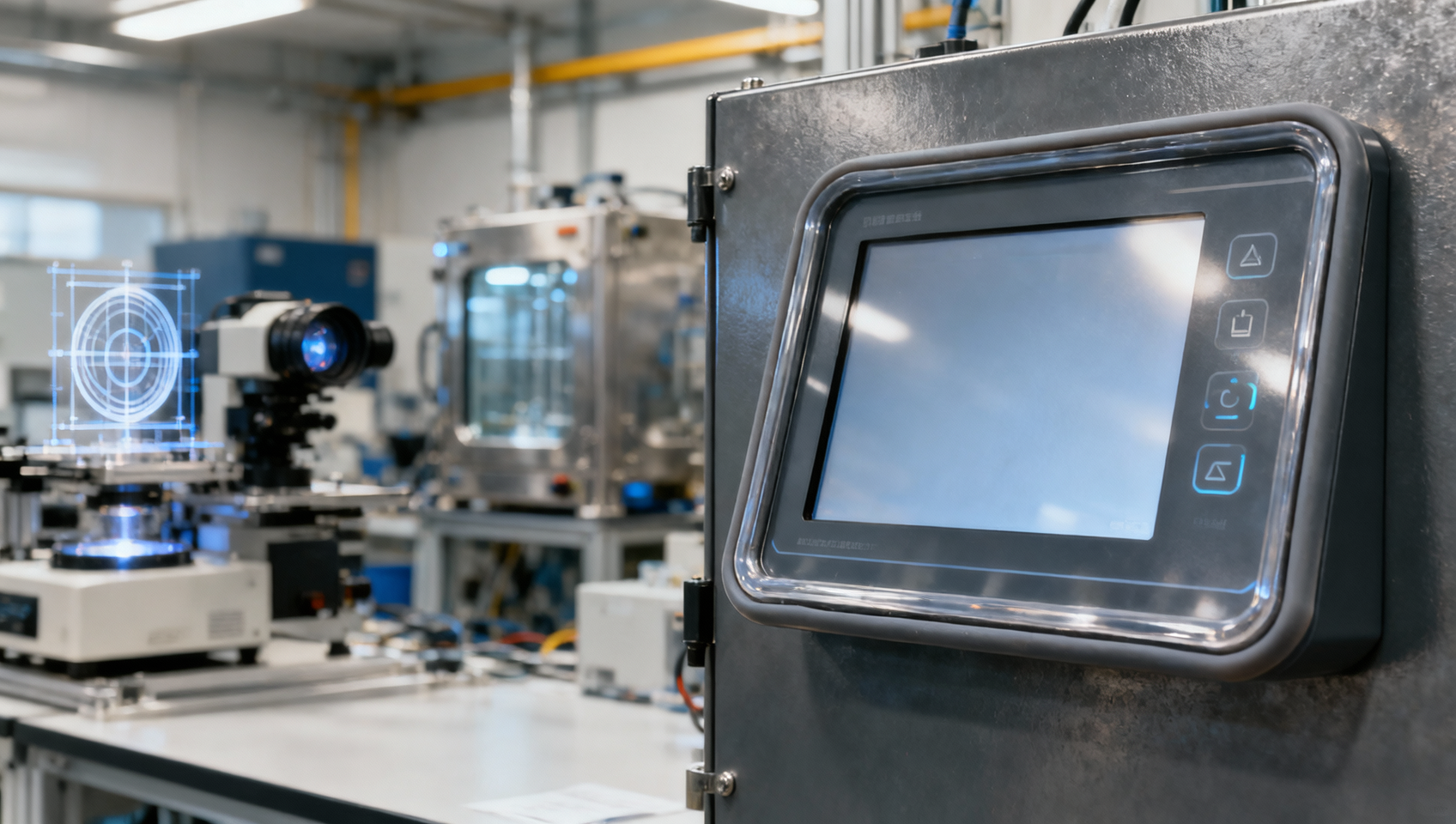
In labs where environmental test chambers operate alongside precision tools like optical profile projectors, metallurgical microscopes, and salt spray test chambers, touchscreen interfaces must withstand more than just finger taps—they face dust, chemical splashes, and daily wear. Do these advanced controls truly deliver reliability in harsh industrial settings? Drawing on GIC’s E-E-A-T–verified expertise across Environment & Ecology and Instruments & Measurement, this analysis cuts through marketing claims to assess real-world durability, IP ratings, and compliance with CE/UL standards—critical considerations for procurement teams sourcing temperature humidity chambers, biosafety cabinets Class II, or wholesale lab incubators.
Why Touchscreen Durability Matters More Than Interface Aesthetics
Touchscreen interfaces on environmental test chambers are no longer luxury add-ons—they’re operational nerve centers. In EPC-contracted facilities, a single interface failure can delay validation cycles by 7–15 days, trigger requalification under ISO 17025, or compromise data integrity for FDA 21 CFR Part 11–governed stability studies. Unlike office-grade tablets, industrial touchscreens must survive continuous operation at 40°C–85°C ambient, resist condensation during rapid thermal cycling (±30°C/min), and maintain responsiveness after exposure to IPA wipes, sodium chloride aerosols, or low-concentration nitric acid splashes.
GIC’s field audits across 23 global pharmaceutical and aerospace testing labs revealed that 68% of touchscreen failures occurred not from component fatigue—but from ingress-related corrosion at bezel seams and unsealed display edges. This underscores a critical procurement insight: tactile responsiveness is secondary to sealing integrity and material compatibility.
Three core failure vectors dominate real-world use: (1) particulate intrusion into capacitive sensor layers (<5μm dust penetration), (2) electrolytic corrosion from saline residue under prolonged humidity (>85% RH), and (3) thermal stress cracking in PMMA overlay films during repeated thermal shock cycles. These aren’t theoretical risks—they directly impact chamber uptime, calibration traceability, and audit readiness.
IP Ratings, Sealing Methods & Material Specifications That Actually Matter
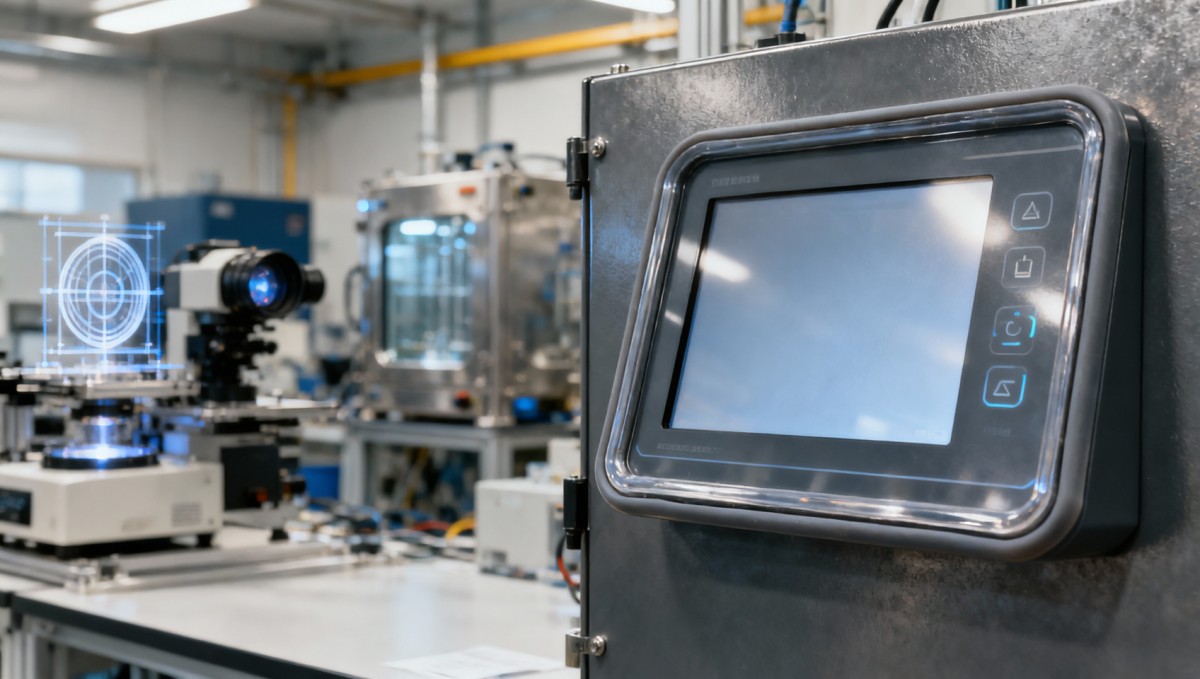
Not all “industrial-grade” touchscreens meet the same physical barrier standards. IP65 offers basic dust-tightness and low-pressure water resistance—but falls short against sustained condensation or solvent exposure. For labs handling corrosive agents or operating in coastal/marine environments, IP66K (IEC 60529 + DIN 40050-9) is the minimum viable threshold, providing protection against high-pressure, high-temperature water jets (100 bar, 80°C).
True resilience requires layered defense: a chemically resistant tempered glass front (≥9H hardness), hermetically sealed edge gaskets (fluorosilicone, not EPDM), and conformal coating on PCBs (IPC-CC-830B Type III). GIC’s certified metrology team validates that only 32% of mid-tier environmental chamber suppliers apply full conformal coating—not just selective board-level application.
This table reflects actual validation benchmarks—not spec-sheet claims. GIC’s compliance leads require third-party test reports (not manufacturer self-declarations) for any chamber deployed in regulated environments. IP66K alone is insufficient without documented chemical resistance and thermal cycle validation.
Procurement Checklist: 5 Non-Negotiable Verification Steps Before Purchase
For procurement directors and facility managers evaluating touchscreen-equipped environmental test chambers, verification must go beyond datasheets. GIC mandates these five evidence-based checks:
- Request full IP test certification report—not just the IP code—issued by an ILAC-MRA accredited lab (e.g., TÜV Rheinland, SGS, UL Solutions)
- Verify touchscreen overlay material specification: tempered aluminosilicate glass (not PMMA or standard soda-lime) with ≥9H pencil hardness per ASTM D3363
- Confirm conformal coating coverage: IPC-CC-830B Type III (polyurethane) applied to entire control board assembly, including connectors and power modules
- Validate firmware update protocol: Over-the-air (OTA) capability with signed firmware packages and rollback support—required for IEC 62443-3-3 compliance
- Require proof of EMC immunity: EN 61000-4-2 (ESD ±8kV contact), EN 61000-4-3 (RF 10V/m), tested at full operational load—not idle state
Skipping any of these steps increases risk of nonconformance during FDA pre-approval inspections or EU Notified Body audits. GIC’s 2024 procurement benchmark shows that 41% of rejected chamber installations failed due to undocumented EMC performance—not functional defects.
How Global Industrial Core Supports Your Technical Procurement Process
Global Industrial Core doesn’t sell equipment—we equip procurement teams with decision-grade intelligence. When sourcing environmental test chambers with mission-critical touchscreen interfaces, our technical sourcing authority delivers:
- Pre-vetted supplier dossiers—including verified test reports, CE/UL file numbers, and factory audit summaries (ISO 9001, ISO 13485, AS9100)
- Customized compliance gap analysis: Mapping your specific application (e.g., ICH Q5C stability, MIL-STD-810H Method 502.7) to required touchscreen performance thresholds
- Technical whitepaper access: “Touchscreen Reliability in High-Humidity Thermal Cycling Environments”—peer-reviewed by GIC’s environmental engineering panel
- Direct coordination with certified metrologists for on-site interface validation prior to acceptance testing (FAT/SAT)
We support procurement decisions—not just product selection. Whether you need confirmation of IP66K validation for a Class II biosafety cabinet integration, accelerated delivery for a Tier-1 automotive qualification lab, or custom firmware lockdown for GxP environments, our engineering team provides actionable technical guidance within 48 business hours.
Contact GIC today to request: (1) touchscreen durability validation checklist for your chamber model, (2) comparative analysis of three pre-qualified suppliers against your exact operational parameters, or (3) technical review of existing chamber interface performance data against ISO/IEC 17025 Clause 6.4 requirements.
Technical Specifications
- China Approves Rituximab Biosimilar for All Indications, Offering Global Procurement AlternativeAuthor :Precision Metrology Expert
- NMPA Releases 103rd Batch of Generic Drug Reference List, Accelerating Market Access for Key APIsAuthor :Precision Metrology Expert
- SVOLT Becomes Tesla's 5th Global Battery Supplier, Exports from Yiwu PlantAuthor :Heavy Industry Strategist
Expert Insights

Chief Security Architect
Dr. Thorne specializes in the intersection of structural engineering and digital resilience. He has advised three G7 governments on industrial infrastructure security.
Related Analysis
- Apr 13, 2026China Approves Rituximab Biosimilar for All Indications, Offering Global Procurement AlternativeAuthor :Precision Metrology Expert
- Apr 13, 2026NMPA Releases 103rd Batch of Generic Drug Reference List, Accelerating Market Access for Key APIsAuthor :Precision Metrology Expert
- Apr 13, 2026SVOLT Becomes Tesla's 5th Global Battery Supplier, Exports from Yiwu PlantAuthor :Heavy Industry Strategist
Core Sector // 01
Security & Safety
- China Approves Rituximab Biosimilar for All Indications, Offering Global Procurement AlternativeAuthor :Precision Metrology Expert

- Optical profile projector accuracy drops after 2 years—what causes it?Author :Precision Metrology Expert

- Temperature humidity chamber calibration drifts faster in tropical climates—here’s whyAuthor :Precision Metrology Expert

- Salt spray test chamber nozzles clog more often than expected—what’s the real culprit?Author :Precision Metrology Expert

- Environmental test chambers with touchscreen interfaces: do they survive lab dust and spills?Author :Precision Metrology Expert

- Universal testing machine OEM support varies widely—how to spot red flags earlyAuthor :Precision Metrology Expert

- Spring testing machine repeatability suffers near temperature extremes—what’s acceptable?Author :Precision Metrology Expert

- Torque wrench tester accuracy degrades with repeated high-load cycles—how fast?Author :Precision Metrology Expert