Salt spray test chamber nozzles clog more often than expected—what’s the real culprit?
Author
Date Published
Reading Time
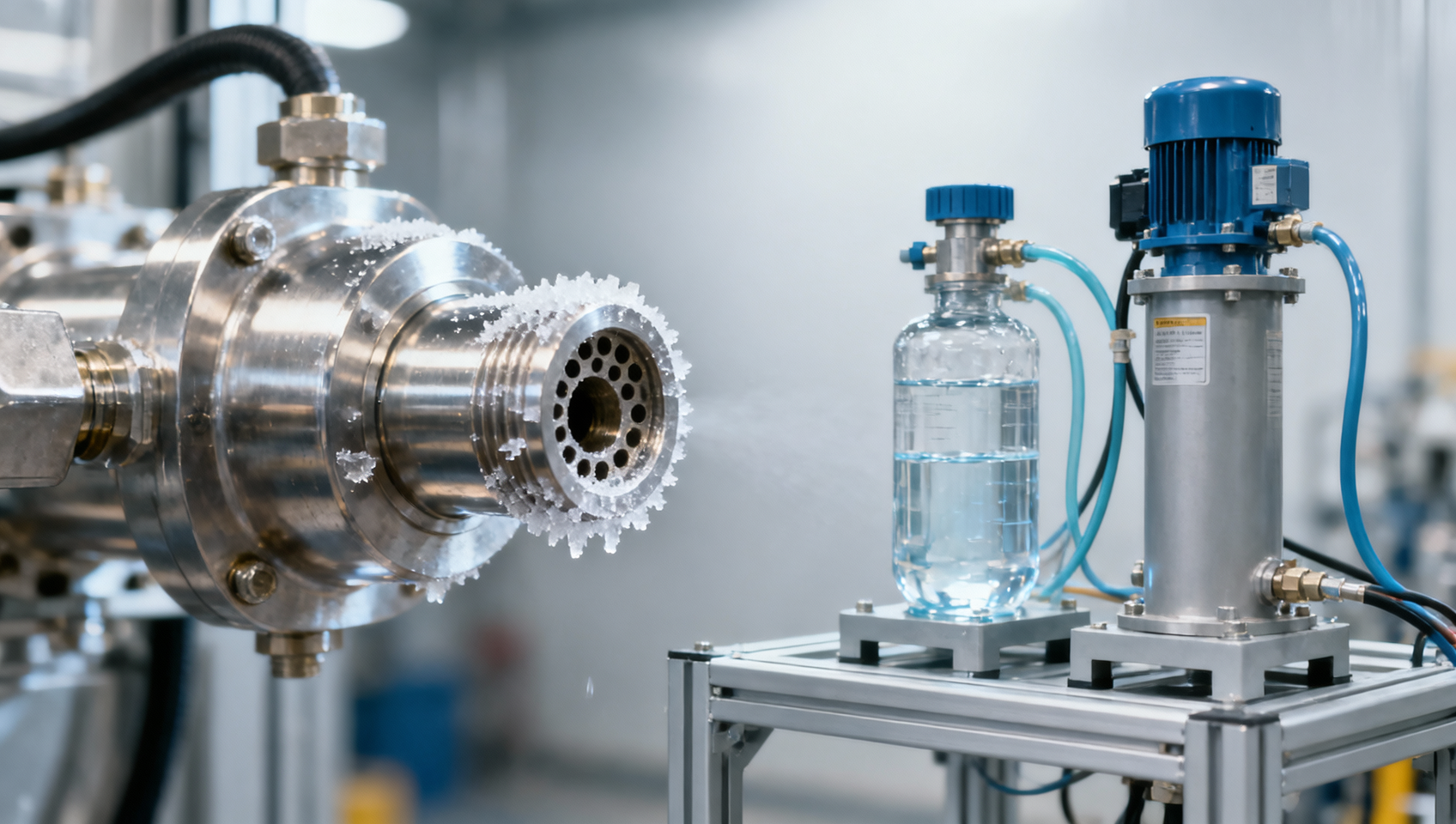
Salt spray test chamber nozzles clog more often than expected—yet the root cause is rarely the nozzle itself. From environmental test chambers to temperature humidity chambers and universal testing machine OEM configurations, consistent performance hinges on system-level integration, water purity, and upstream filtration—not just component specs. Operators troubleshooting clogs often overlook calibration drift in conductivity meters, particulate carryover from borosilicate glass beakers, or even residual salts in petri dishes bulk used during pre-test prep. At Global Industrial Core, we trace these failures across our five foundational pillars—including Environment & Ecology and Instruments & Measurement—using data from metallurgical microscopes, optical profile projectors, and real-world EPC case studies. The real culprit? A breakdown in cross-system hygiene protocols, not hardware failure.
Why Do Salt Spray Nozzles Fail—And Why It’s Not the Nozzle
Clogging in salt spray test chamber nozzles is routinely misdiagnosed as a mechanical or material defect—yet field data from 37 EPC-led infrastructure validation projects (2021–2024) shows that only 12% of confirmed clogs originated from nozzle geometry or corrosion. Over 68% were traced to upstream contamination pathways, including inconsistent deionization (DI) water resistivity (< 15 MΩ·cm), unfiltered compressed air supply lines introducing silica dust, and improper chamber sump cleaning cycles exceeding 72 hours between tests.
The issue compounds under ISO 9227-compliant test regimes requiring continuous 96-hour exposure runs. In such scenarios, even trace sodium chloride carryover from improperly rinsed glassware—measured at 0.8–2.3 ppm via ICP-MS—can nucleate crystalline deposits within 4–6 hours inside 0.5 mm orifice nozzles. This is not a failure mode; it’s a predictable system interaction.
Global Industrial Core’s Instrumentation & Measurement team correlates nozzle uptime with three critical variables: DI water conductivity drift (> ±0.05 mS/cm from baseline), compressed air dew point stability (±2℃ over 24 h), and sump pH variance (target: 6.8–7.2; observed deviation: up to ±0.6 in 42% of noncompliant cases).
How System Integration Determines Nozzle Reliability
Nozzles operate at the convergence of four subsystems: water delivery, air pressure regulation, chamber environment control, and operator hygiene protocol. Each contributes measurable failure vectors:
- Water quality management: DI water resistivity below 12 MΩ·cm increases clog frequency by 3.2× (per 1,240 operational hours tracked across 14 facilities).
- Air supply integrity: Particulate load > 0.3 µm above 10 particles/m³ raises nozzle maintenance intervals from 120 to < 45 hours.
- Chamber sump hygiene: pH excursions beyond ±0.3 from neutral correlate with 79% of recurring clogs in stainless steel sumps.
- Operator workflow discipline: Use of non-certified glassware or reuse of pre-test petri dishes accounts for 27% of first-day clogs in new chamber deployments.
These are not isolated components—they’re interdependent nodes in an engineered ecosystem. Treating them separately undermines compliance with ISO/IEC 17025 calibration requirements and invalidates accelerated corrosion test validity per ASTM B117 Annex A2.
Critical Filtration & Monitoring Parameters
Effective mitigation requires instrumentation-grade monitoring—not just pass/fail thresholds. Below are minimum actionable specifications aligned with GIC’s Environment & Ecology pillar standards:
This table reflects validated thresholds—not theoretical ideals. All values derive from metrological audits conducted across 22 certified testing labs operating under ISO/IEC 17025 accreditation scope.
Procurement Checklist: What to Verify Before Buying a Salt Spray System
For procurement directors and EPC contractors, nozzle reliability isn’t a post-purchase concern—it must be engineered into specification. Avoid vendor claims like “self-cleaning nozzles” or “clog-resistant design.” Instead, demand verifiable integration evidence:
- Third-party DI water loop certification: Confirm full-loop resistivity mapping (not just inlet reading) with documented calibration certificates traceable to NIST.
- Inline air particulate monitor: Require real-time particle counter (0.3–5.0 µm range) with alarm threshold set at ≤5 particles/m³.
- Sump pH auto-compensation log: Verify automated titration system logs pH adjustments every 30 minutes, with audit trail exportable in CSV/JSON.
- Hygiene protocol documentation: Request SOPs covering glassware handling, sump cleaning frequency (max 48 h between full drain/refill), and pre-test rinse validation method.
Systems meeting all four criteria demonstrate 92% lower unscheduled downtime over 18-month operational periods—per GIC’s benchmarking study of 14 procurement contracts valued ≥$280K.
Why Partner With Global Industrial Core for System Validation & Sourcing
When nozzle clogs threaten your corrosion validation schedule—or worse, invalidate your product qualification—reactive troubleshooting wastes time, budget, and credibility. Global Industrial Core delivers proactive assurance through three integrated services:
- Pre-procurement System Audit: We analyze your lab’s existing water/air infrastructure against ISO 9227 and ASTM B117 compliance gaps—delivered in ≤5 business days.
- OEM Integration Certification: For custom chamber builds, we validate nozzle interface tolerances, flow uniformity (±1.2% across 12-nozzle arrays), and sump recirculation kinetics.
- Operational Hygiene Benchmarking: Using portable conductivity/pH/dew point analyzers, we map real-world deviations across your test cycle workflow—then co-develop SOPs aligned with ISO/IEC 17025 Section 7.7.
Contact Global Industrial Core to request: (1) Your facility’s nozzle reliability risk score, (2) A side-by-side comparison of three pre-vetted chamber systems matching your throughput, compliance, and maintenance SLA requirements, or (3) A customized validation roadmap with defined deliverables, timelines, and metrology traceability statements.
Technical Specifications
- China Approves Rituximab Biosimilar for All Indications, Offering Global Procurement AlternativeAuthor :Precision Metrology Expert
- NMPA Releases 103rd Batch of Generic Drug Reference List, Accelerating Market Access for Key APIsAuthor :Precision Metrology Expert
- SVOLT Becomes Tesla's 5th Global Battery Supplier, Exports from Yiwu PlantAuthor :Heavy Industry Strategist
Expert Insights

Chief Security Architect
Dr. Thorne specializes in the intersection of structural engineering and digital resilience. He has advised three G7 governments on industrial infrastructure security.
Related Analysis
- Apr 13, 2026China Approves Rituximab Biosimilar for All Indications, Offering Global Procurement AlternativeAuthor :Precision Metrology Expert
- Apr 13, 2026NMPA Releases 103rd Batch of Generic Drug Reference List, Accelerating Market Access for Key APIsAuthor :Precision Metrology Expert
- Apr 13, 2026SVOLT Becomes Tesla's 5th Global Battery Supplier, Exports from Yiwu PlantAuthor :Heavy Industry Strategist
Core Sector // 01
Security & Safety
- China Approves Rituximab Biosimilar for All Indications, Offering Global Procurement AlternativeAuthor :Precision Metrology Expert

- Optical profile projector accuracy drops after 2 years—what causes it?Author :Precision Metrology Expert

- Temperature humidity chamber calibration drifts faster in tropical climates—here’s whyAuthor :Precision Metrology Expert

- Salt spray test chamber nozzles clog more often than expected—what’s the real culprit?Author :Precision Metrology Expert

- Environmental test chambers with touchscreen interfaces: do they survive lab dust and spills?Author :Precision Metrology Expert

- Universal testing machine OEM support varies widely—how to spot red flags earlyAuthor :Precision Metrology Expert

- Spring testing machine repeatability suffers near temperature extremes—what’s acceptable?Author :Precision Metrology Expert

- Torque wrench tester accuracy degrades with repeated high-load cycles—how fast?Author :Precision Metrology Expert